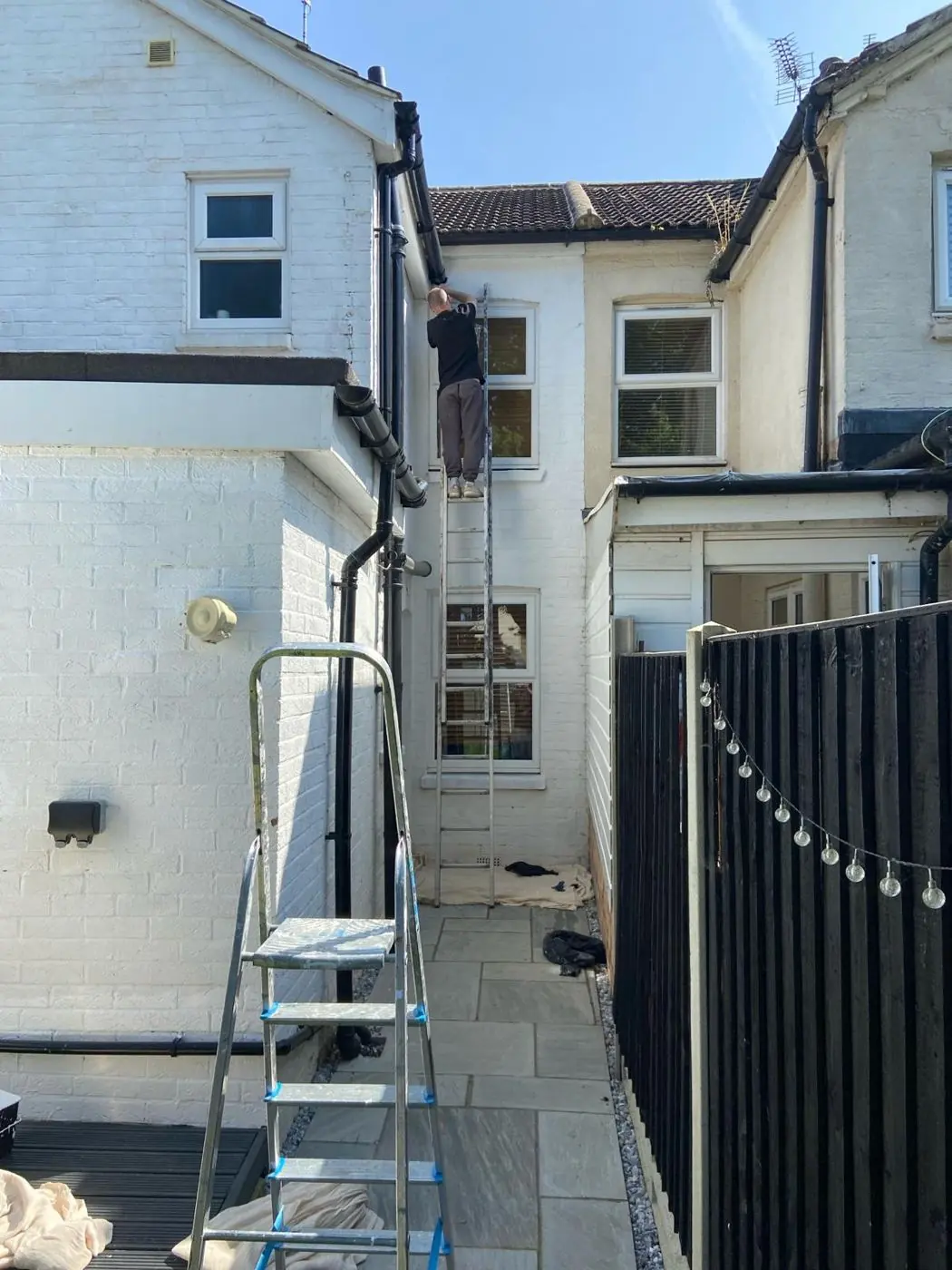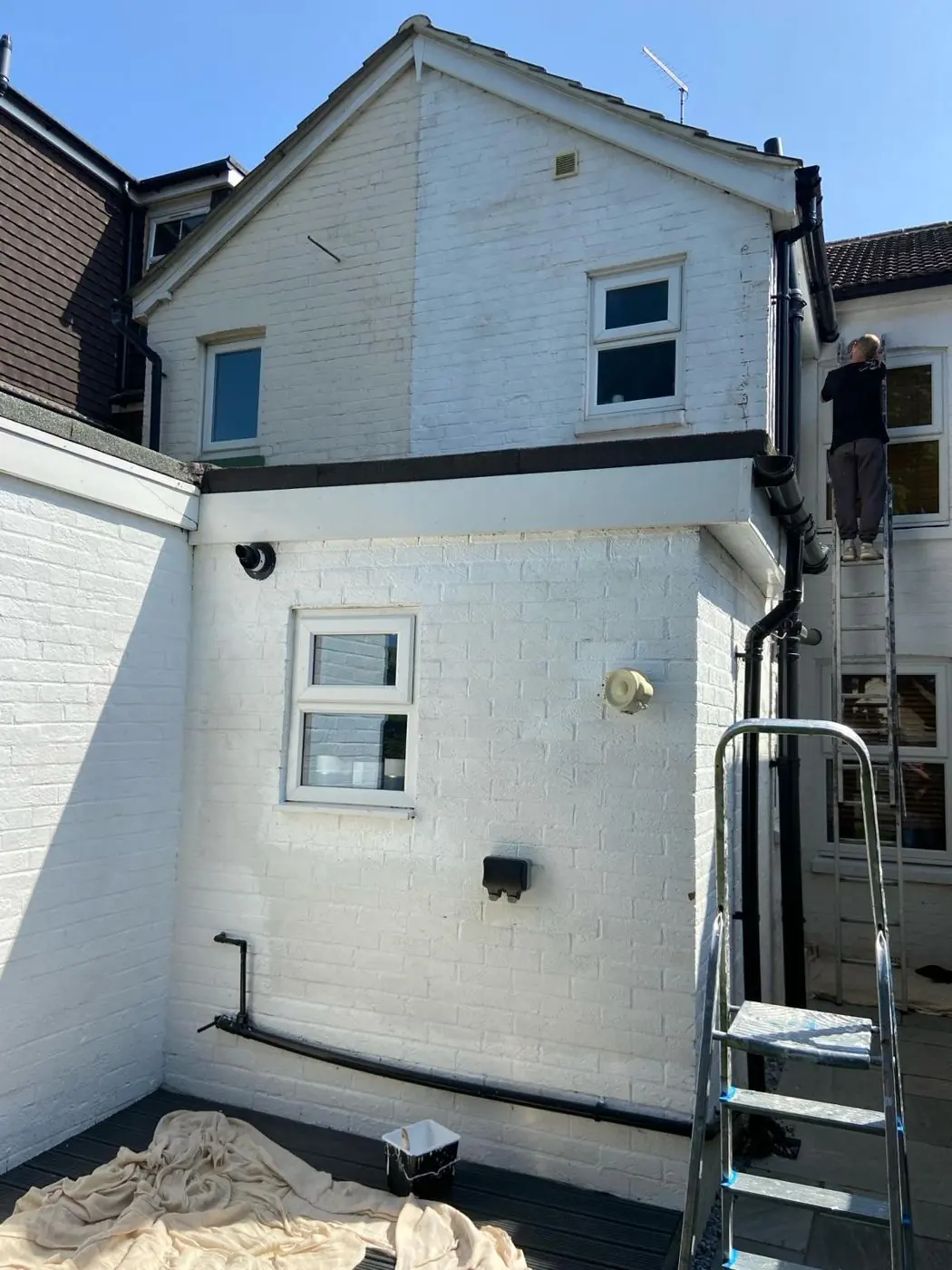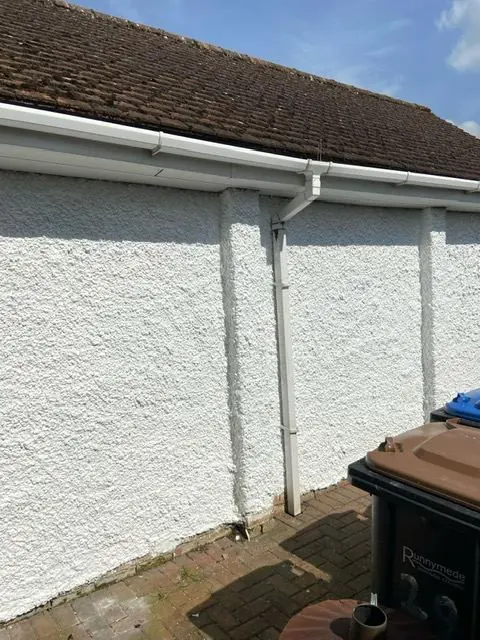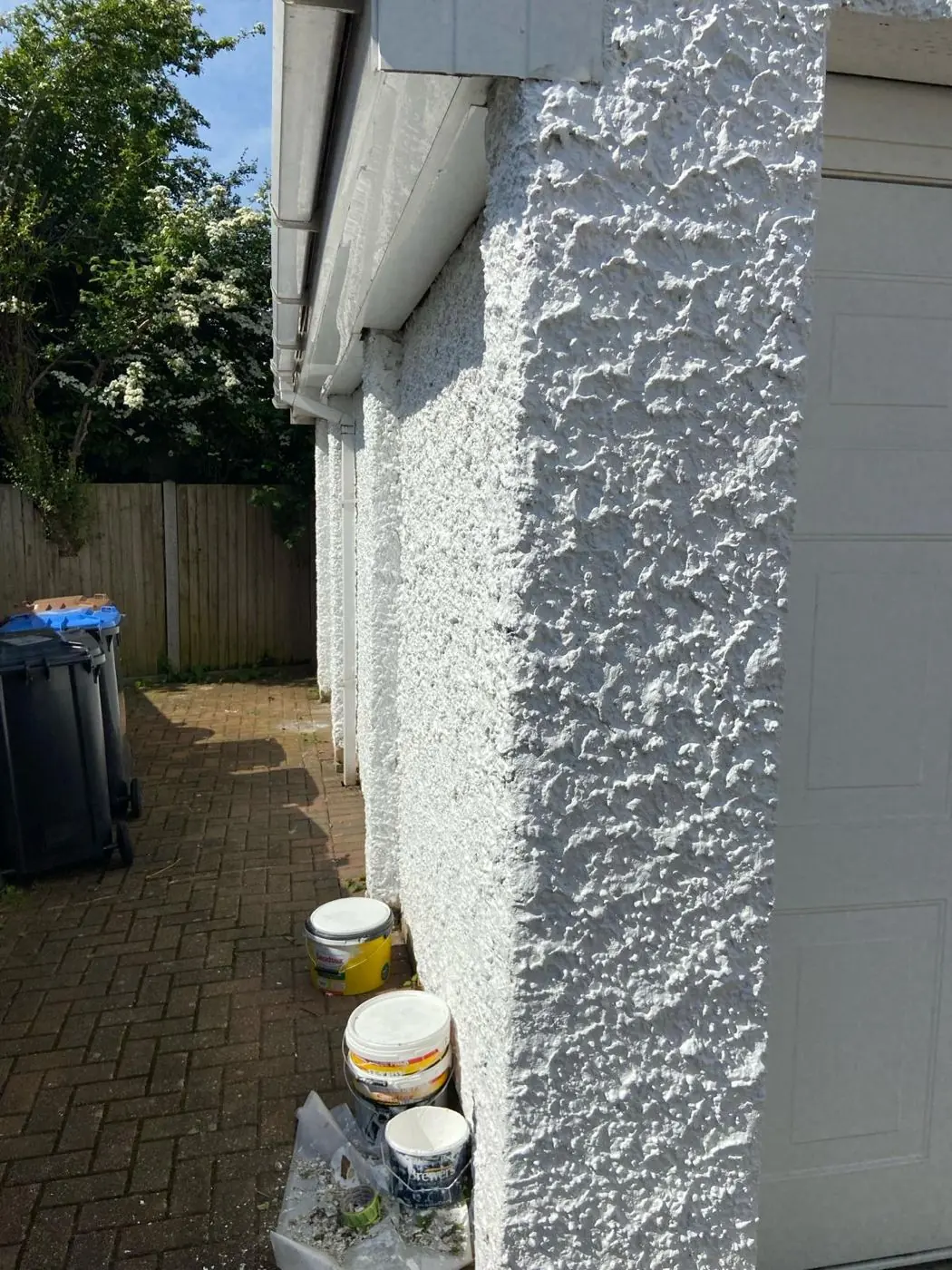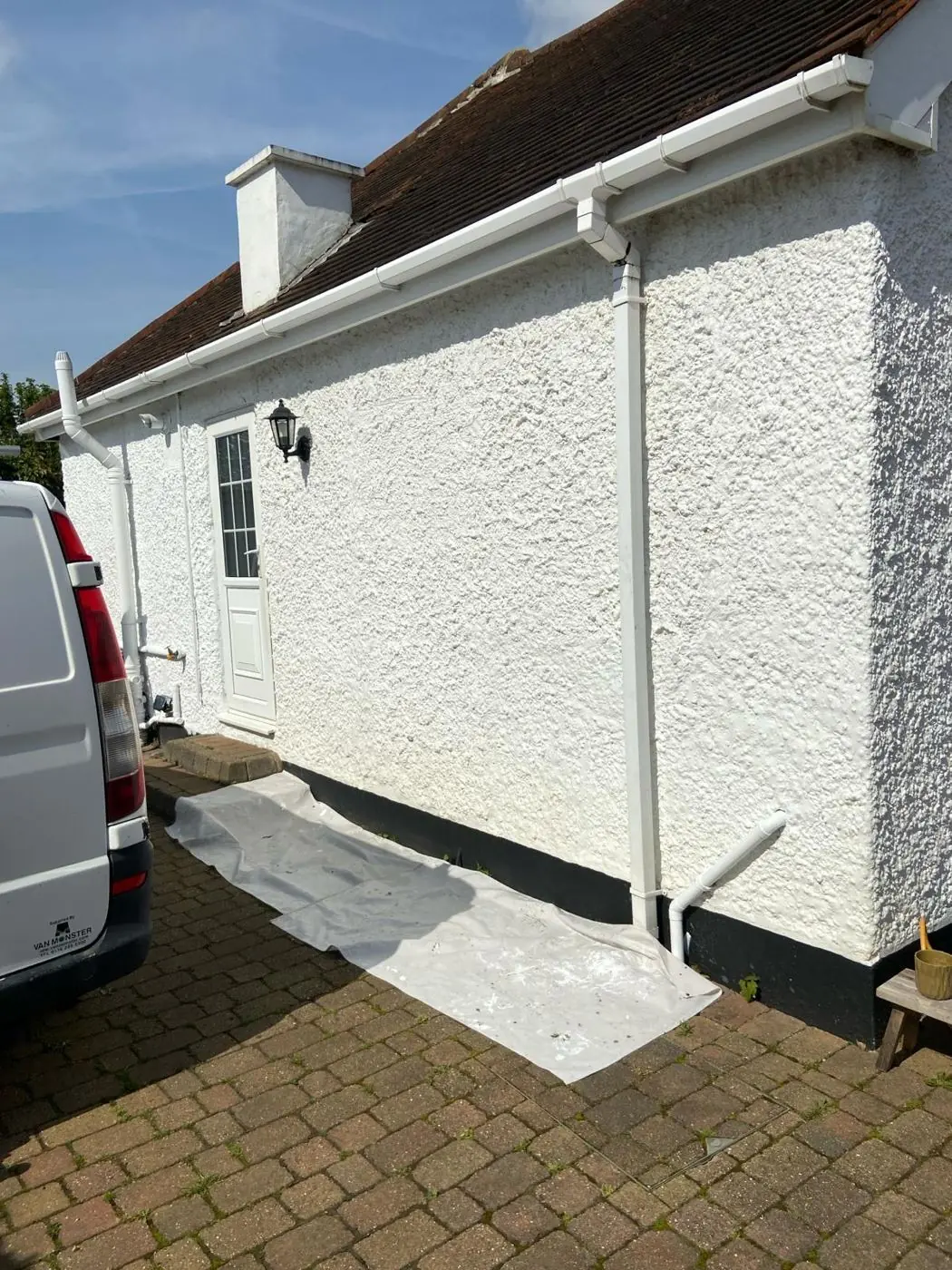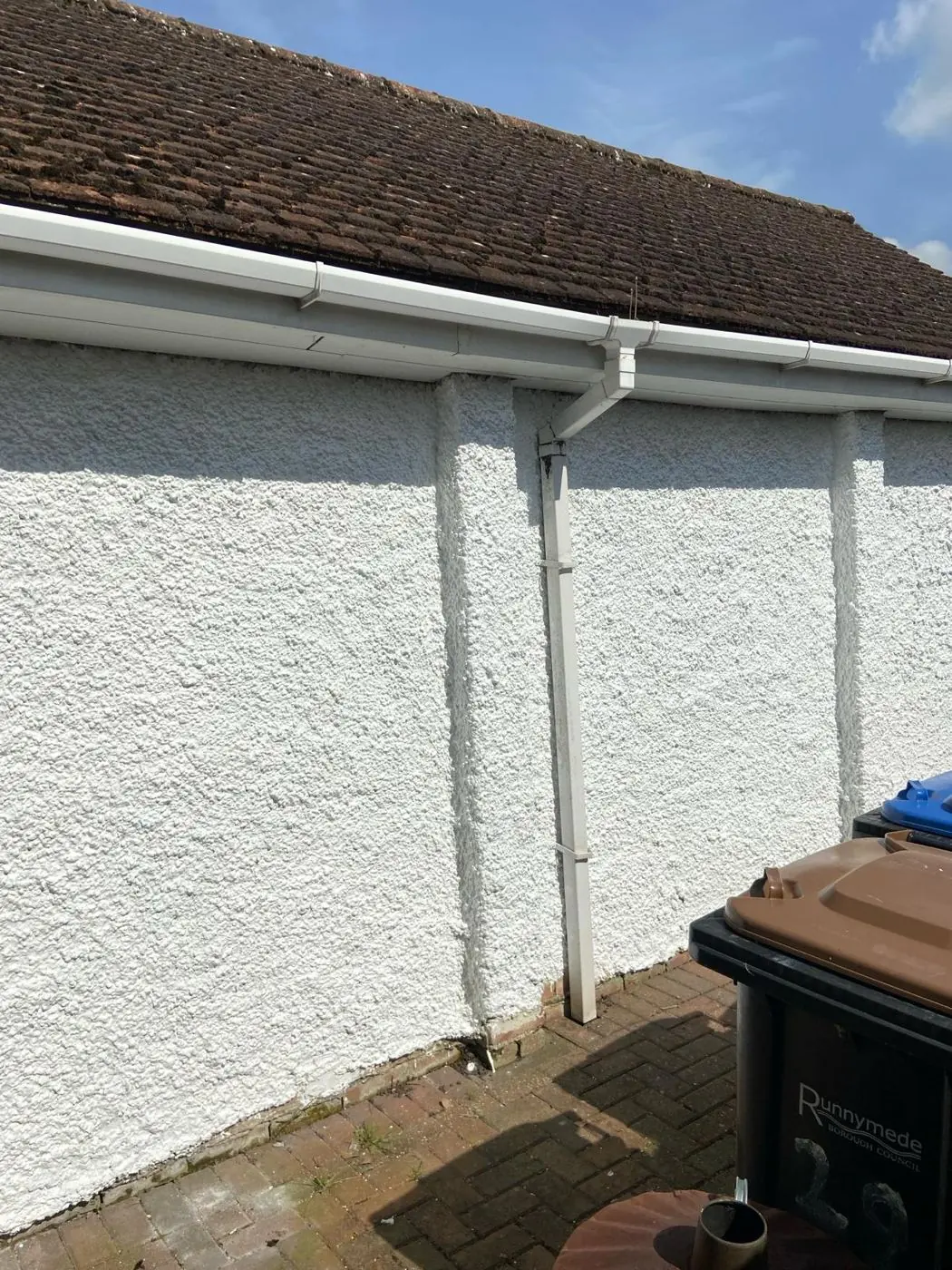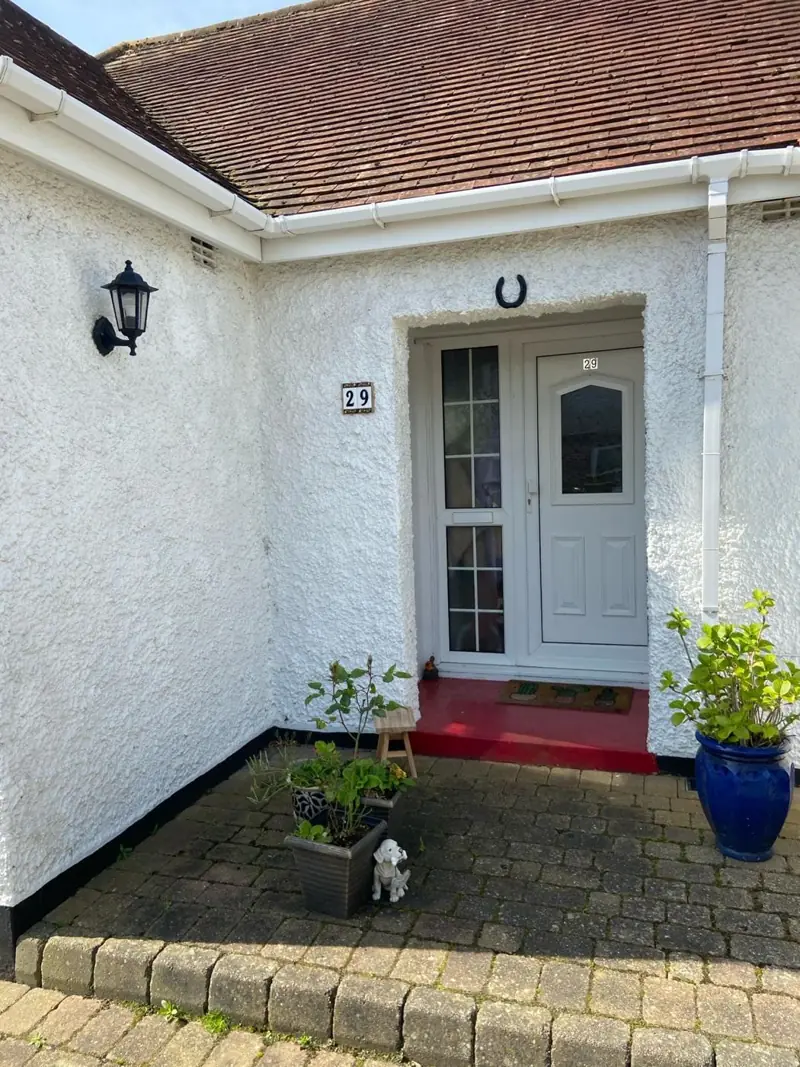
DH Painter & Decorator paints render and masonry in Great Doddington, the NN29 village roughly 8.3 miles east of Northampton town centre. Much of the old stone core should stay unpainted, so Dean starts with what the wall is made of and only quotes for a coating where one belongs.
Why the old core is mostly a no-paint zone
Ask for masonry painting in many towns and the answer is a tin of exterior masonry paint. Great Doddington is different. The conservation area appraisal describes a historic core of regular coursed limestone with lias or ironstone dressings, ashlar gable parapets and kneelers, and stone boundary walls finished with “cock and hen” copings. Stone like this breathes. It takes on rain and dries out through its face and joints, and a plastic-based coating stops that drying. Damp is then held in the wall, frost works on the trapped water, and the face of the stone can start to spall behind the paint.
So on an unpainted limestone cottage, a stone barn or a boundary wall in the conservation area, we will tell you not to coat it. What those walls usually need is a gentle clean of algae or tree staining. Pointing in lime mortar is mason’s work, not painter’s work.
Where coatings do belong in the village
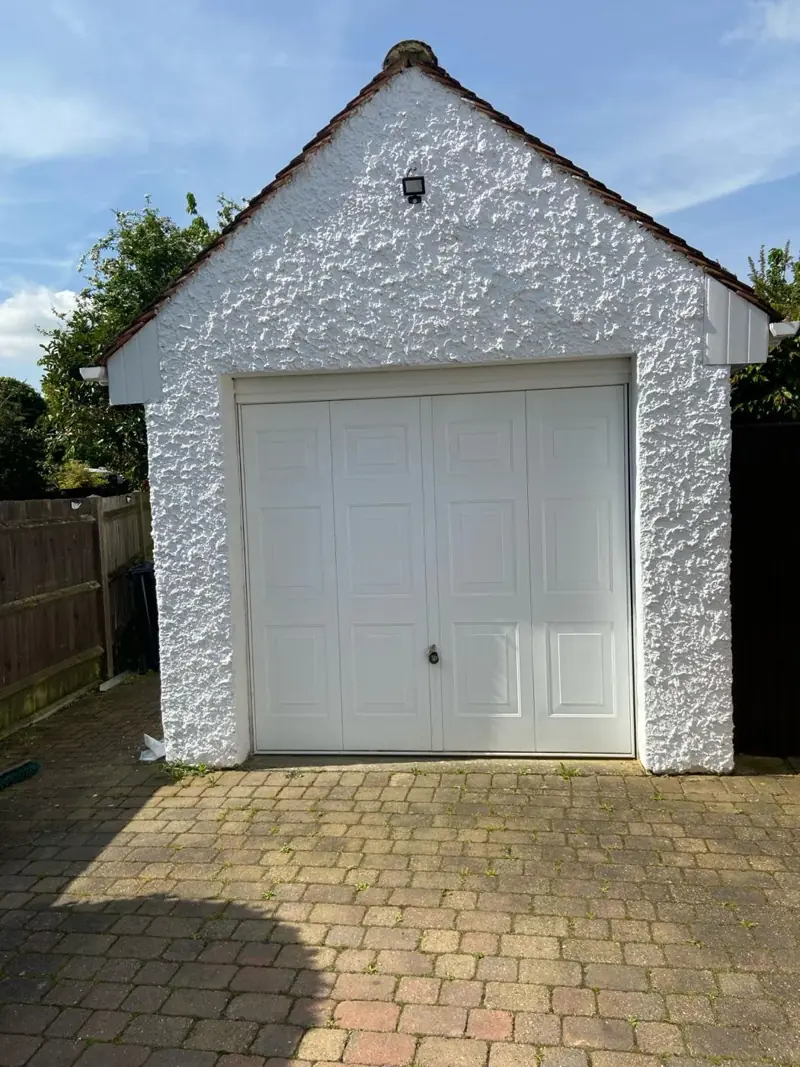
Render is among the walling materials recorded in the village, so an older house may already have a rendered or limewashed face. Where a breathable finish is already there, we renew it with the same kind of material: limewash over lime, or a mineral silicate paint where the background suits it. Before we pick a product we check whether the existing coat is lime, a cement render or a later acrylic, because putting the wrong system over the wrong background is where trouble starts.
| Wall type in Great Doddington | Our usual advice |
|---|---|
| Bare coursed limestone, ironstone dressings | Leave unpainted; clean only |
| Existing limewash or lime render on older houses | Renew with limewash or a breathable mineral paint |
| Red brick at the chapel and farm barns | Do not coat; remove stains and growth |
| Cement render on 20th-century houses | Modern masonry paint after repairs |
Red brick: the chapel and the farm barns
The 19th-century former Methodist chapel on Chapel Lane is smooth red brick under Welsh slate. Some of the barns at The Farm and Top Farm are red brick too. Brick on buildings like these was built to be seen, so we would not paint it. The useful work is cleaning off green growth, bird mess and sap staining and, where a previous owner has already painted a section, discussing whether to maintain it or have it professionally removed. On a listed barn, removing or applying any coating may need consent, so speak to the council before deciding.
The same thinking applies to the converted barns at Top Farm, Glebe Farm and Grove Farm, which mix stone and red brick under clay tiles. Owners sometimes want to brighten a shaded courtyard elevation with paint. We would rather clean the masonry and put colour on the joinery, which is easier to change later and leaves the walls able to dry.
Coating the 20th-century houses along the main road
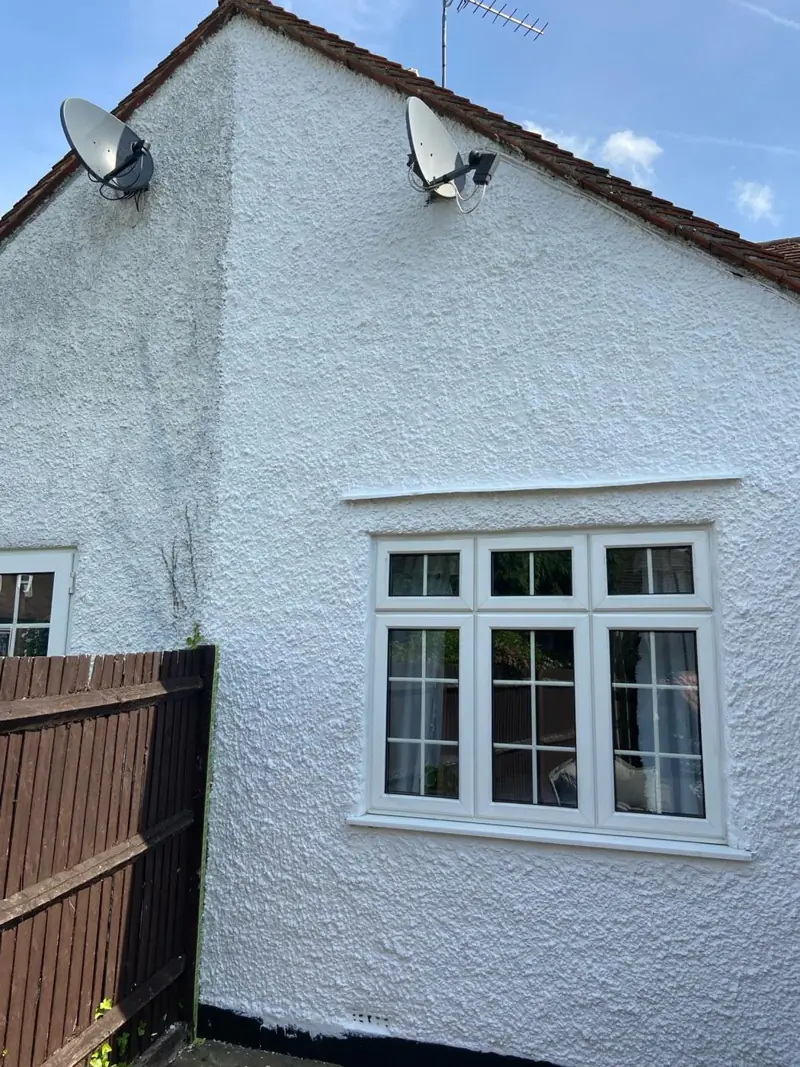
Outside the conservation area, most of Great Doddington is ribbon development from the 20th century, strung out along the road between Wellingborough and Earls Barton. These are standard masonry homes. Where they have cement render or painted block, a modern masonry paint is the right answer. We wash off algae, treat it with a biocide, cut out and fill cracks, and seal any chalky surface before the finish coats. South and south-east faces looking over the Nene Valley take the hardest weathering and usually show the first hairline cracks and fading.
Our guide to painting render and roughcast covers the preparation in more depth, and the render and masonry painting service page explains smooth versus textured finishes. The Great Doddington area page covers the village’s other property types.
Last updated by Dean, DH Painter & Decorator.