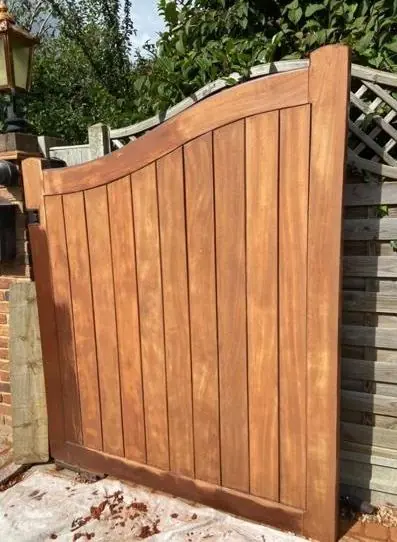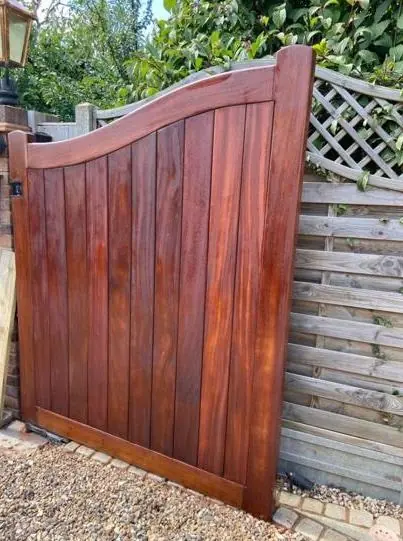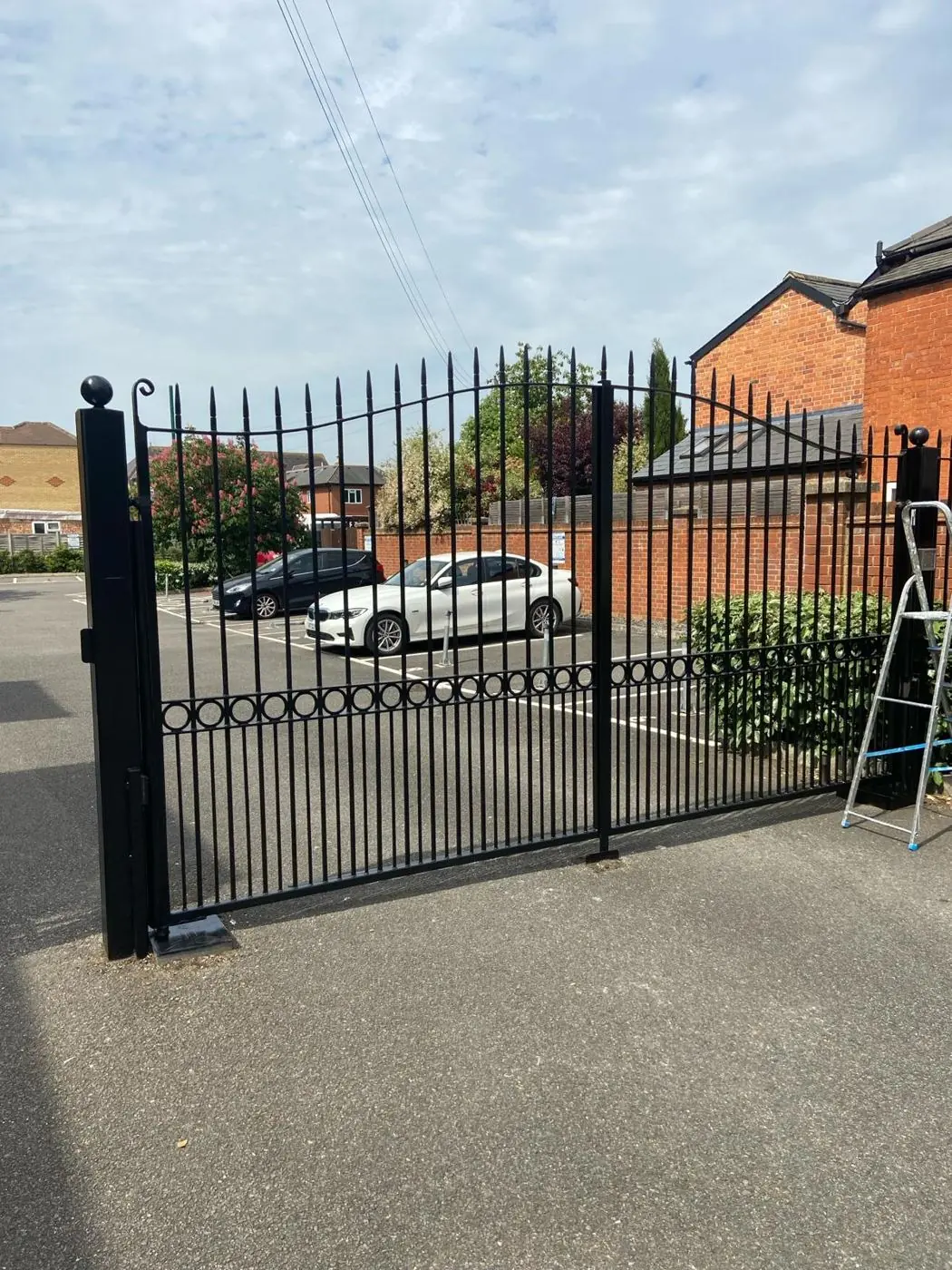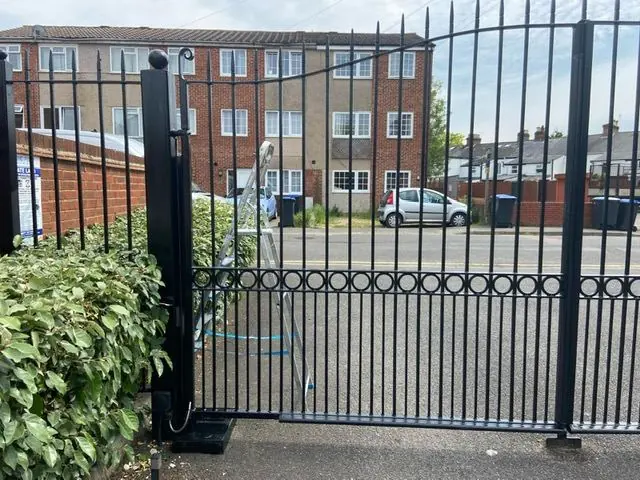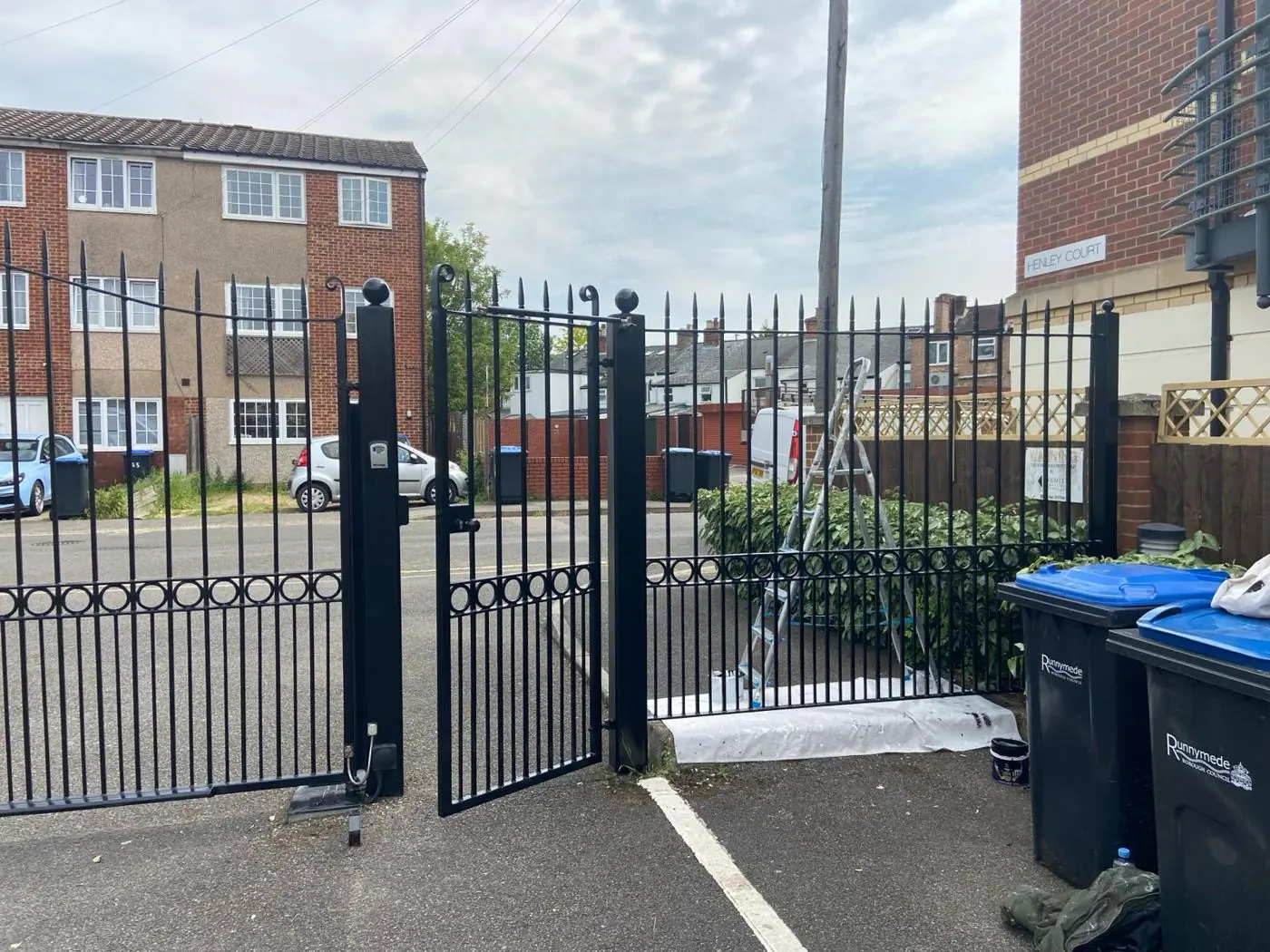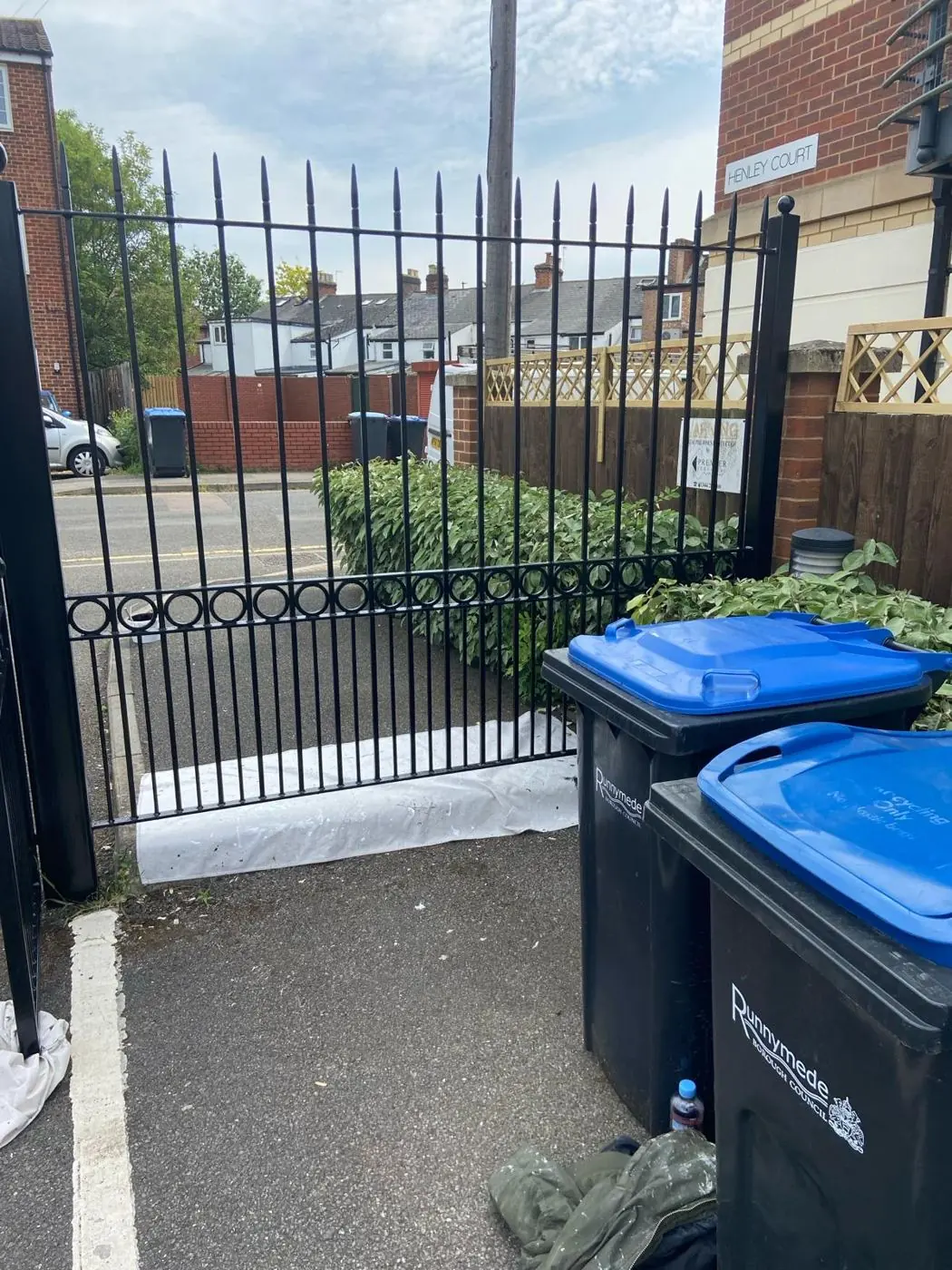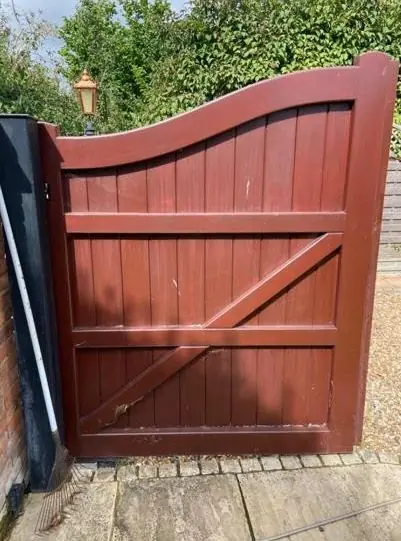
DH Painter & Decorator stains and oils fences, gates and garden timber in Great Doddington, a farming village on the Nene Valley side about 8.3 miles east of Northampton. Dean quotes on site, picking products to suit the timber, the nearby stone and any animals that can reach it.
Picket fences that sit on limestone plinths
One of the things that sets Great Doddington apart is the boundary treatment. Many front gardens in the old core are enclosed by low stone walls with picket fencing on top, and the conservation area appraisal records stone boundary walls with “cock and hen” copings running along much of the village. So the timber we stain often sits directly on limestone.
That changes how we work. Stain that runs down onto pale stone soaks in and is very hard to remove, so we sheet or tape the coping, use a brush rather than a sprayer, and load the brush lightly on the bottom rails. Pickets also have a lot of end grain on the tops and lower ends, where water gets in first. Those get an extra coat. Where a fence bears directly on the plinth, we check whether the bottoms of the pickets are wet or rotten before we stain anything.
Field gates, livery yards and animal-safe finishes
Great Doddington is still a farming village, with working farms and Top Farm Livery Stables on Top Farm Lane, and horses are ridden through the streets. Timber that animals can reach brings a rule of its own: horses chew fence rails and gates, and some wood preservatives and stains are not safe for them. Near paddocks, stables and field gates we use products the manufacturer states are suitable for use around animals once dry, and we plan the drying time so animals can be kept away until the finish has cured.
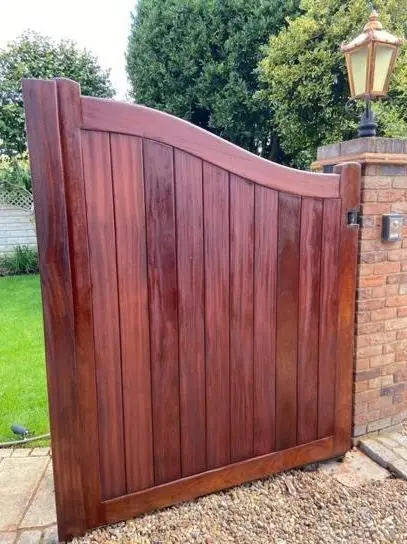
Heavy field gates, five-bar gates and post-and-rail fencing usually take a penetrating, low-build stain or oil rather than a film-forming paint. A film coat will peel on rough-sawn timber that moves with the weather. If a gate is hardwood, we use a hardwood oil instead and degrease the surface first, because oily timbers can resist ordinary stains.
Big gardens and long boundaries are common in a village that stretches about 1.5 miles along one main street. A run of close-boarded fencing behind a bungalow on the main road can be longer than people expect. We measure on the survey visit and agree which faces are included, because the neighbour’s side of a shared fence is only stained with their agreement.
Sap, needles and leaf litter from the old trees
Mature trees are part of the village’s character, among them the sycamore in The Square, the cedar, Scots pine and false acacia at 22 High Street, and the yews at the churchyard and the Stag’s Head. Fences and gates under them collect sap, green algae and a build-up of needles along the rails. All of it has to come off, or the stain will not bond. We scrub, apply a fungicidal wash and let the timber dry properly. Under dense evergreen cover that can take longer than you might expect, so we allow extra time on the quote.
Picking a shade that suits stone and pantile
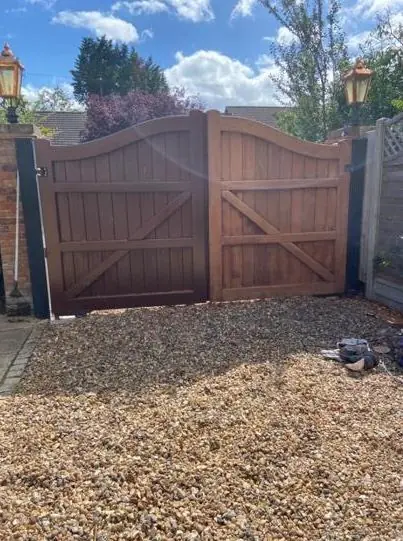
The old core is a palette of honey limestone, darker ironstone dressings and orange-red clay pantiles. Very cool greys or bright, saturated colours can look out of place against that. Mid-browns, oak tones, muted greens and natural clear oils usually sit better. Colour on a garden fence is not normally controlled, but if a fence or gate belongs to a listed building, or stands right on the street in the conservation area, it is worth keeping changes modest.
The fence and gate staining page explains microporous stains, oils and how often to re-coat. The Great Doddington area page covers the rest of what we do in the village.
Last updated by Dean, DH Painter & Decorator.