
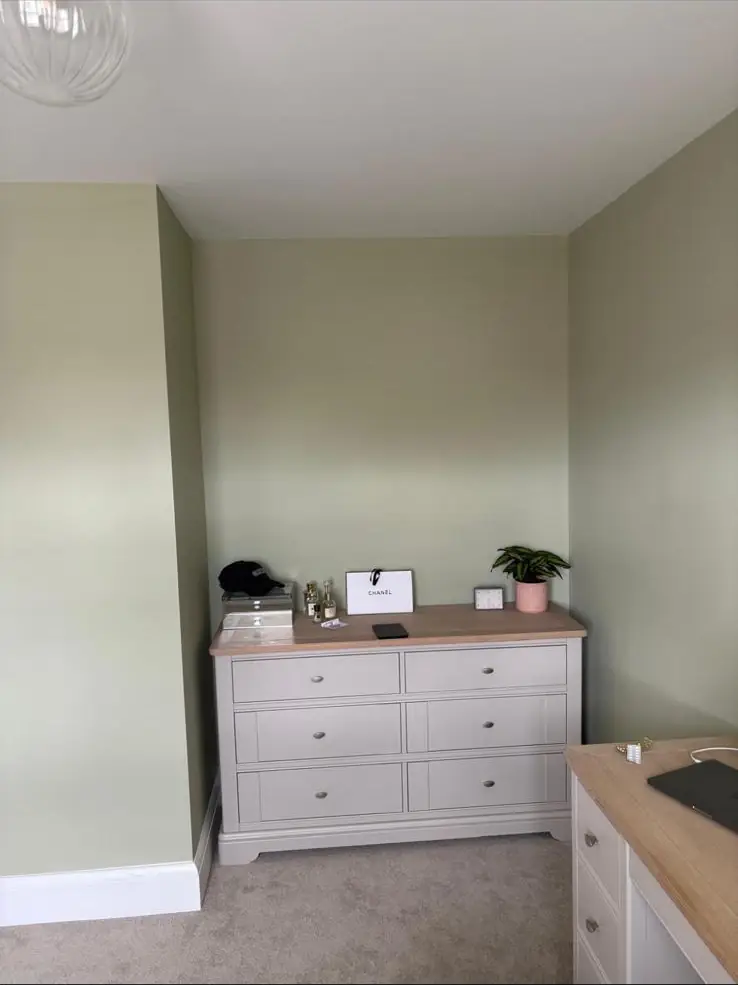


Dean gives colour and finish advice to homeowners in Great Doddington, about 8.3 miles east of Northampton town centre. In the conservation area the stone and roof tiles set the palette, and listed houses can need consent for a change; on the estates outside it, the choice is open.
| Fact | Detail | Source |
|---|---|---|
| Conservation area designated | 31 January 1973; last amended 31 January 1990 | Northamptonshire HER |
| Area and listed buildings inside | About 9.8 ha; 19 of the parish’s 21 list entries | Heritage Check |
| Appraisal adopted | 26 November 2002 | North Northamptonshire Council |
| Article 4 direction | None for Great Doddington | North Northamptonshire Council |
| Typical roofs | Orange/red clay pantiles and Castle Ashby clay specials | North Northamptonshire Council |
The palette the conservation area already gives you
Great Doddington Conservation Area was designated on 31 January 1973 and last amended in 1990. It covers about 9.8 hectares of the old village and contains 19 of the parish’s 21 list entries. The character appraisal adopted in November 2002 describes its materials: regular coursed limestone walls, ironstone on copings and kneelers, and roofs of orange and red clay pantiles, Welsh slate, plain tiles, long-straw thatch and Castle Ashby clay specials. Those are the colours every front door, window and gate is seen against, and they are warm: honey-coloured stone, red-brown ironstone and orange roofs.
That has practical consequences for paint. A brilliant white window frame on honey limestone can look harsh and slightly blue. A soft off-white, cream or stone colour sits more comfortably. Dark heritage colours, such as deep green, dark blue-grey, oxblood or near-black, work well on doors against the stone. Strong cool greys can clash with the orange pantiles above.
| Backdrop | Where | Joinery colours that tend to work |
|---|---|---|
| Honey limestone with ironstone dressings | Cottages and farmhouses in the conservation area | Off-whites, creams and stone tones on windows; deep green, blue-grey or dark red on doors |
| Smooth red brick and Welsh slate | The Chapel Lane chapel | Cream or white joinery; avoid reds that compete with the brick |
| Red brick barns | Barns and conversions at The Farm and Top Farm | Dark, muted colours on large openings and boarded doors |
| 20th-century estate houses | Glenfield Drive, The Ridge, John Gray Road | Open choice; check against your own walls and roof colour |
Do you need permission to change your door colour in Great Doddington?
Only if the house is listed. North Northamptonshire Council’s Article 4 page lists no direction for Great Doddington, so an unlisted house in the conservation area keeps its normal rights, and you can repaint its door, windows or fascias in a new colour without planning permission. A listed building is different. A change in colour, or in the type of paint, on a listed house can count as altering its character, which needs listed building consent. In practice, owners of listed houses here repaint like for like, and if they want a change, they ask the council’s conservation officer first. We can match an existing colour from a sample of the old paint.
Where the backdrop changes
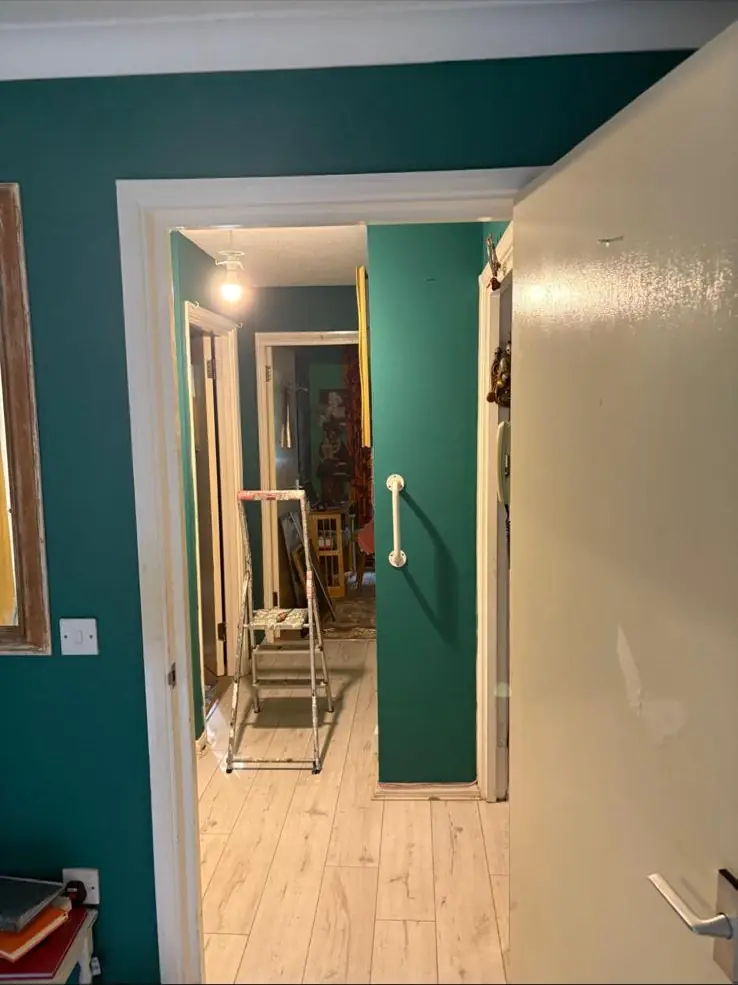
Not all of the old village is limestone. The 19th-century chapel on Chapel Lane is smooth red brick with a Welsh slate roof, and the appraisal records red brick barns at The Farm and Top Farm. Against red brick, the creams and soft whites that work on limestone still look fine, but warm reds and terracottas fight with the brick. Converted barns usually have large openings and boarded doors, and these usually suit a single dark, muted colour, so the shape of the old opening is still visible.
Sheen matters as much as colour on old buildings. A high gloss on cottage casements shows every ripple in old glass and timber, and an eggshell or satin finish is closer to the traditional look. Inside, the same thinking applies to rooms with exposed stone or brick: let the stone set the warmth, and pick wall colours that are a little lighter and cooler than it, so the stone stands out rather than disappearing.
Choosing freely on the estates
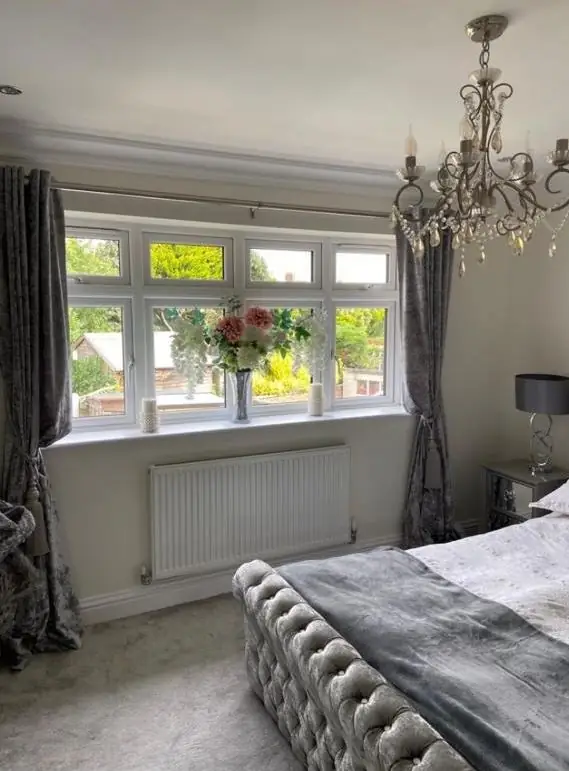
Outside the conservation area, on Glenfield Drive, The Ridge, John Gray Road and St Nicholas Road, there is no conservation constraint at all. The test there is your own brick and roof. On a pair of semis, it is worth talking to the neighbour about the fascia and door colours, because a continuous fascia in two colours rarely looks deliberate. For woodwork on any of these houses, our page on doors, skirtings and woodwork in Great Doddington covers the paint systems, and the outside job is on our exterior painting page for the village. The main colour and finish advice page explains how we test colours in your own light. The guide to choosing a decorator is useful before any listed work, and the Great Doddington page covers the rest.
Sources
- Great Doddington Conservation Area (DNN12304), Northamptonshire HER (accessed 2026-11-16)
- Great Doddington conservation area, Heritage Check (accessed 2026-11-16)
- Conservation areas, North Northamptonshire Council (accessed 2026-11-16)
- Great Doddington Conservation Area Character Appraisal (November 2002), North Northamptonshire Council (accessed 2026-11-16)
- Article 4 directions, North Northamptonshire Council (accessed 2026-11-16)
- Listed buildings in Great Doddington, British Listed Buildings (accessed 2026-11-16)
Last updated .