Painter & decorator covering Northampton and surrounding areas

Doors, Skirtings & Woodwork in Great Doddington

Casements under timber lintels, plank doors in limestone cottages and standard joinery in the ribbon houses, painted with the right system for each.

  • Over 30 years experience
  • Free quotes & advice
  • Fully insured & trained
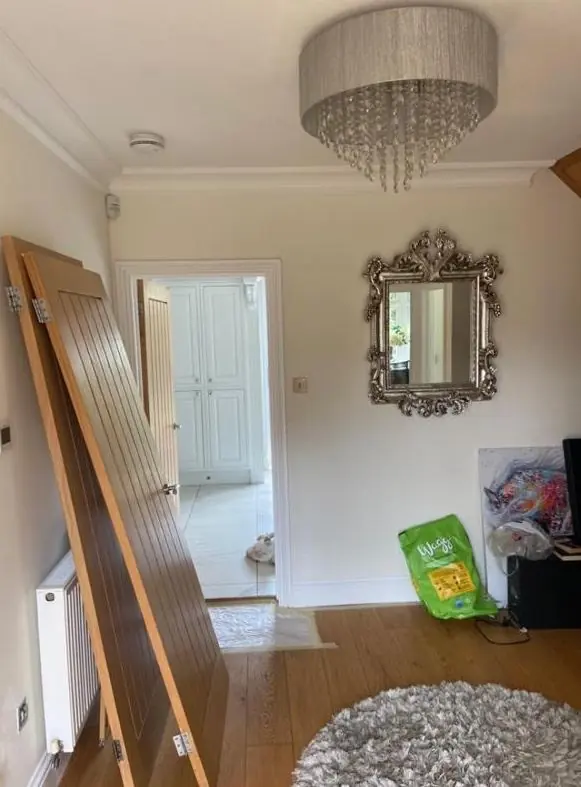
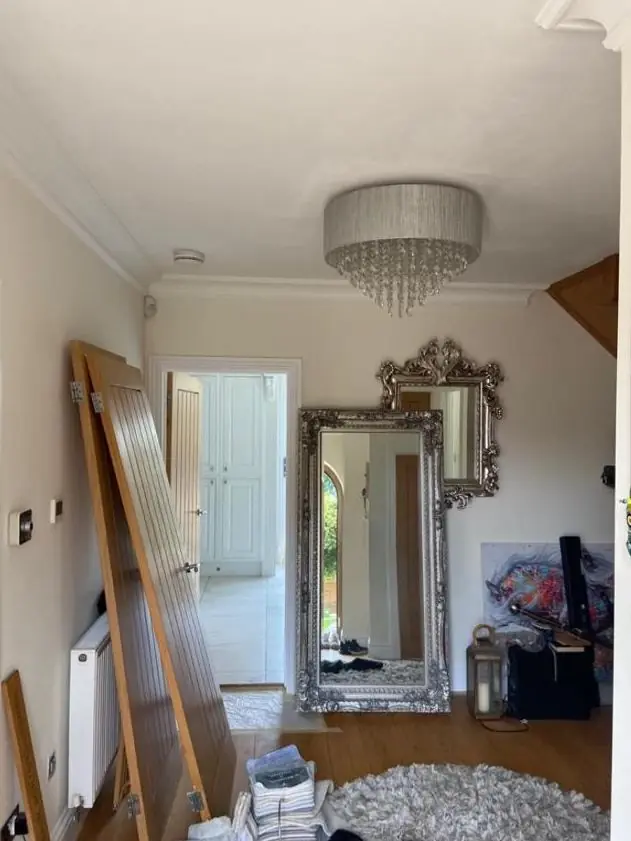
Hallway with chandelier and ornate mirrors, cream walls painted and oak doors propped ready

DH Painter & Decorator paints doors, window casements, frames and skirting boards in Great Doddington, on the Nene Valley side, 8.3 miles east of Northampton. Dean matches the paint to the house: breathable, like-for-like finishes on the listed stone cottages and durable modern coatings on the 20th-century homes.

Two kinds of joinery along one street

Great Doddington’s woodwork falls into two quite separate groups. In the old heart of the village, the joinery belongs to limestone cottages and farmhouses built between the 16th and 19th centuries: timber casements under wooden lintels, a few stone-mullioned windows, ledged plank doors, and boarded cheeks on the dormers. Outside it, the post-war bungalows and ribbon-built houses have the factory-primed doors, architraves and skirtings found in most post-war homes.

The two groups need different paints and different preparation, so the first thing Dean does on a visit is work out which kind of house he is standing in. For the general method on doors, frames and skirting boards, see our main doors, skirtings and woodwork page. This page covers what is particular to Great Doddington.

Listed cottages: like-for-like, breathable, no blowlamps
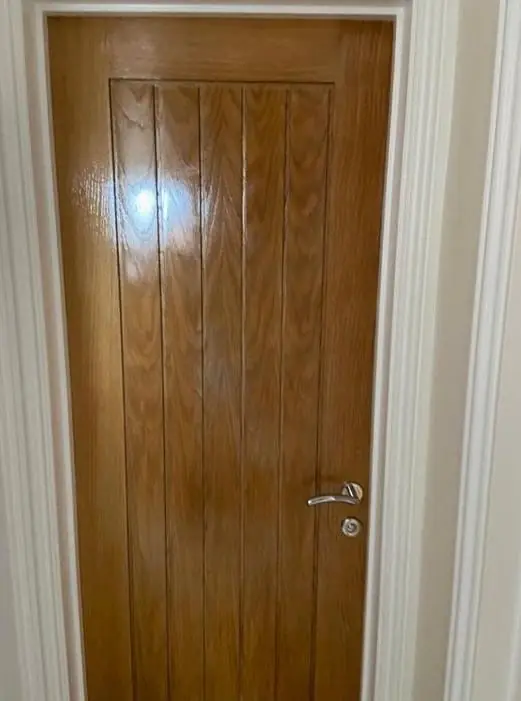
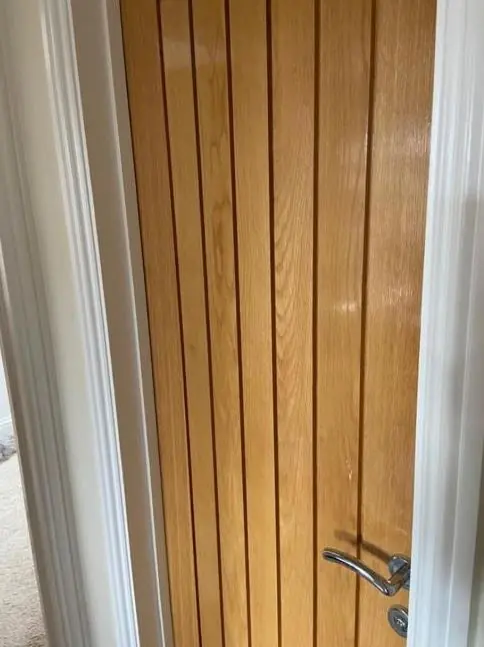
Oak cottage-style door varnished to a high-gloss sheen within a white painted frame

Several houses in the village are listed, including 1 Doctors Lane, 36 and 47 High Street and 39 Lower Street, and the Old Vicarage on Church Lane is Grade I. On listed fabric, repainting normally means matching what is already there. A change of colour or material on doors and windows may need listed building consent, so if you want to move away from the existing scheme, check with North Northamptonshire Council before any paint is ordered.

Old softwood and oak set into limestone walls holds and releases moisture differently from modern timber. Rather than sealing it under a hard, non-breathing gloss, we use microporous or linseed-type paints that let the wood dry out. Preparation is by hand: scraping back loose material, sanding, filling with a flexible filler and spot-priming bare wood. Old paint layers on cottages of this age may contain lead, so suspect coats are rubbed down wet rather than dry-sanded, and the dust is cleaned up as we go.

The thatched pair at 24 and 26 High Street is a good reminder of why flame never comes near paint stripping in the old core. Heat guns and blowlamps close to thatch, or to dry timber under deep eaves, are not worth the risk, so stripping is done with scrapers and chemical strippers.

Front doors that face down the valley

A door on the Nene side of the village, looking across to Grendon and Wollaston, gets low winter sun and rain blown up the slope. The bottom rail and the threshold fail first: end grain soaks up water, the paint lifts at the corners, and the door starts to swell and stick in its frame. Whenever we can swing a door fully open, we seal its bottom edge and exposed end grain, a detail nobody sees afterwards but one that does more for the life of the paint than an extra top coat.

Doors shaded by the big trees in the old core, such as those near the churchyard yews or around The Old Vicarage, pick up sticky sap and a green film. A degreasing wash comes before any sanding, otherwise the new coat will not grip.

Indoors: settled frames and straight skirtings
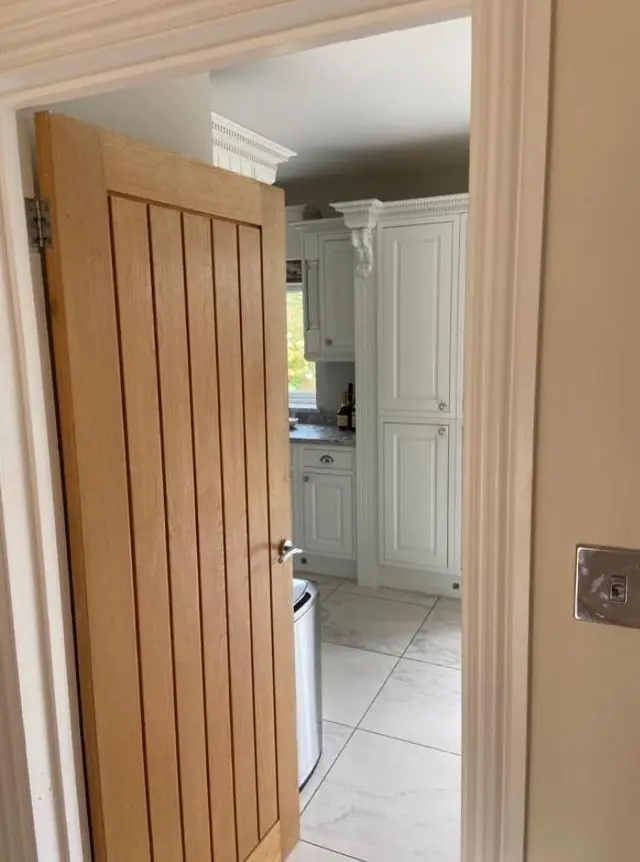
Oak door opening onto a kitchen, with off-white walls and freshly glossed frame

Inside the old houses, plank doors with ledges and braces hang in frames that have settled into the walls over centuries. Skirtings, where they exist, follow walls that are rarely straight, so cutting in is done freehand along the actual line of the wall. An eggshell or a flat oil finish usually suits this joinery better than high gloss, which picks out every ripple in old timber.

The bungalows at 44-54 High Street, the houses at St Nicholas Court and the rest of the ribbon development are simpler. Flush or panelled doors, MDF or softwood skirtings and standard architraves take a water-based satin or gloss well. Somewhere between the two are the farm conversions at Top Farm, Glebe Farm and Grove Farm, with large new joinery set against old stone, where a clean line against rough walling matters as much as the coats themselves.

Doors on the pavement edge

Where a cottage door opens straight onto the High Street footway, it has to be painted and still close and lock by the end of the day. We start the door early in the working day, pick a quicker-drying exterior product in cool weather, and leave a cone and wet-paint sign on the pavement until it is touch dry. The door is left on the latch or wedged slightly ajar, never propped across the path, so people can still walk past.

There is more about the village and the other work we cover there on our Great Doddington area page, and the painter and decorator cost guide explains what affects the cost of woodwork.

Last updated by Dean, DH Painter & Decorator.
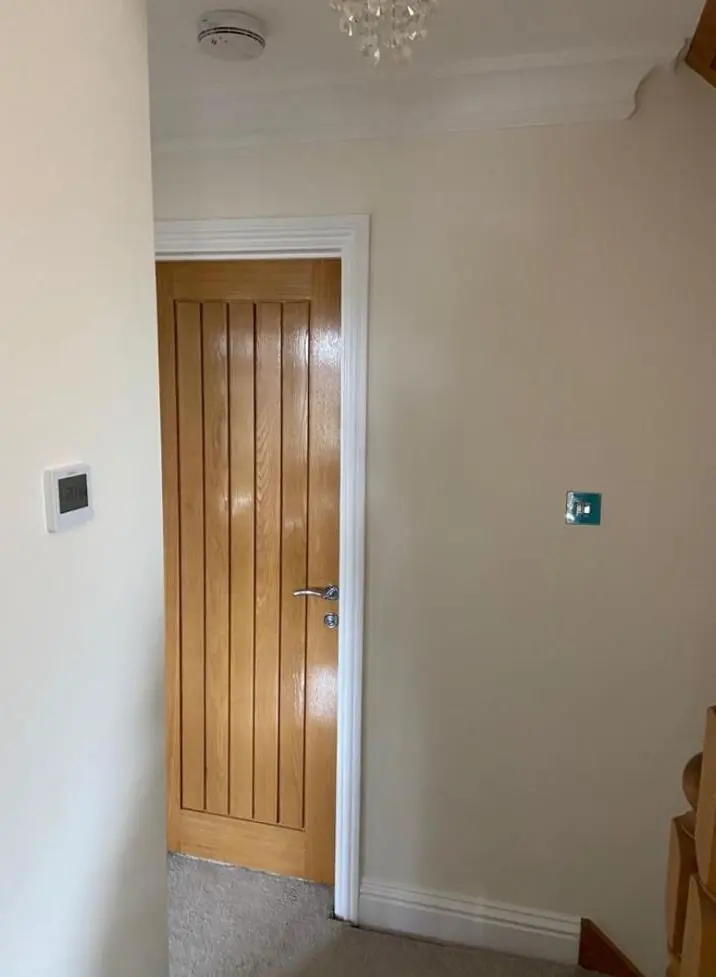
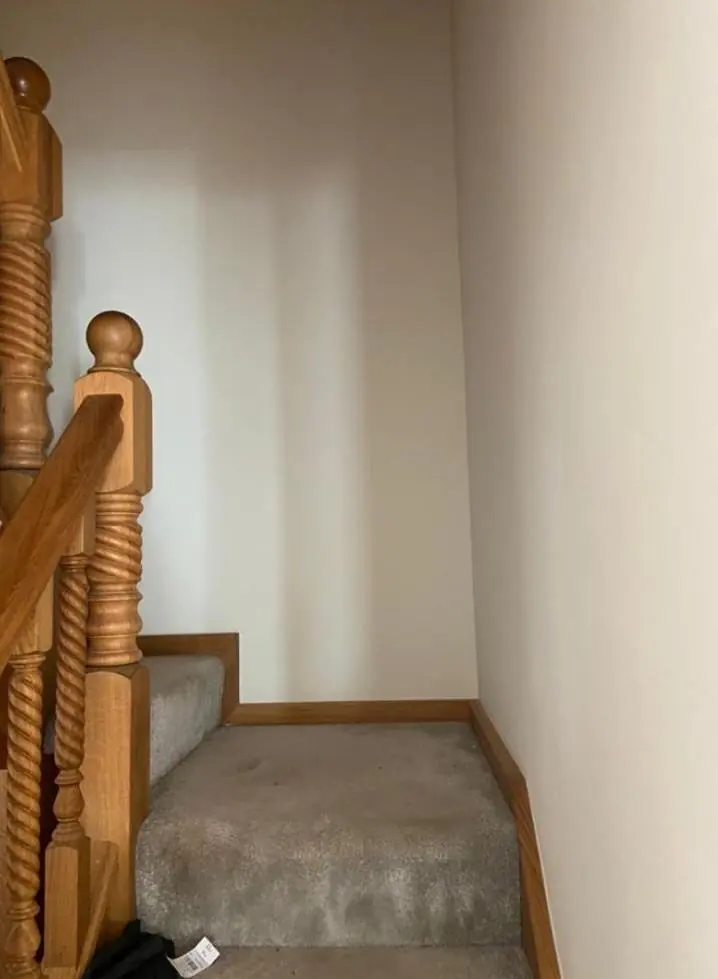
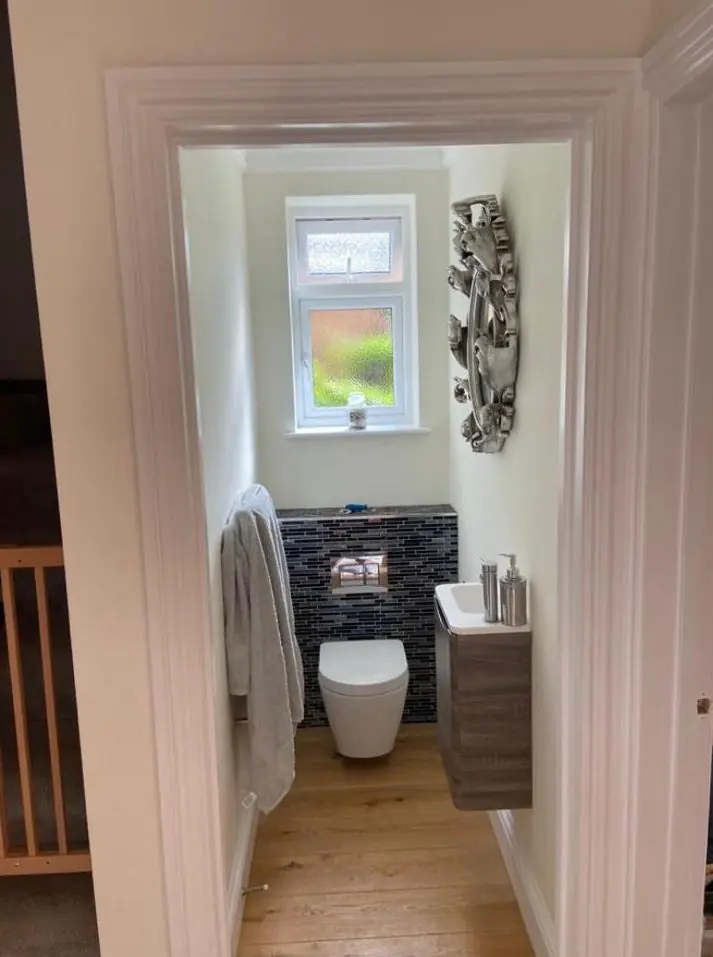
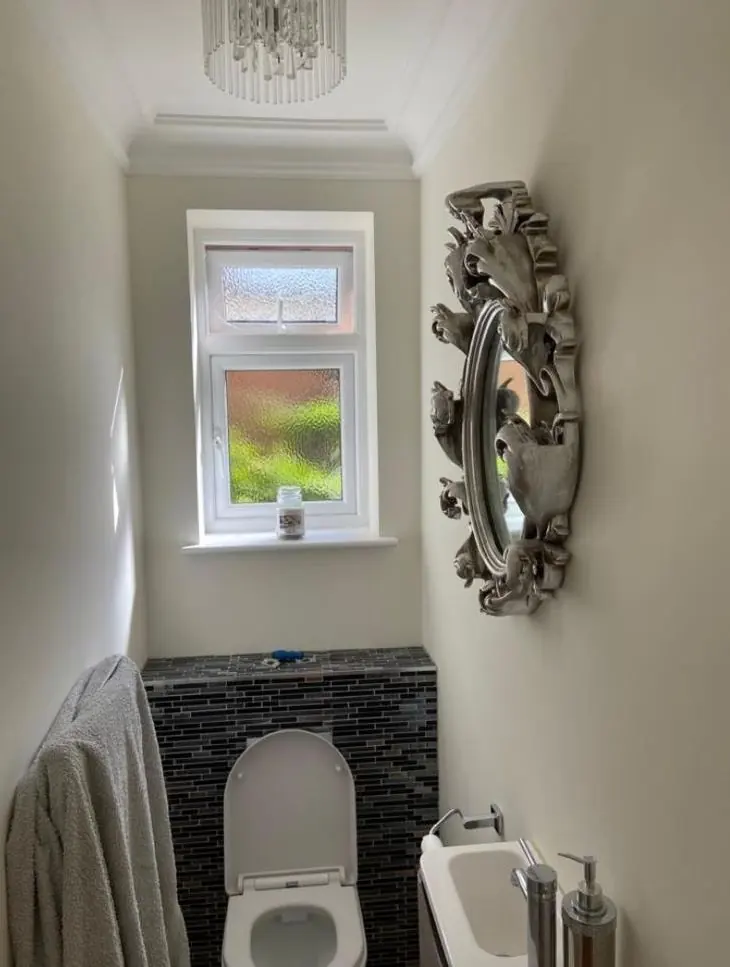
Close-up of an oak door with a lacquered finish beside white gloss architrave Landing wall painted warm cream around an oak door with white gloss architrave Staircase with oak barley-twist spindles and newel post, walls painted soft cream Cloakroom WC seen through a white-painted architrave, cream walls and gloss woodwork finished Hallway with crystal chandelier and cream walls, new oak doors waiting to be hung Cloakroom with cream walls, white coving and window frame painted, ornate mirror hung

Doors, skirtings & woodwork in Great Doddington: your questions answered

Can't see your question? Call us on 07539 779 036 and we'll happily talk it through.

Can you repaint the front door of a listed cottage in Great Doddington a different colour?

Repainting a listed door in its existing colour is normally straightforward, but a new colour or material on a listed door can require consent from North Northamptonshire Council. Several houses in the village are listed, and the Old Vicarage is Grade I. We can repaint like-for-like straight away, and if you want a change, it is worth asking the council's conservation officer before any paint is bought.

Why does my south-facing door in Great Doddington wear out faster than the back door?

The village sits on the valley side above the Nene with open views to the south and south-east, so doors and casements on those faces take strong sun and wind-driven rain. Sunlight degrades the finish while rain soaks the bottom rail, so the timber moves more. A microporous paint, and repainting the exposed faces more often than the sheltered ones, keeps the wood sound without redoing the whole house.

Do you use heat guns to strip paint near the thatched cottages on the High Street?

No. With thatched roofs at 24 and 26 High Street and old, dry joinery throughout the historic core, we do not use flame or heat stripping in the historic core. Old paint comes off with scrapers, chemical strippers and wet abrasive paper, which also keeps dust down if earlier coats contain lead.

Will the internal doors in a 1960s bungalow on the High Street need the same treatment as a cottage?

No. The bungalows and ribbon houses outside the conservation area have modern flush or panelled doors and machined skirtings, so a good clean, a light sand and two coats of a water-based satin or gloss usually does the job. The breathable, oil-based systems we use on the old cottage joinery are not needed there, which keeps the work simpler.

What customers say about Dean

Most of our work comes from recommendations and returning customers. These are real reviews from customers after the job was finished, in their own words.

More customer reviews

After completing my gates I was then assured Dean was more than competent to repaint the inside of my property from top to bottom. It’s a large 4 bedroom house and was done to a very high standard. Once again I would highly recommend him.

Customer review Gates, then a full four-bedroom interior

I contacted Dean to get the outside of the house painted; the house is all roughcast render. He has done a fantastic job; the house is looking brand new. The same he did for our garage, painted our bedrooms x2, did extra jobs for us like skirtings and door frames, and painted even our gates. I could not recommend him enough; he is attentive, smiling, always on time, and nothing too much; I am so happy with what Dean has done; he went above and beyond. I have recommended him to all my friends and family.

Read full review
Customer review Roughcast render, garage, bedrooms and gates

Dean did a great job for a good price i'd be very happy to recommend him always on time polite and friendly.

Customer review Painting and decorating

Start your project

Get a free painting and decorating quote

Tell us a little about the job and we'll arrange a visit to look at it properly. Quotes and advice are always free, with no obligation.

What happens next

  1. We get back to you to arrange a convenient time to visit.
  2. Free visit. We look at the job and talk through colours, finishes and any repairs.
  3. Written quote. A clear price covering preparation, materials and the finish we agreed.

Request a free quote

Please enter your name.

Please check your email address.

Please enter a valid phone number.

Prefer to talk? Call 07539 779 036.

Call 07539 779 036Call nowFree quote