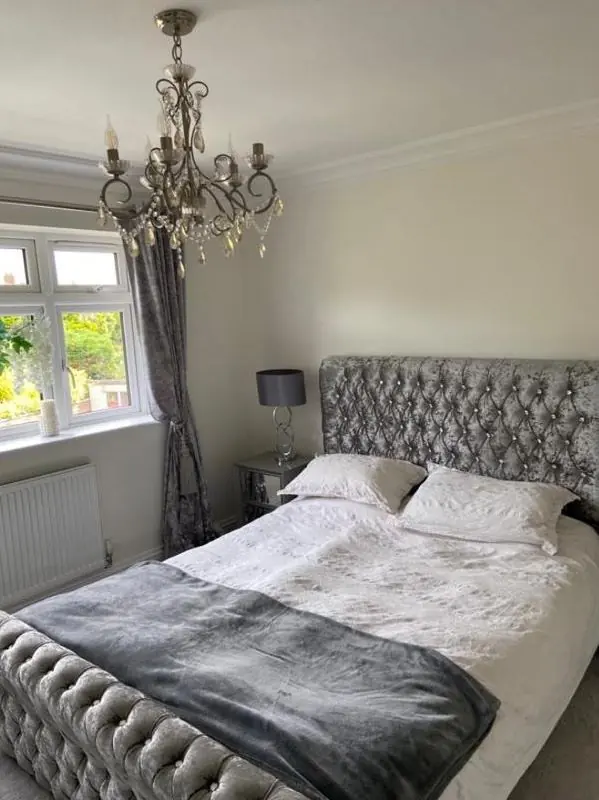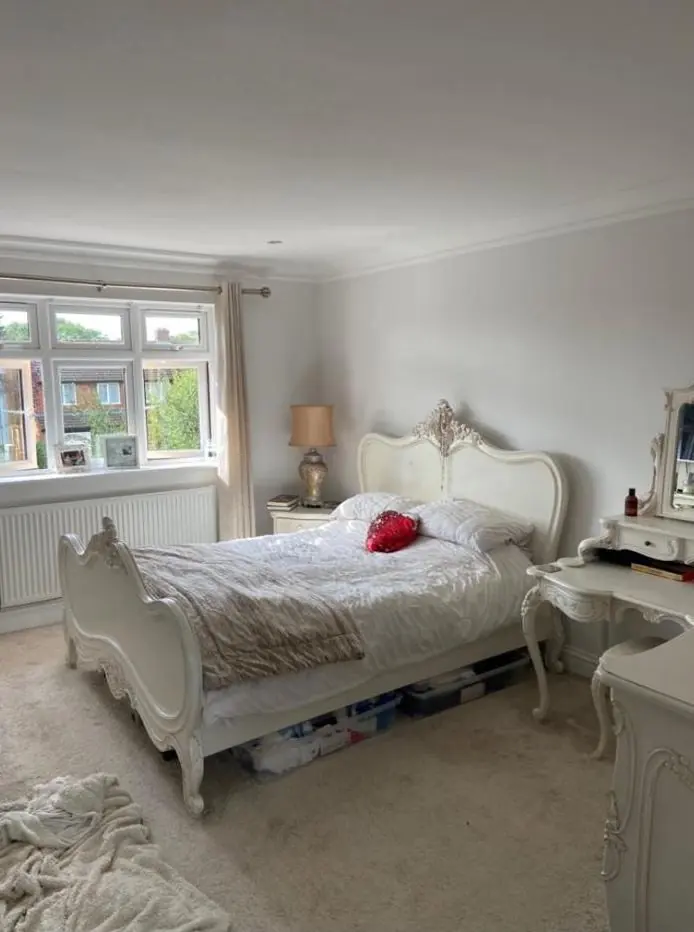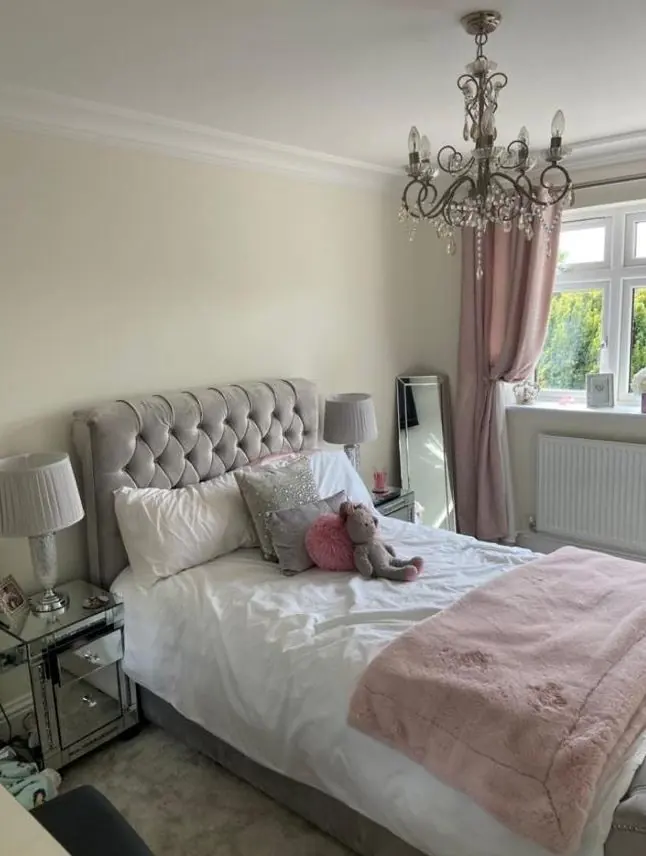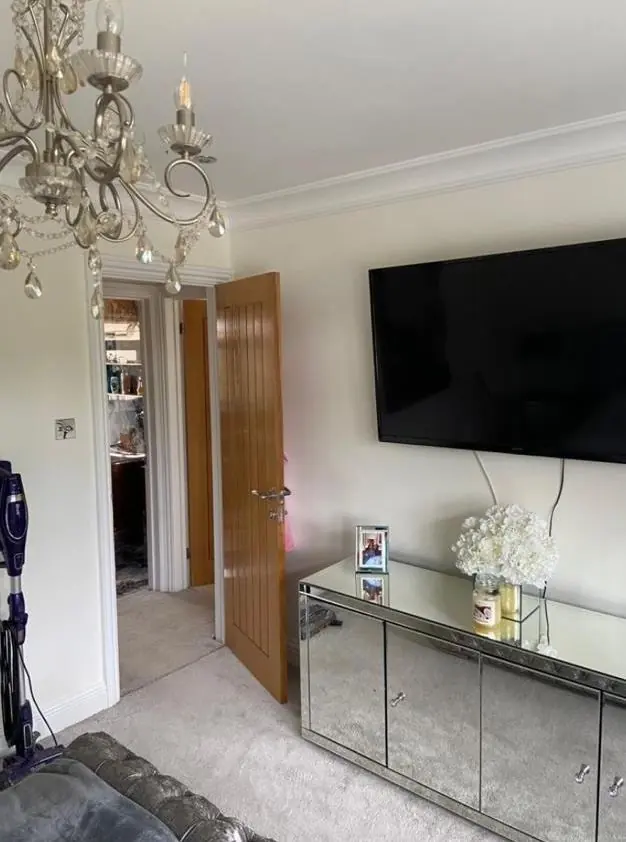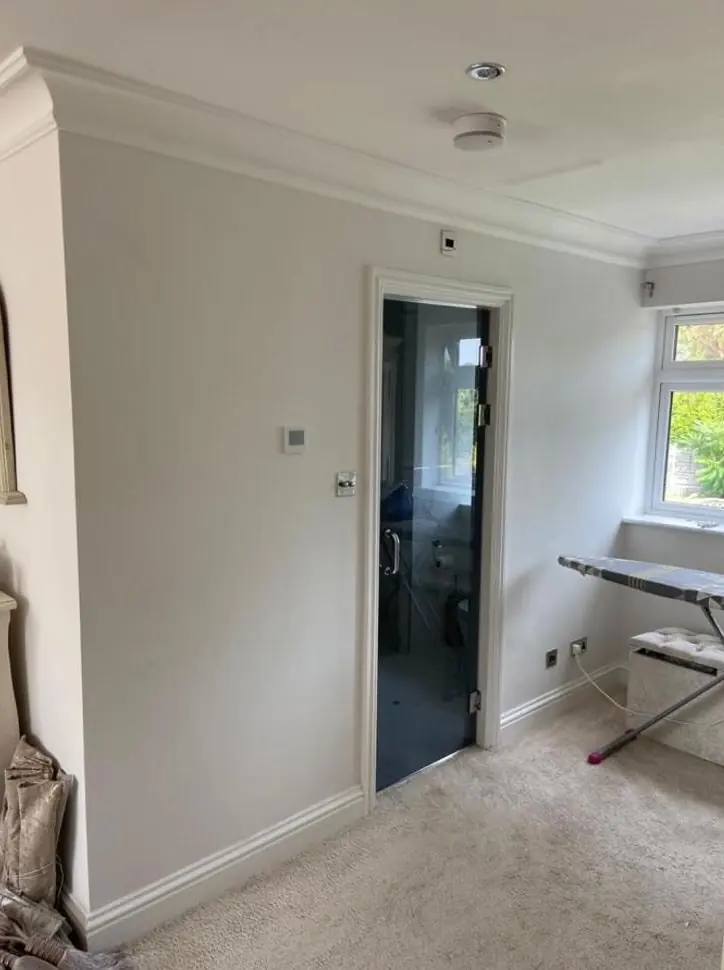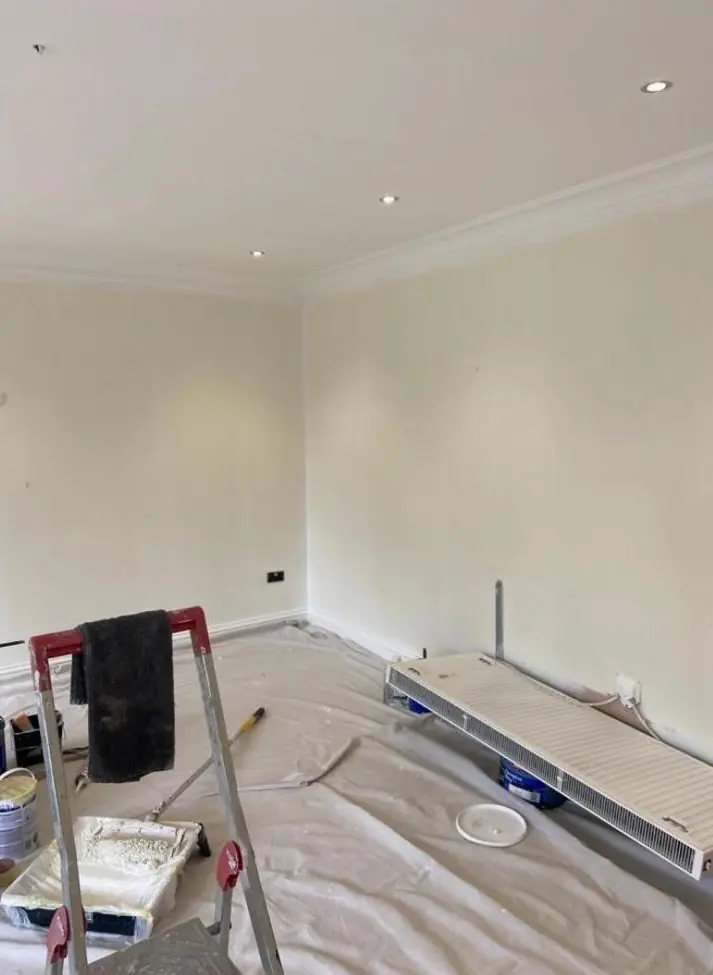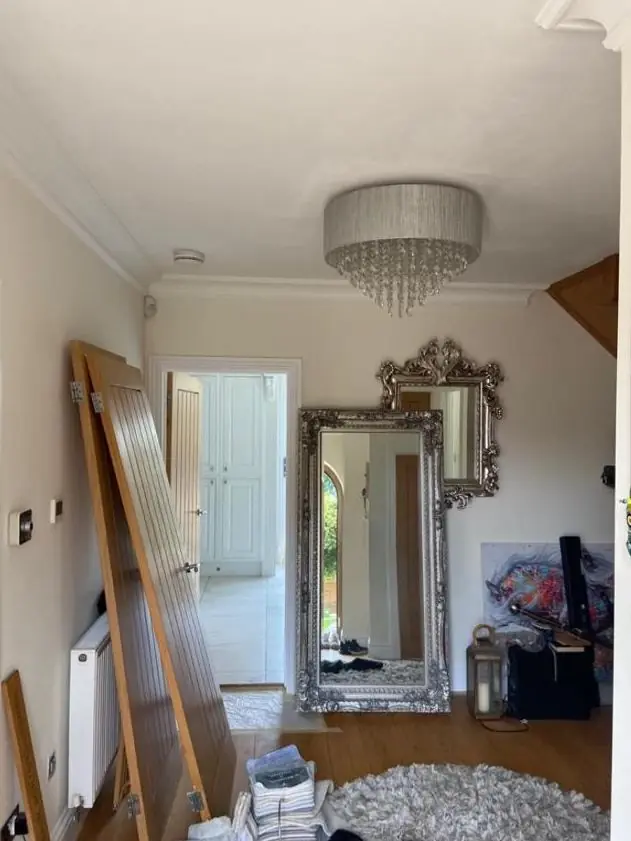
DH Painter & Decorator paints interiors in Hartwell, the NN7 village on the edge of Salcey Forest, roughly 6.5 miles south of Northampton town centre. Dean handles everything from 17th and 18th-century limestone cottages, where walls need breathable paint, to the council-built and 1960s-70s estate houses.
Hartwell Green cottages: thick stone, low rooms, later plumbing
The oldest houses in Hartwell were built along the main road across Hartwell Green, the old common on the edge of Salcey Forest, in the 17th and early 18th centuries. They are coursed limestone rubble, some only one storey with an attic, and 38 Forest Road is a lobby-entrance house put up by John Mould in 1681. Inside, that means solid walls, low ceilings, wooden lintels over the openings and attic bedrooms where the ceiling follows the slope of the roof.
Piped water only reached the village shortly before the First World War, so the bathrooms, kitchens and pipe runs in these cottages all came later, often in more than one round of alterations. The plaster shows it: patches around old pipe routes, chased-in cables, blocked-up openings and walls that drift in and out along their length. Preparation on a Park Road or Forest Road cottage takes longer than the painting. Patches are feathered out so they vanish under the finish, and badly scarred walls are often better lined before they are painted.
Solid limestone in lime mortar needs to let moisture out. On original lime plaster we normally suggest a breathable or mineral emulsion, because vinyl paint can hold damp in the wall and start to blister or powder just above the skirting. Where an earlier modern coat is already flaking, it comes off before anything new goes on.
Listed interiors on Park Road and Forest Road
No conservation area is recorded for Hartwell, yet a dozen buildings in the parish are listed, among them the thatched cottage at No. 52 Park Road, Old Forge Cottage at No. 41, and the Grafton estate pair on Forest Road dating from about 1840. Listing covers the inside of a building as well as the outside. Repainting walls and woodwork like for like is ordinary upkeep, while stripping historic finishes or altering a feature can need the council’s consent. If your home is listed, Dean will point out anything in the quote worth checking with the council first. The Gothick iron casements on that Forest Road pair also need their inside faces treated as metal: rust taken back and a metal primer applied, not the usual timber undercoat.
Salcey Avenue, Salcey Close and the later estates
Most Hartwell homes are much newer than the green. The first council houses were ready in 1932, with more in the mid and late 1930s, and the post-war council estate of Salcey Avenue and Salcey Close came after 1945. From the early 1960s private houses spread along Lower End and the south-east of the main street, and a 1973 consent beyond the old village edge brought another 153. These have regular plastered walls, standard ceiling heights and long straight runs of skirting, so each room goes quicker.
Homes of that age, the newest now past fifty, tend to need the same things: hairline cracks along ceiling joints, scuffed stair walls, kitchen walls that need degreasing, and woodwork glossed so many times it has yellowed and gathered runs. A full repaint here usually includes sanding that old gloss back and moving to a water-based satin or eggshell that stays white.
| Hartwell house type | What the walls are like | What we usually suggest |
|---|---|---|
| 17th-18th century limestone cottages | Lime plaster on solid stone, patched after later services | Breathable or mineral emulsion, lining paper on rough walls |
| Grafton estate cottages, c.1840-1875 | Solid squared limestone, iron casements at 4 and 6 Forest Road | Breathable wall paint, metal primer on casements |
| 1930s-1950s council houses | Plastered, settlement cracks common | Crack repair, then a hard-wearing matt |
| 1960s-70s private estates | Regular plastered walls and ceilings | Standard emulsions, water-based trim paint |
Booking interior work 6.5 miles out of town
From our Northampton base Hartwell is a drive of roughly 7 miles, either through the forest or round by Roade, and the village has had no nearby station since Roade’s closed in 1964. We bring everything by van and book interior work in continuous days, so a room is never left half-finished between visits. In a small cottage that usually means finishing one floor while you carry on living in the other.
How we protect furniture and floors and the order we work in is set out on our main interior painting page. For the other services we offer in the village, see the Hartwell area page, and for budgeting, our guide to decorating costs.
Last updated by Dean, DH Painter & Decorator.