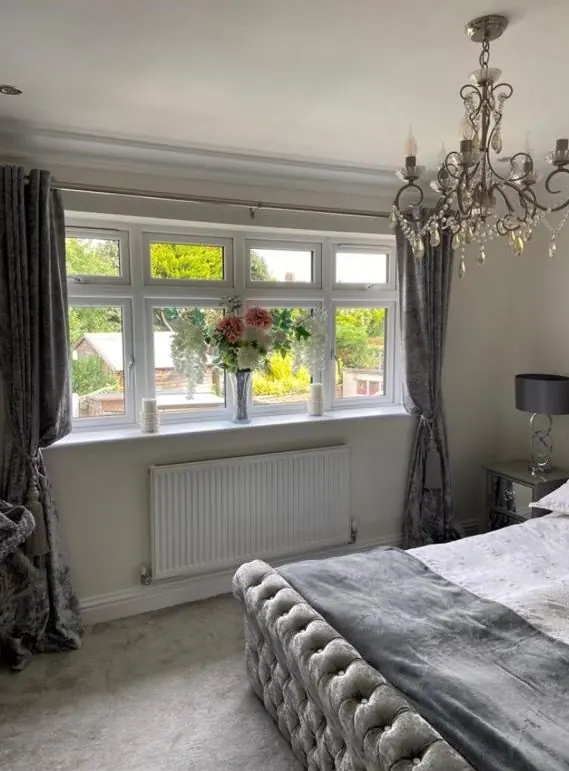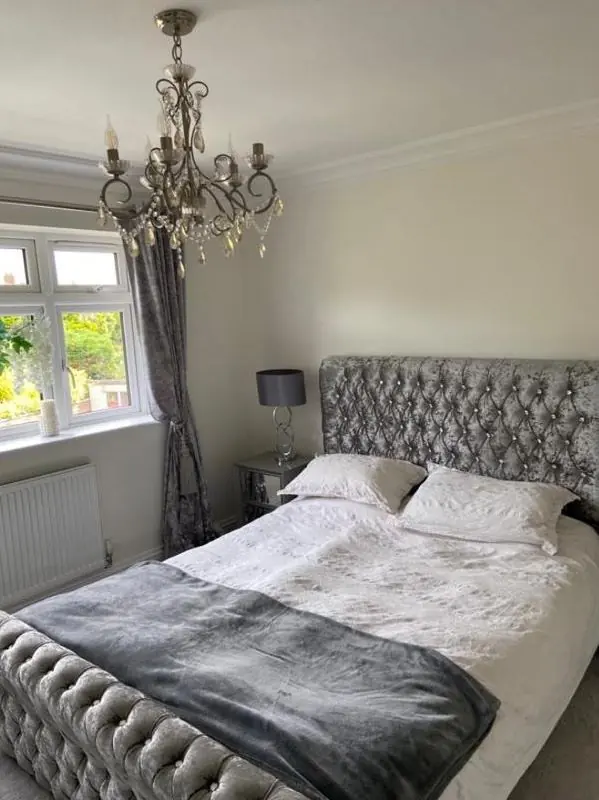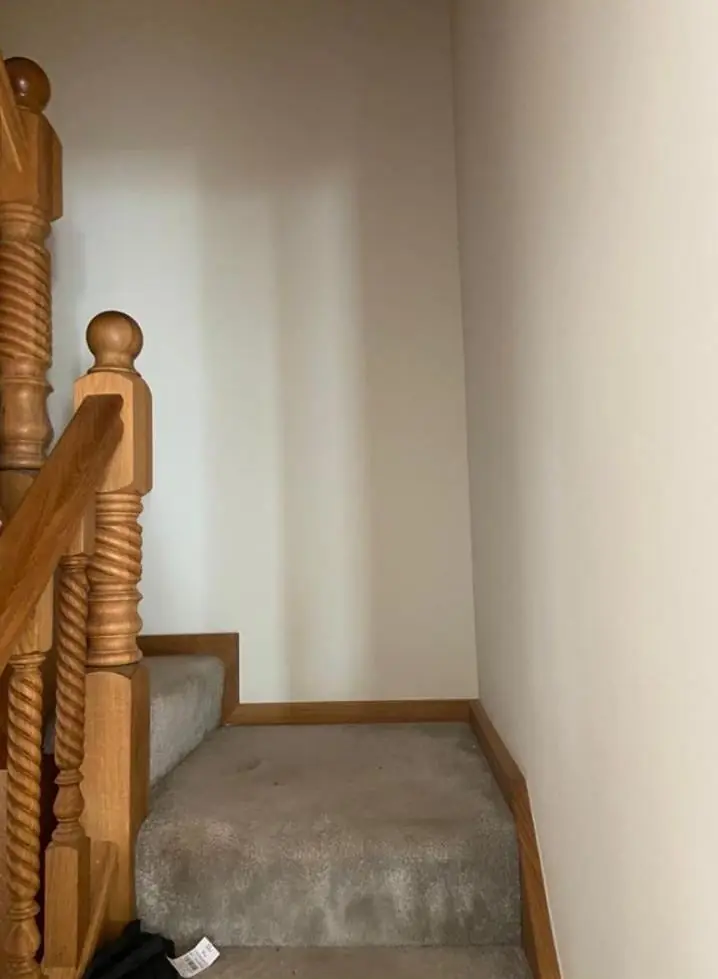
DH Painter & Decorator paints interiors in Hackleton, the NN7 village on the B526 about 4.7 miles south-east of Northampton town centre. Dean matches the paint to the wall: breathable or mineral finishes over lime plaster in the old Main Road cottages, and standard emulsions in the estate houses built between 1939 and 2000.
Two kinds of wall along one main road
Hackleton grew as a single line of houses beside the B526, and the inside of a home here depends on which side of that history it was built. The limestone cottages and farmhouses facing Main Road are the older half, with listed houses dating from the late 1600s to a 1763 date stone at 76 Main Road. Behind them, mostly to the north, run the cul-de-sacs of semis, detached houses and bungalows put up between 1939 and 2000. Painting a sitting room in one has little in common with painting a sitting room in the other, so Dean looks at the walls before talking about paint.
Low ceilings, deep reveals and lime plaster in the old core
The stone cottages have solid walls of coursed limestone in lime mortar, and many still carry lime plaster inside. Ceilings are low, window reveals are deep because the walls are thick, and very little is square. Most of the hours go on cutting in: along ceiling lines that wander, into reveals around small casements and along the edges of old timbers. The Jetty Cottages, thought to date from around 1720 and built of early irregular brick, have beamed ceilings, and painting between joists is slow brush work rather than rolling.
Solid walls need to breathe. A standard vinyl emulsion over lime plaster tends to hold moisture in the wall, and the paint then blisters or turns powdery a little above the skirting. On these walls we usually suggest a breathable emulsion or a mineral paint, and we take any failing modern coat back first instead of painting over it. Hairline crazing gets a flexible or lime-based filler. Hollow patches are pointed out on the visit so you can decide whether a plasterer is needed before decorating.
Hackleton has no conservation area, but seven Grade II buildings stand on Main Road, and listing applies inside as well as out. For a listed home, like-for-like redecoration is the sensible starting point, and Dean will flag anything that might count as an alteration.
Estate houses, bungalows and the newer homes on Oak Way
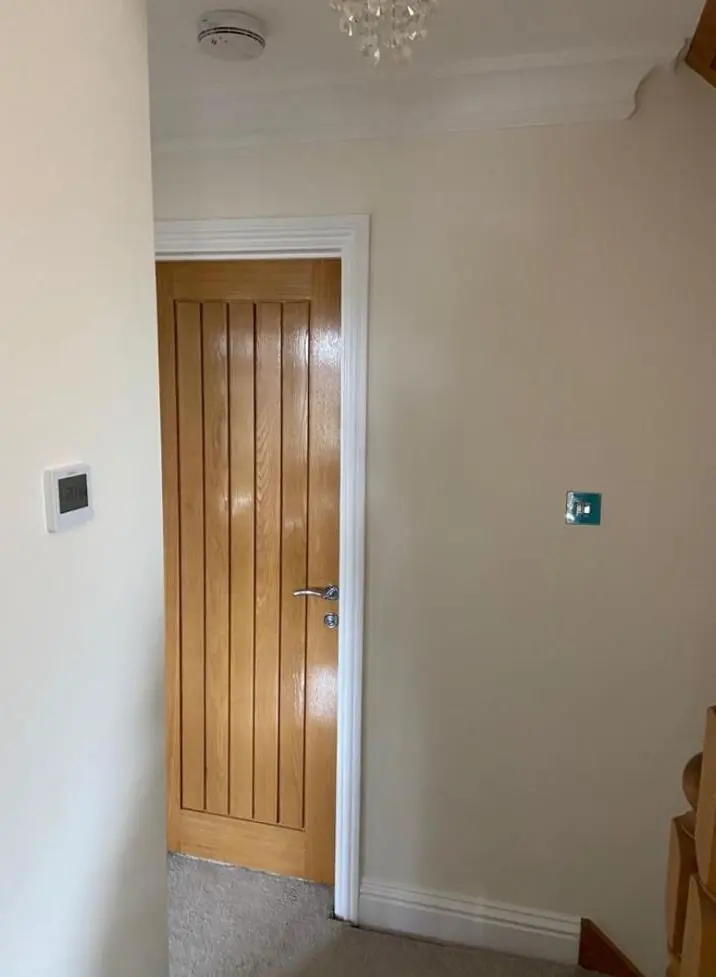
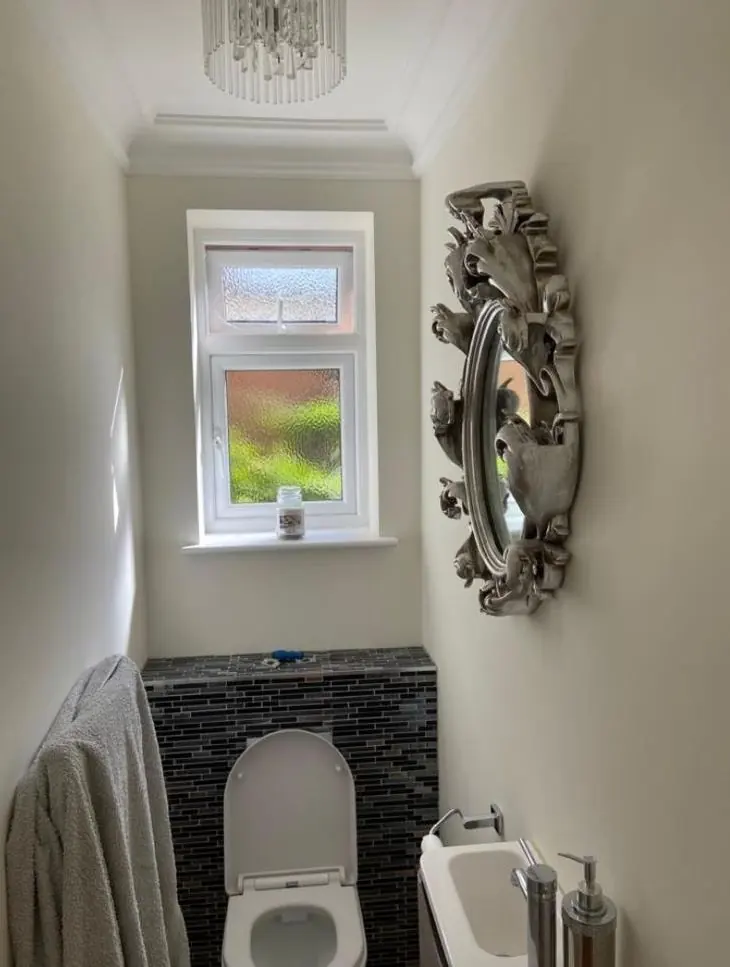
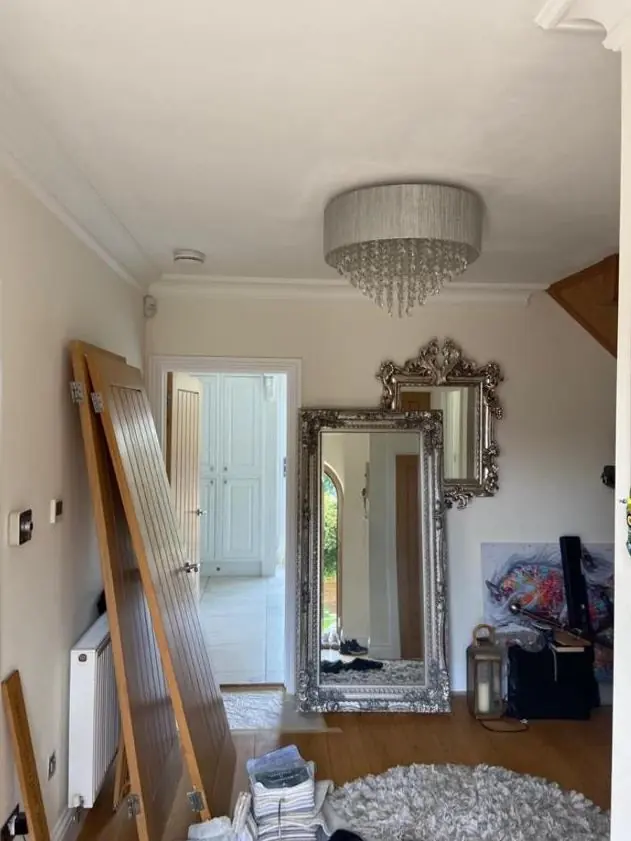
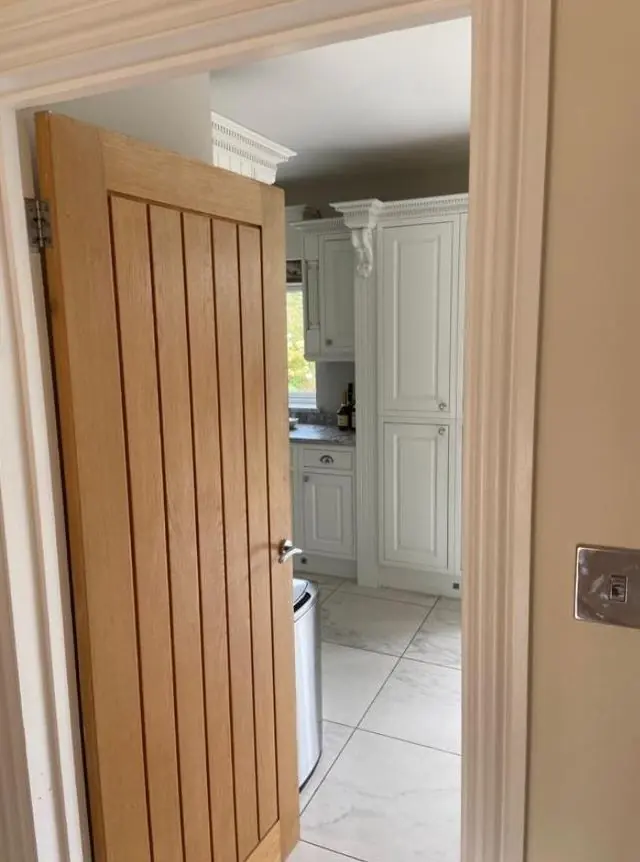
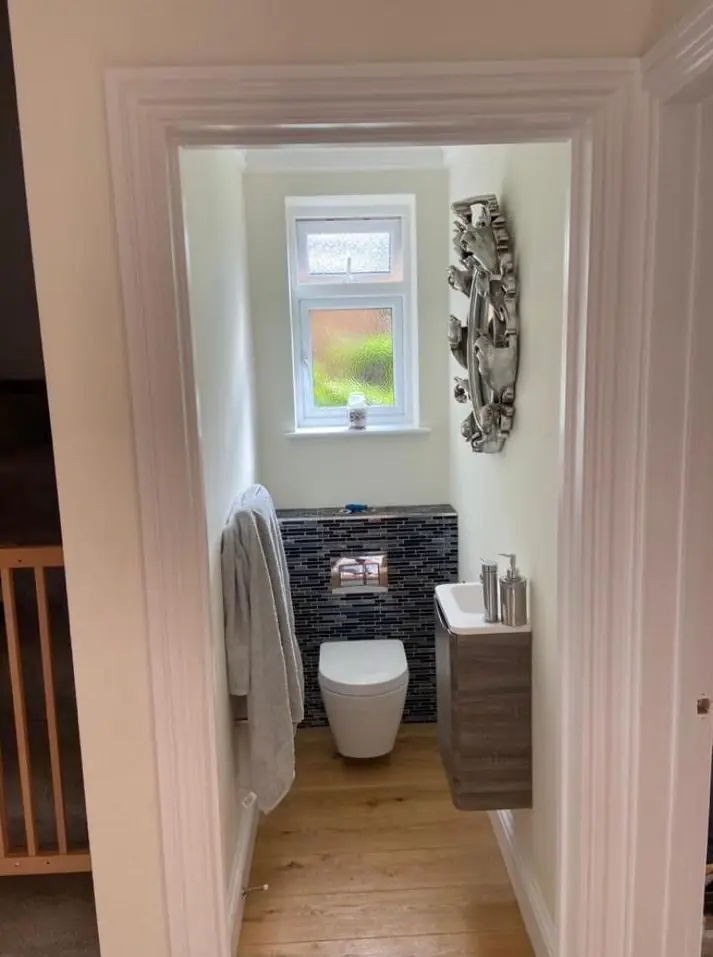
The estates behind the main road are a different job. Walls are flatter, ceilings are a standard height and rooms are regular in shape, so rolling is quick and the effort moves to preparation: filling settlement cracks, sealing old water marks on ceilings and keeping sharp lines where walls meet skirtings and door frames. Bungalows on the housing-association estate keep every room on one level, which makes access simple. On the newer homes on Oak Way and around Lyne Walk, a first redecoration often means covering the builder’s matt emulsion and filling the small cracks that open as a new house settles. A recently plastered extension needs a mist coat first, and our mist coat guide explains why. The room-by-room method we follow everywhere is set out on our interior painting page.
Getting in and out beside the B526
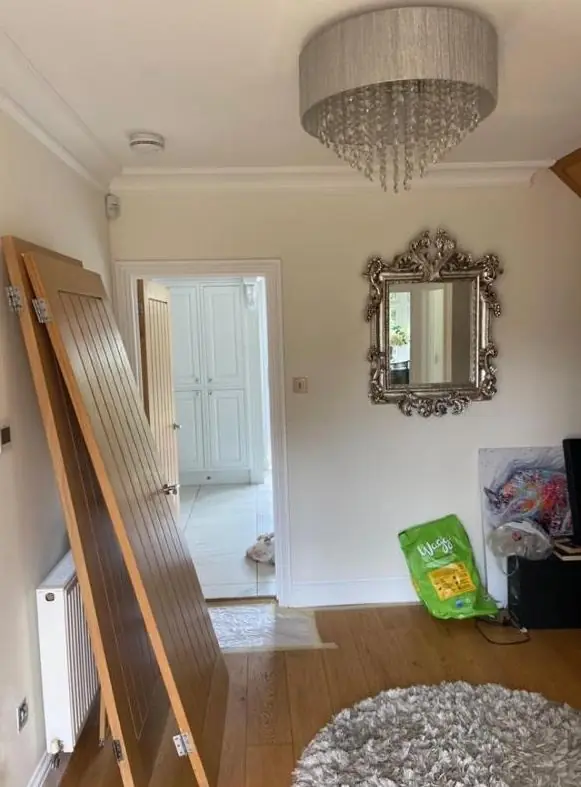
Inside work still depends on parking. The old cottages stand on the back edge of the footway beside a busy road with no front garden, and the parish Neighbourhood Plan records speeding traffic, on-street parking and narrow roads as local concerns. Some cottages on the south side sit below road level. We agree where the van goes and how dust sheets, steps and boards come in before the first day. The lane down to the village hall is narrow as well, so homes along it are planned the same way. Houses on the cul-de-sacs usually have a drive, which makes loading easier.
We cover Hackleton from our Northampton base, about 4.7 miles away along the B526. For the wider picture of the village’s houses and the other work we take on there, see our Hackleton area page.
Last updated by Dean, DH Painter & Decorator.