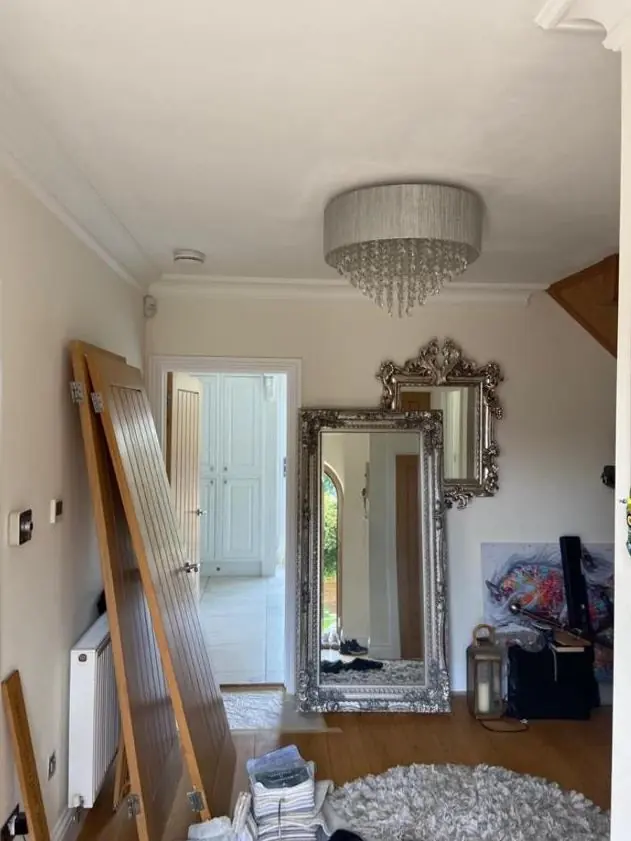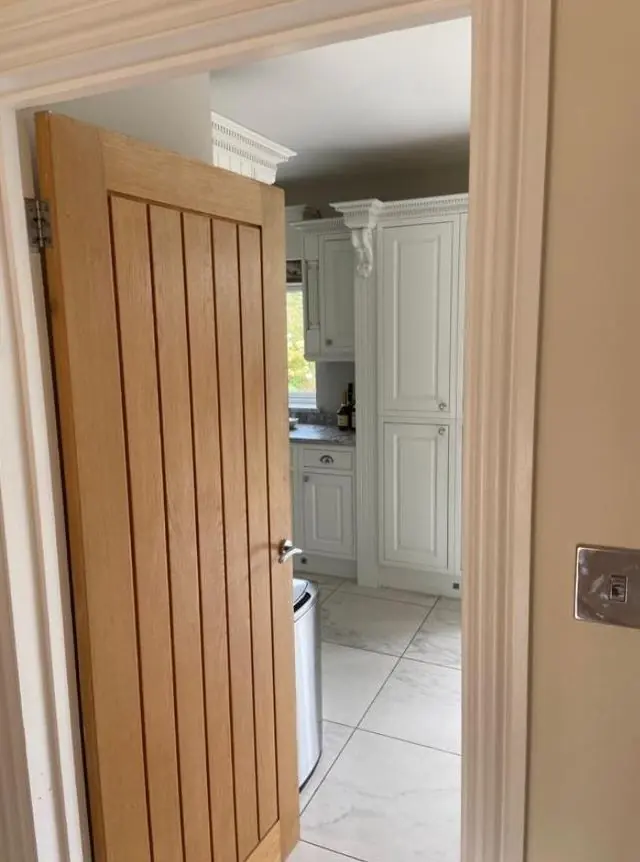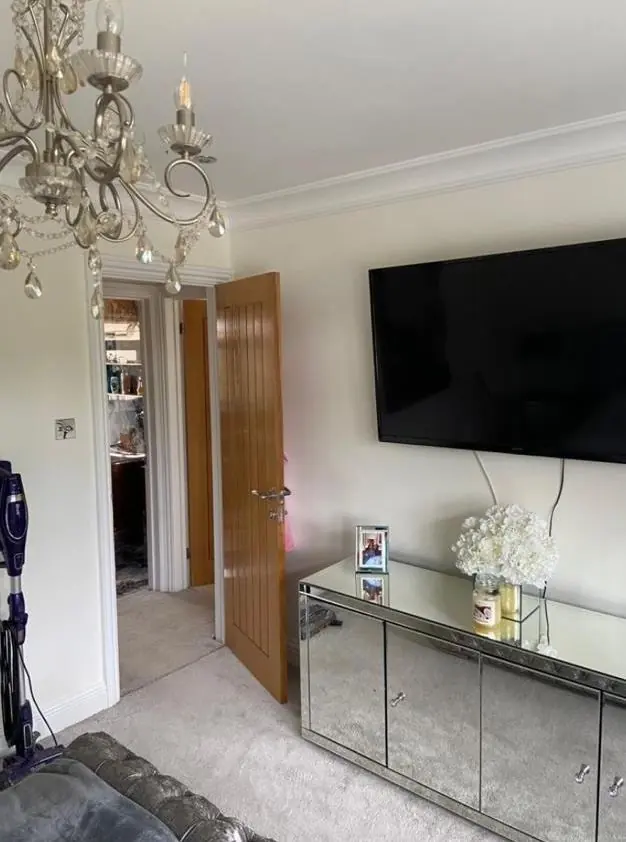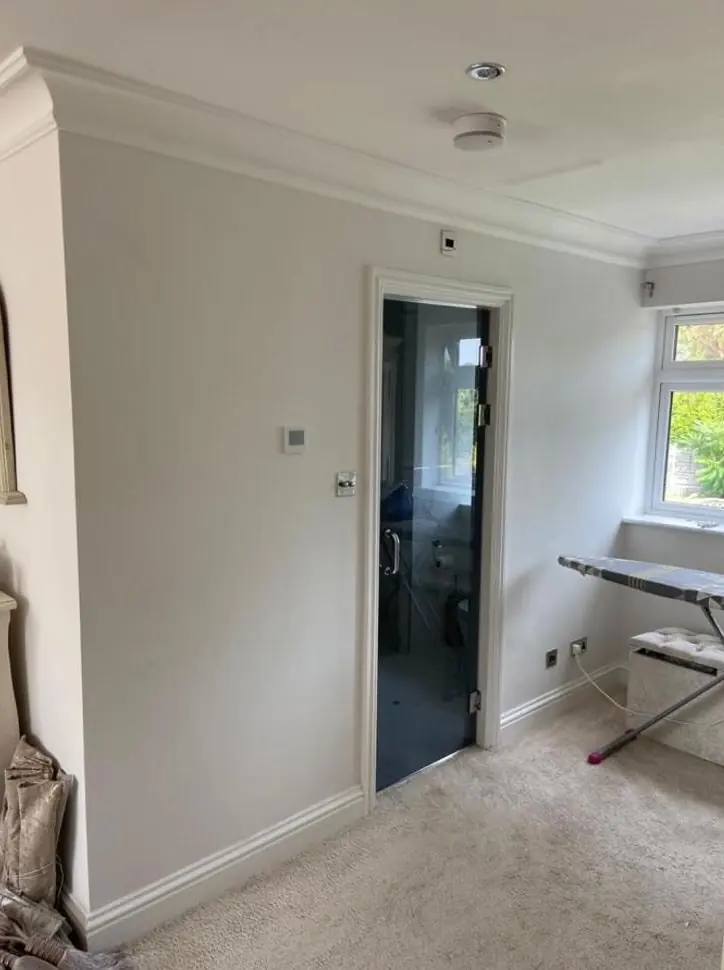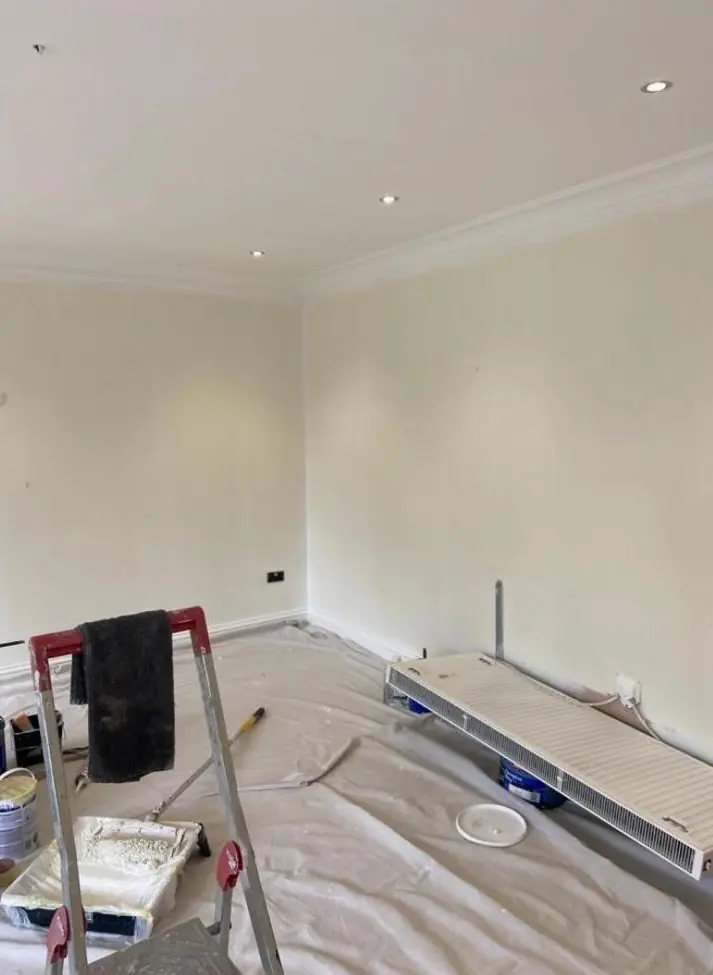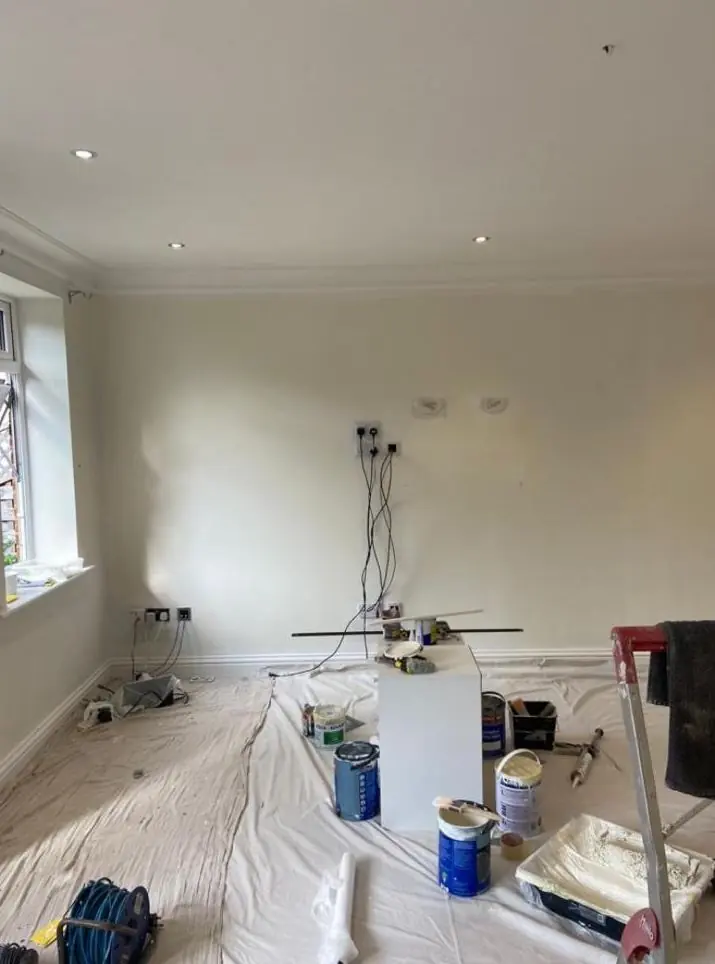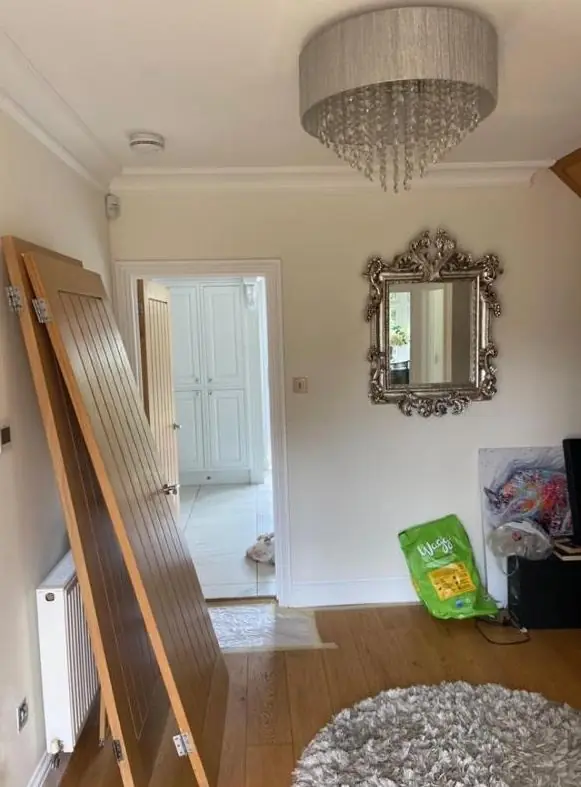
DH Painter & Decorator hangs wallpaper and lining paper in Hartwell, NN7, about 6.5 miles south of Northampton town centre near Salcey Forest. Dean prepares the uneven walls of the village's limestone cottages before papering and hangs feature papers in the 1930s to 1970s houses.
Papering walls that were never straight
Hartwell’s cottages on Park Road and Forest Road were built from coursed limestone rubble between the 17th and 18th centuries, and their inside walls follow the stone. A plumb line held against them shows the wall bowing in and out, and the corners are rarely square. On top of that, these houses had kitchens, bathrooms and pipework added after the village was connected to piped water in the years just before 1914, so most walls carry patches of newer plaster beside the old.
Paper shows every one of those faults. Before decorative paper goes up in a cottage like this, we usually hang lining paper, sometimes cross-lined (run horizontally) so its joints never sit under the joints of the finishing paper. That gives a sound, even surface and stops the patchwork of old and new plaster showing through thin papers.
Pattern choice matters more here than in a modern house. A busy, small-scale or loose botanical pattern hides a wall that wanders. Bold stripes and tight geometrics make every out-of-true corner and sloping ceiling line obvious, because the eye compares the pattern with the edges of the room. Dean will tell you on the visit which of your shortlisted papers will sit happily on your walls.
Attic rooms, deep reveals and lintels
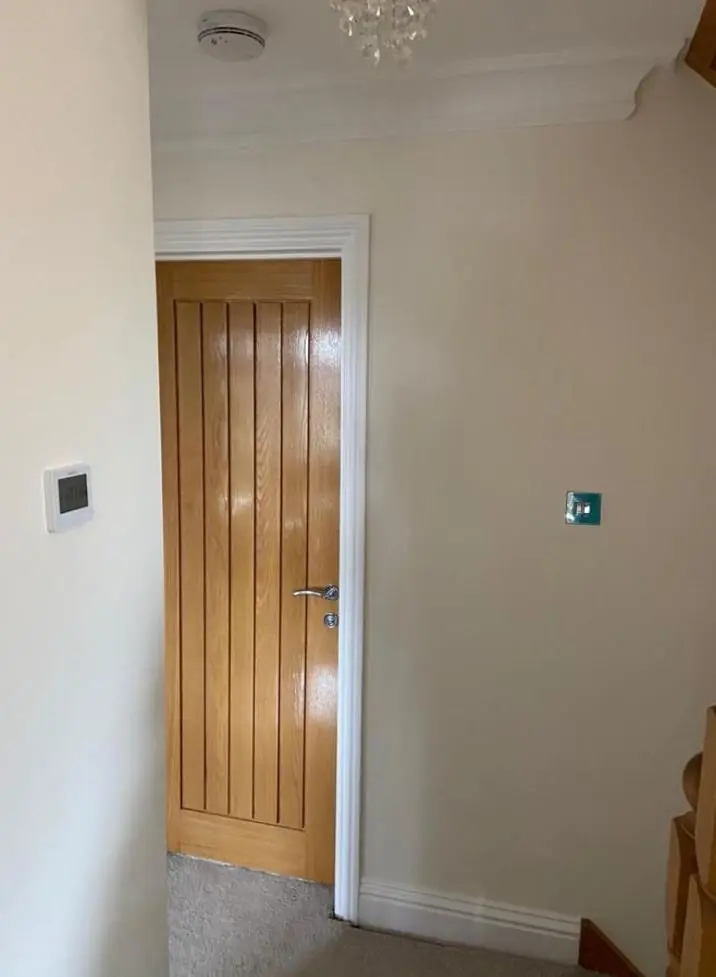
Several of the older houses are one storey with an attic, so bedrooms sit partly under the roof with sloping ceilings and dormer windows. Papering these means deciding where the pattern stops: carrying it up the slope, or ending at the wall head and painting the slope. Thick stone walls also give deep window reveals, often with a wooden lintel above, and paper has to be wrapped into those reveals neatly without bubbling at the edge of the timber.
Breathable paper on solid limestone
Solid limestone walls in lime mortar rely on drying out through their faces. A heavy vinyl wallpaper acts as a skin, and on a cold wall that can hold moisture behind it until the paste lets go or mould appears at the seams. This is worth thinking about in cottages on the forest side of the village, where tree cover keeps walls shaded and slow to dry. On those walls we lean towards paper-based or non-woven papers over lining paper, and we check for damp before anything is pasted. Papering over a damp patch only hides it for a few months.
Feature walls and stripping on the estates
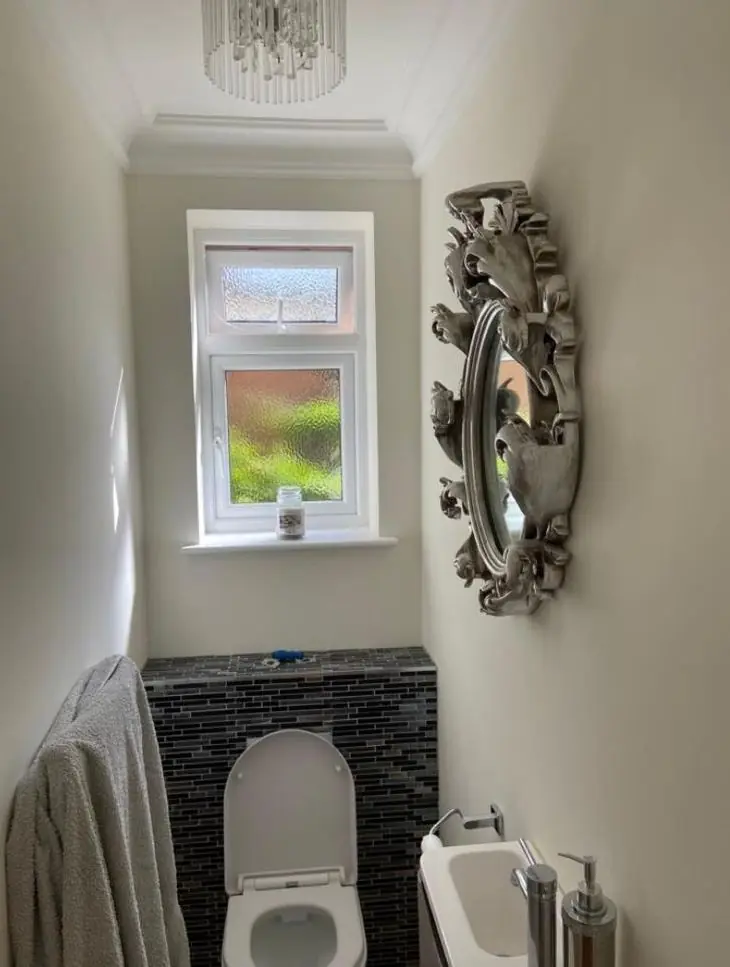
Salcey Avenue and Salcey Close, where the rural district council put up 74 homes after 1945, and the 1960s-70s private houses on the south-east side of the main street and at Lower End, are much simpler to paper. Walls are flatter and corners nearly square, so a single feature wall or a full room in a bold print works without lining in most cases.
The work in these houses is often in the stripping. Homes 50 to 90 years old commonly have several layers of old paper, some painted over, and textured papers that have been emulsioned for decades. We steam those off, repair the plaster underneath and size the wall before hanging. Things we look at on a first visit in Hartwell:
- How many layers of paper are already on the wall, and whether any are painted
- Whether the plaster under them is lime, gypsum or a mix of both
- Any signs of damp, especially on forest-facing or north walls
- The width and repeat of your chosen paper against the room’s height and reveals
Our main wallpaper hanging page explains how we strip, line and hang in more detail. For painting and other work in the village, the Hartwell area page lists what we cover.
Last updated by Dean, DH Painter & Decorator.