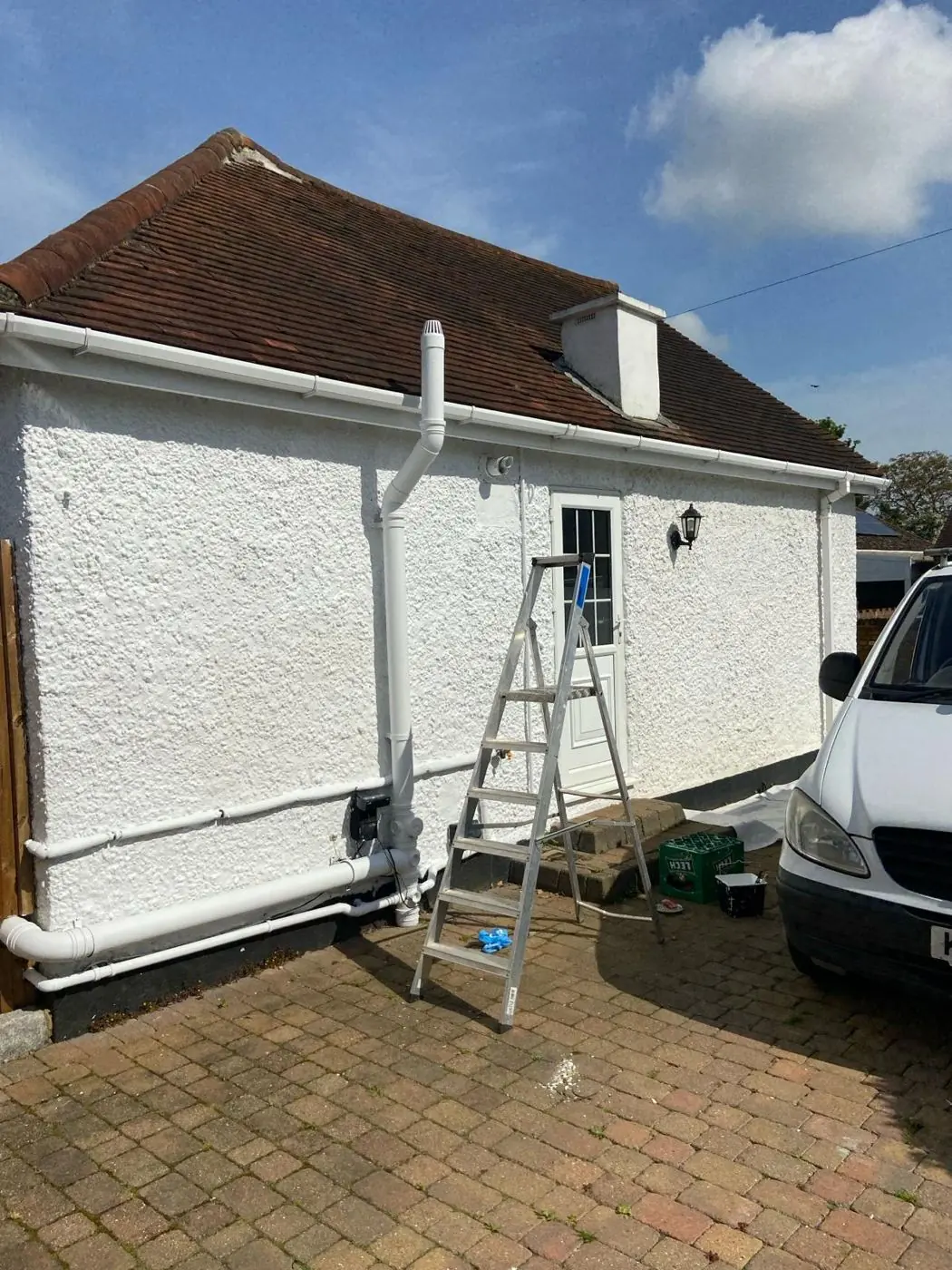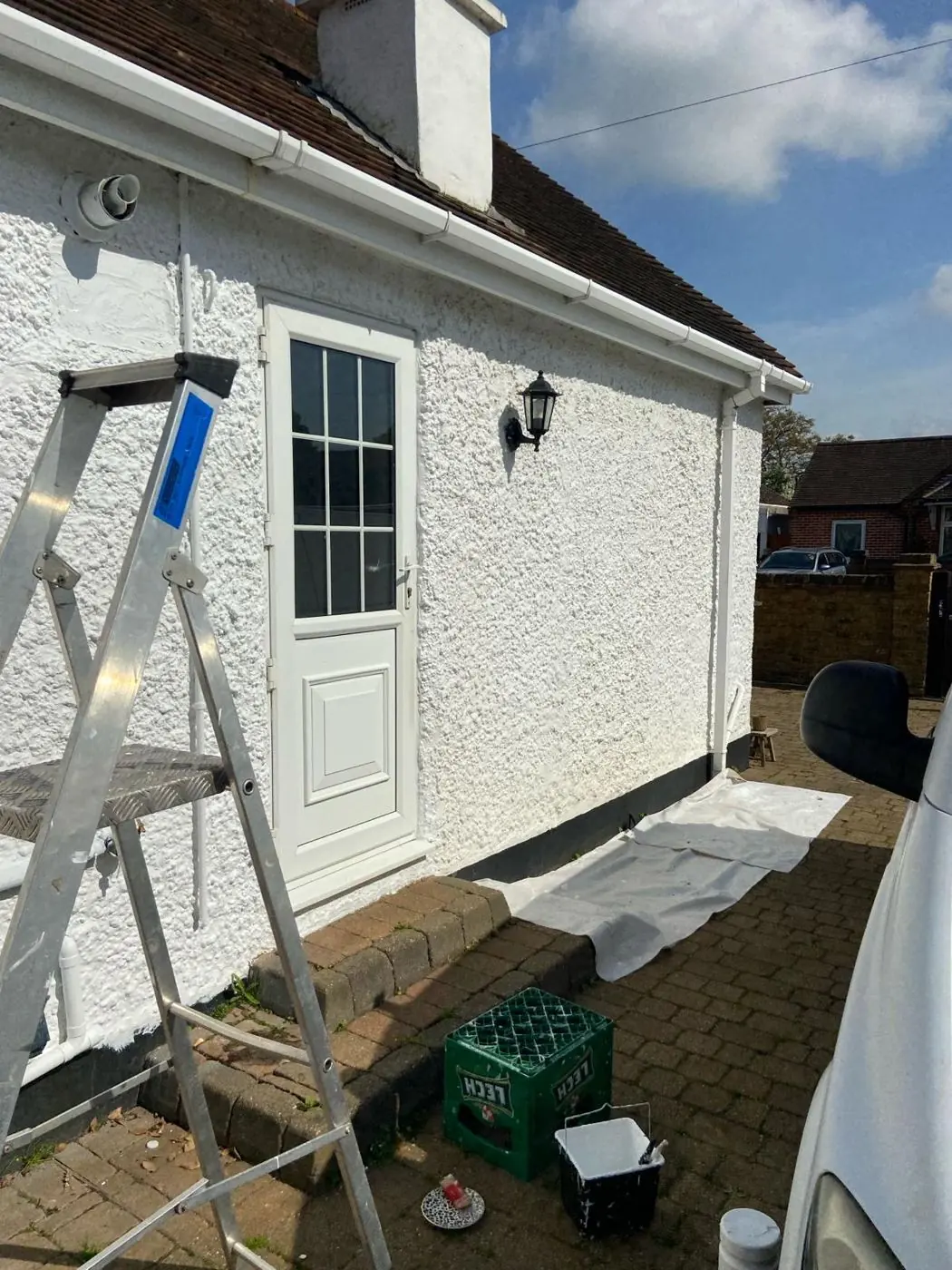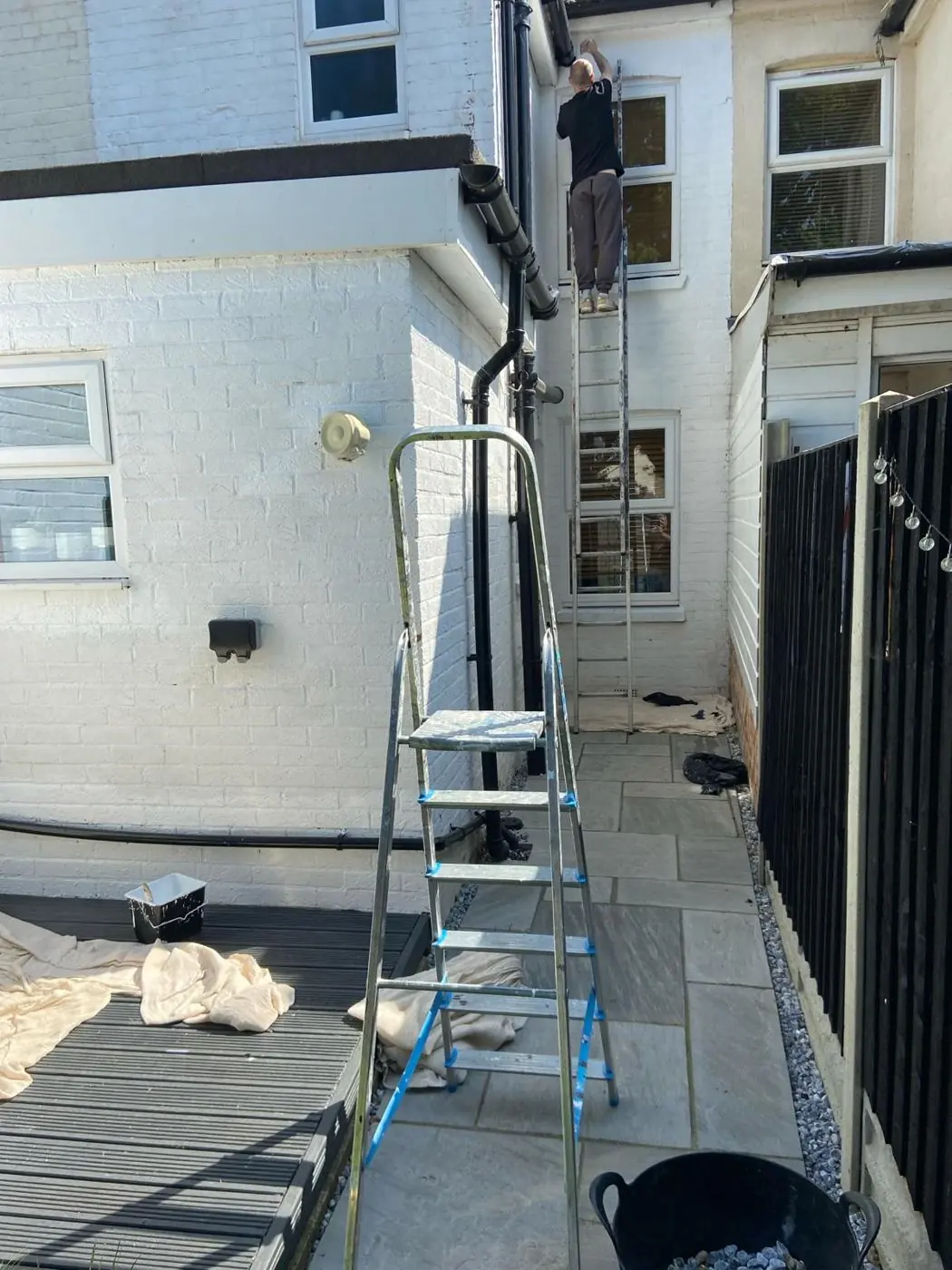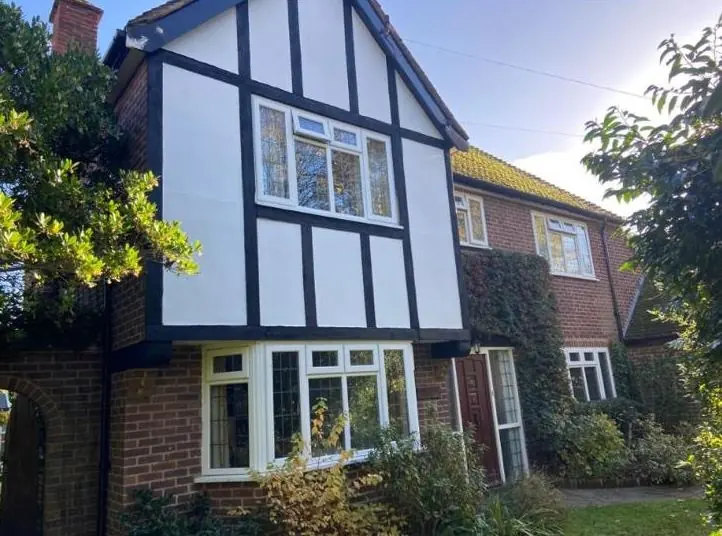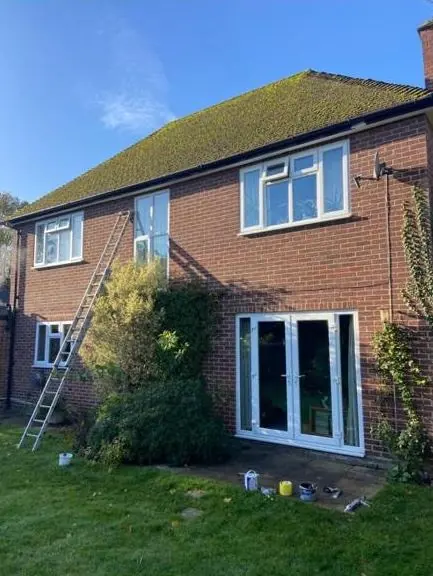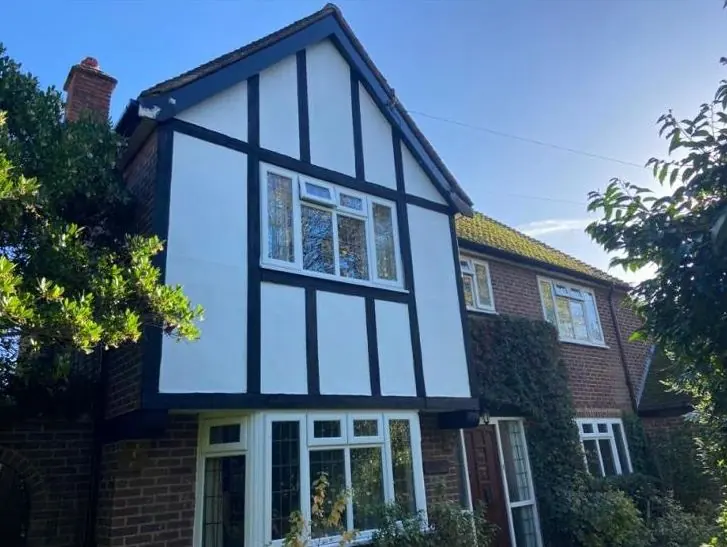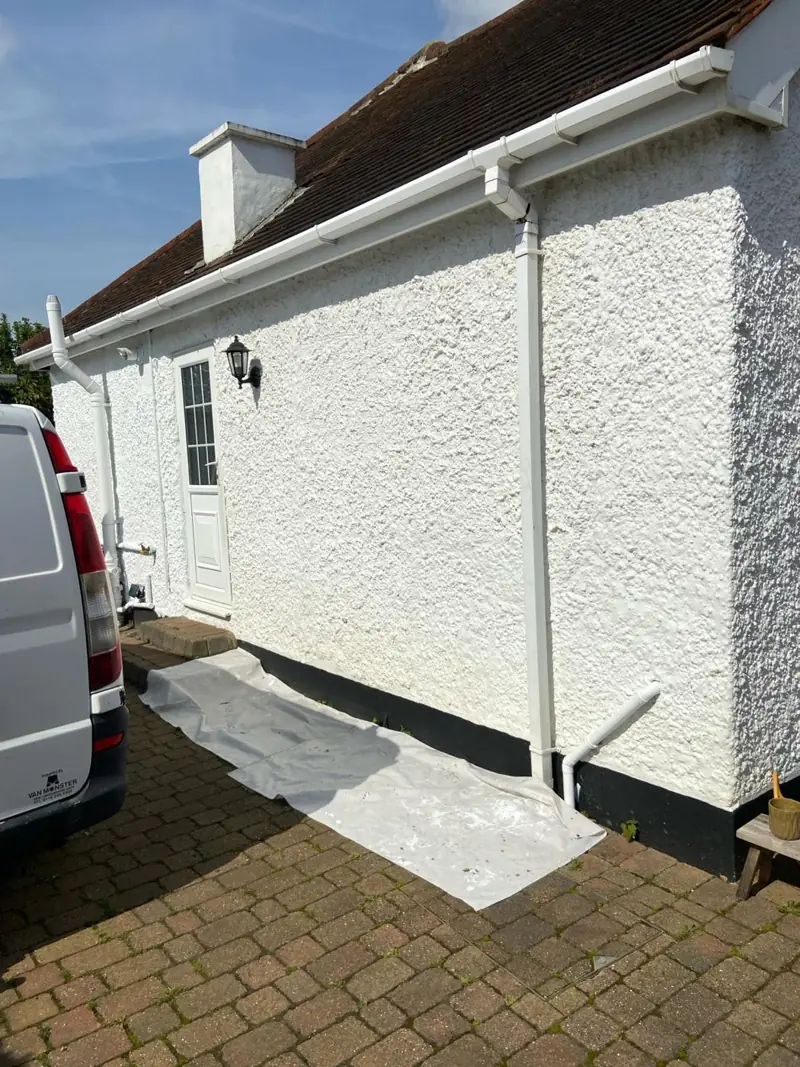
Dean paints render, pebbledash and masonry in Hartwell, NN7, about 6.5 miles south of Northampton. The village mixes pebbledash, painted limestone rubble and brick with stone dressings, so the first step on any wall is identifying what it is made of and what is already on it.
Start by reading the wall
Hartwell’s masonry is not uniform, and the right paint depends entirely on what lies underneath. Before suggesting a product, Dean looks at the substrate, the existing coating and the moisture conditions around it. The table below sets out the main wall types recorded in the village and how each is usually approached.
| Wall type | Where it appears in Hartwell | Usual approach |
|---|---|---|
| Painted coursed limestone rubble | Older cottages on Hartwell Green, including Old Forge Cottage on Park Road | Identify limewash or modern paint, then a breathable mineral or limewash finish |
| Pebbledash over stone and brick | Hartwell End House, an early 17th-century house with later additions | Check for hollow areas, then masonry paint by long-pile roller or spray |
| Brick with stone quoins | The 1889 Methodist chapel on Hartwell Green | Separate treatment for brick and stone where they meet |
| 20th-century walls | 1930s to 1970s housing at Salcey Avenue, Salcey Close and Lower End | Identified on site first, since brick, render and dash each need their own preparation |
Why soft limestone and acrylic paint don’t mix
The oldest houses in the village are coursed limestone rubble laid in lime mortar. Stone like this takes on moisture and needs to let it out again. A plastic-type acrylic masonry paint seals the face, so water collects behind it, the paint blisters and the stone and pointing start to break down. On these walls we use breathable products: limewash, mineral silicate paints or lime-compatible finishes.
Where stone has been painted before, testing comes first. If an old cottage has been coated in modern masonry paint, it may need to come off before a breathable system will work. On a listed building such as Old Forge Cottage, staying with the existing system and colour is the default, and any change may need listed building consent from West Northamptonshire Council.
Pebbledash laid over older stone and brick
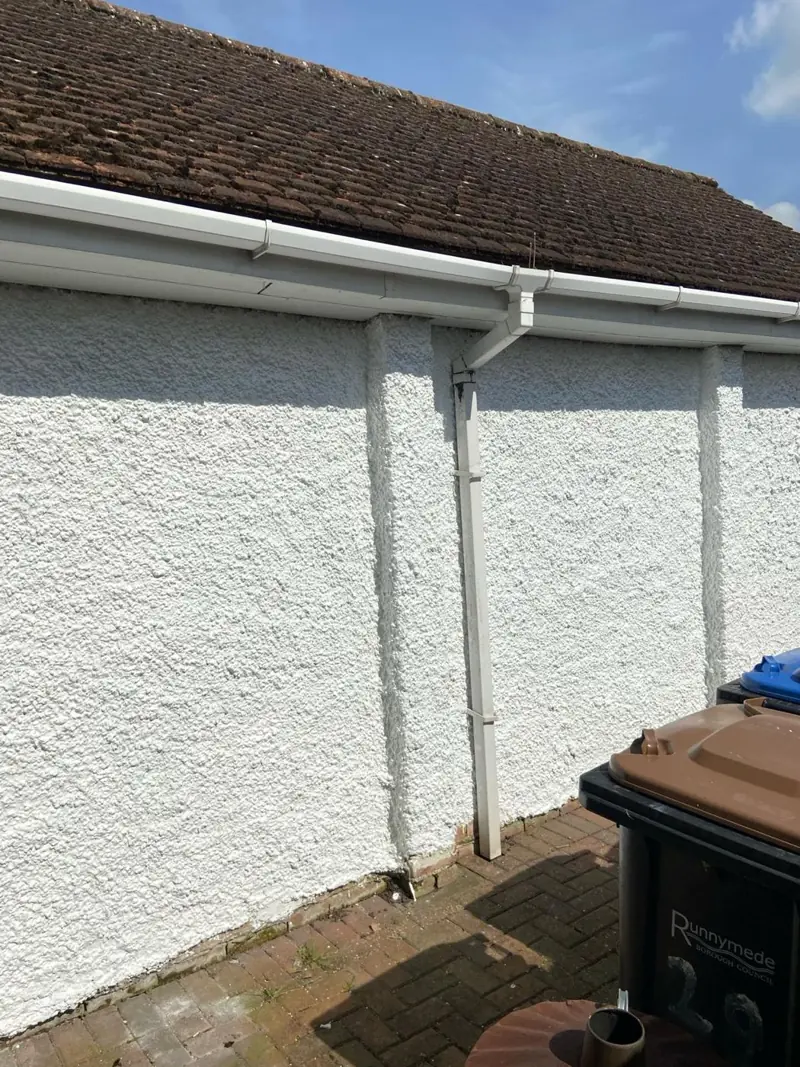
Hartwell End House is recorded as stone and brick, largely pebbledashed. Pebbledash takes a lot of paint because of its texture, so it is cut in by brush and finished with a long-pile roller or spray to get into every hollow.
The bigger risk is hidden. Dash applied over mixed backgrounds can lose its bond, so before painting we tap the walls for hollow patches and check every crack. Loose areas need repair before coating, otherwise new paint simply adds weight to render that is already coming away.
Green walls on the forest side
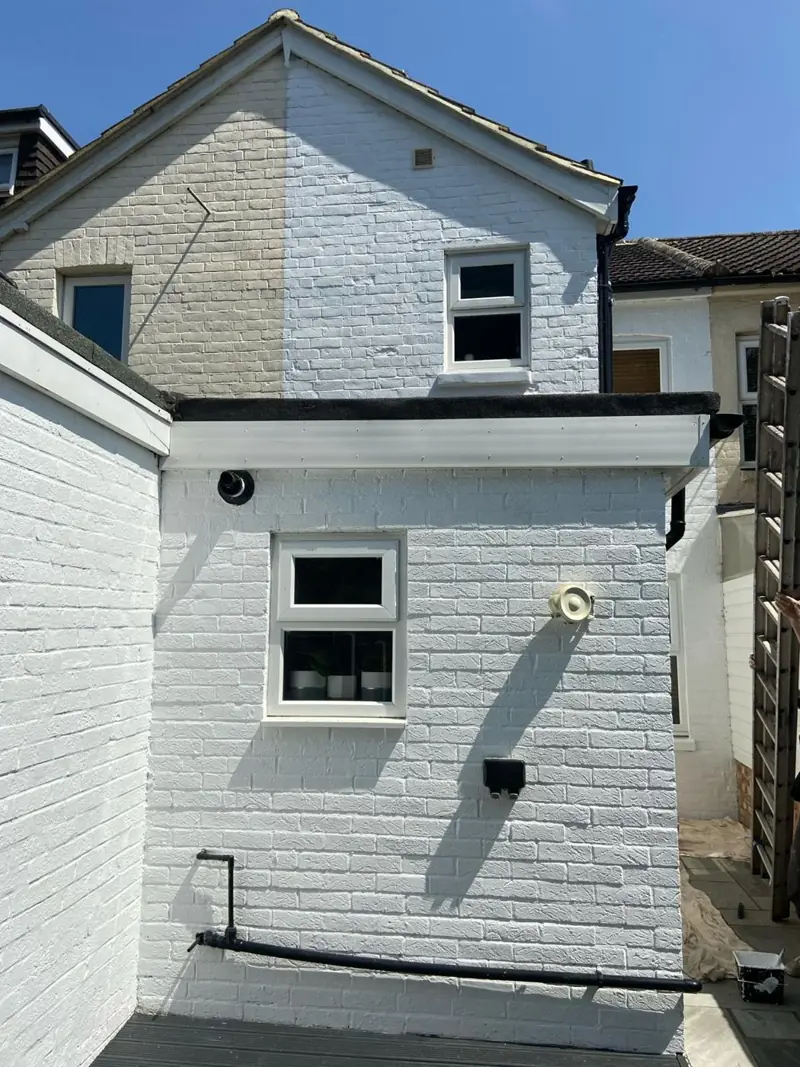
Salcey Forest borders the north-east of the parish. Houses on that side spend much of the day in shade, collect leaf litter and dry out slowly after rain, so render and stone there often go green or black with algae. That growth has to be killed with a fungicidal wash and brushed off once it has worked, or it comes back through fresh paint.
Slow drying also narrows the painting window. Masonry coats need dry walls and settled weather, which in Hartwell usually means late spring to early autumn, with shaded elevations left until they have had a good few dry days.
For a fuller explanation of preparing and coating textured walls, read our guide to painting render and roughcast. Our main render and masonry painting service covers the full process, and the Hartwell area page covers the rest of the village’s housing.
Last updated by Dean, DH Painter & Decorator.