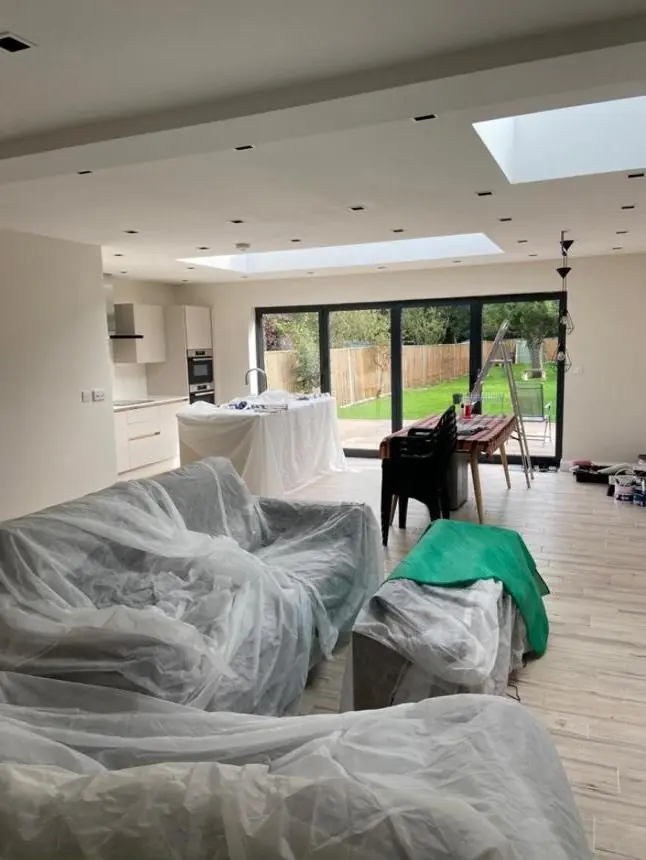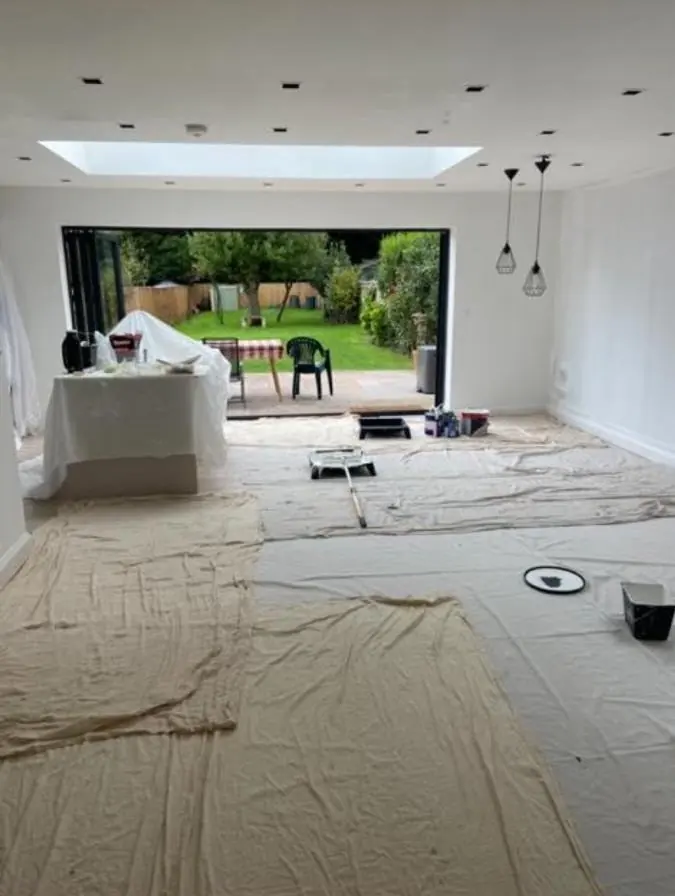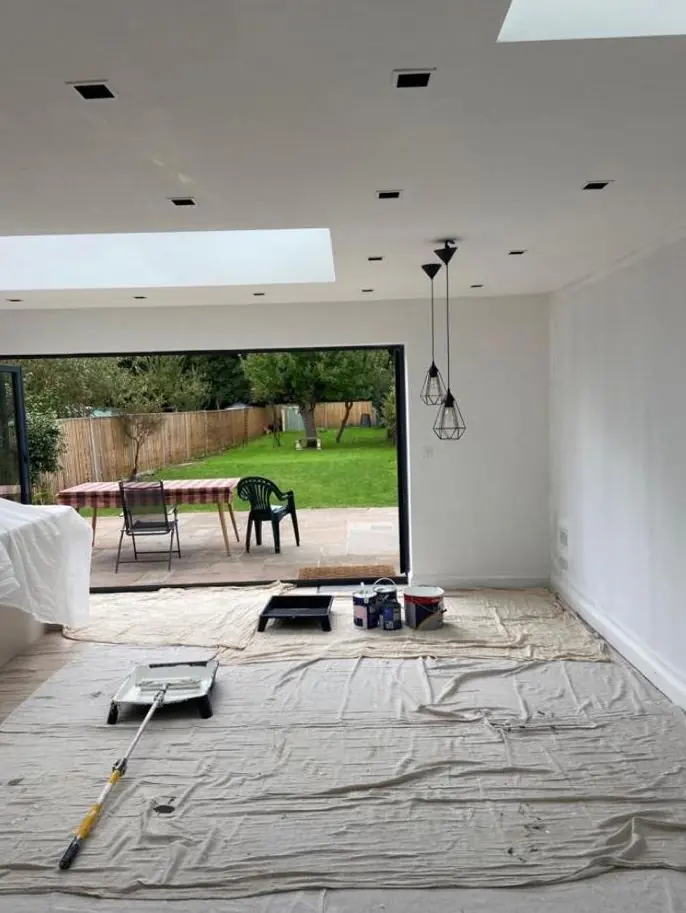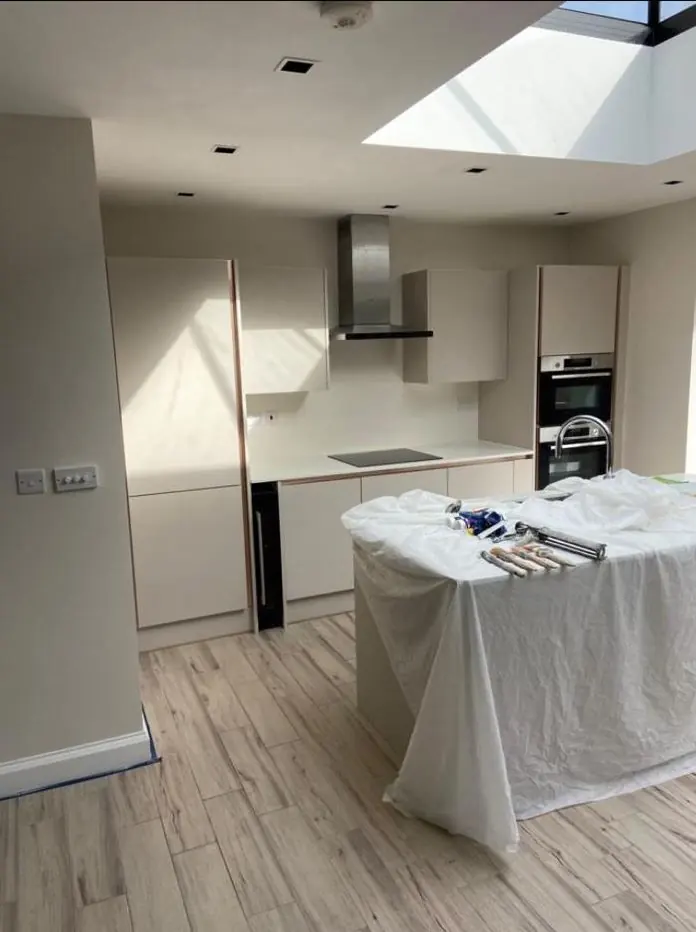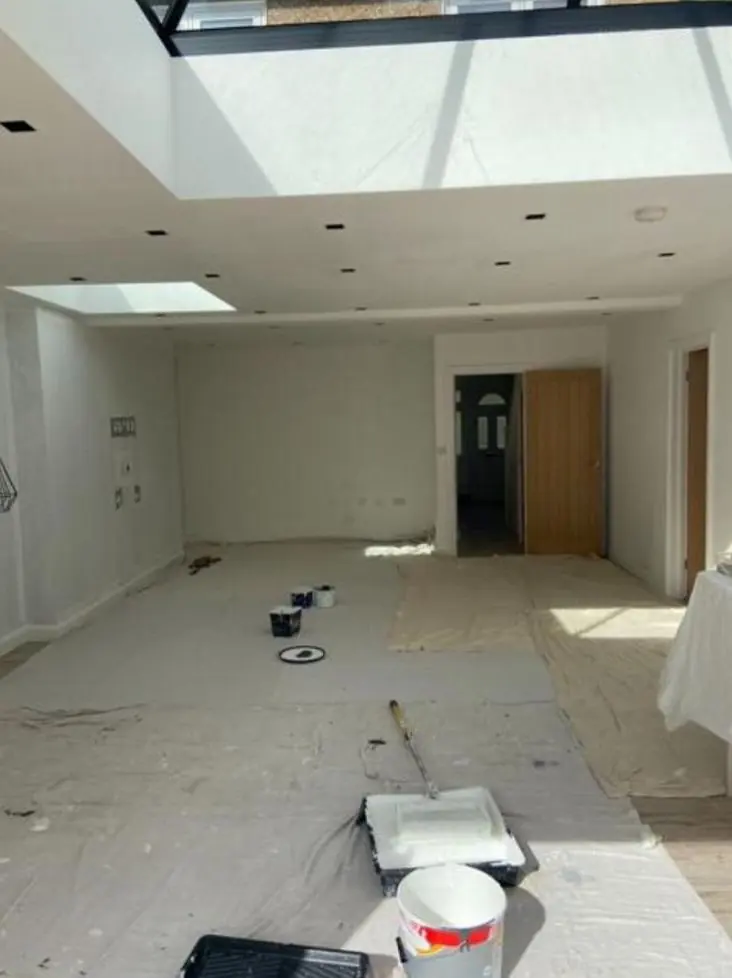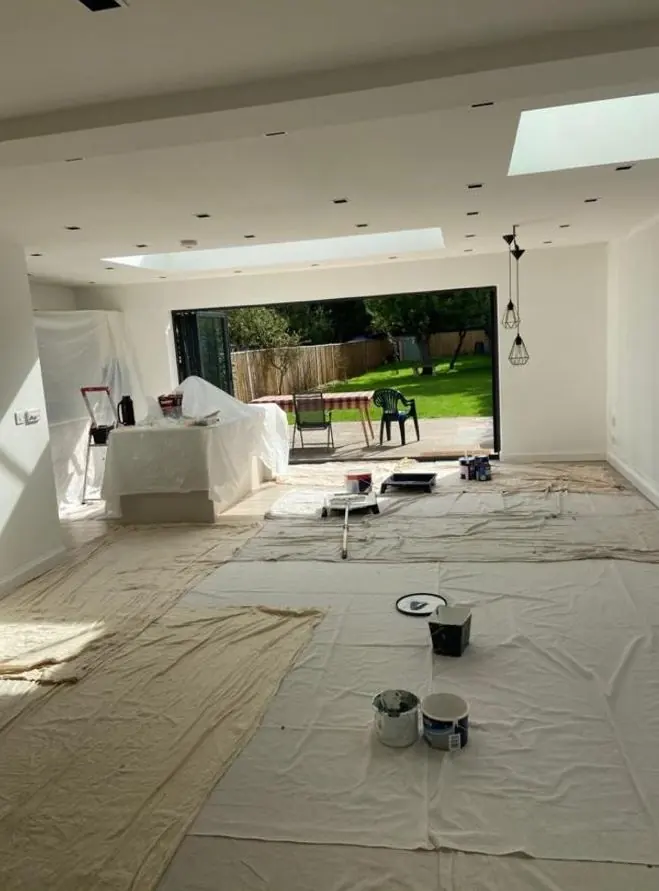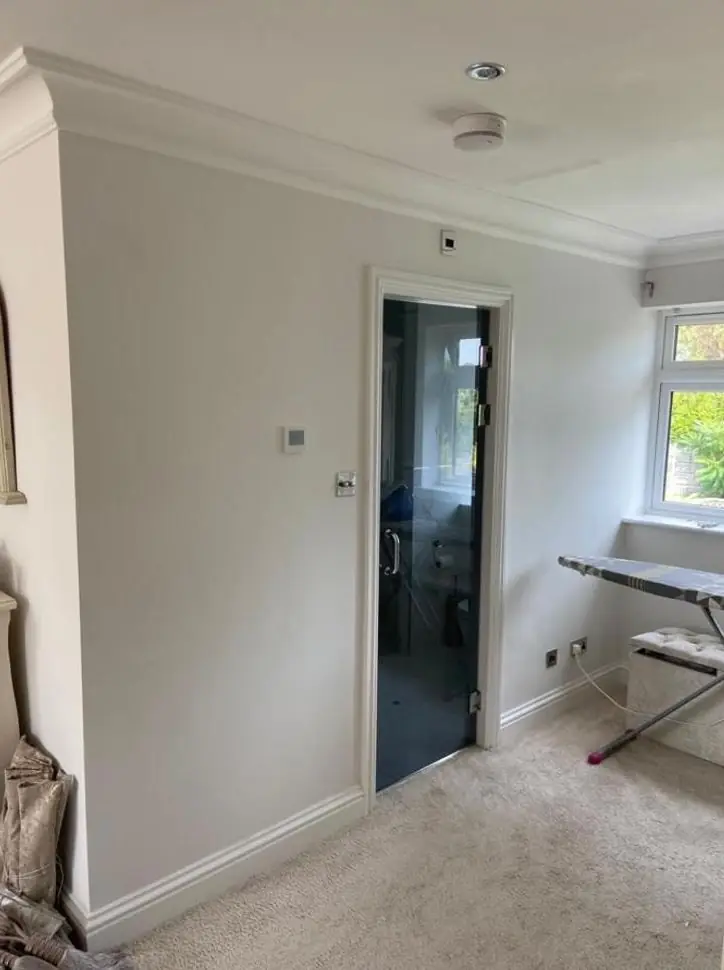
Dean decorates new plaster in Hartwell, about 6.5 miles south of Northampton, once the builder or plasterer has finished. That includes extensions on older stone cottages and 20th-century estate houses, re-skimmed rooms, and the tall walls of barn conversions, all sealed with a suitable mist coat before the finish coats go on.
Where new gypsum meets old lime
Hartwell has a core of limestone cottages and farmhouses from the 17th and 18th centuries, and many have been extended since. The village had no piped water until shortly before the First World War, so kitchens and bathrooms in these houses were nearly all added or rebuilt later. An extension on one of these cottages usually means new gypsum plaster in the added room, meeting older lime plaster on solid stone where the two parts of the house join.
These two materials behave differently. Lime plaster on stone lets moisture move through it, and covering it in a tight modern paint can trap damp. Gypsum skim on plasterboard or blockwork is happy under ordinary emulsion once sealed. So on these jobs we often use two systems in the same room: a breathable mineral or clay paint on the original walls and a standard mist coat and emulsion on the new plaster, chosen so the colour and sheen still match across the join. The joint itself is the weak point. Old walls move with the seasons, so a crack often opens along the line between old and new. We rake it out, fill it with a flexible filler and, where it keeps reopening, recommend a strip of lining paper over the join.
Barn conversions and the old schoolroom
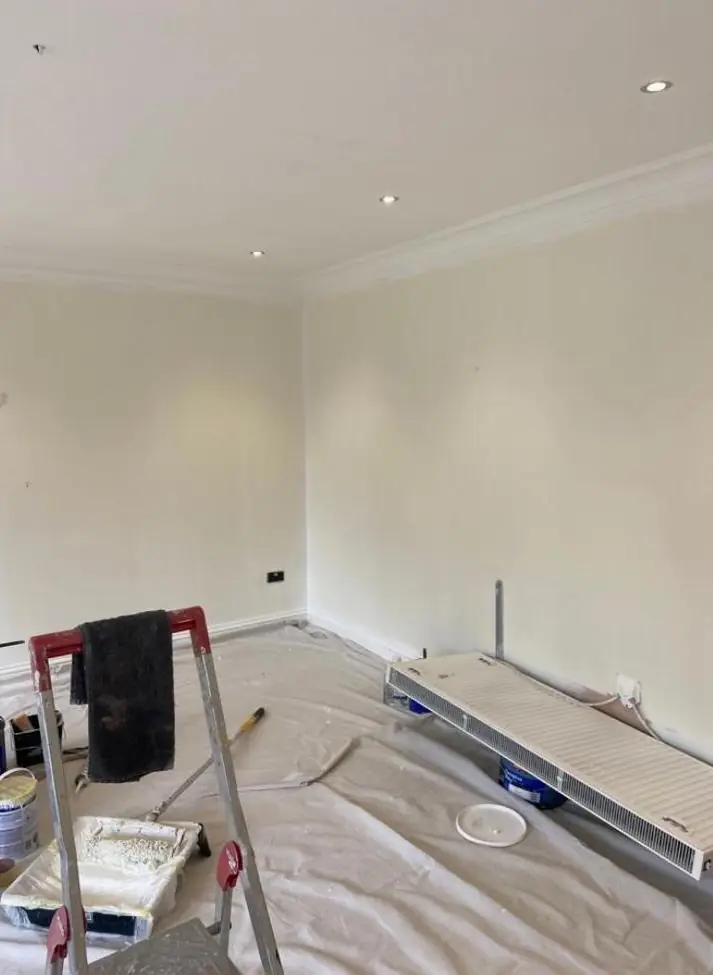
Former farm buildings around the village and the 1861 National school on Forest Road, a single-storey stone building that became a house after the new school opened in 1962, show the kind of conversion found here. New plaster in a conversion tends to come in large, tall areas: gable walls rising into the roof, wide openings where cart doors used to be, and plaster finished up to exposed beams and trusses.
For walls of that height we bring a tower or podium rather than ladders. The slow part is masking. Old oak or softwood beams are rarely straight, and plaster has been finished tight against them, so the cutting-in line follows the timber by hand. We protect the beams with low-tack tape and sheeting, because a mist coat splashed onto bare, untreated timber soaks in and is very hard to remove.
Estate extensions and re-skims
Most homes in Hartwell date from the 1930s to the 1970s, from the first council houses of 1932 through Salcey Avenue and Salcey Close to the private estates at Lower End and on the south-east side of the main street. Single-storey rear extensions, garage conversions and re-skimmed living rooms are the common jobs in these houses. The new plaster here is straightforward: check it is dry, apply a diluted contract matt or purpose-made mist coat, fill and sand what the first coat shows up, then two finish coats. We also seal and paint new MDF skirtings, architraves and door linings. Our new plaster and extension painting page lists everything that usually goes into the quote, and the mist coat guide explains why the first coat is thinned.
Drying times beside Salcey Forest
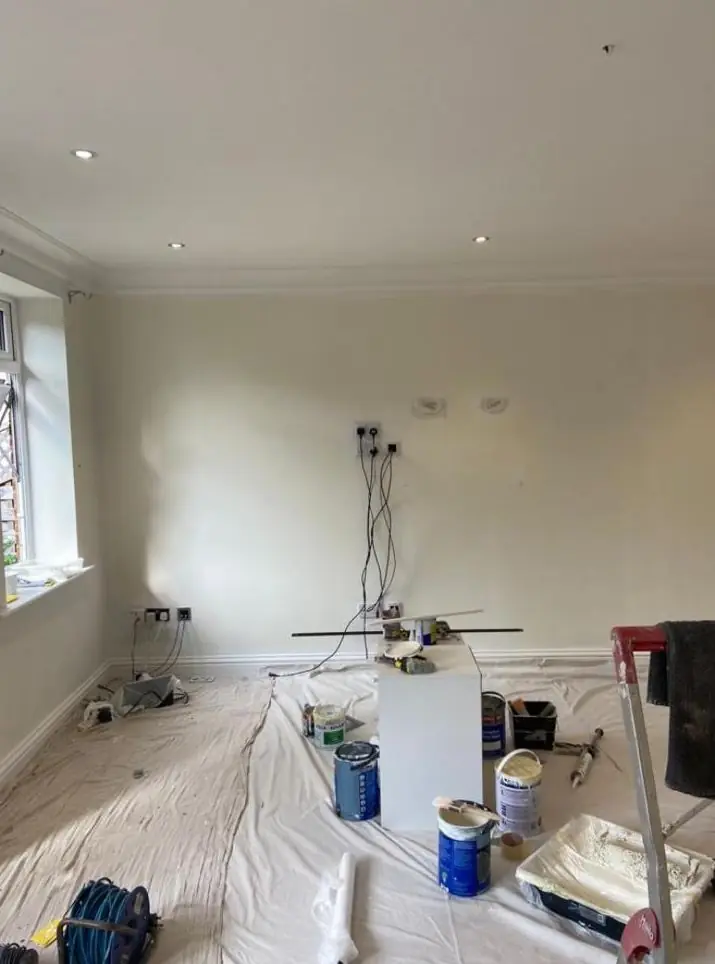
New plaster has to dry before it is painted, and in Hartwell that can take longer than the usual rule of thumb. Properties on the forest side sit in shade and damp air for much of the year, and an extension built in autumn or winter may still be holding moisture weeks after the plasterer leaves. We check walls before we start, looking for an even pale colour with no dark patches in corners, behind radiators or around window reveals. If an area is still damp we leave it and come back, rather than sealing water in.
Because we drive out from Northampton, it helps to book the decorating once the plaster has had time to dry, so the job can run without gaps. More about the village’s houses is on the Hartwell area page.
Last updated by Dean, DH Painter & Decorator.