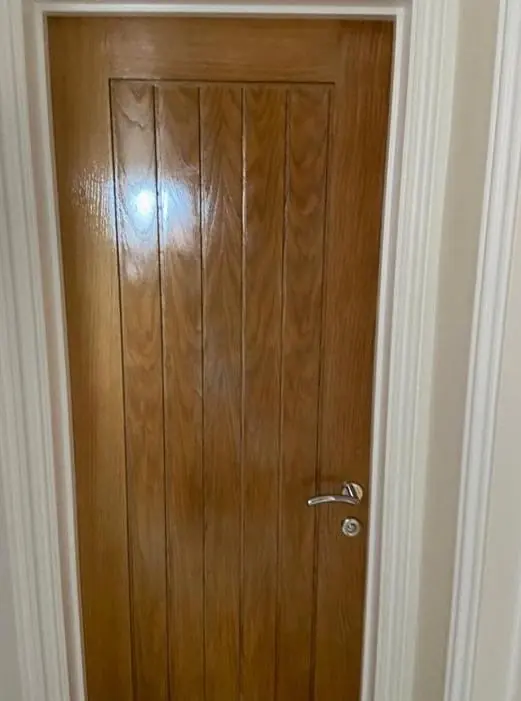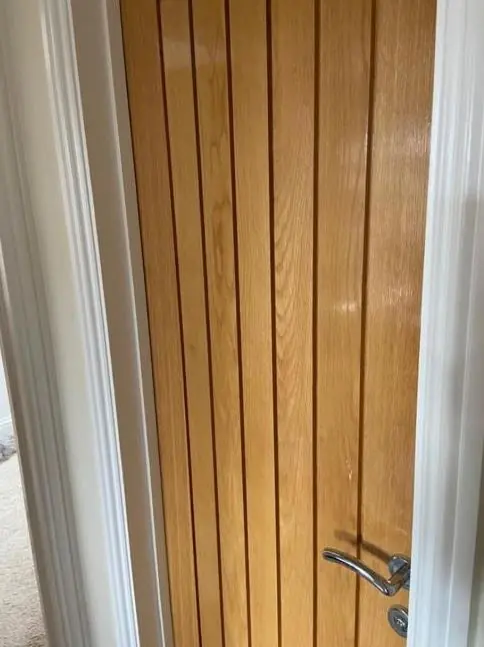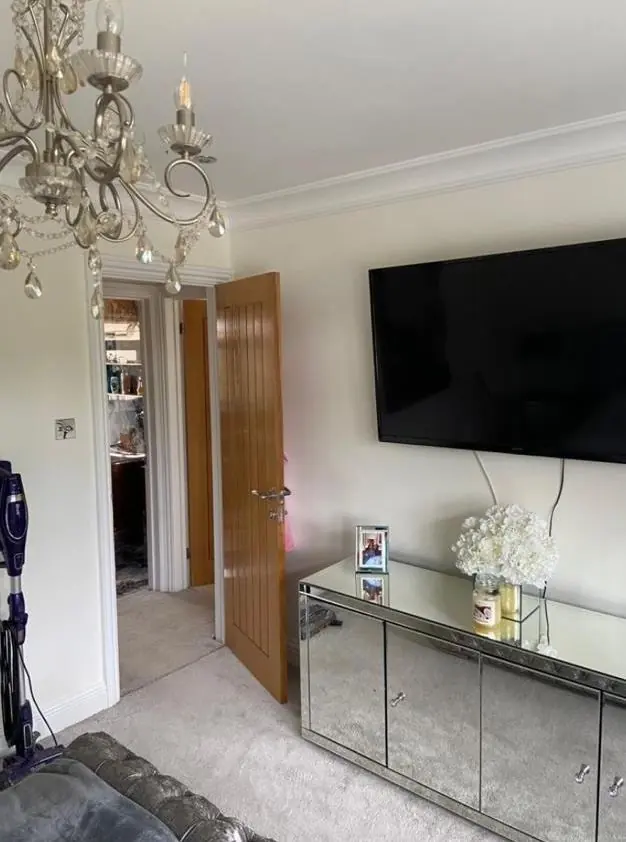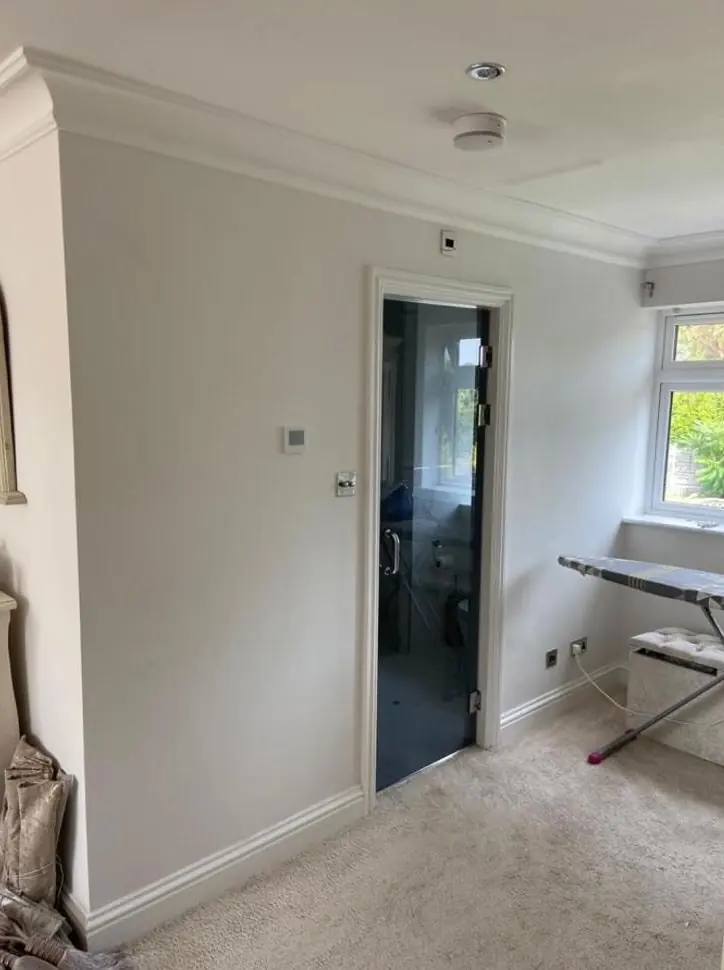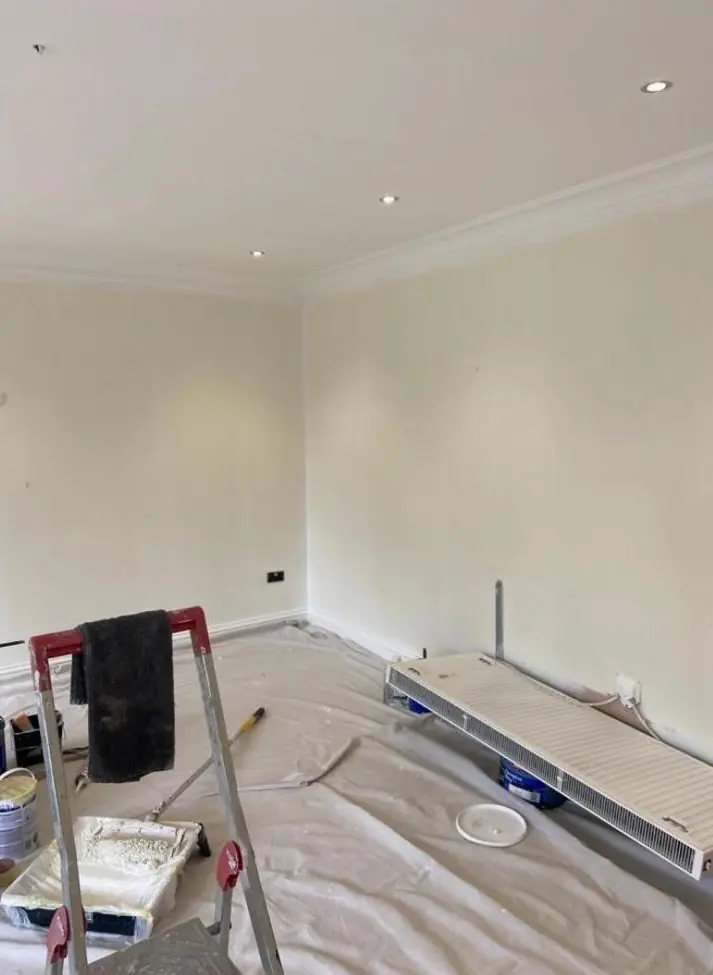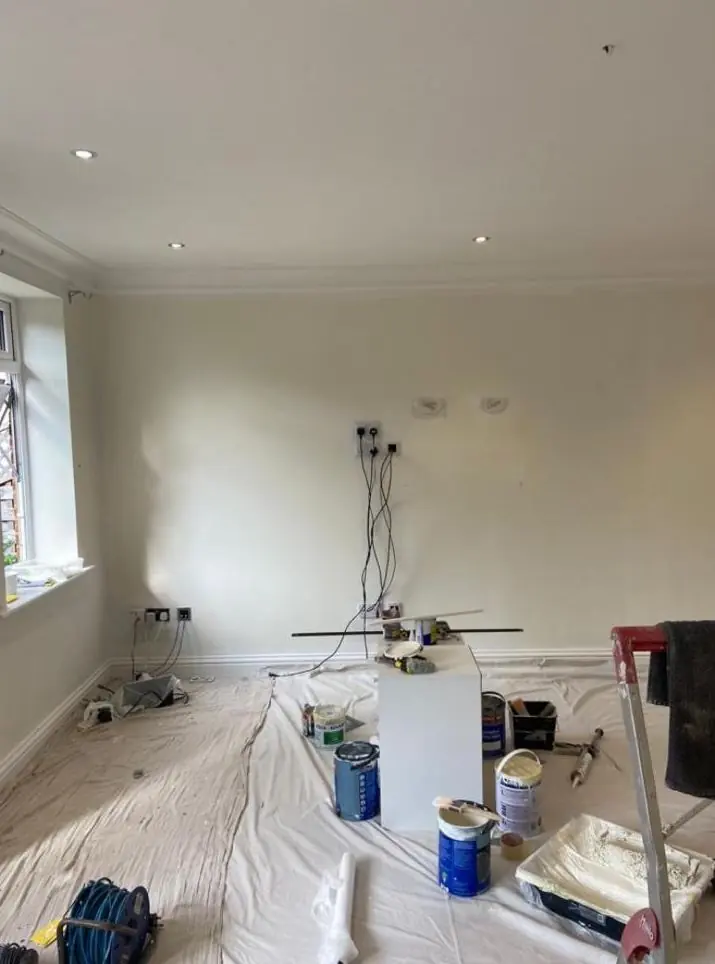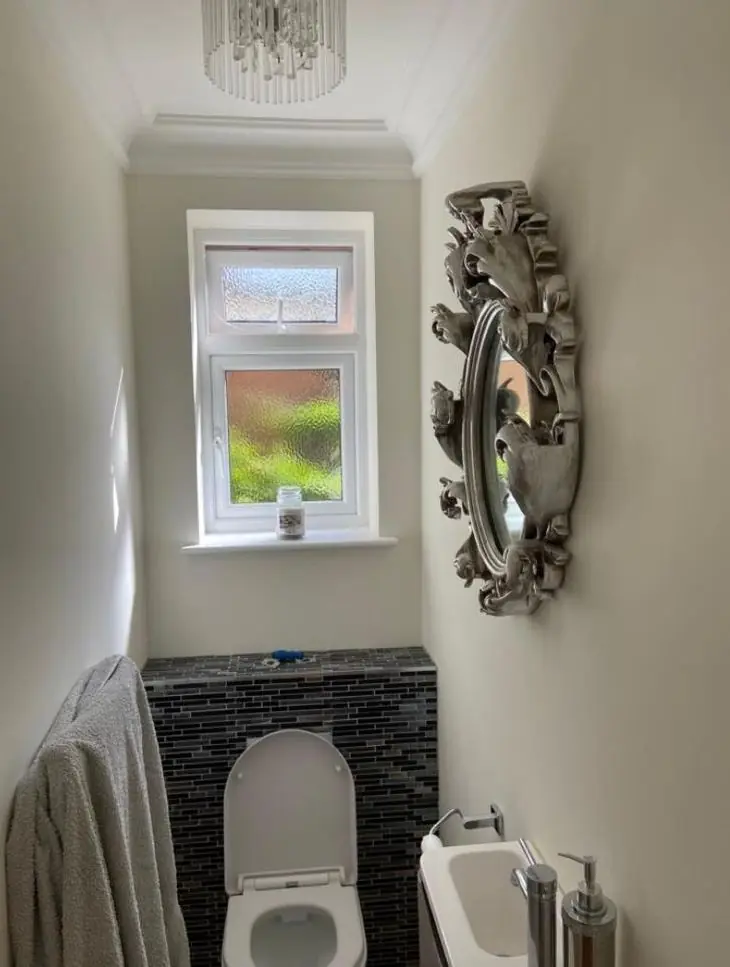
DH Painter & Decorator applies decorative and traditional finishes in Hartwell, NN7, about 6.5 miles south of Northampton town centre. For the village's 17th and 18th-century limestone cottages that usually means limewash and period detailing, while estate homes suit feature walls, panelling and contemporary effects.
Limewash on the cottages of Hartwell Green
Hartwell’s oldest homes were built of coursed limestone rubble in the 17th and early 18th centuries, along the main road across Hartwell Green. Limewash is the finish these walls were made to take. It soaks into the stone and lime plaster rather than forming a film on top, lets damp move out freely and dries to a soft, chalky surface that shifts slightly in tone with the light. That uneven depth is part of its appeal, and it is why limewash suits a thick, bumpy cottage wall where a flat modern paint would look wrong.
It is a slower finish to apply. Limewash goes on in several thin coats, each one dampened and left to cure, and it needs mild, dry conditions to set well. That matters in Hartwell, where houses on the Salcey Forest side are shaded and slow to dry, so exterior limewashing is kept to the warmer months. Inside, it can go on year-round as long as rooms are not heated hard to speed it up.
Checking old coatings before limewash
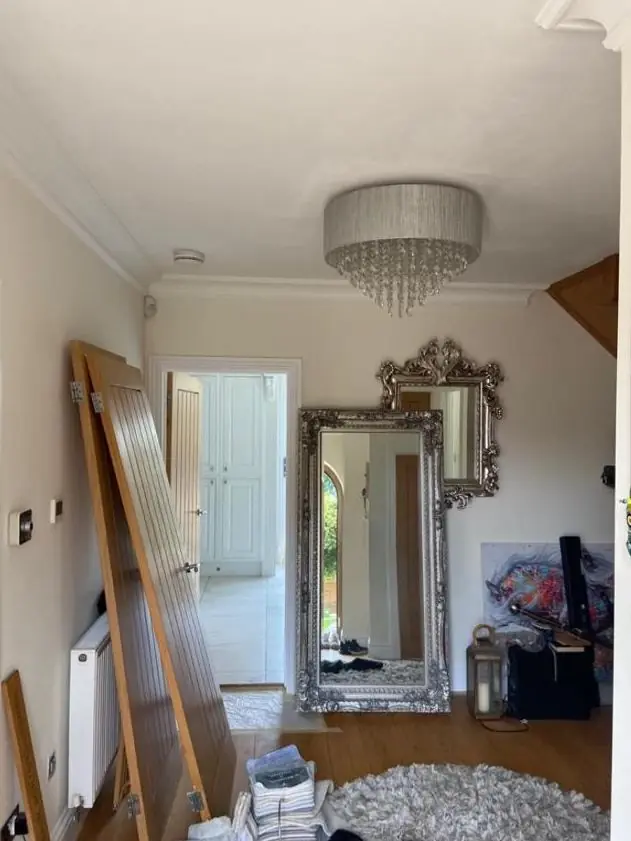
The listing for Old Forge Cottage on Park Road describes its walls as painted limestone rubble, and other cottages in the village have painted walls too. Before any decorative scheme goes on stone like this, we test what is already there. Limewash will take over old limewash but will not bond to a modern acrylic or vinyl coat. If a cottage has been painted with modern masonry paint at some point, it has to be removed, or the wall kept in a compatible breathable system instead. On a listed building, of which Hartwell has 12, a change of system may need consent from West Northamptonshire Council, so like for like is where we start.
Joinery, iron and timber worth picking out
Much of the decorative interest in Hartwell is in woodwork and metal rather than walls:
- Plank and panel doors and wooden lintels in the older cottages, which look right in flat, chalky paints in muted colours
- Four-panel doors and Gothick iron casements on the c.1840 Grafton estate cottages at 4 and 6 Forest Road, where the ironwork can be picked out in a darker shade
- Timber porches and projecting wood eaves on the 1875 cottage ornee houses on Ashton Road
- Exposed timbers and tall walls in barn conversions and the 1861 schoolroom on Forest Road, now a house
Converted farm and institutional buildings bring their own demands. High walls need towers or tall steps, and exposed beams have to be masked carefully if the walls between them are being limewashed or colour-washed, so the timber stays clean.
Feature walls and panelling in the newer homes
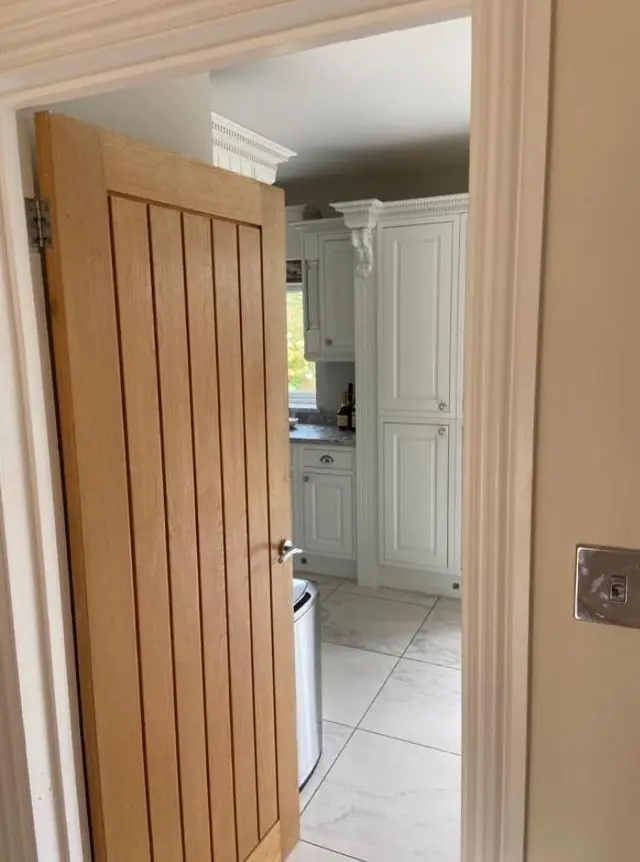
The 74 post-war houses and flats at Salcey Avenue and Salcey Close and the 1960s-70s estates at Lower End and south-east of the main street have flat plastered walls and square corners. That is the right base for crisper effects that would fight with an old stone wall: two-tone splits with a sharp line, painted panelling added to a plain hallway or bedroom, colour-drenched rooms where walls, ceiling and woodwork share one shade, and geometric feature walls. Straight walls let tape lines run true, so the result looks deliberate.
The process behind each effect, from glazes to panelling joints, is explained on our main decorative finishes page. For the rest of what we cover locally, see the Hartwell area page, and our guide to timing exterior painting explains why outdoor limewash waits for the right weather.
Last updated by Dean, DH Painter & Decorator.