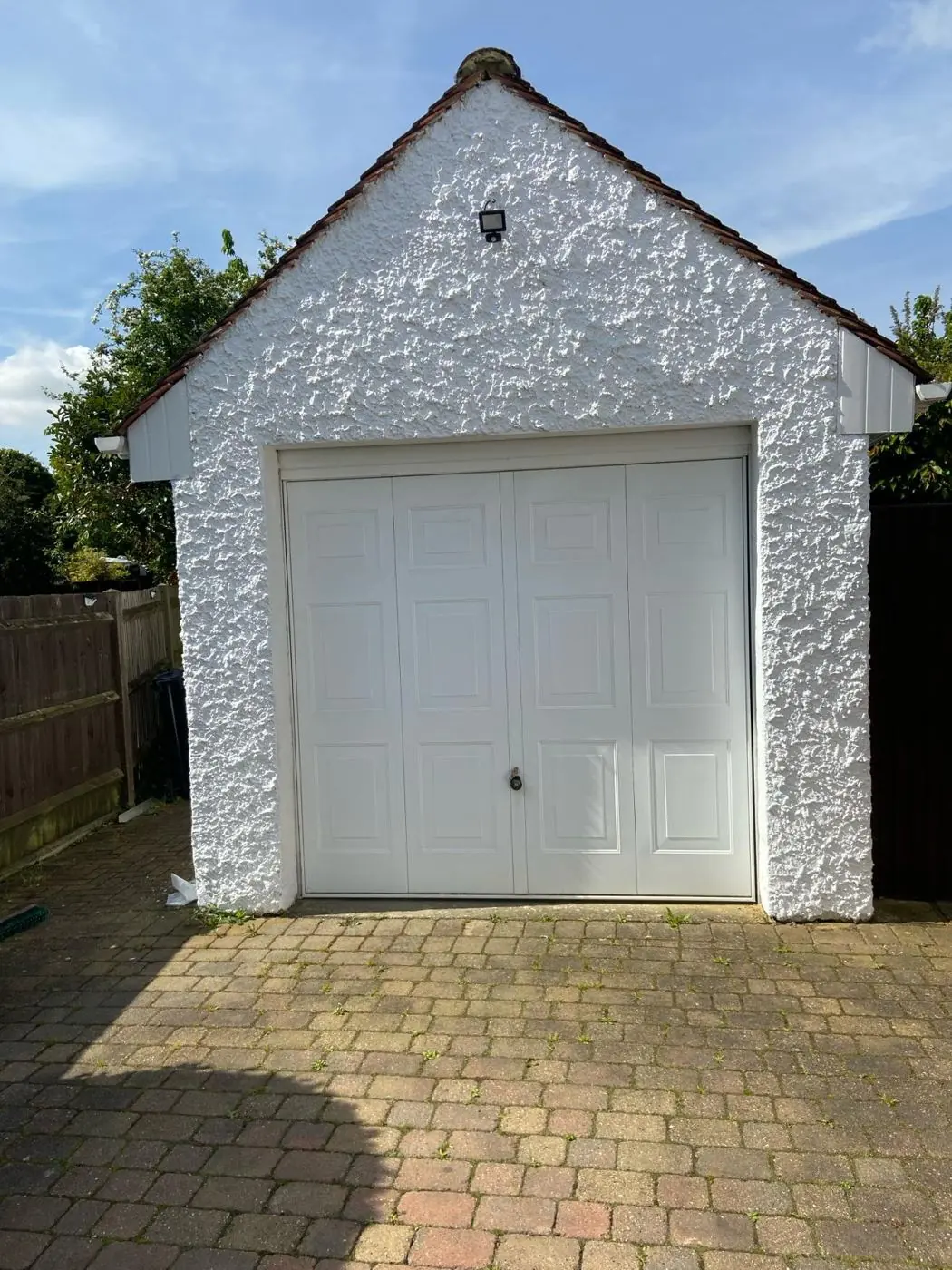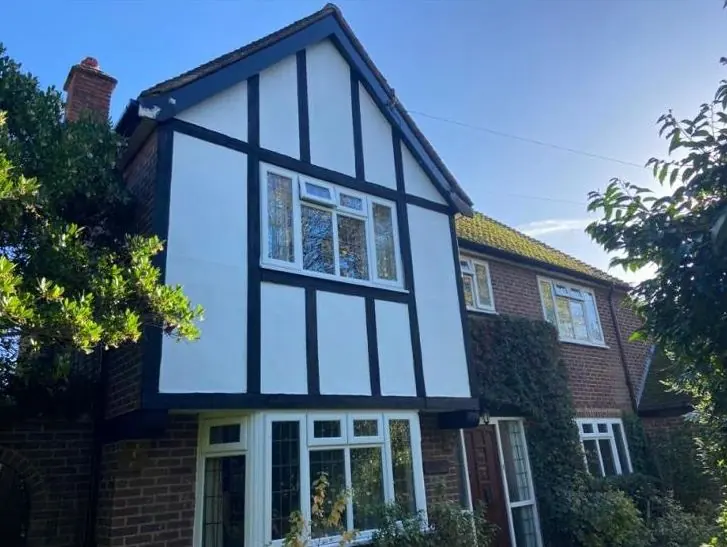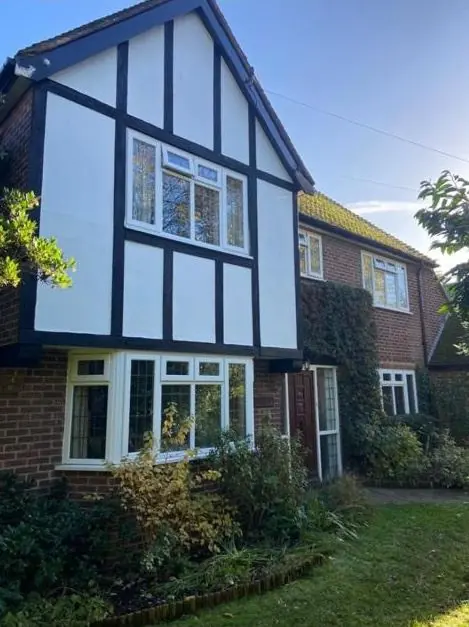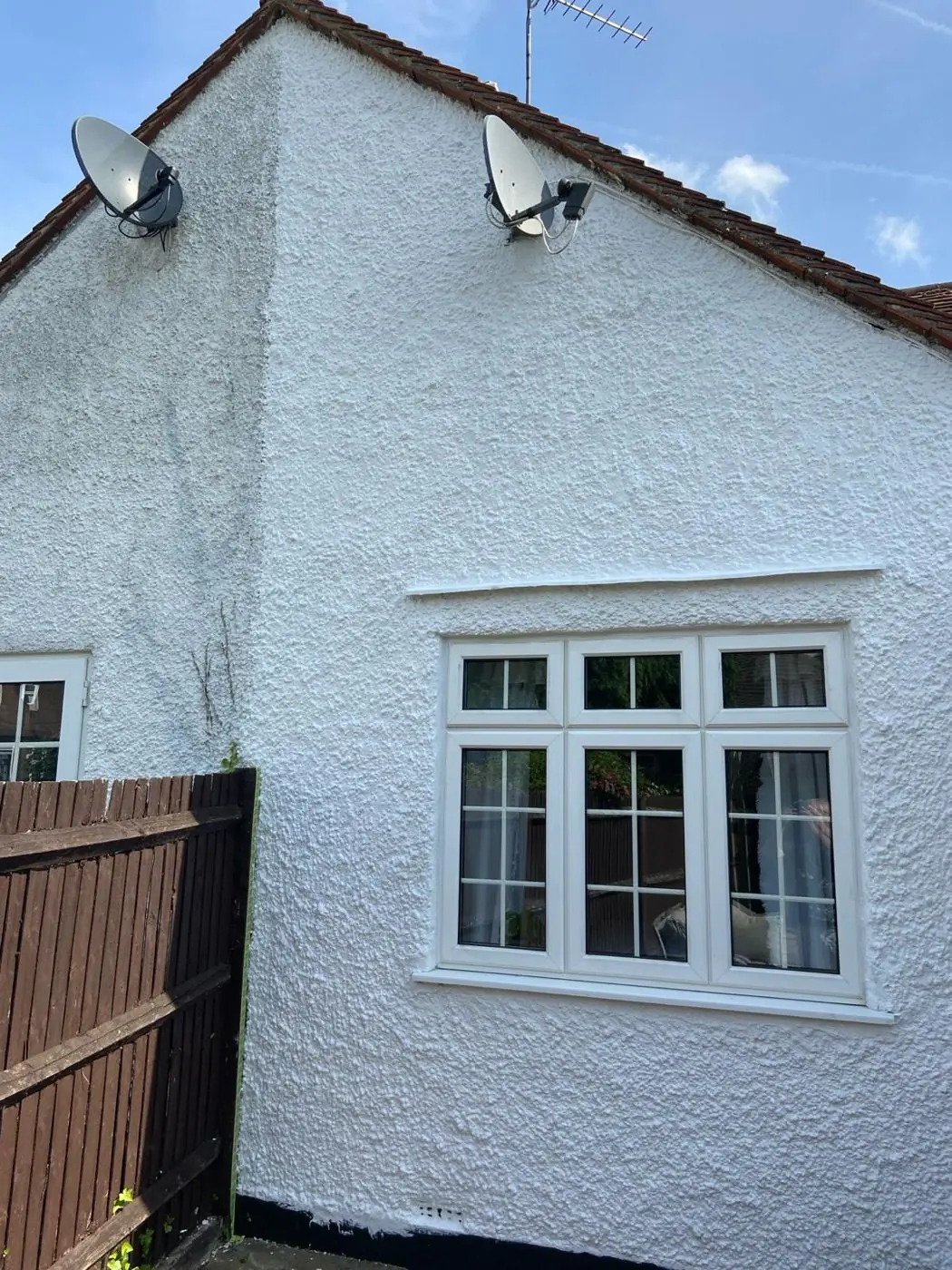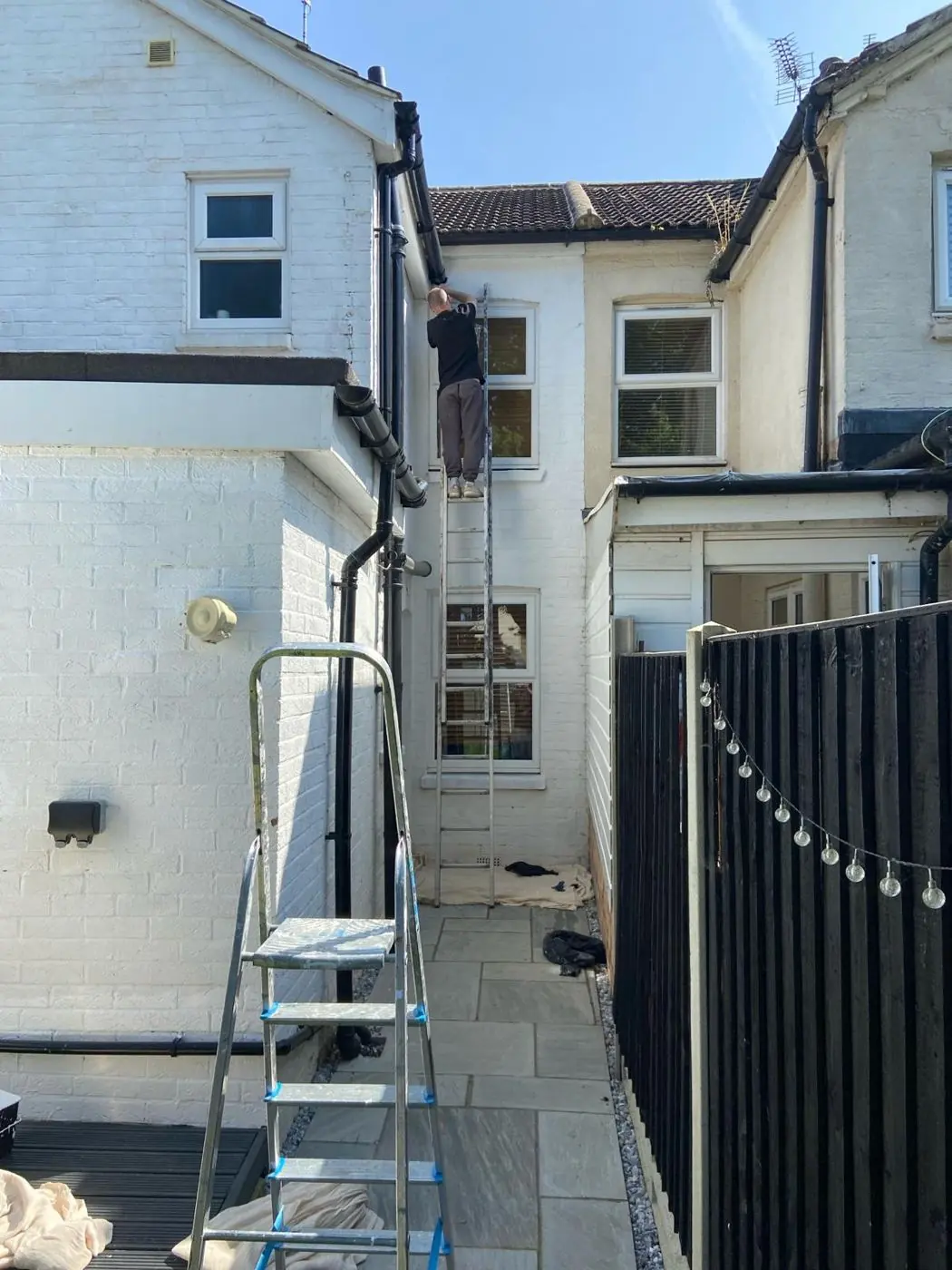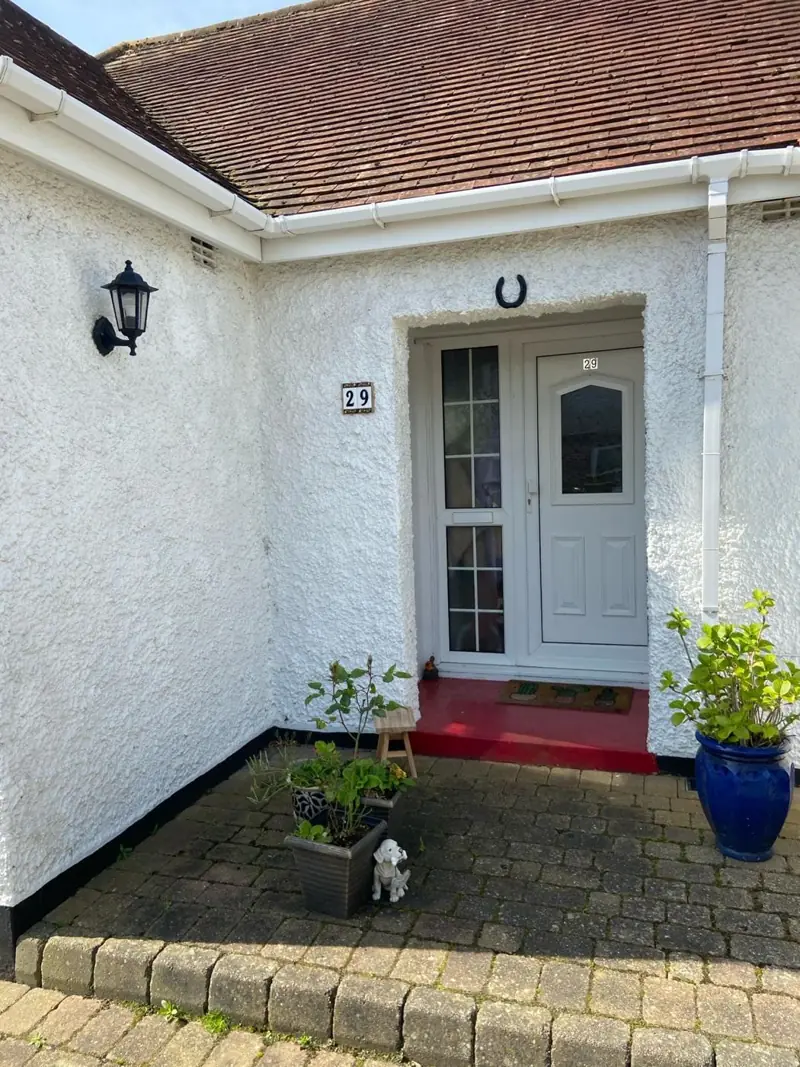
Dean paints timber fascias, soffits, gutters and downpipes in Hartwell, NN7, about 6.5 miles south of Northampton town centre. Most of the village's rooflines are on the 1930s to 1950s council houses and the 1960s and 70s private estates, where tree cover from Salcey Forest adds to the wear.
Where Hartwell’s timber rooflines are
Fascia work in Hartwell follows the village’s 20th-century growth. The first council houses went up in three small batches between 1932 and 1939, and after the war the rural district council built 74 houses and flats in Salcey Avenue and Salcey Close. Private building then began in the early 1960s on the south-east side of the main street and at Lower End, and a 1973 consent outside the old village boundary produced 153 more houses.
That is a large stock of houses aged roughly 50 to 90 years, and many still have timber fascia boards, soffits and bargeboards that have been painted many times over. Where several coats of gloss have built up and started to crack, the boards need more than a quick top coat. Flaking layers are scraped back and edges feathered so old ridges do not show through the new paint.
Trees, leaf litter and blocked gutters
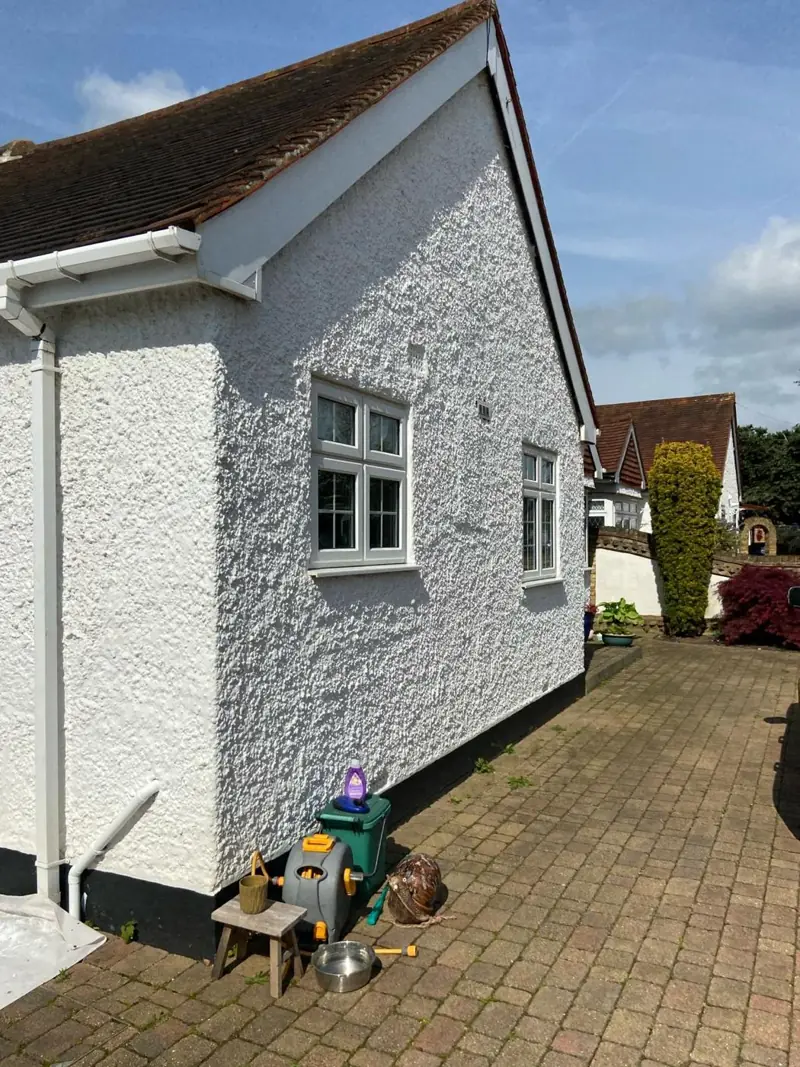
Houses on the Salcey Forest side of Hartwell sit under heavy tree cover. Leaves and twigs collect in gutters, water backs up and spills over the front edge of the fascia, and the board behind stays wet. That is how soft spots start, usually at gutter joints, outlets and the lower ends of bargeboards.
So a Hartwell roofline job starts with a look at the drainage:
- Gutters are checked for debris and for leaking joints before the boards behind them are painted.
- Each board is probed for soft timber, especially at corners and behind downpipe outlets.
- Small areas of decay are cut out and filled with an exterior timber repair system. Boards that are rotten through are pointed out so a carpenter can replace them before painting.
- Algae on shaded soffits is treated with a fungicidal wash and allowed to dry.
Painting fresh boards above a gutter that still overflows only buys a season or two, so where a leak is found we tell you before any paint goes on.
Projecting eaves on the older cottages
Not all of the roofline work is on the estates. The Grafton estate cottages of the mid 19th century have wide wooden eaves overhanging the walls, which leave a deep, sheltered underside that holds damp and cobwebs. On the thatched cottages along Park Road, eaves woodwork sits right under the thatch, so ladders are positioned well clear of the thatch edge and boards are prepared by hand.
Some of these cottages are listed, so the colour already on the eaves and bargeboards is normally kept unless the owner has consent to change it.
Fitting the job around Hartwell’s roads
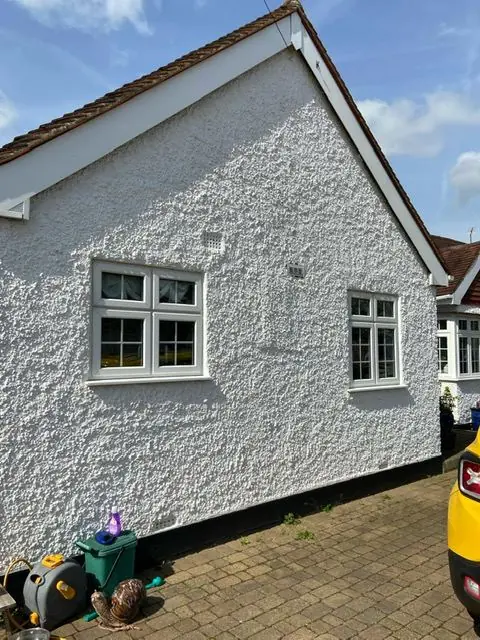
On Salcey Avenue, Salcey Close and the Lower End estates there is usually more room in front of the houses, so towers and ladders can often stand clear of the carriageway. Houses on Park Road and Forest Road front the main road through the village, which calls for careful ladder footing and attention to traffic. Being 6.5 miles out, the job is booked as a continuous run of dry days, with the van carrying everything needed.
Our main fascia and soffit painting service explains each stage of preparation and the paints we use. For an idea of what affects the price of roofline work, see the painter and decorator cost guide, and the Hartwell area page covers the rest of our work in the village.
Last updated by Dean, DH Painter & Decorator.