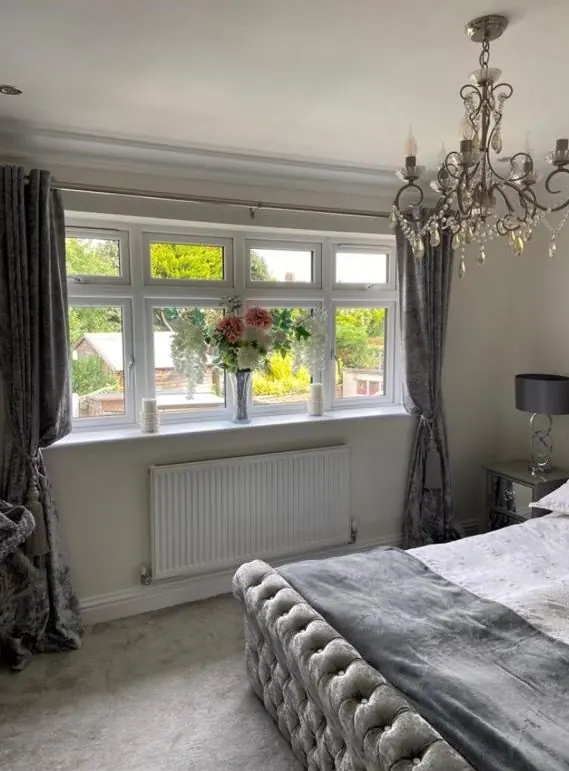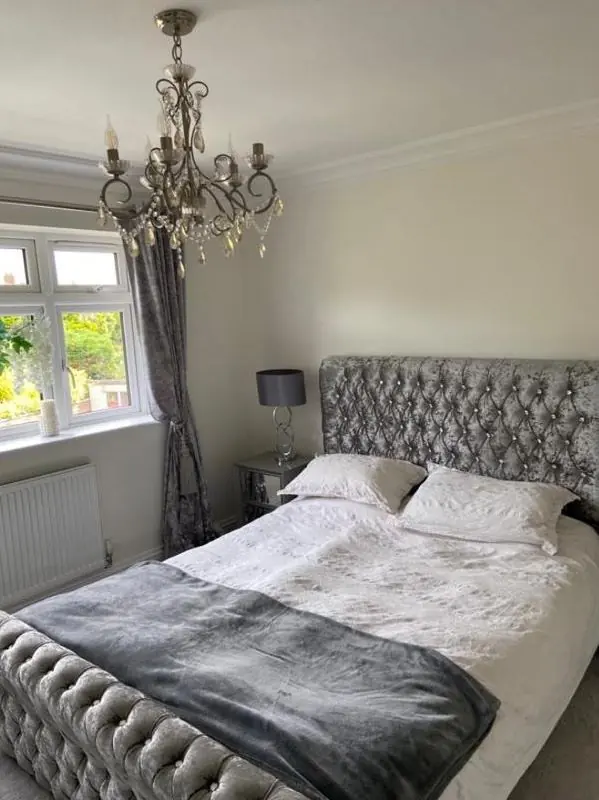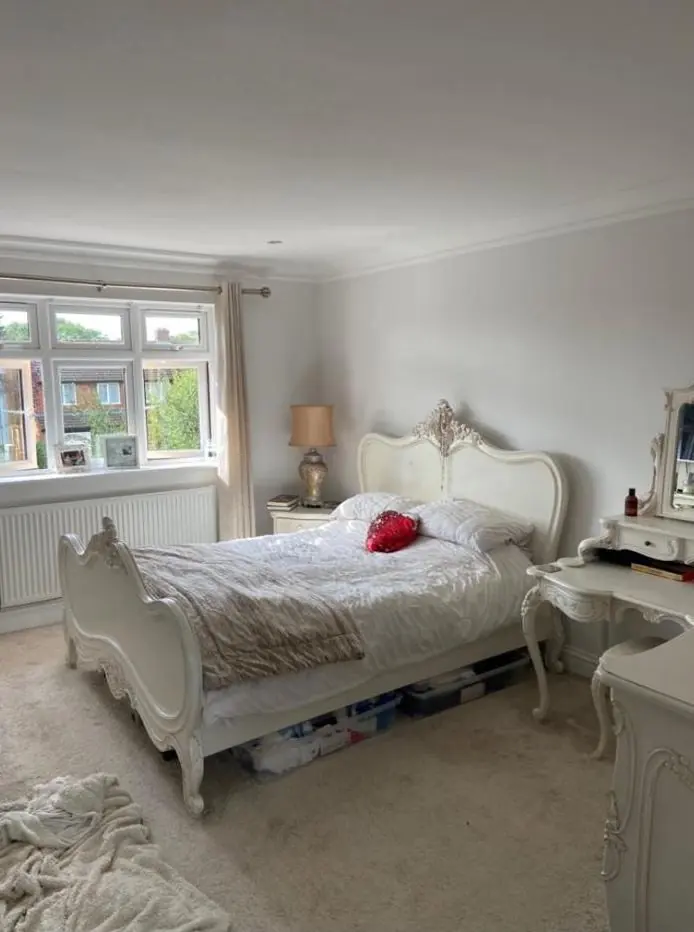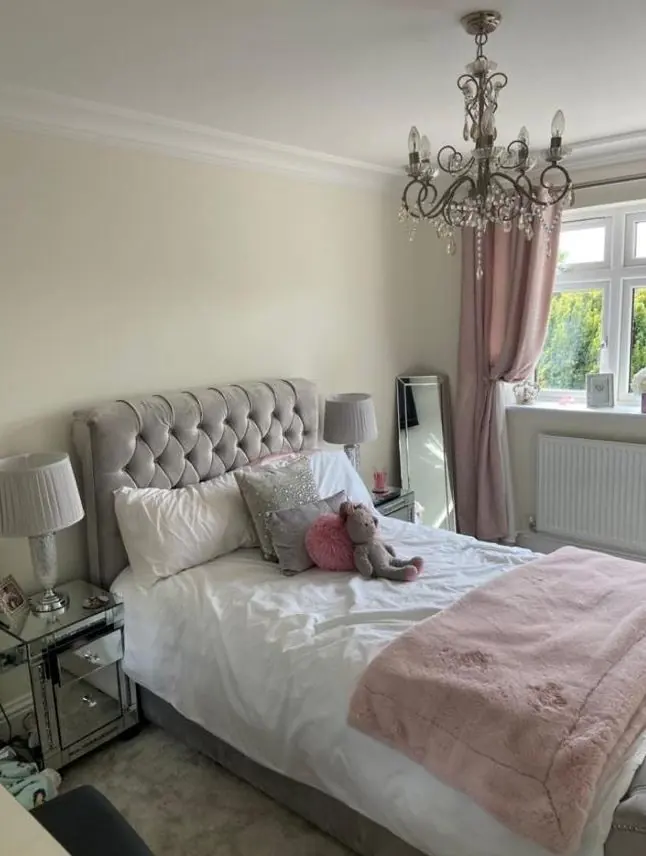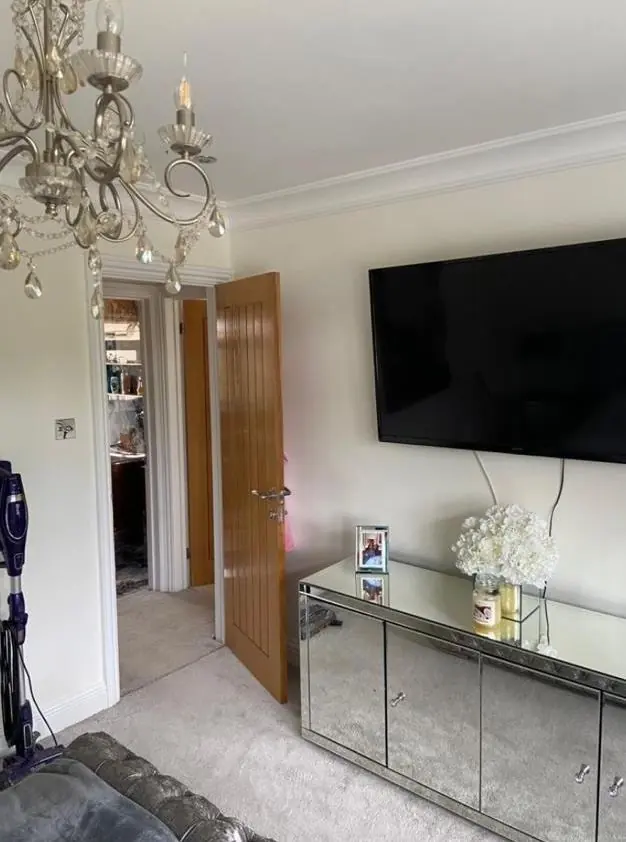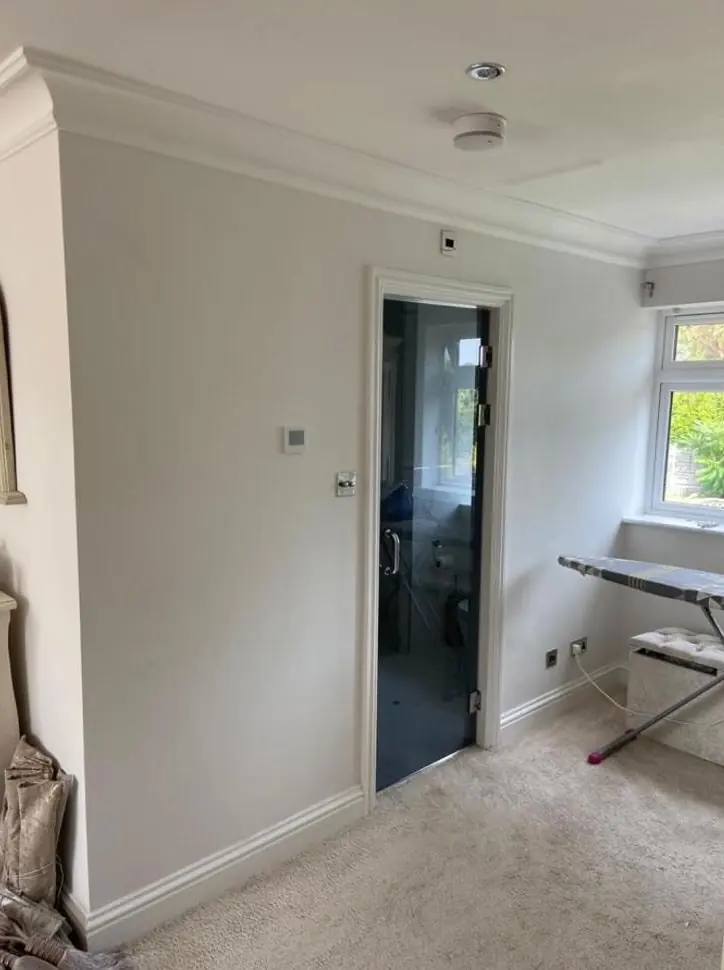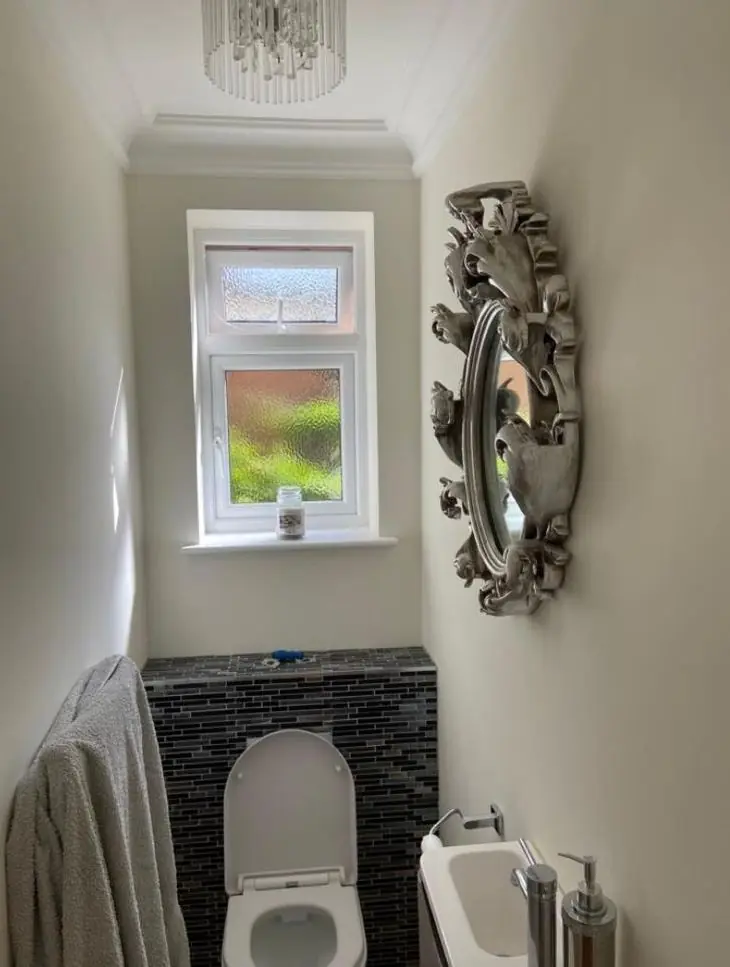
DH Painter & Decorator paints interiors in Yardley Gobion, a valley-side village in NN12 about 9.7 miles south of Northampton town centre. Dean works on both the old stone cottages, where lime plaster often needs breathable paint, and the newer estate houses with standard modern plaster.
Low ceilings and lime plaster in the stone cottages
The oldest homes in Yardley Gobion are 17th and 18th-century cottages of light yellow and grey coursed limestone rubble, many built in short terraced ranges with low eaves. Several are listed, among them Nos 3, 5 and 7 Moorend Road and Nos 17 and 19 High Street, and Nos 3 and 4 Mount Pleasant carry a datestone of 1667. Inside, the ceilings are low and the walls follow the stone behind them, so a straight edge held against the plaster rarely sits flat.
Where those walls still have lime plaster, the paint has a job beyond colour. A solid stone wall has to let moisture move out through its surface. Vinyl emulsion forms a tighter film, and on old lime it can lead to blistering and flaking over a few seasons. We look at what is already on each wall before recommending anything. Breathable mineral or clay paints, or a traditional distemper, are often the safer choice on original plaster, while later gypsum patches will take ordinary emulsion. Plenty of cottages have both, sometimes in the same room.
Low rooms also change how we cut in. With so little height between the top of a door frame and the ceiling, a wavering line shows straight away, and on uneven plaster a laser line looks wrong because the wall is not where the laser thinks it is. We cut the ceiling line by eye so it reads straight when you stand in the room.
More joinery in the formal 18th-century houses
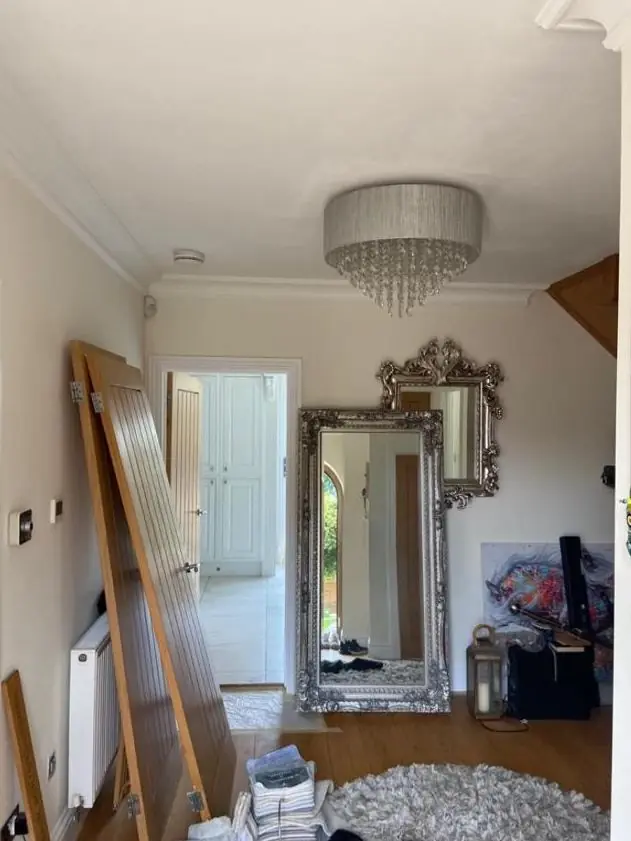
A step up in scale are the symmetrical Georgian houses: Manor Farmhouse, The White House on Chestnut Road, and Prospect House at 28 High Street. They have six-over-six timber sashes with narrow glazing bars, panelled doors, fanlights and timber door surrounds, so each room carries far more woodwork than a cottage of the same size. Sash linings and bars need careful cutting-in, and we keep paint off the running surfaces so the sashes still slide once the coating has cured. Joinery that has always had oil-based paint stays on an oil-based or traditional system. Our general approach to prep and finishes is set out on the interior painting service page.
The post-war estate: a more familiar job
Between 1961 and the early 1970s the village grew from about 600 people to almost 1,400 as housing went up to the south of the old core and along parts of Moorend Road. These homes sit outside the conservation-area concerns and have standard modern plaster and plasterboard. Interior painting here is simpler: filling settlement cracks and nail pops, sanding, a hard-wearing emulsion in kitchens, halls and children’s rooms, and satinwood or gloss on skirtings and doors. Where an extension has added fresh plaster, it takes a diluted mist coat before anything else, which our mist coat guide explains.
Listed interiors, parking and planning the days
More than twelve of the village’s historic buildings are on the statutory list. Listed building consent covers works that affect a building’s character, and that can include interiors, so if you plan to strip old finishes, take off historic paint layers or alter panelling in a listed cottage, check with West Northamptonshire Council first. Like-for-like repainting is normally simpler, but asking costs nothing.
Access needs thought too. Several cottages front straight onto the roadway on Moorend Road, the gravel lane into the Mount Pleasant courtyard takes one vehicle at a time, and walls hem in both sides of Chestnut Road. We agree where the van will go before the first day and carry sheets, steps and paint in by hand when we cannot park close. Yardley Gobion is an easy drive down the A508 from our Northampton base, and the Yardley Gobion area page covers the village’s houses in more depth.
Last updated by Dean, DH Painter & Decorator.