DH Painter & Decorator paints shopfronts and pub frontages in Little Houghton, the village by the A428 about 3.1 miles east of Northampton. The handful of businesses here all sit in the conservation area around the crossroads, so we plan colour, signage and timing around that. Dean quotes after a visit.
A handful of businesses at the crossroads
Little Houghton is a small commuter village, and its commercial side is modest. The 2015 conservation area appraisal records a village shop with a post office, a pub and a small laundering shop, along with the school and the church, and a few farm buildings that remain in agricultural use. They sit around the crossroads where Bedford Road meets Station Road and Lodge Road, near St Mary the Virgin on its raised mound, the village stocks and the listed telephone box. That is the most looked-at corner of the village, which is why a frontage there deserves more thought than a fresh coat in whatever colour was used last time.
Shopfront painting in a place like this covers whatever the business presents to the street: a timber door and window frames, a fascia or sign board, a stallriser below the window, a hanging sign bracket, and on a pub the external joinery and any boards that carry the name. On buildings of the village’s 17th and 18th-century stone, those elements are timber set into ironstone and limestone, and the stone itself should stay bare.
Advertisement controls and colour in the conservation area
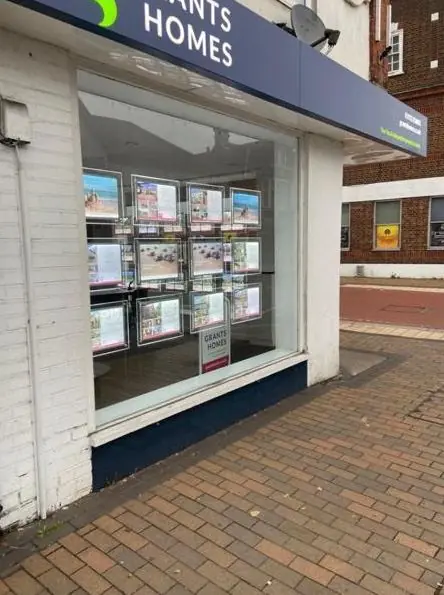
Because all of these premises are inside the conservation area, advertisement controls there are tighter than on an ordinary high street. In practice that means illuminated or large new signs, and sometimes changes to an existing sign’s design, may need consent from West Northamptonshire Council. Repainting an existing fascia like for like is usually simple. Rebranding with a new colour scheme or new lettering is the point to check with the planning and heritage officers first, and if the building is listed, a change of finish can need listed building consent as well.
On the colour itself, we suggest schemes that sit with the banded ironstone and limestone and the red pantile and slate roofs around the crossroads: deep greens, dark blues, heritage reds, off-whites and stone tones, with lettering in a contrasting traditional shade. Glossy, bright corporate colours can look out of place against a 17th-century stone wall even when they are allowed.
Working while the doors stay open
A village shop and post office is something people rely on daily, and a pub depends on its opening hours, so we plan the work to keep the business trading. That usually means:
- painting the door and the area around it in stages, so customers can always get in and out;
- starting early in the day on parts that need the longest drying, and leaving clear signs on wet paint;
- keeping ladders and sheets to a narrow strip of pavement, since the buildings sit on the road edge and the A428 passes through the crossroads;
- agreeing van parking in advance, because few properties have drives and residents park on the street and verges.
Exposure matters as well. Joinery that faces west over the open Nene valley weathers faster, and shade from mature trees slows drying, so we pick settled weather and allow for it in the programme.
Repainting rather than replacing
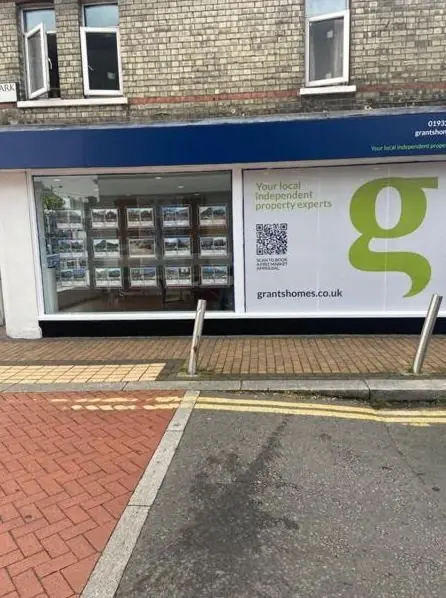
The appraisal wants traditional doors and joinery kept wherever they survive, and old timber shopfront parts can usually be repaired and repainted for far less disruption than replacing them. Old paint layers are treated as possibly lead-based and removed by hand with dust controlled, with no heat near any thatch.
Our main shopfront painting page describes the general process for commercial frontages, and the Little Houghton area page covers the village’s homes and wider painting needs.
Last updated by Dean, DH Painter & Decorator.