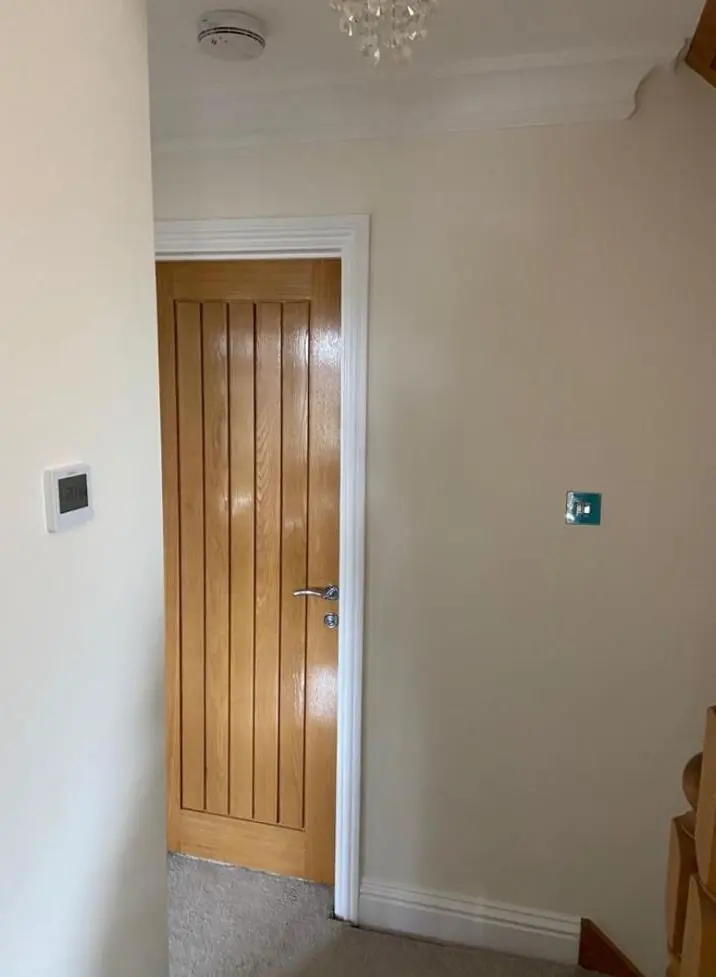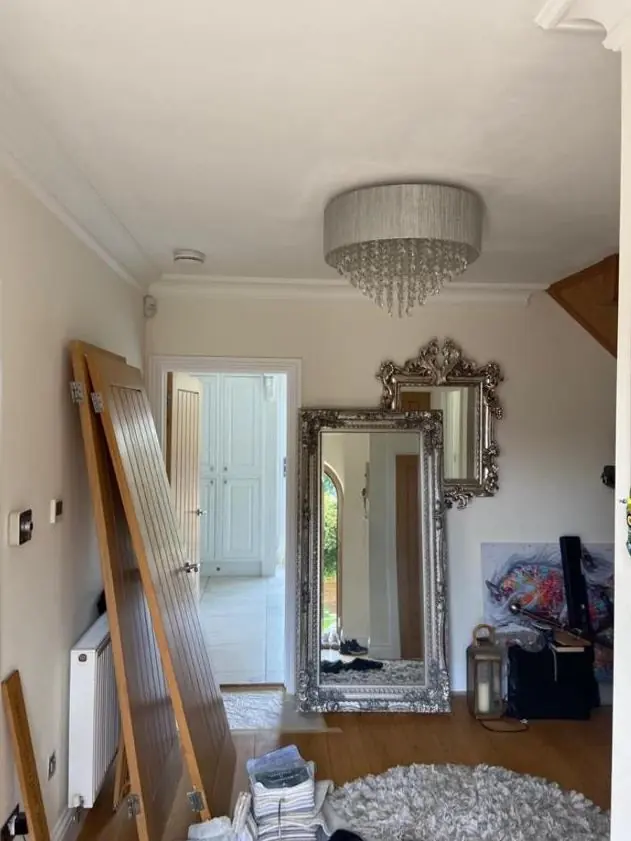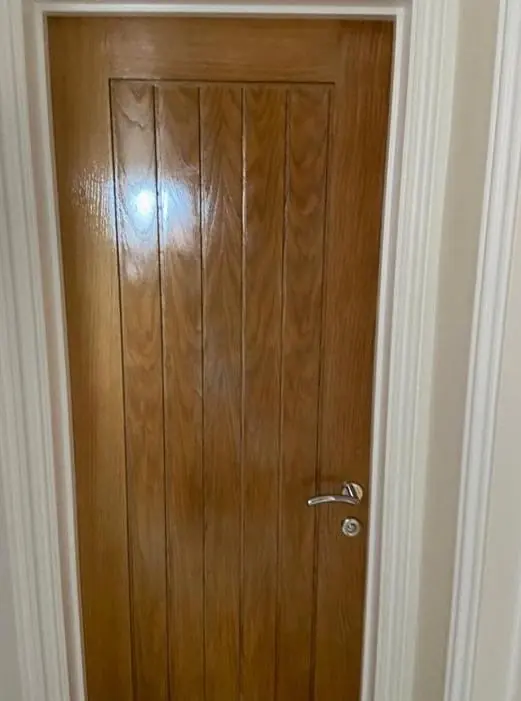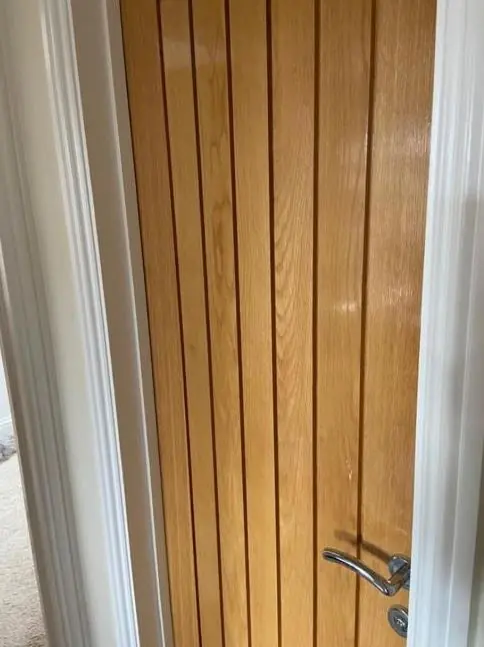
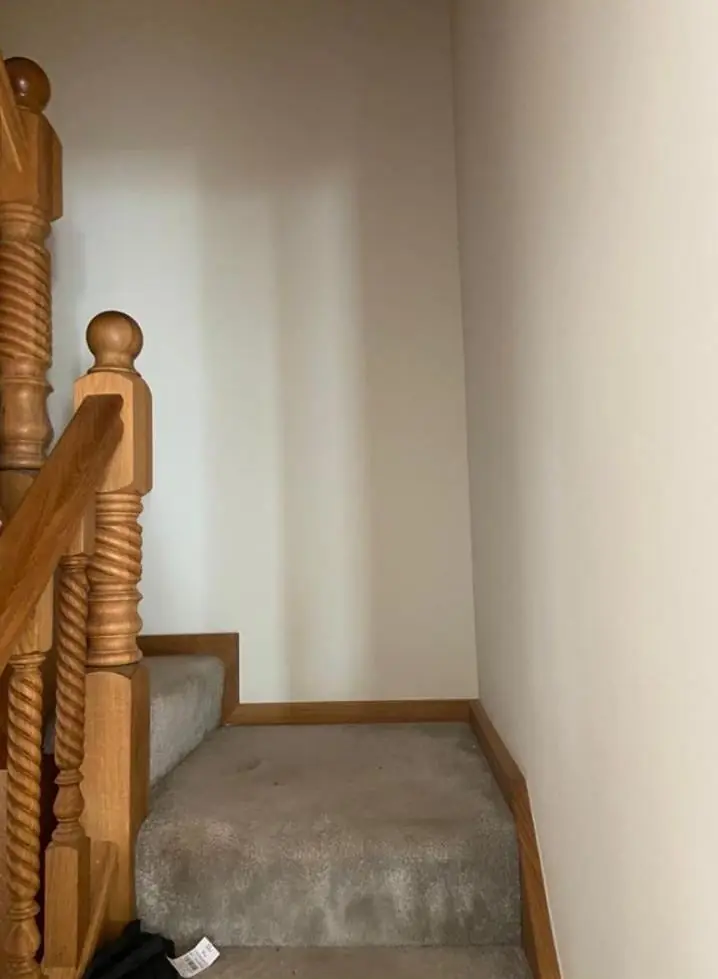
Dean decorates hallways, stairs and landings in Little Houghton, about 3.1 miles east of Northampton town centre. In the village's 17th-century stone cottages that usually means steep, narrow flights up to attic rooms and solid walls that need breathable paint, while the edge-of-village closes have simpler modern stairwells.
Steep cottage stairs and attic flights
Little Houghton’s 17th-century cottages are narrow in depth, two storeys high with attics and gabled dormers above, and some later buildings use the roof space as a third floor. That plan squeezes the staircase into a tight slot: often a steep or winding flight between solid stone walls, a small landing, then a narrower flight to the attic. Decorating it means working in a stairwell barely wider than the treads, with low headroom at the top and a tall drop where flights meet. We cover the village from our Northampton base, 3.1 miles to the east, and plan these jobs around the shape of the stair in front of us.
Getting safe access in a narrow stairwell
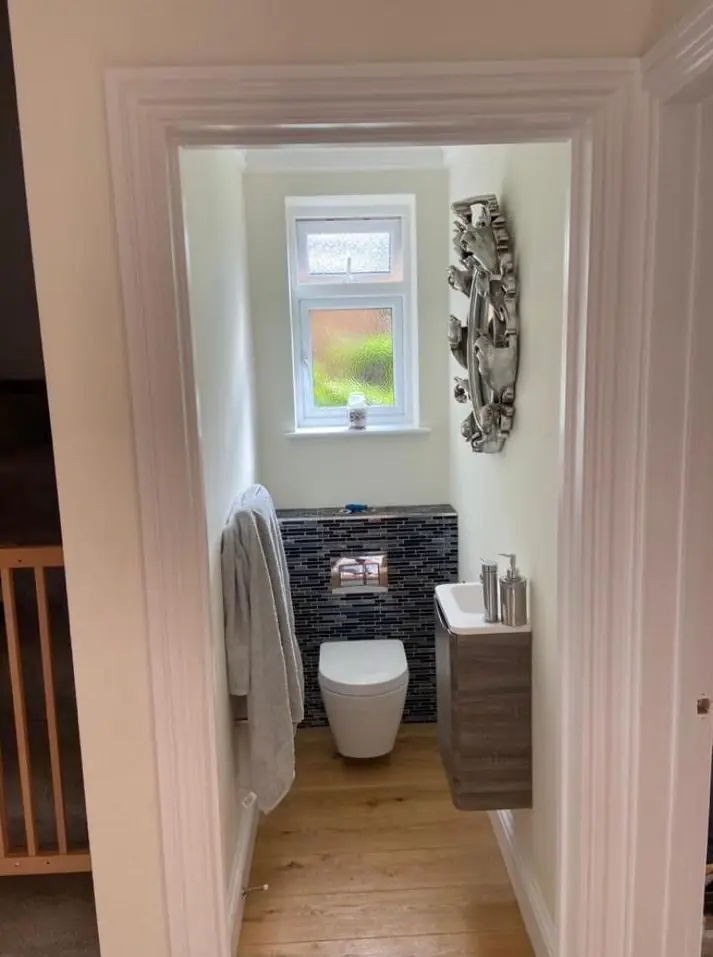
A cottage stairwell rarely has room for a full stair platform, so Dean sets out adjustable stair ladders, short staging boards and small podiums flight by flight, fixed so the stairs can still be climbed. Walls are done top down, then the ceiling over the drop, then woodwork, so nothing finished gets knocked. Banisters, spindles and strings in older houses often carry many layers of paint; they are washed, keyed and filled before an eggshell or satin finish that wipes clean. The general method for stairwell access is set out on our hallway, stairs and landing decorating page.
Solid stone walls and what goes on them
Hall walls in the old cottages are the inside face of coursed ironstone and limestone, laid in lime mortar and usually finished in lime plaster. Moisture has to move through that wall, and in a hall right behind a street door there is plenty of it. Vinyl emulsion seals the surface and traps damp behind it, so paint blisters and plaster softens near the floor. A breathable claypaint or mineral paint lets the wall dry out. Lining paper can help over cracked ceilings, but on damp-prone lower walls we would rather repair and paint than cover the problem. With 38 listed buildings in the conservation area, check whether yours is one before changing historic finishes in the hall.
Larger halls and the modern closes
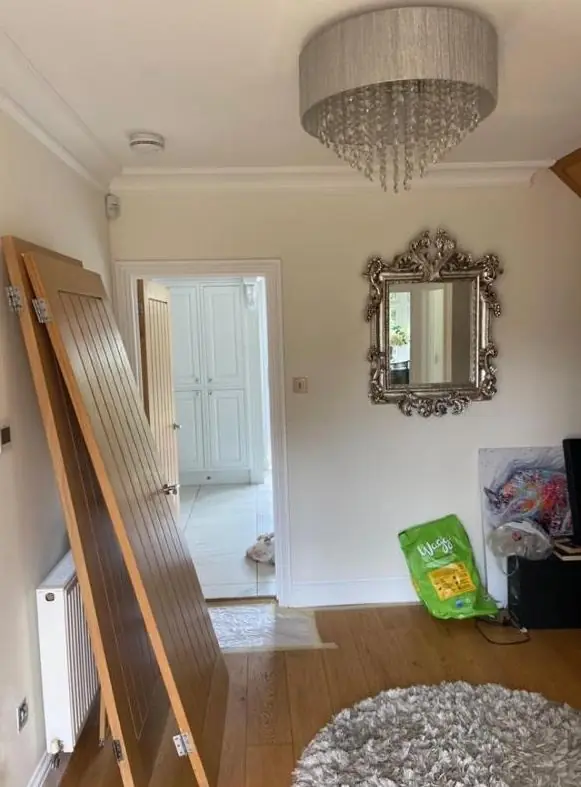
Not every hall in Little Houghton is cramped. Bigger houses on Station Road and Bedford Road have more formal entrance halls, with higher ceilings and wider stairs. These take a staging board across the well, more time on mouldings and turned balusters, and a single colour decision that carries from hall to landing. Homes at Nursery Close, Lodge Close and Home Acre are simpler again: modern plaster, standard softwood spindles and a straight flight, finished in a durable washable emulsion. Light from a single landing window in an old cottage is limited, so a paler wall colour and a sheen on the woodwork make a narrow flight easier and safer to use.
Keeping the house moving during the job
In a cottage with one staircase, it is the only way to the bedrooms, so we keep a clear route at all times, mark wet woodwork and leave the stairs safe at the end of every day. Little Houghton is largely a commuter village, and we agree start and finish times to suit when you are in and out. With few drives, the van stays on the street and dust sheets and steps come in through the front door. For other work in the village see our Little Houghton page, and for budgeting our decorating cost guide.
Last updated by Dean, DH Painter & Decorator.