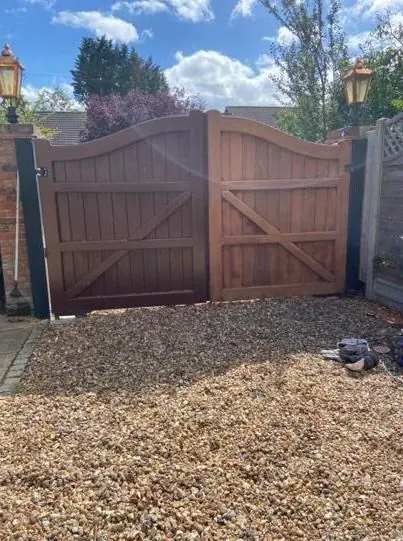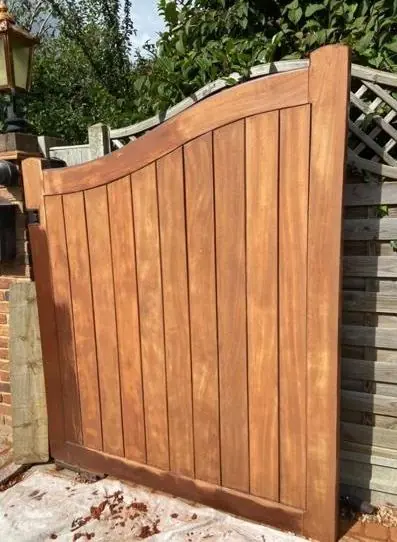
DH Painter & Decorator stains and paints garden gates and fences in Little Houghton, the village on the A428 about 3.1 miles east of Northampton. Here most gardens sit behind high ironstone walls, so the timber is often a gate in a wall opening, with fencing mainly on the post-war closes. Dean quotes after seeing the timber.
A village of walls, with gates in them
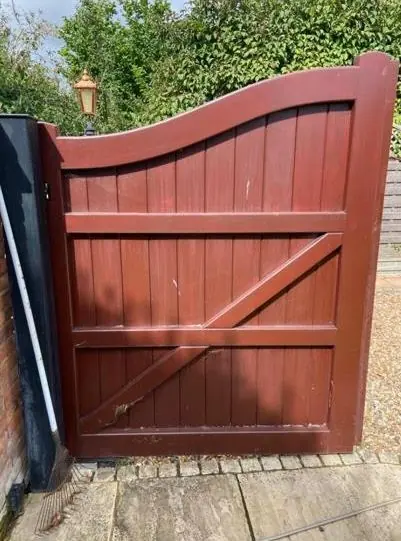
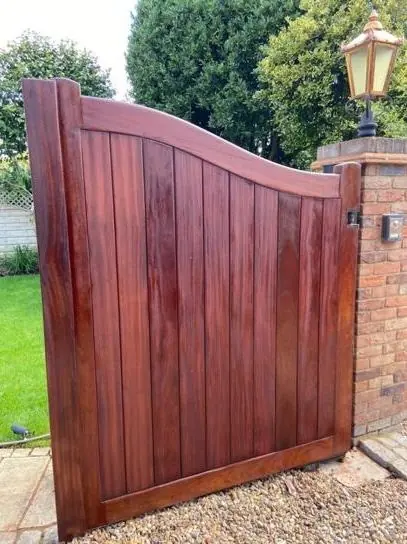
Much of Little Houghton is enclosed by stone. High ironstone walls, some in limestone, line the roads and wrap round gardens, and stone boundary walls over a metre high next to a highway are protected from demolition under the conservation area. So where another village would have a run of panel fencing along the front, here the timber you see from the road is usually a gate: a ledged and braced or boarded door set into an opening in the wall, sometimes hung on iron pins set into the stone.
Those gates take a lot of weather on a small area. The bottom rail sits close to damp ground, rain runs down the face and collects at the foot, and the edges rub against stone. Staining one well means taking it off its hinges where that is practical, so we can reach the top and bottom edges that are normally hidden, clean off grey weathered fibres, treat any soft timber and seal the end grain before the colour goes on. Where the gate cannot come off, we work it in place and protect the surrounding stone with care, because stain wicks into porous ironstone and limestone and cannot easily be lifted out.
Fencing around the edge-of-village houses
Garden fencing in the sense of lap panels, feather-edge boards and posts is mainly found around the post-war homes on Nursery Close, Lodge Close and Home Acre. Nursery Close and parts of Home Acre lie outside the conservation area, so you have more freedom on colour there. In a ridge-top village with open ground to the west and north, the fence face turned towards that open ground is usually the one that needs attention first.
- Panels that have greyed but are sound take a penetrating stain well after a clean and a dry spell.
- Fences coated in the past with a thick opaque product may need that layer weathered or brushed back before a different stain will soak in evenly.
- Gravel boards and the base of posts sit in damp soil and are worth checking before anything goes on.
Shade, moss and slow drying
Little Houghton is full of mature trees and heavy vegetation, and there are climbing plants on many walls. Timber that sits in shade most of the day grows green algae and moss, holds moisture for longer and dries slowly after a wet night. Before staining we clean off organic growth, let the wood dry right through, and plan the job for a spell of dry weather so the stain can absorb rather than sit on a damp surface. In heavily shaded spots, a product with built-in protection against mould and algae is worth considering.
If the timber is beside a climber you want to keep, we can usually ease it away from the face and tie it back, rather than cut it, then let it return once the finish has cured.
Choosing a colour that sits with the stone
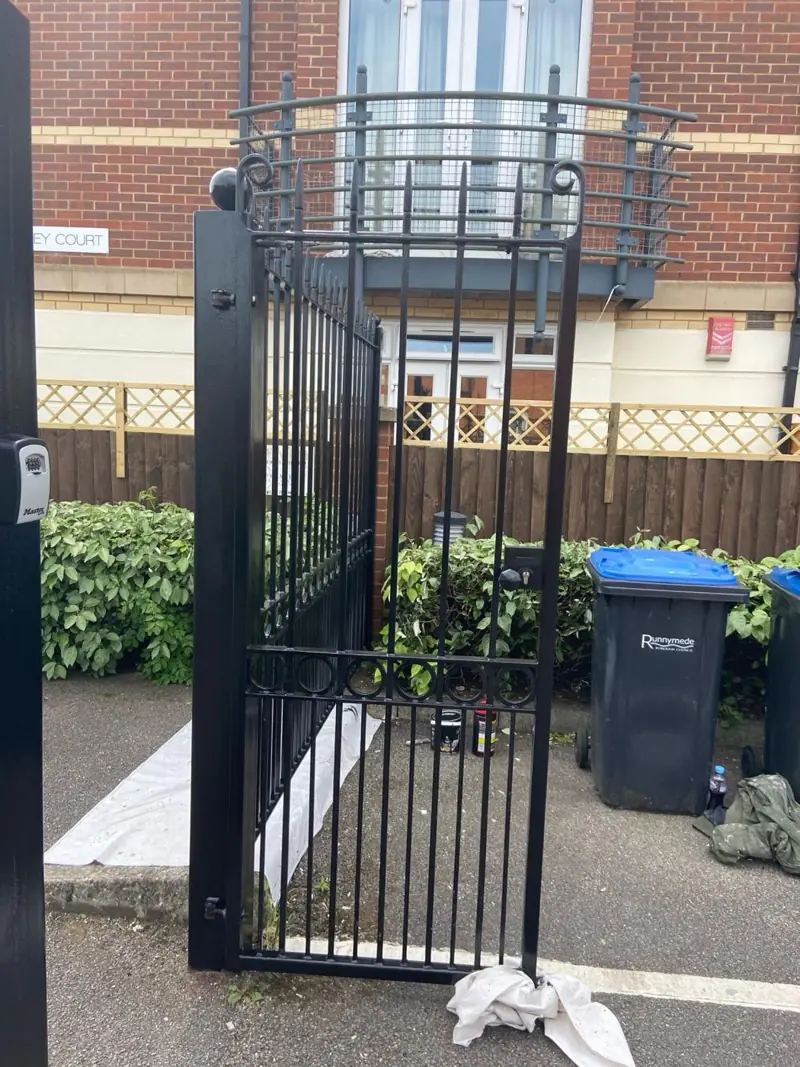
A gate in a wall is seen from the street, and inside the conservation area that matters. Natural timber tones, dark browns, deep greens and muted greys sit comfortably against ironstone and limestone. Bright modern colours on a gate in the historic core should be checked with West Northamptonshire Council first, and if the wall and gate belong to a listed building, a change of finish may need consent. On the closes outside the conservation area, the choice is yours.
Our main fence and gate staining page sets out the products and preparation we use. The Little Houghton area page covers other painting work in the village, and our guide to timing outdoor work explains which months suit staining.
Last updated by Dean, DH Painter & Decorator.