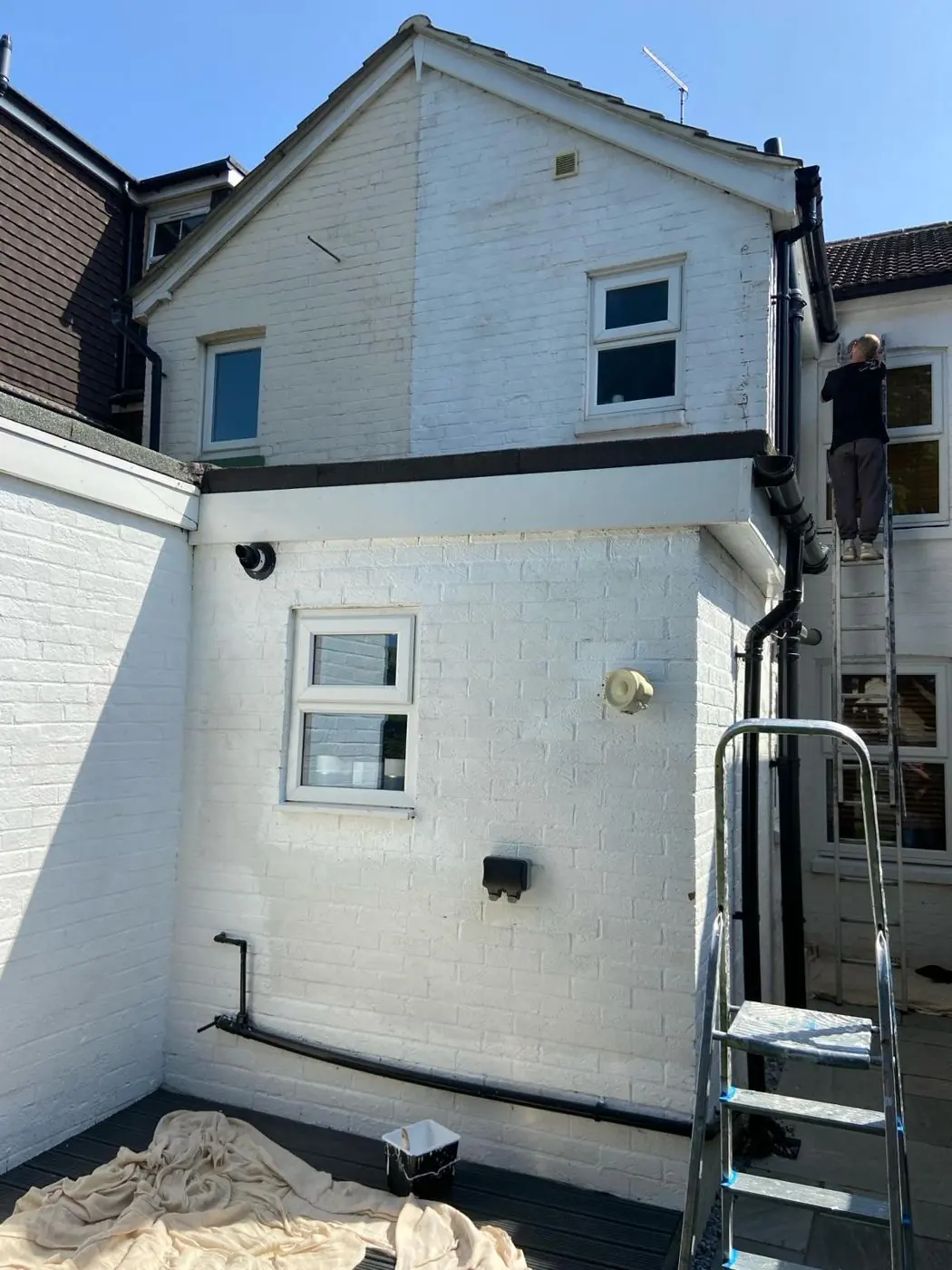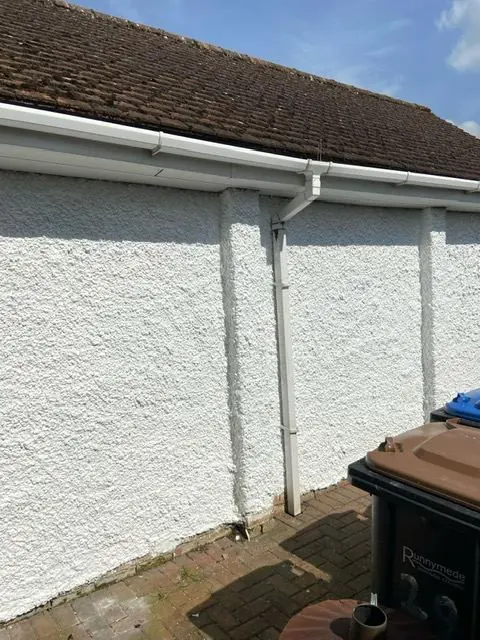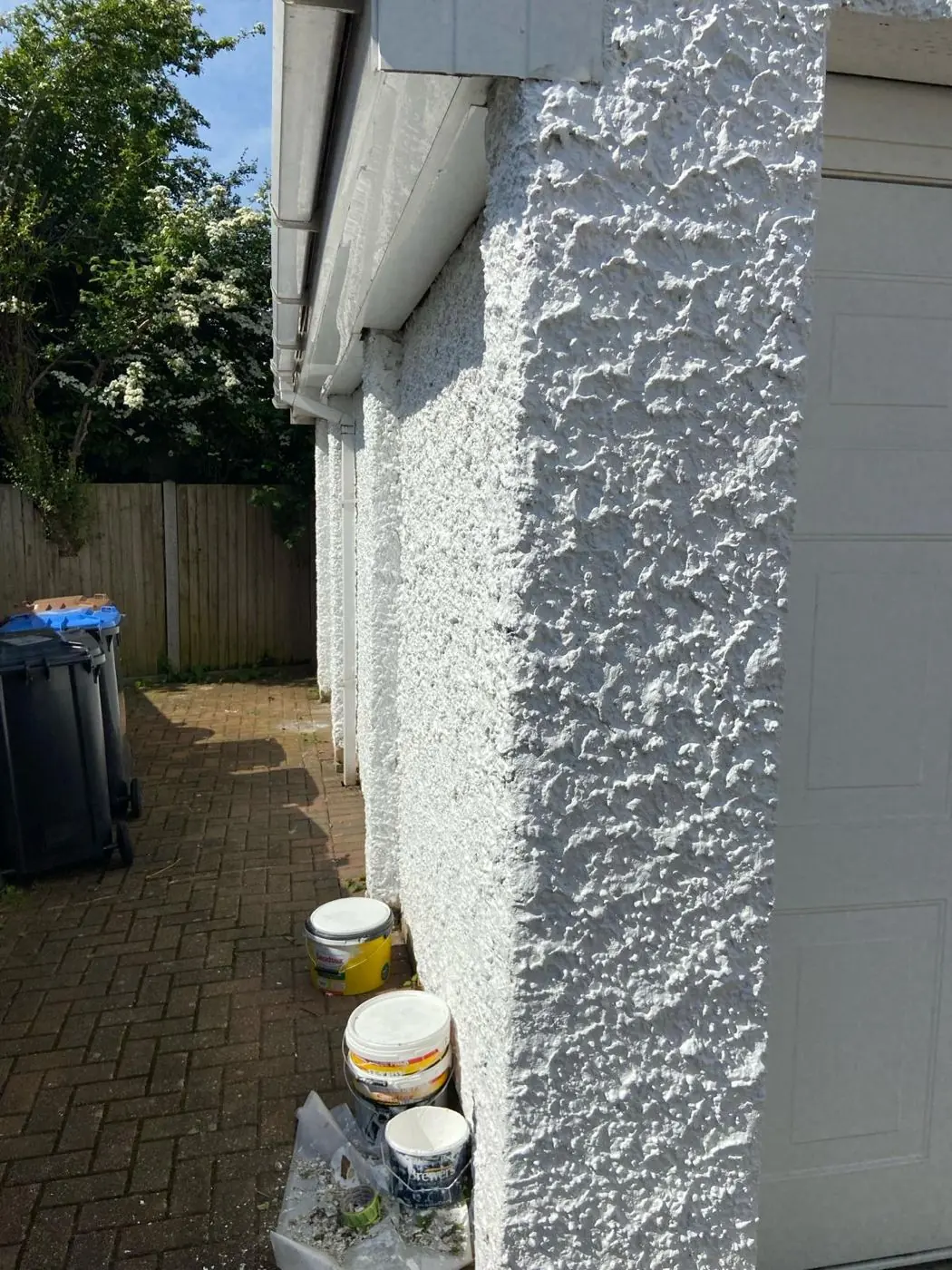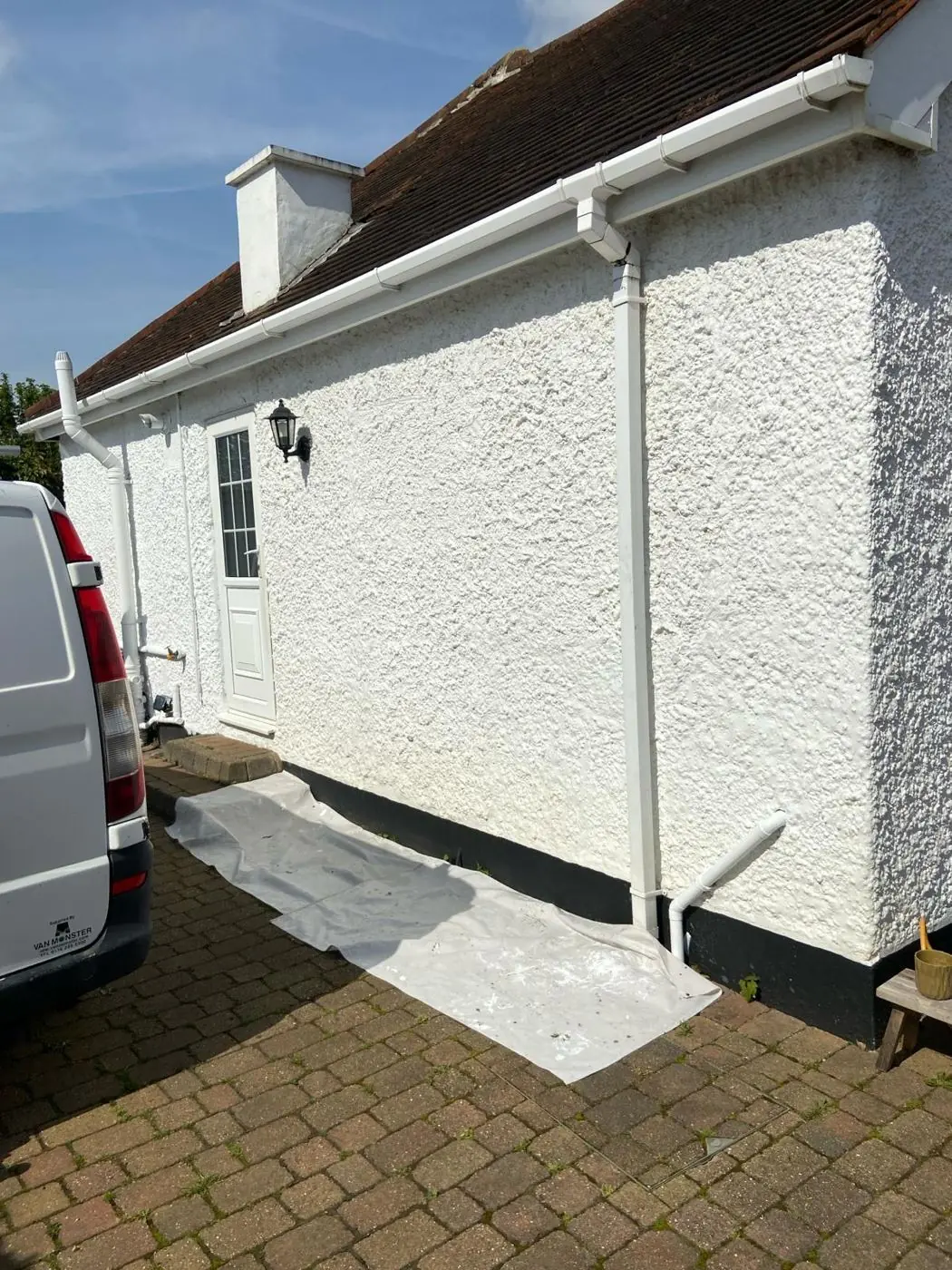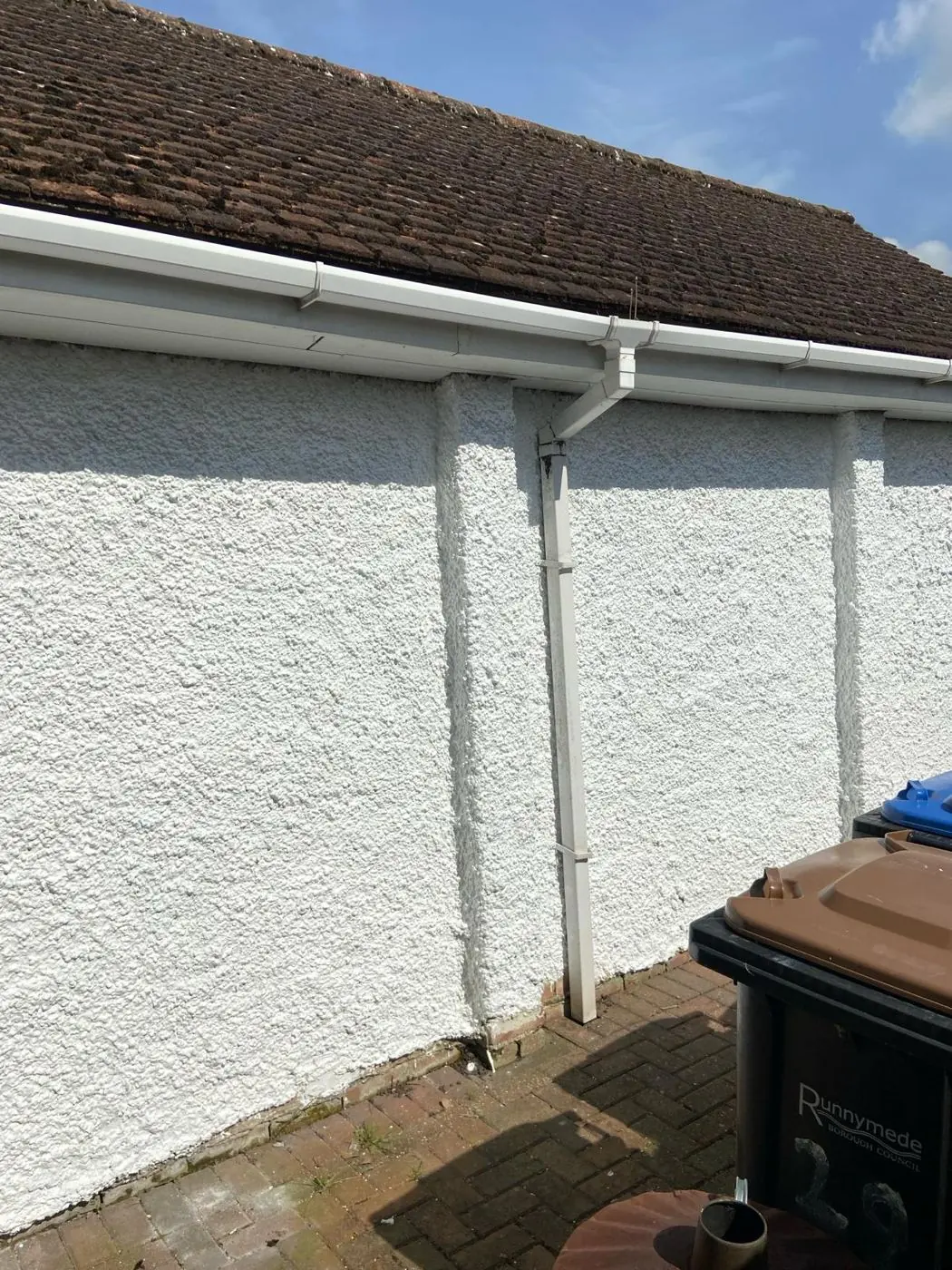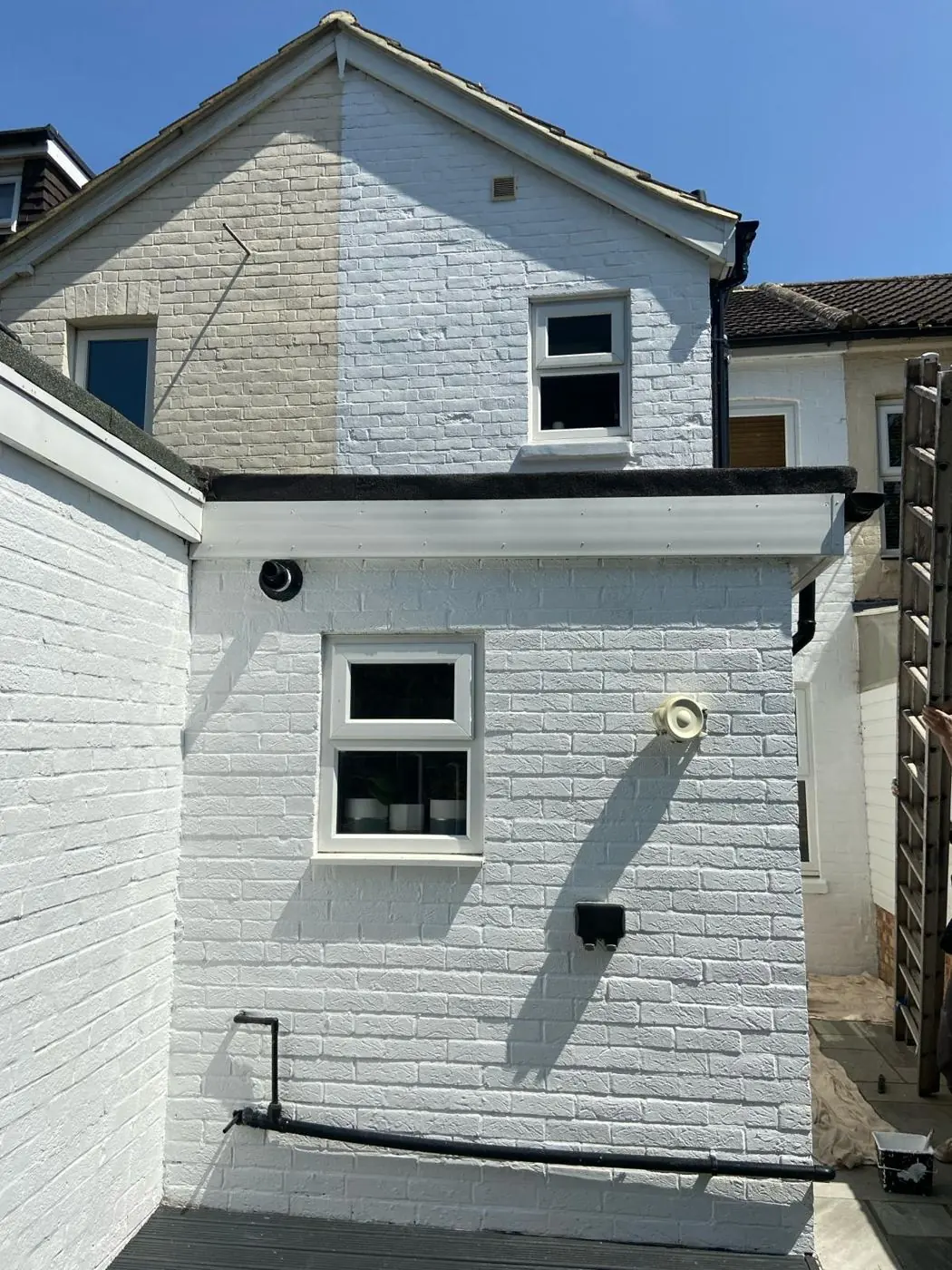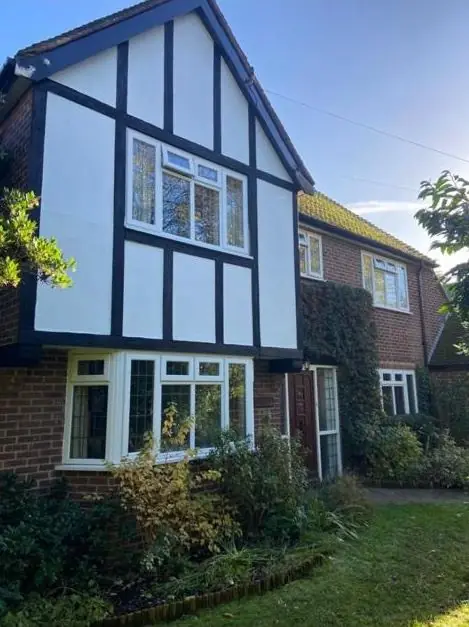
DH Painter & Decorator paints fascias, soffits, bargeboards and gutters in Little Houghton, an NN7 village 3.1 miles east of Northampton town centre. Most boxed rooflines here belong to the post-war homes on the village edges, while the older stone cottages need different care at the eaves. Dean prices each roofline after looking at it.
Where the boarded rooflines are
Little Houghton is unusual for a roofline painter. The historic cottages along Bedford Road, Lodge Road and Meadow Lane mostly have open eaves without gutter boards: the rafters run out over the wall and the roof finishes in pantiles, plain tiles or slate, with a few thatched roofs still in place. There is no fascia and soffit box of the kind you find on a modern house. Boarded rooflines are mainly on the small post-war developments at the edges of the village, on Nursery Close, Lodge Close and Home Acre, and that is where most of this work happens.
| Property type | What is at the eaves | What painting involves |
|---|---|---|
| Post-war infill on the closes | Softwood fascias, soffits and bargeboards, sometimes partly uPVC | Full preparation and repaint of timber, gutters and downpipes, with any uPVC cleaned or coated to match |
| 17th and 18th-century stone cottages | Open eaves, exposed rafter ends, occasional bargeboards on gables and dormers | Hand preparation of old timber, breathable finishes, no flame near thatch |
| Larger houses and 19th-century buildings | Varies building to building | Assessed at the visit, with consent checked if the building is listed |
Painting the closes on the village edge
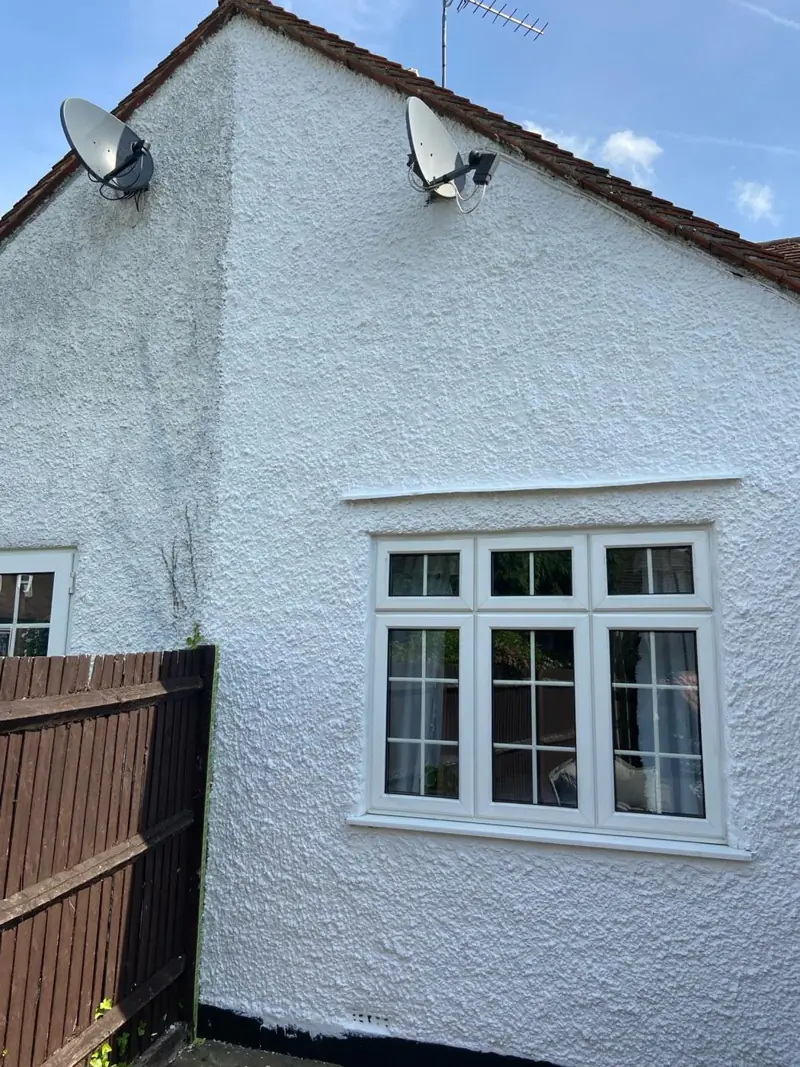
The edge-of-village houses are outside the historic core, and Nursery Close and parts of Home Acre are excluded from the conservation area altogether, so the work there is closer to a standard roofline repaint. Where a house on the closes has a west or north-facing roofline looking out over open ground towards the Nene valley, those boards tend to weather first, with the paint cracking along the bottom edge where water sits behind the gutter. We check every board for soft timber, cut out and splice where needed, then prime bare wood and build up the coats. Gutters and downpipes are usually done at the same time so the roofline finishes as one colour.
Some of these houses have had a mix of uPVC and timber fitted over the years. We can repaint the timber and clean the plastic, or use a suitable primer to bring uPVC into the same colour if you would rather it all matched.
Gable timbers and eaves on the older cottages
Where an older cottage does have painted timber at the roof, it is usually a bargeboard on a gable or the cheeks of a gabled dormer. These boards can be very old and carry thick paint. Treat it as possibly lead-based: we wet-scrape rather than dry-sand. On the thatched cottages of Lodge Road and Meadow Lane, no heat gun or flame goes anywhere near the eaves. Any colour change on one of the listed cottages may need listed building consent, so on those we repaint like for like unless you have checked otherwise.
Ladders, trees and wires
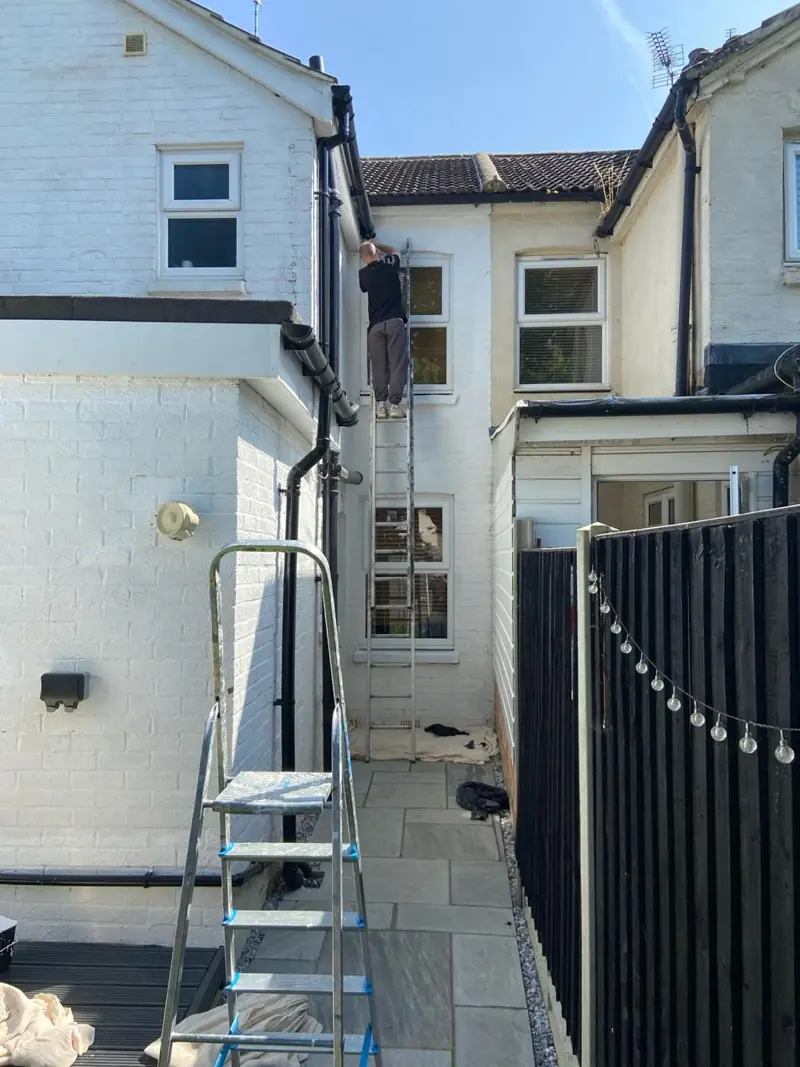
Access in the village is mostly about what is on the ground and in the air. Cars park on the street and on verges because few homes have drives, so ladder positions are agreed with you before the day. Mature trees and roadside vegetation overhang some rooflines; branches touching the fascia hold moisture against it and need cutting back before painting. Overhead wires run along some streets, and where they come near the eaves we plan ladder angles around them or use a different access method. Where a house on the closes is two storeys, ladders with a stand-off usually reach the roofline safely.
Our main fascia and soffit painting page covers the standard process step by step. For other work on homes in the village, start from the Little Houghton area page, and for a sense of how roofline jobs are priced, read our painter and decorator cost guide.
Last updated by Dean, DH Painter & Decorator.