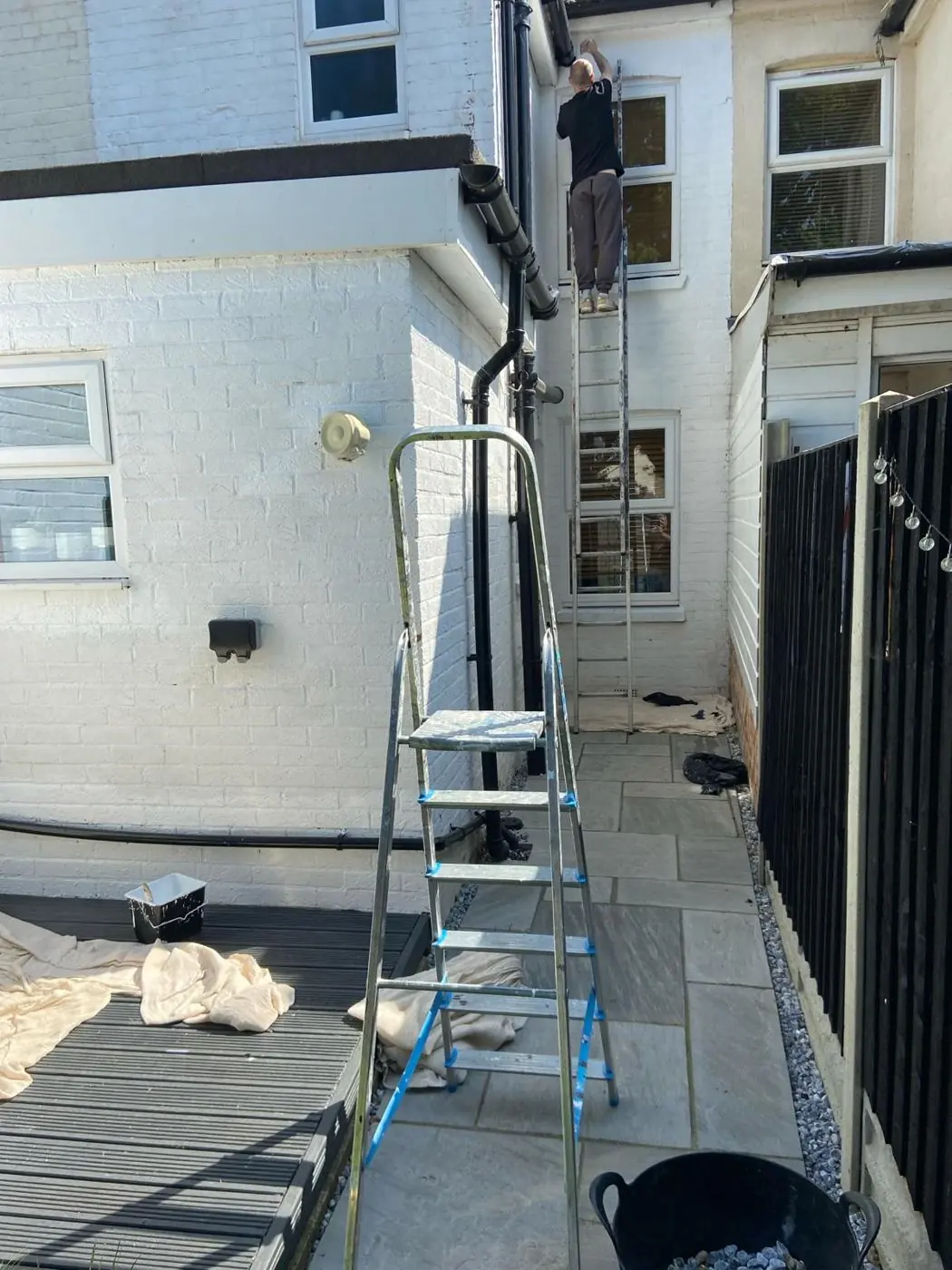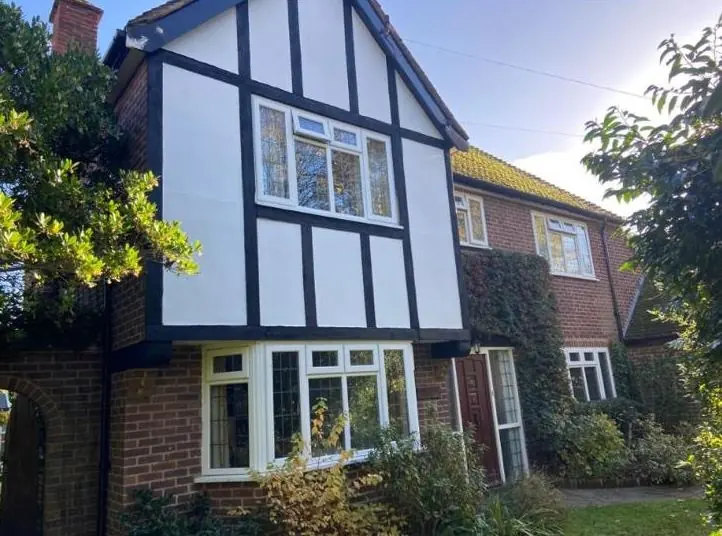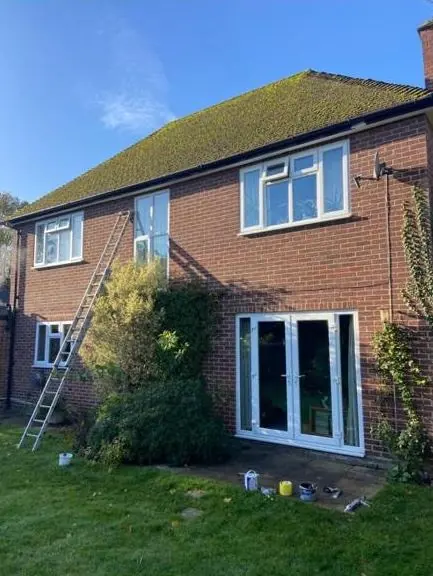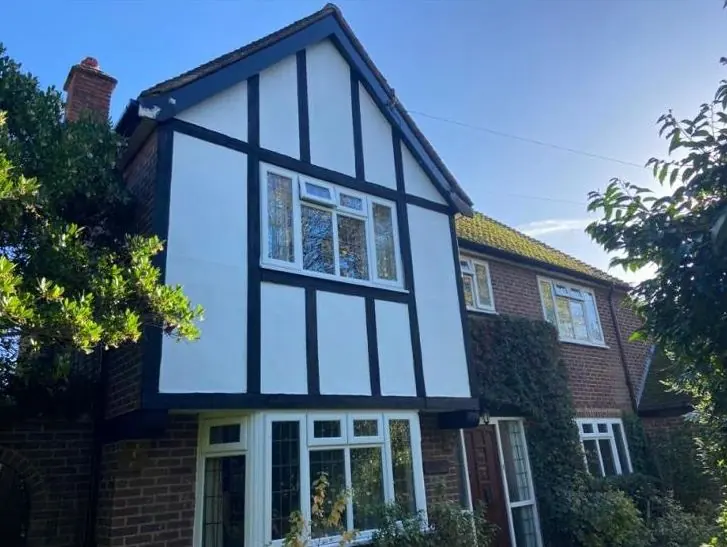
Dean at DH Painter & Decorator covers render and masonry painting in Little Houghton, about 3.1 miles east of Northampton. In a village of bare ironstone and limestone, that work is limited to walls that are already painted or rendered, and it uses breathable mineral or lime-based finishes rather than standard acrylic masonry paint.
Why we often tell people not to paint
Little Houghton is a village of exposed stone. Its 17th and early 18th-century cottages are built of coursed rubble ironstone and limestone, many laid in bands of the two, with ironstone dressings around openings. Elizabeth Cottage on Bedford Road, dated 1601 and listed Grade II, is coursed squared limestone banded with ironstone. The conservation area appraisal treats this bare stonework as central to the village’s character and lists painting among the changes that cause harm. If you are thinking of painting a stone wall that has never been painted, our advice is usually to leave it, repoint where needed with lime, and put the money into the woodwork instead.
That is not the answer a painter would normally give, but on these walls it is the correct one. Once a coating goes onto soft ironstone it is very hard to remove without damaging the face of the stone.
Walls that are already painted or rendered
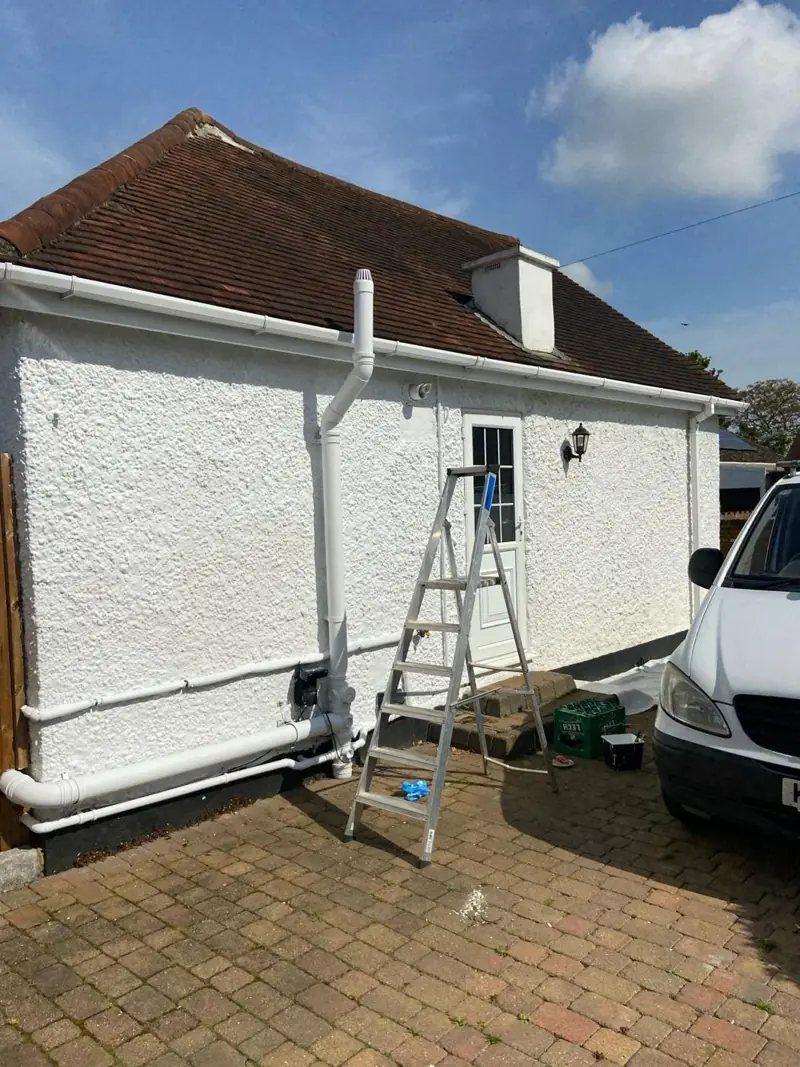
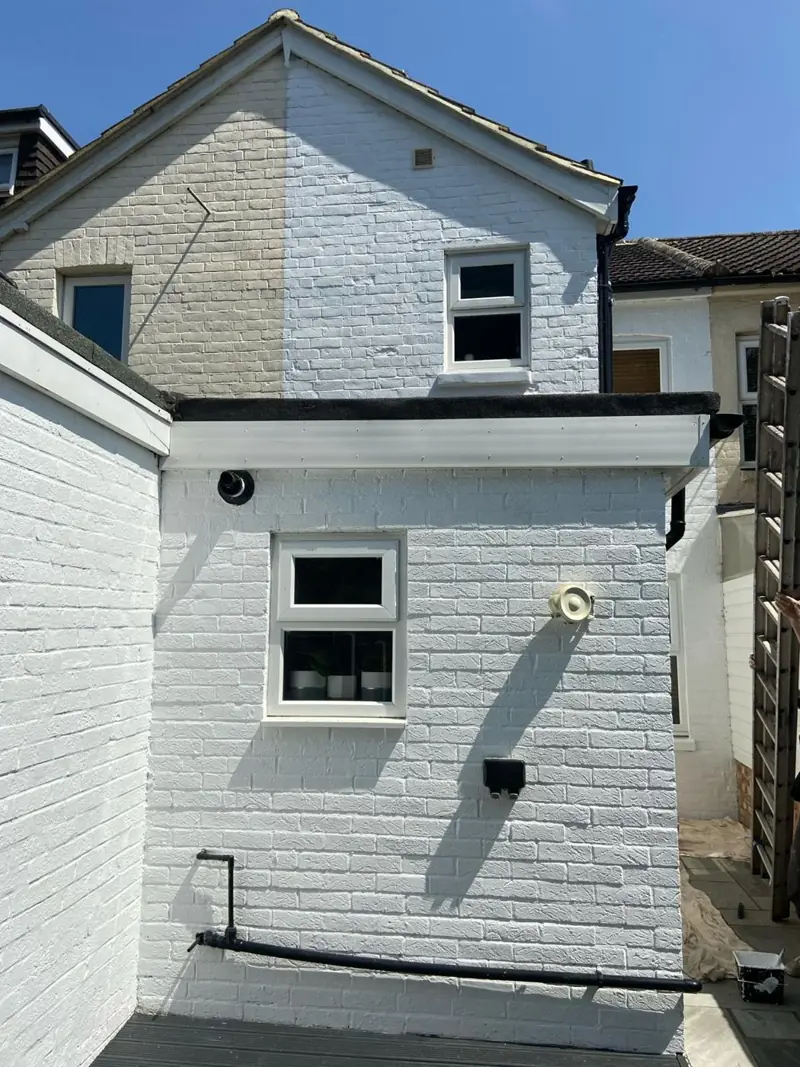
There are exceptions. Some outbuildings, rear walls, extensions and later repairs carry render or an old coat of paint, and those surfaces do need looking after. The question is what goes on next. Stone and lime mortar walls of this age have no damp-proof course in the modern sense; moisture rises and soaks in, then leaves through the face. An acrylic masonry paint forms a skin that slows that down, so water collects behind it, the stone and mortar stay wet, and the paint blisters and peels, often taking the surface of the stone with it.
Our approach on these surfaces is to:
- find out what is on the wall now, since an old plastic coating may need removing before anything breathable will work;
- look at the render itself, because hard cement render on a lime-built wall can trap moisture whatever goes over it;
- use mineral silicate paint or limewash, both of which let vapour pass, matched to whether the base is lime or cement;
- keep colours in the soft earth tones that sit with ironstone, limestone and red pantiles.
Our guide to painting render and roughcast covers the coating types in more depth.
Listed walls, boundary walls and consent
There are 38 listed buildings in the conservation area, two of them Grade II*: the church of St Mary the Virgin and Little Houghton House, which is limestone ashlar. Applying any coating to a listed wall, or changing an existing one, can need listed building consent, and work on the Grade II* buildings is specialist conservation work. Unlisted homes are still inside the conservation area, so we suggest a quick word with West Northamptonshire Council’s heritage officers before a colour change on a previously painted front.
The high ironstone boundary walls along the roads are a defining feature too. Stone walls over a metre high next to a highway are protected from demolition, and they are not something to paint. If a boundary wall has been painted in the past, we will discuss whether to maintain it breathably or leave it to weather back.
Shade, damp ground and drying
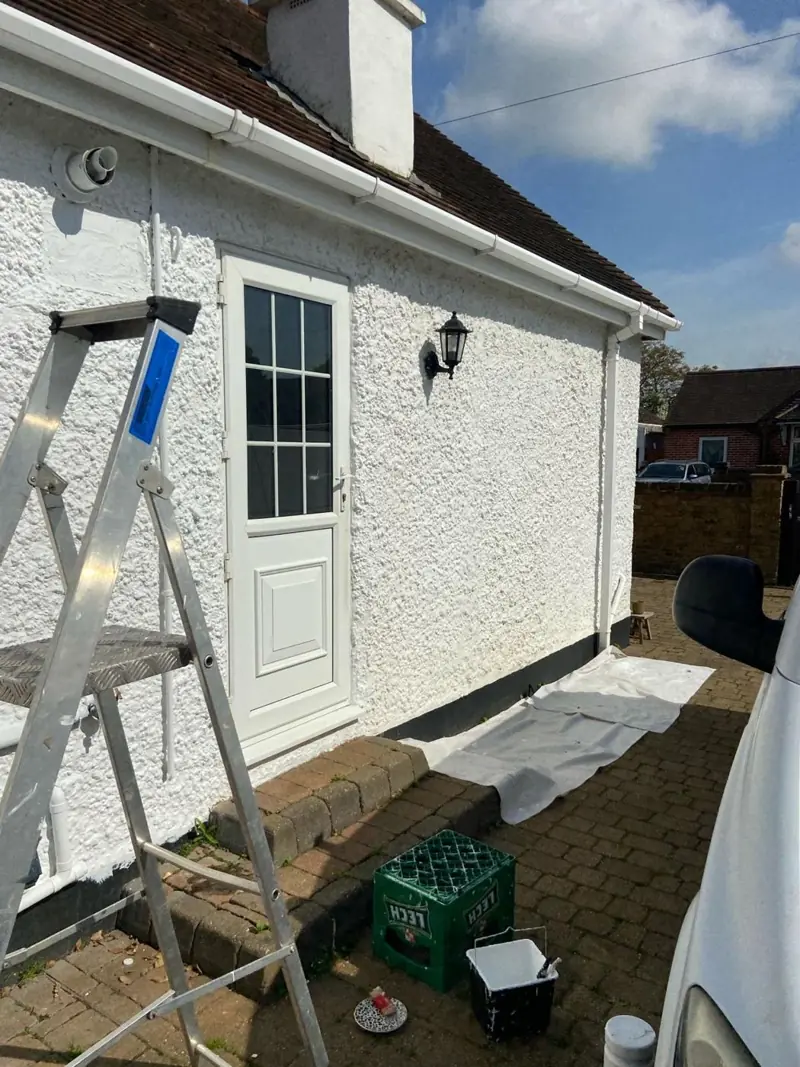
Mature trees, grass verges and climbing plants are everywhere in the village, and shaded lower walls stay damp. Before any breathable coating goes on we remove organic growth, let the wall dry out properly and pick a spell of settled weather, since limewash in particular needs slow, even drying. Walls facing west over the open Nene valley get the driving rain, so they are the ones we watch most closely.
For the general method behind our masonry work, see the main render and masonry painting page, and the Little Houghton area page explains how we cover the village as a whole.
Last updated by Dean, DH Painter & Decorator.