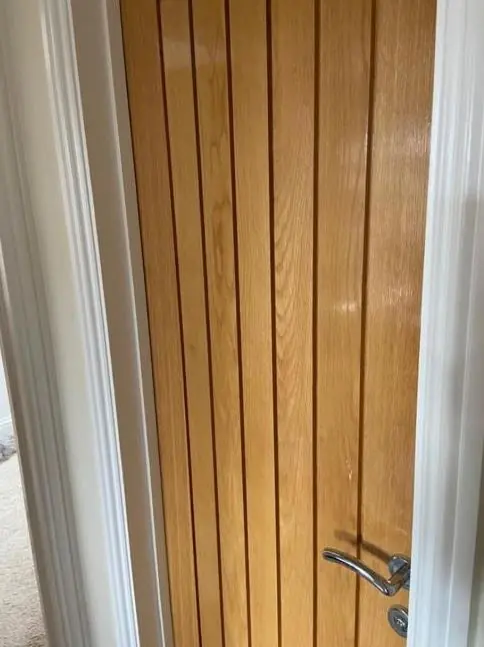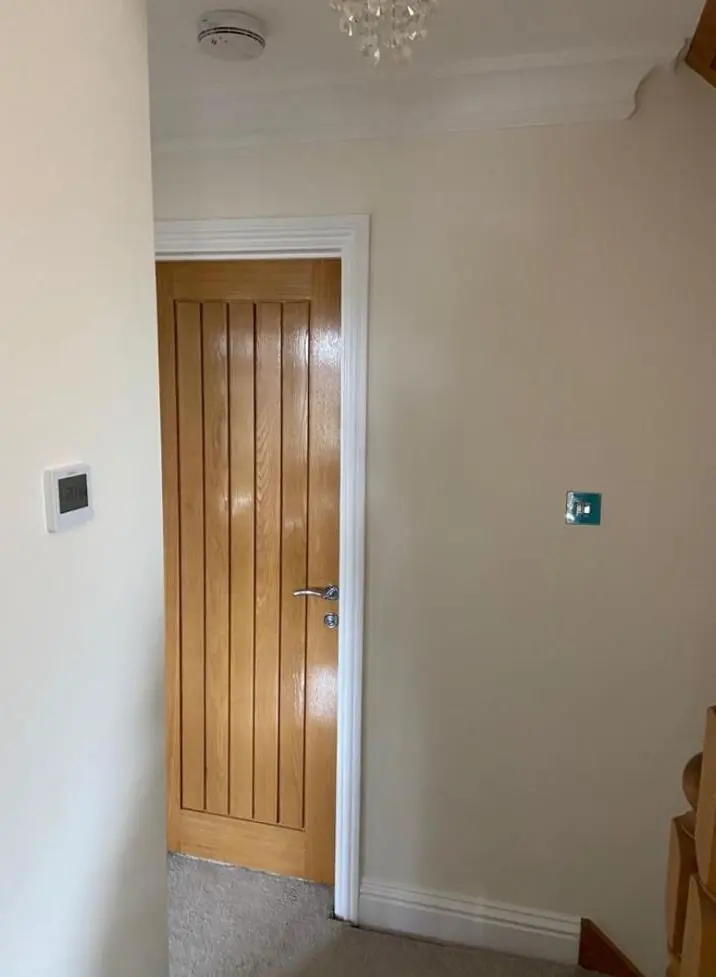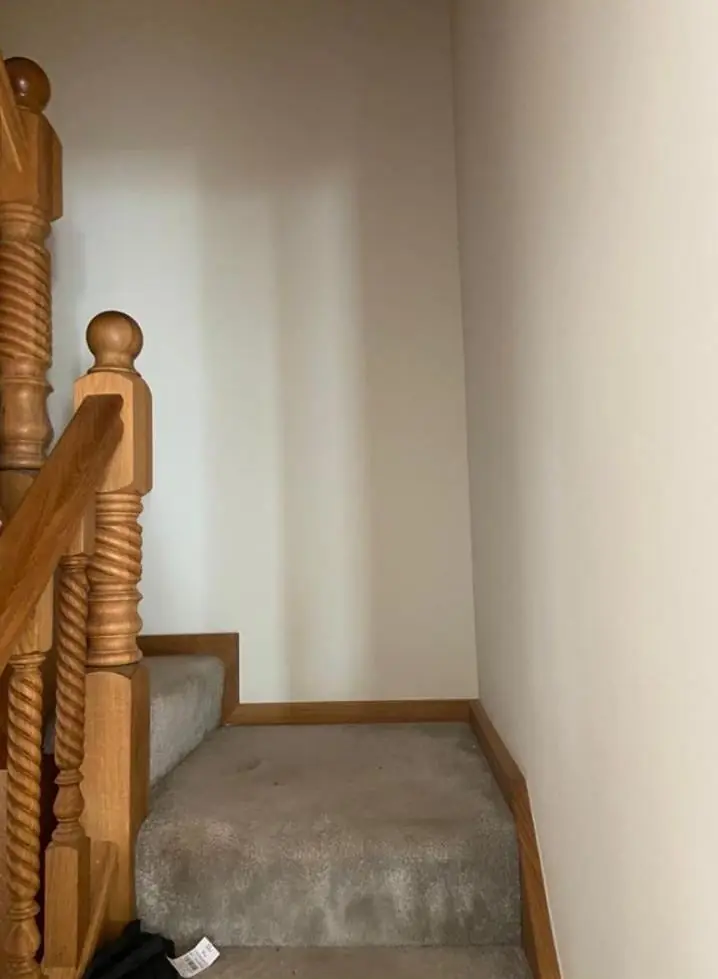
Dean paints doors, windows, frames and skirtings in Little Houghton, the NN7 village about 3.1 miles east of Northampton town centre. Most of the work is on 17th and 18th-century stone cottages in the conservation area, where traditional doors and timber windows should be kept and repainted like for like.
Street doors that open onto Bedford Road
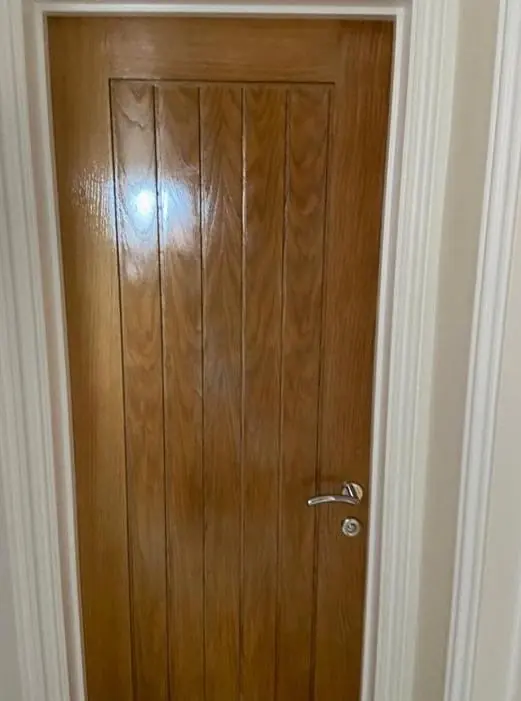
Little Houghton is a village where the front door is often the first thing on the pavement. Most of the 17th and early 18th-century cottages along Bedford Road, Lodge Road, Meadow Lane and Station Road were built right on the road edge, so a timber door or casement window is within arm’s reach of passers-by and the traffic on the A428. That makes joinery the most visible paintwork in the village, far more than the walls, which are coursed ironstone and limestone meant to stay as bare stone. The conservation area appraisal asks for surviving traditional doors to be protected, and repainting a sound old door instead of replacing it is what that means in practice. We cover Little Houghton from our Northampton base, about 3.1 miles east of the town centre, for front doors, frames and windows and the internal doors and skirtings behind them.
Joinery in houses dated from 1601 onwards
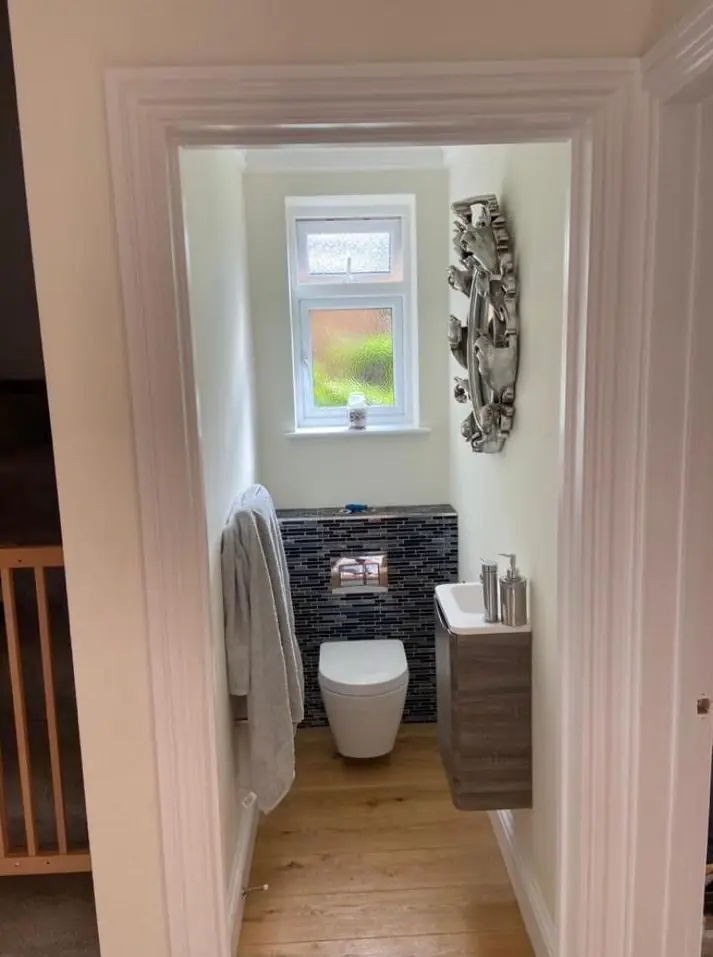
Elizabeth Cottage at 55 Bedford Road is dated 1601, and the village largely took its present form in the 17th century. Timber in houses of that age has been painted many times, often with old oil-based coats that are thick at the edges and failing in the middle. Before anything new goes on, Dean checks how sound the layers are, marks soft wood around sills and timber lintels for a joiner to repair, and decides whether to build on what is there or take it back. On small casements and sashes, linseed-oil paint or a good microporous system lets the wood move and breathe instead of trapping moisture under a hard skin. Colour stays like for like unless you have checked with West Northamptonshire Council’s conservation officers, because the appraisal names painting among the small changes that can harm the conservation area.
- With 38 listed buildings in the conservation area, a change of colour or finish on a listed cottage may need listed building consent.
- Thatched cottages on Lodge Road and Meadow Lane rule out heat guns and blowlamps near eaves and windows, so stripping there is done by hand or with chemical strippers.
- Old paint on early joinery may contain lead, so we avoid dry sanding it and use wet methods instead.
Weather on the ridge, shade under the trees
The village sits on the southern ridge of the Nene valley, with open views west of Bedford Road over the river. Doors and windows facing that way catch wind and rain coming across open ground, and their paint breaks down faster than on a sheltered back wall, so expect to look at them sooner. Elsewhere the opposite applies: mature trees, heavy roadside planting and climbing plants on cottage walls keep some joinery damp and shaded. There we cut growth back from frames, clean off green algae and leave longer between coats. Our guide to the right season for outside painting explains why late spring to early autumn suits these jobs.
Skirtings and doors inside stone cottages
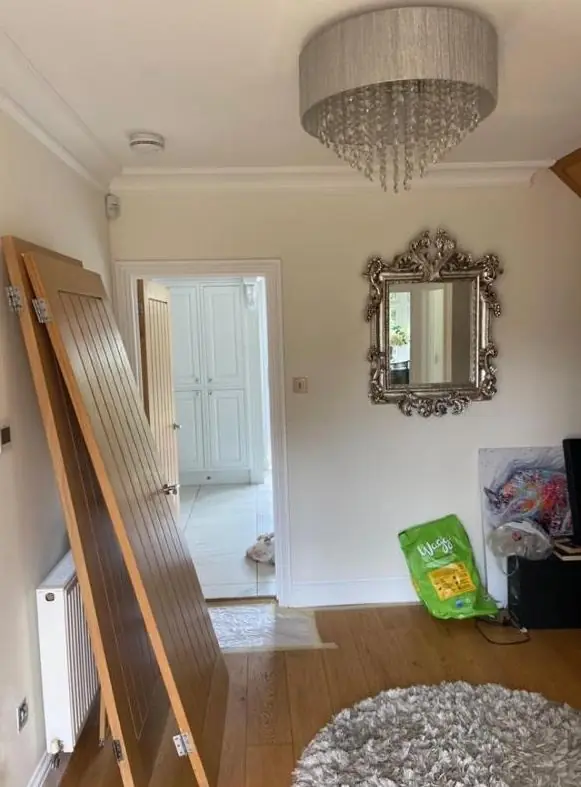
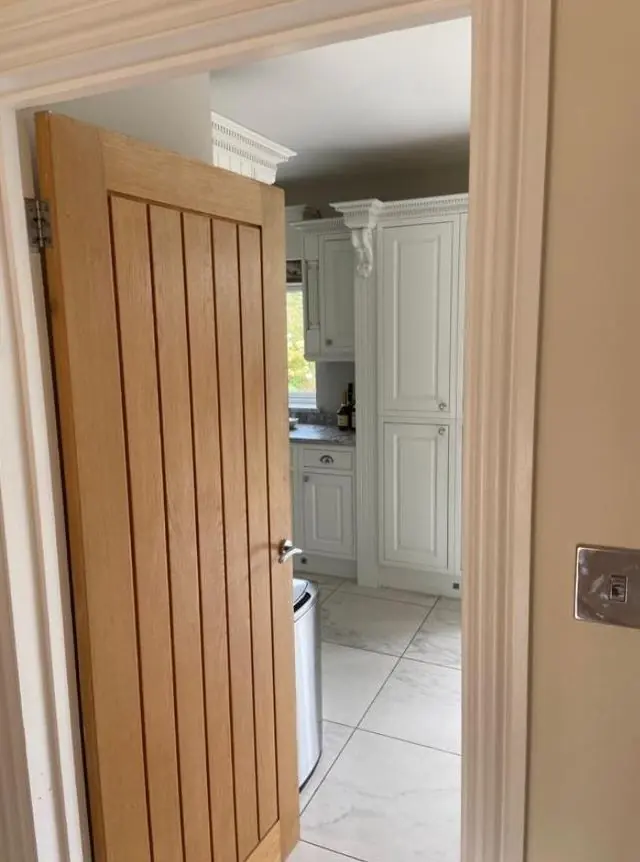
Indoors, the cottages have a narrow-depth, wide-frontage plan, so rooms are shallow and a lot of woodwork is packed into a small floor area: ledged or panelled doors, deep window boards set into thick stone walls, and skirtings along floors and walls that are rarely level. Forcing a straight caulk line into a wavy gap between skirting and lime plaster looks wrong and cracks when the wall moves, so we fill with a flexible product and let the line follow the wall. The houses at Nursery Close, Lodge Close and Home Acre are a different job, with softwood joinery and modern plaster that take a standard primer, undercoat and satin or eggshell finish. Our main doors, skirtings and woodwork page covers that process in full.
Working from the pavement edge
Because few homes here have drives and cars park along the street and verges, front door and window work happens a metre or so from the road. We keep the doorway usable, put up wet-paint notices, and plan when a door has to stay propped so you are not left with an open house. The van and materials stay at the roadside for short spells agreed with you beforehand. More on the village as a whole is on our Little Houghton area page.
Last updated by Dean, DH Painter & Decorator.