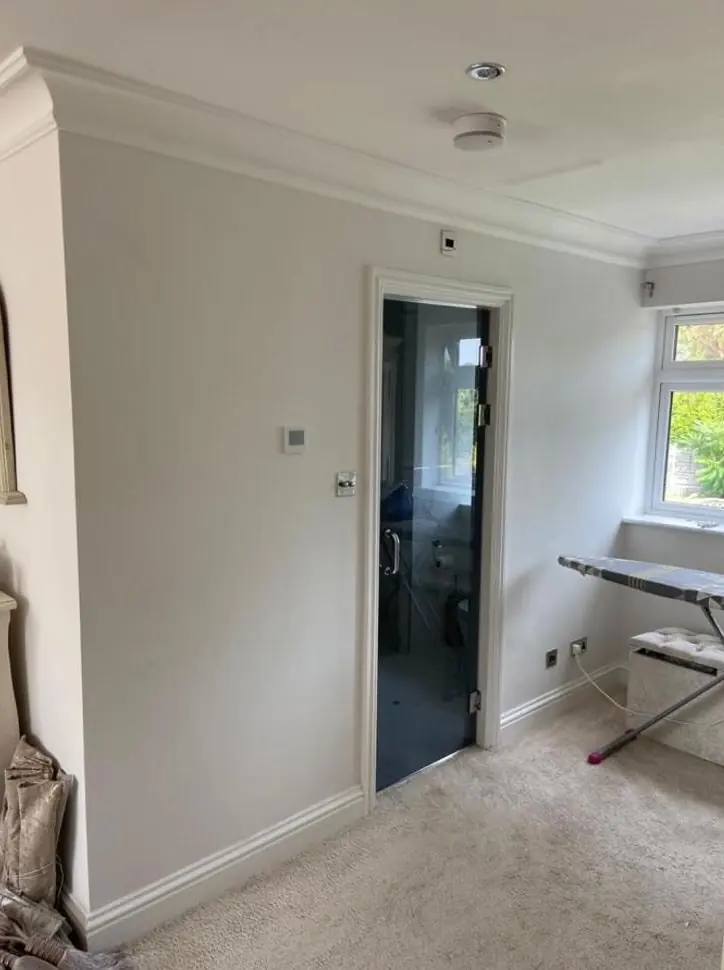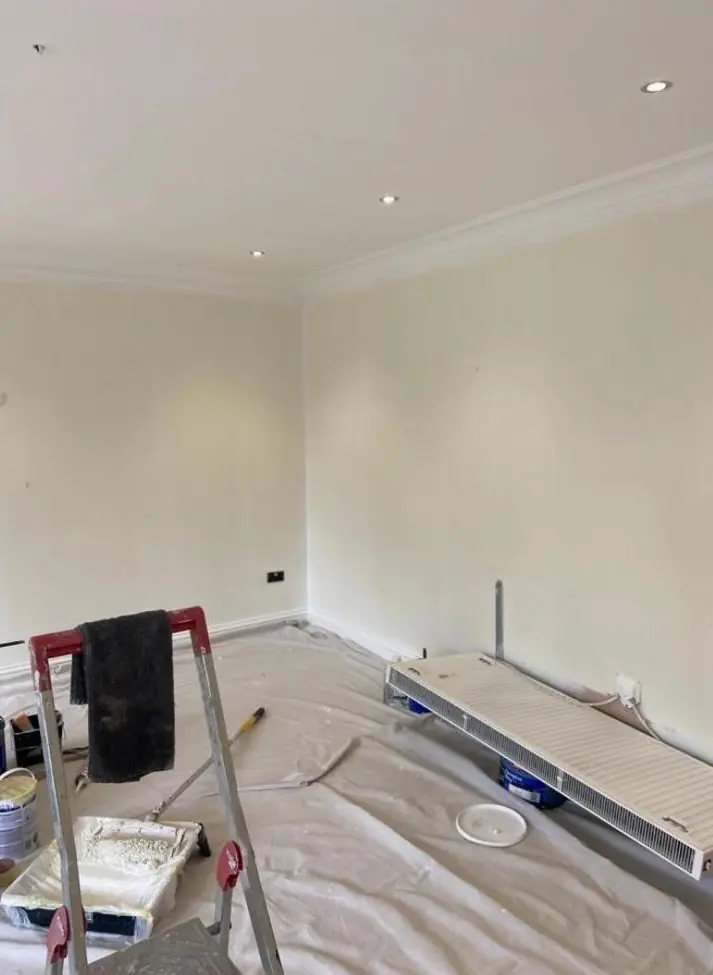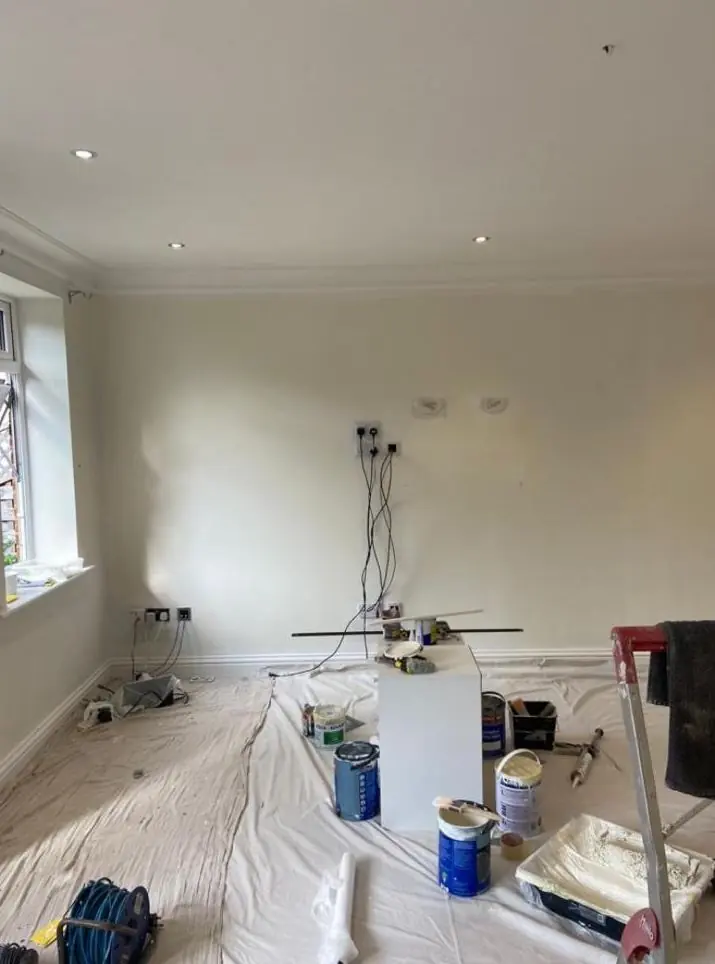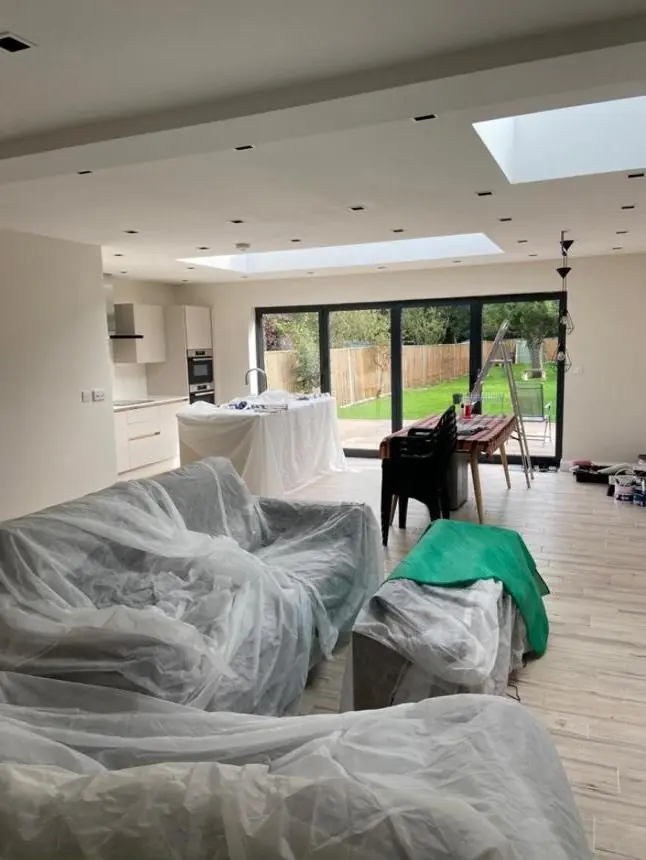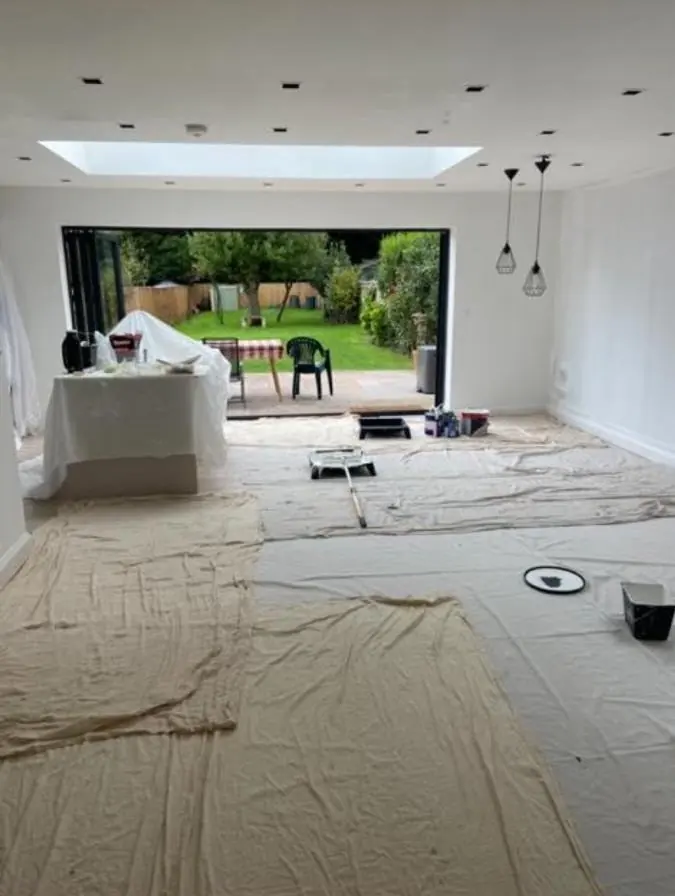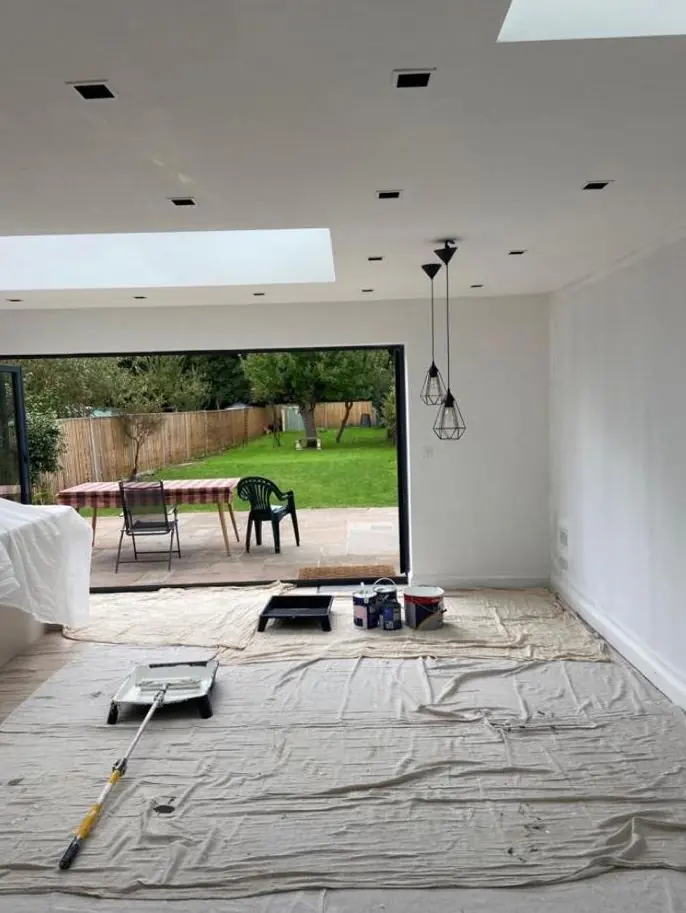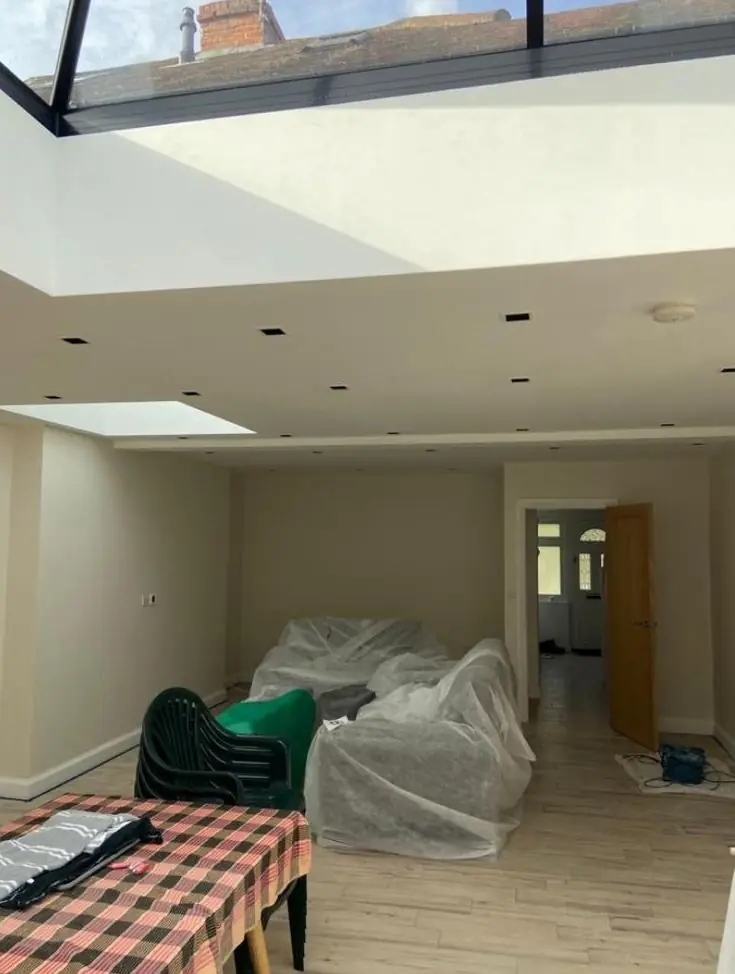
Dean decorates new plaster in Little Houghton, about 3.1 miles east of Northampton town centre. That covers extensions and re-skims on the post-war closes with a standard mist coat, and lime plaster repairs in the village's 17th-century cottages, which need a breathable paint instead of vinyl.
Where new plaster turns up in Little Houghton
New plaster in Little Houghton comes from two quite different kinds of work. One is modern: extensions, re-skims and new rooms on the post-war houses at Nursery Close, Lodge Close and Home Acre, and extensions to older properties, where the 2015 conservation area appraisal asks for high-quality materials. The other is repair work inside the 17th and 18th-century stone cottages, where a patch of failing plaster is replaced, ideally with lime. The two need opposite approaches to the first coat, and mixing them up is the main way new plaster decoration fails here. We cover the village, 3.1 miles east of Northampton town centre, for both.
Gypsum skim on modern extensions
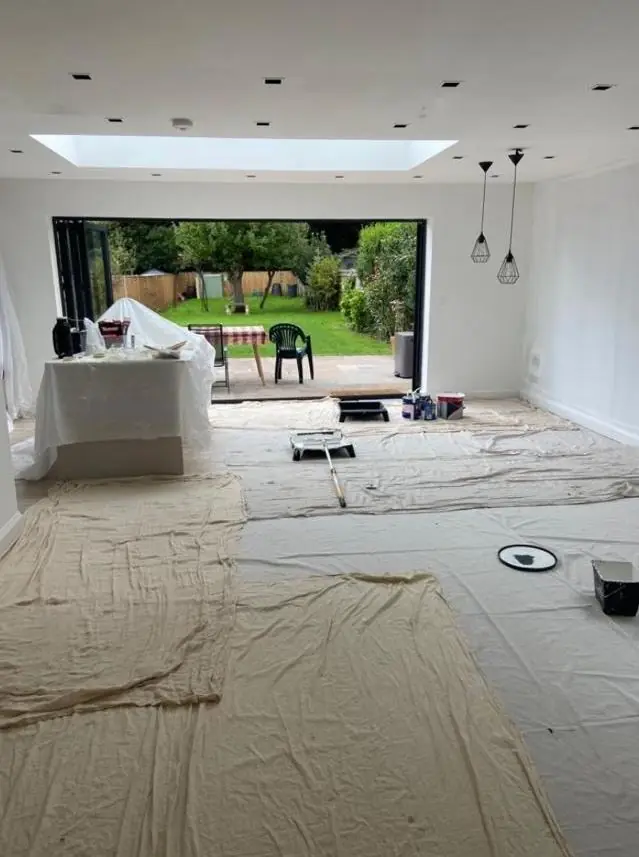
On a gypsum skim or plasterboard in a modern extension the routine is familiar: wait until the surface is an even pale colour all over, apply a mist coat of thinned contract matt so the porous plaster soaks it in, then two finish coats. Dean checks corners, window reveals and the area behind radiators, where drying lags. Filling and sanding come after the mist coat, which shows up trowel marks. New softwood skirtings, architraves and doors get knotting, primer, undercoat and topcoat. The full steps are in our mist coat guide and on the main new plaster and extension page, so here we stick to what is particular to the village.
Lime plaster repairs in stone cottages
In a cottage of coursed ironstone and limestone laid in lime mortar, the walls dry outwards through the plaster. A plasterer patching them should use lime, and lime cures far more slowly than gypsum, often weeks per coat depending on thickness and season. A standard vinyl mist coat over it seals the face and stops the wall breathing, so damp collects behind and can blow the paint or soften the new plaster. We leave fresh lime until it has fully carbonated and dried, then use a breathable claypaint, mineral paint or limewash matched to the rest of the room. Where a patch sits beside old distemper or limewash, the new paint must suit both, which sometimes means redecorating the whole wall instead of touching in.
- Gypsum on a modern extension: mist coat of thinned contract matt, then two coats.
- Lime plaster in a stone cottage: full cure, then a breathable system with no vinyl.
- Where an extension meets an old stone wall: check both sides and use the more breathable paint.
Extensions joined to historic fabric
With 38 listed buildings in the conservation area, some extensions join directly onto old walls. A hairline crack often opens at that junction as the new structure settles, and the old side may be lime plaster while the new side is gypsum. We fill with a flexible filler, decorate the historic wall in a breathable paint and carry the colour across the join. If the original house is listed, changing the finish on its historic walls may need consent, so check with West Northamptonshire Council first. More about the village is on our Little Houghton area page.
Timing around builders and the street
Few Little Houghton homes have drives, so skips, plasterers’ vans and our van all compete for space on the street and verges. We set a start date once the plaster has actually dried, not on the day the plasterer leaves, and keep materials compact at the roadside. Rooms shaded by the village’s mature trees can dry more slowly, so we take moisture readings before the first coat rather than going by the calendar.
Last updated by Dean, DH Painter & Decorator.