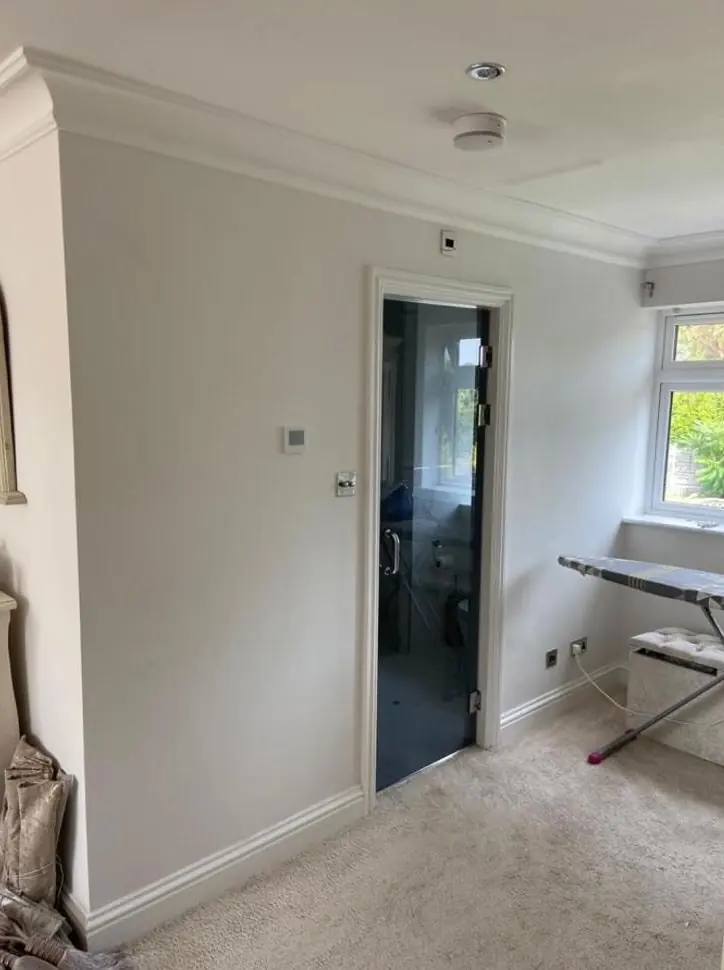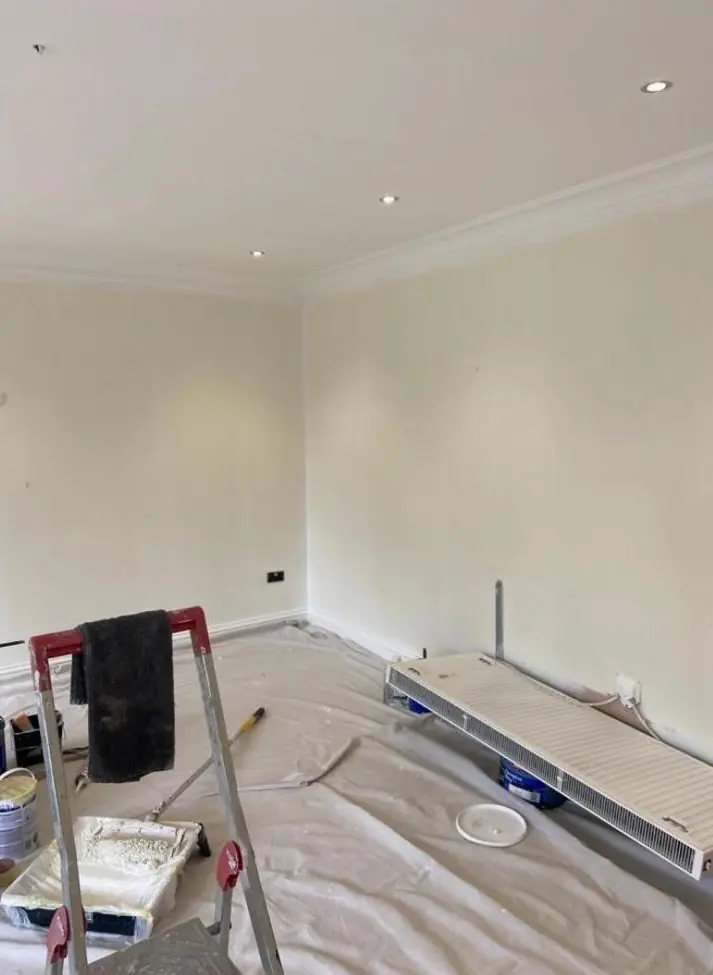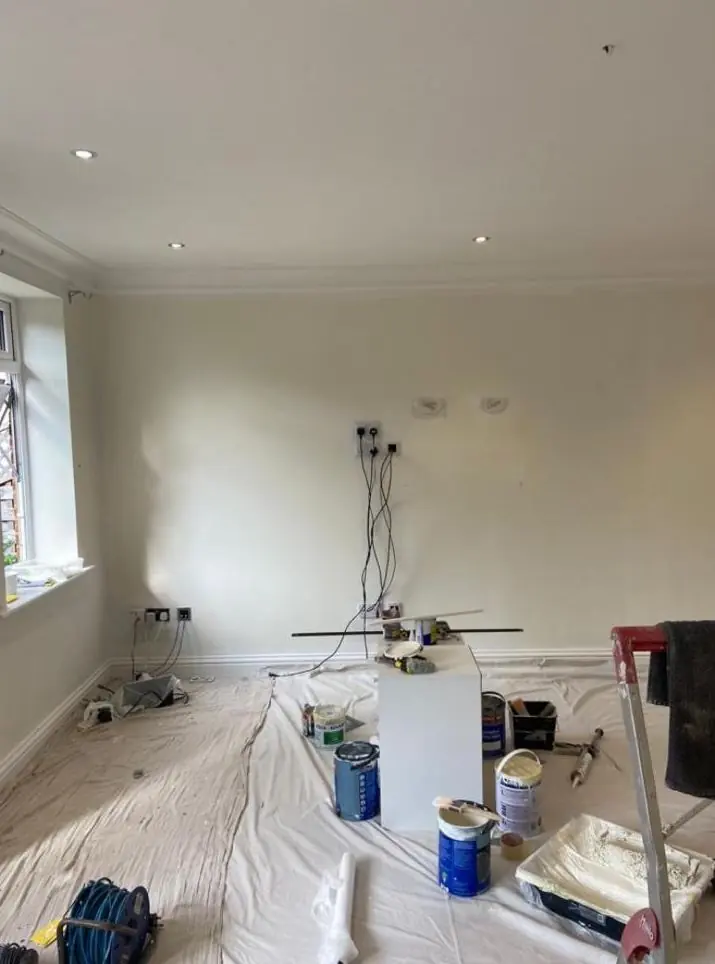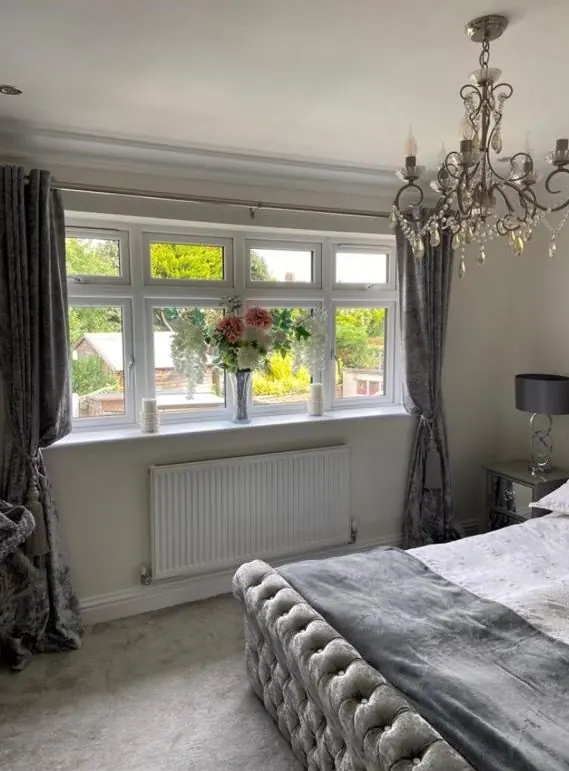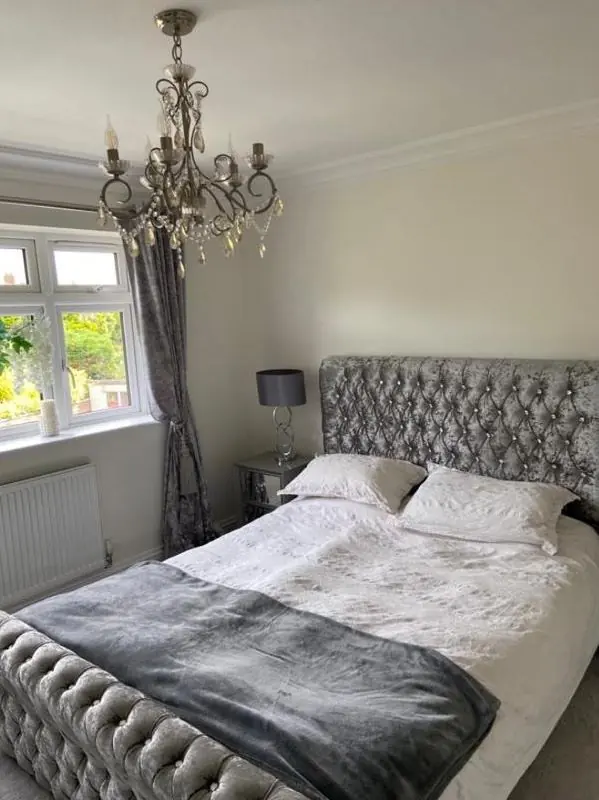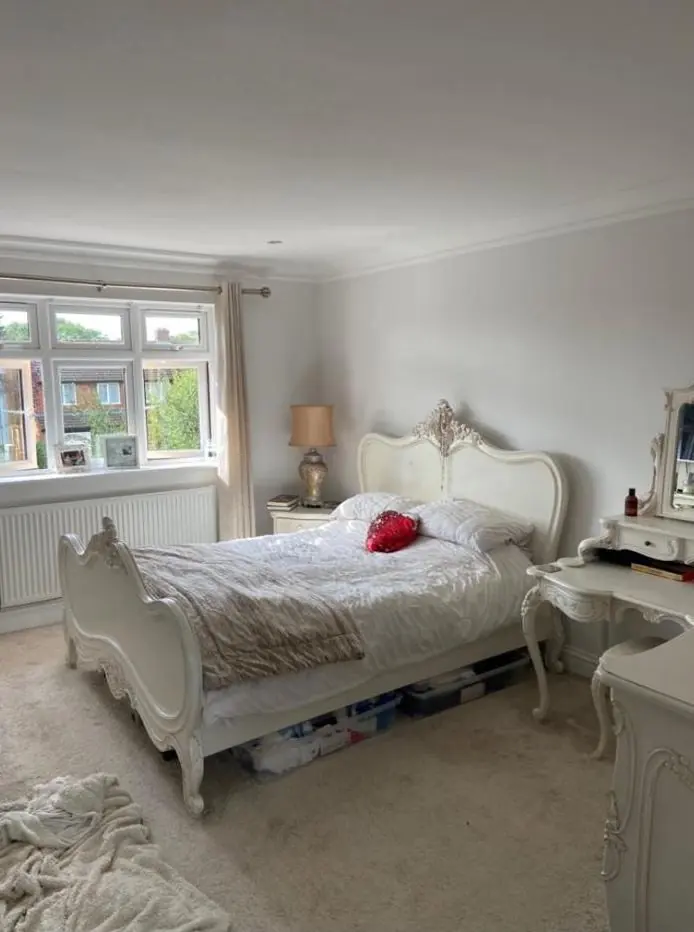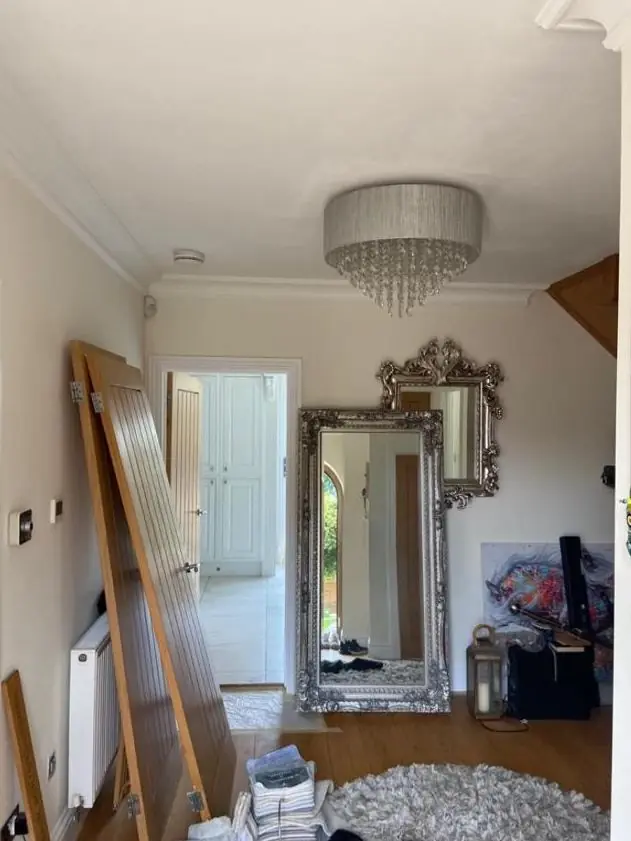
We hang wallpaper in Little Houghton, about 3.1 miles east of Northampton town centre in NN7. Its 17th-century stone cottages have uneven solid walls and irregular ceilings that usually need lining paper and careful pattern setting out, while the post-war houses on the edge-of-village closes take paper much more simply.
When no wall in the room is straight
Little Houghton’s old cottages were built of coursed rubble ironstone and limestone, and the plaster inside follows the stone. Walls bow, corners lean and ceilings dip between beams. A patterned paper hung square to a ceiling like that will drift off vertical within a couple of lengths, and the eye picks it up straight away.
So the first job in a cottage room is deciding where the compromise goes. Dean drops a plumb line, looks at where the room is viewed from, and settles on a starting point that hides the worst of the movement, usually in a corner behind the door or beside a chimney breast. Where a ceiling line wanders badly, a paper with a small, loose repeat is far more forgiving than a large geometric or a stripe, and we will say so before you buy.
Lining paper usually goes up first. Hung horizontally, it evens out the surface, bridges fine cracks in old plaster and gives the finishing paper a consistent base to grip, which matters on walls that have been patched over several centuries.
Papers for solid, breathable walls
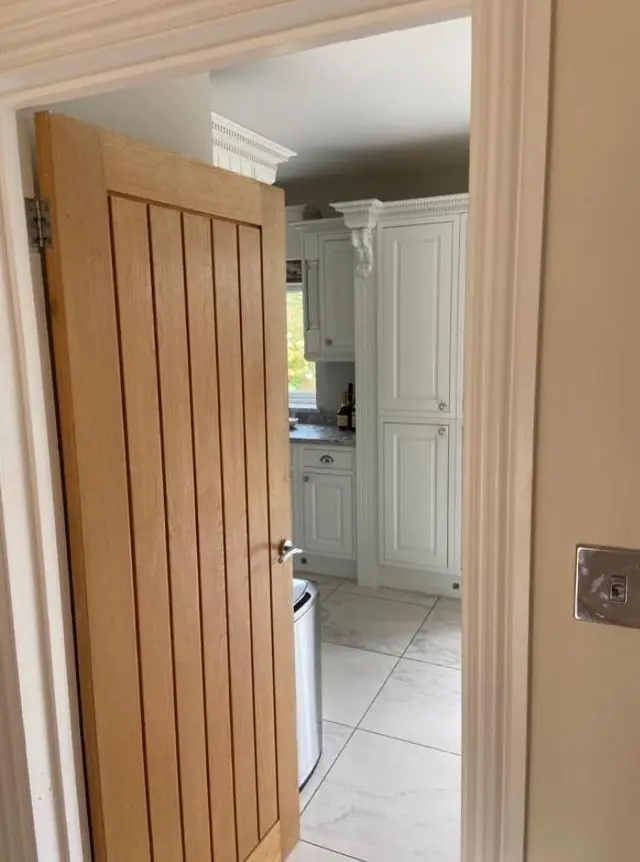
The same rule that applies to paint inside these cottages applies to paper. The external walls are solid and have to let moisture out. A heavy vinyl wallpaper behaves much like a vinyl emulsion: it seals the surface, and damp that cannot escape ends up lifting seams or growing mould behind the paper.
- On external stone walls we steer towards traditional pulp or non-woven papers, which let more vapour through.
- Vinyls are better kept for kitchens and bathrooms with modern partitions, or for the post-war houses.
- Old lime plaster is sized before hanging so the paste does not soak straight in.
- If a wall is already damp, we will not paper over it. The cause needs sorting first or the new paper will fail.
Attic bedrooms and dormers
Many of the village cottages have an attic storey lit by a gabled dormer, and some later buildings use the roof space as a third floor. Papering those rooms means sloping ceilings, short knee walls and the sides and cheeks of a dormer, all meeting at odd angles. You have to decide early whether the pattern runs onto the slope or stops at the change of angle, and whether the slope is papered at all or painted to match. We talk that through with you on the visit, because it changes how many rolls you need.
Stairs in these narrow-depth cottages can be tight, which limits the length of paper we can carry up pasted. In those rooms we often paste on a board in the room itself.
Newer homes and listed cottages
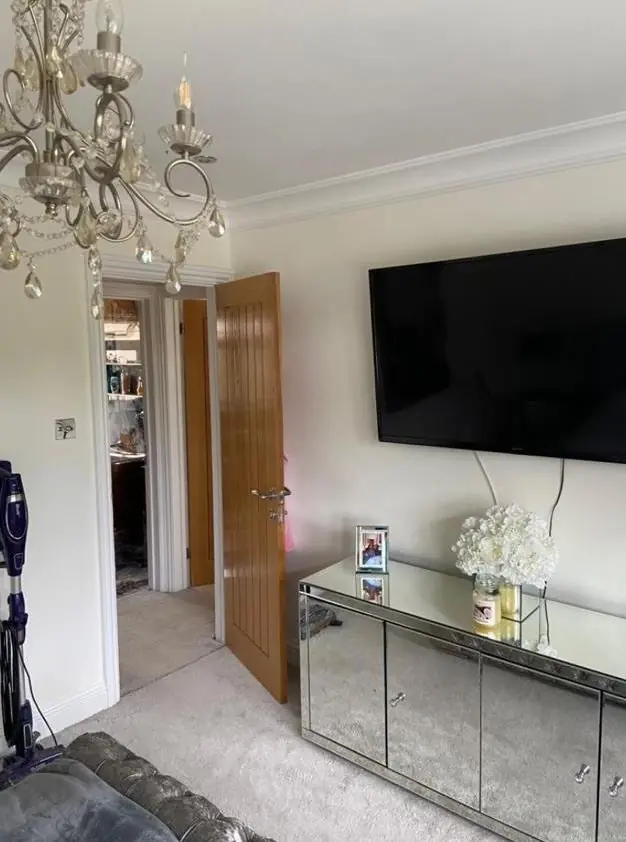
The houses on Nursery Close, Lodge Close and Home Acre were plastered conventionally, so papering there is straightforward: strip, fill, size and hang, with feature walls and chimney breasts a common request. Stripping is where most of the time goes, especially where earlier owners painted over old paper.
The listed cottages need one extra check. If stripping turns up early layers of paper or an old painted finish that looks historic, we stop and let you raise it with West Northamptonshire Council before anything else comes off. Our main wallpaper hanging page explains the full process, from stripping to trimming the last length. For the rest of the work we do in the village, see our Little Houghton page.
Last updated by Dean, DH Painter & Decorator.