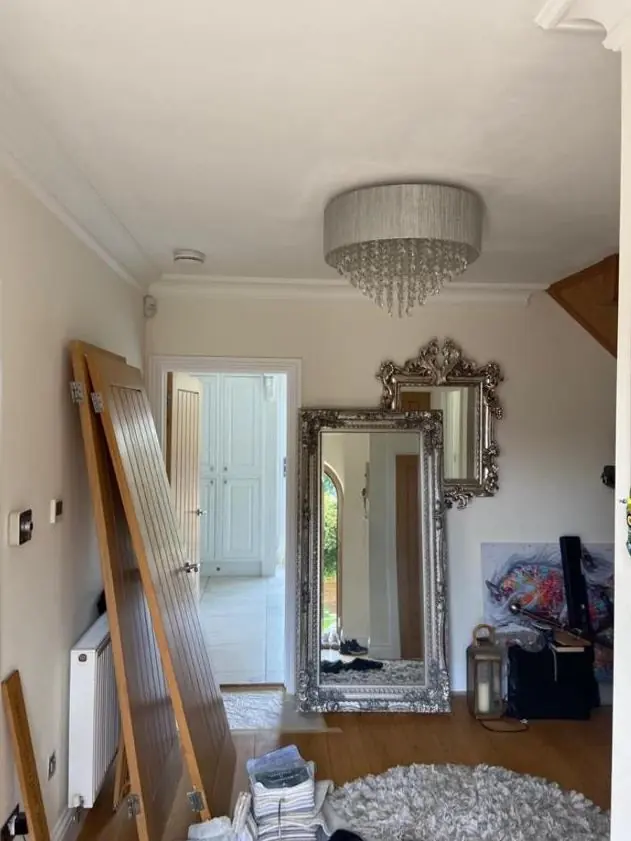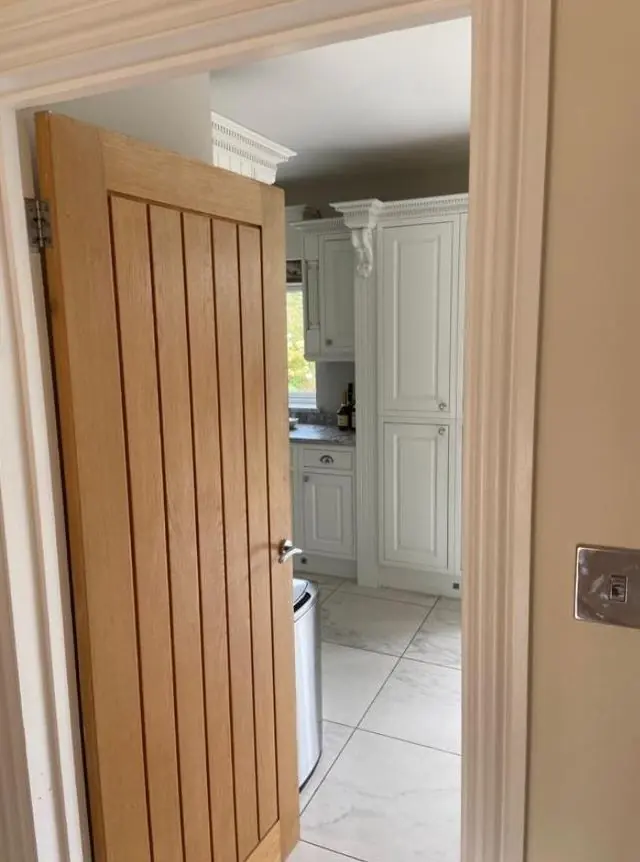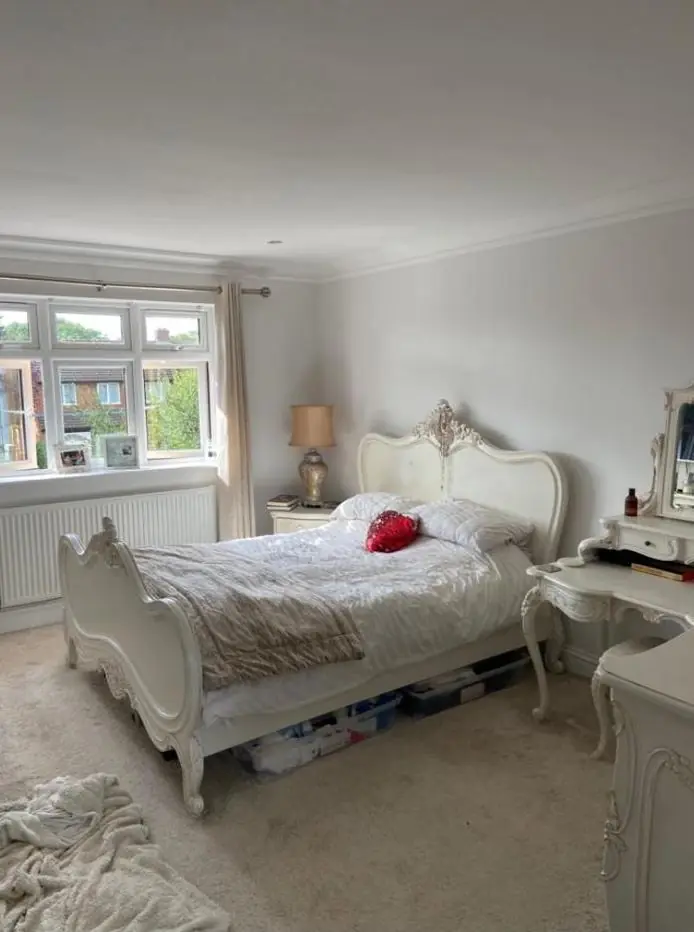
Dean gives colour and finish advice as part of decorating jobs in Little Houghton, about 3.1 miles east of Northampton town centre. Outside, choices have to sit with banded ironstone, limestone and clay pantiles inside a conservation area; inside, small windows and thick walls change how colours read.
Reading the village palette first
Any colour on a Little Houghton house is seen against a fixed set of neighbours. The walls are rust-brown ironstone and pale limestone, often laid in alternating bands that give the village fronts their striped look. Roofs are mostly red clay pantiles, plain tiles and slate, with a few thatched. Add the grass verges, high stone boundary walls and mature trees along the four village roads, and you have a background that is warm, earthy and quite busy.
Against that, bright whites and cool greys on timber windows and doors tend to jump out, while softer off-whites, stone shades, muted greens and deep traditional colours settle in. For metal gates and railings, especially along walled properties such as Little Houghton House, black or dark heritage colours are the traditional choice in the conservation area. None of this is a rulebook. It is what reads well on a street where the stone is the main event.
Context changes the answer, too. A cottage built tight to the road edge on Bedford Road is seen at close range by everyone walking past, so its door and window colours carry more weight than those of a house set back behind a wall. On the post-war houses at Nursery Close and parts of Home Acre, which sit outside the conservation area, there is more freedom, although colours that echo the stone still tend to look settled. Where uPVC windows are already fitted, we choose door and gate colours that work alongside the white frames rather than fight them.
What the conservation appraisal says about paint
The historic core has been a conservation area since 1978, last reviewed in 2014. Its appraisal names painting among the small permitted-development changes that, added together, harm the area’s character, and it suggests Article 4 Directions could be considered. We have not seen confirmation that one is in force, so before changing an exterior colour in the core it is worth asking West Northamptonshire Council’s conservation officers.
There is one firm point. The bare ironstone and limestone fronts are meant to be seen as stone, and painting them is the wrong answer however good the colour. With 38 listed buildings in the area, a change of colour or finish on a listed cottage may also need listed building consent. Dean can help you set out the scheme clearly; the consent decision is yours and the council’s.
Why cottage rooms look darker than the card
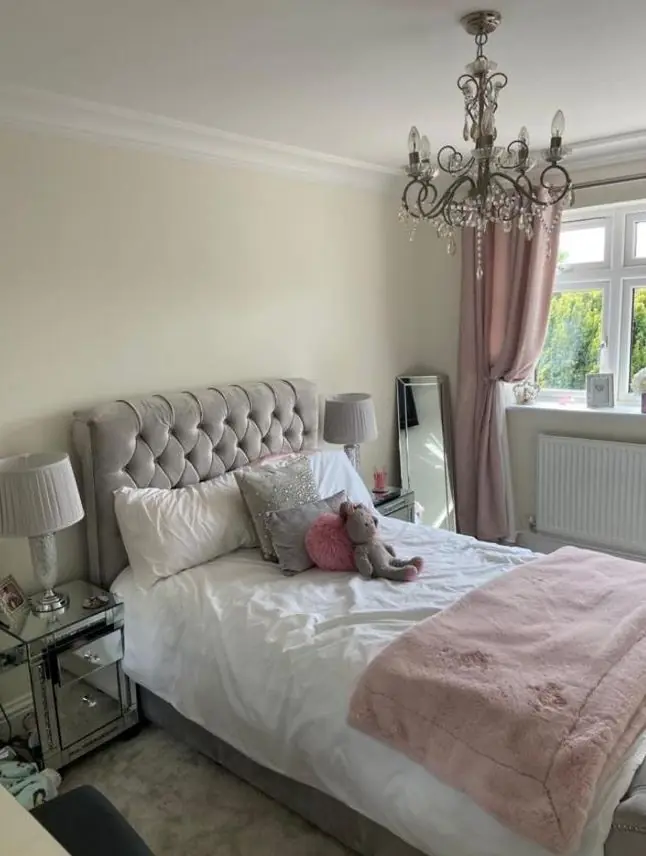
Inside the 17th-century cottages, small casement windows sit in deep reveals in thick stone walls, so less daylight reaches the back of the room. Pale greys that look calm on a chart go flat and cold here, and very bright whites can look dingy in the corners. Warmer whites, soft earth tones and even mid-strength colours often make these rooms feel lighter, because they hold their character in low light.
Where you are in the village matters too. West-facing rooms looking out over the open Nene valley can get strong late-afternoon light, while rooms shaded by the big roadside trees pick up a green cast. Dean looks at each room at the time of day you use it before suggesting anything.
Finish matters as much as shade
| Surface | Finish that usually suits |
|---|---|
| Solid external walls inside a stone cottage | Claypaint or mineral paint, flat and chalky |
| Old timber casements, sashes and street doors | Linseed-oil paint or a microporous system |
| Rooms in the post-war closes | Standard matt or eggshell emulsion, full colour range |
Breathable paints have their own colour ranges and a softer, more powdery look than a vinyl matt, so a shade picked from one brand’s card will not look the same in another. We sample on the actual wall before committing. Our main colour and finish advice page covers how light direction affects every colour. The Little Houghton page has more on the village’s property types.
Last updated by Dean, DH Painter & Decorator.