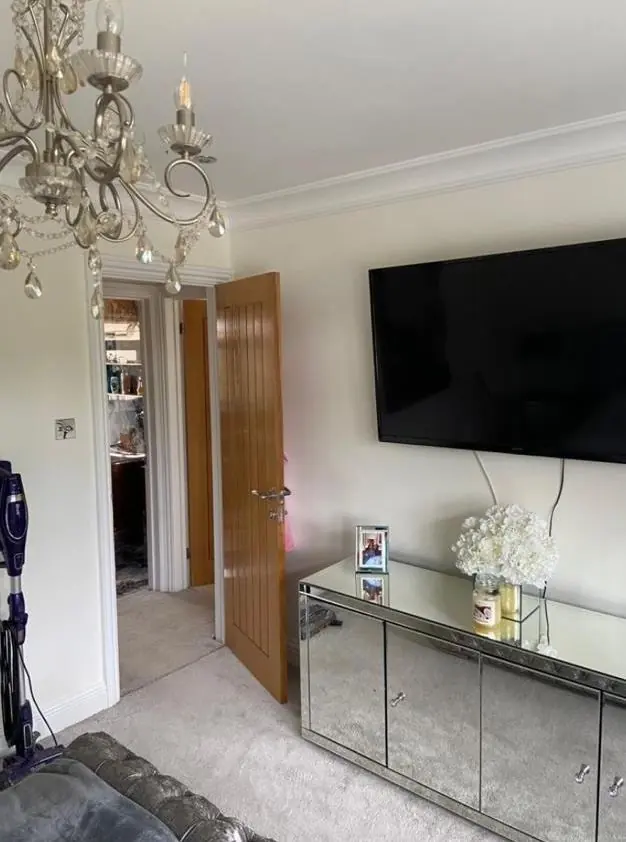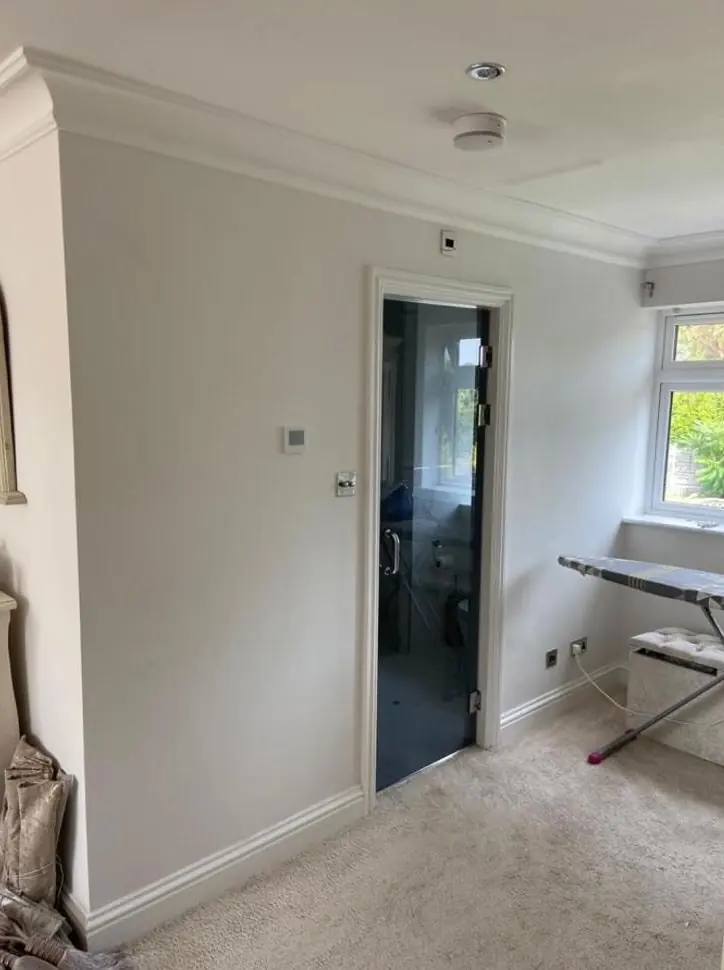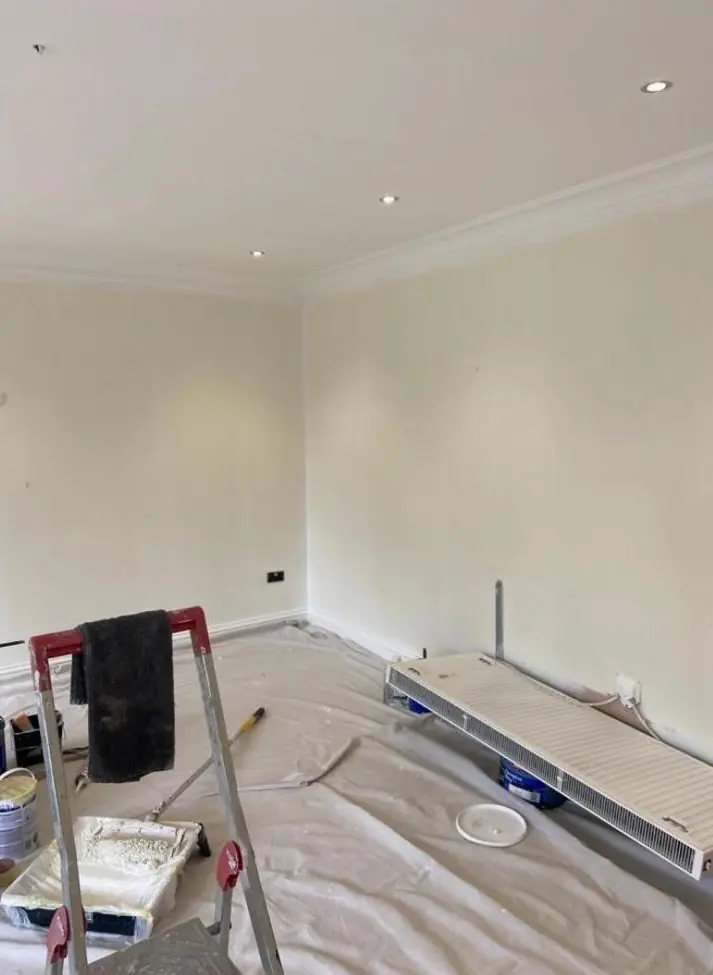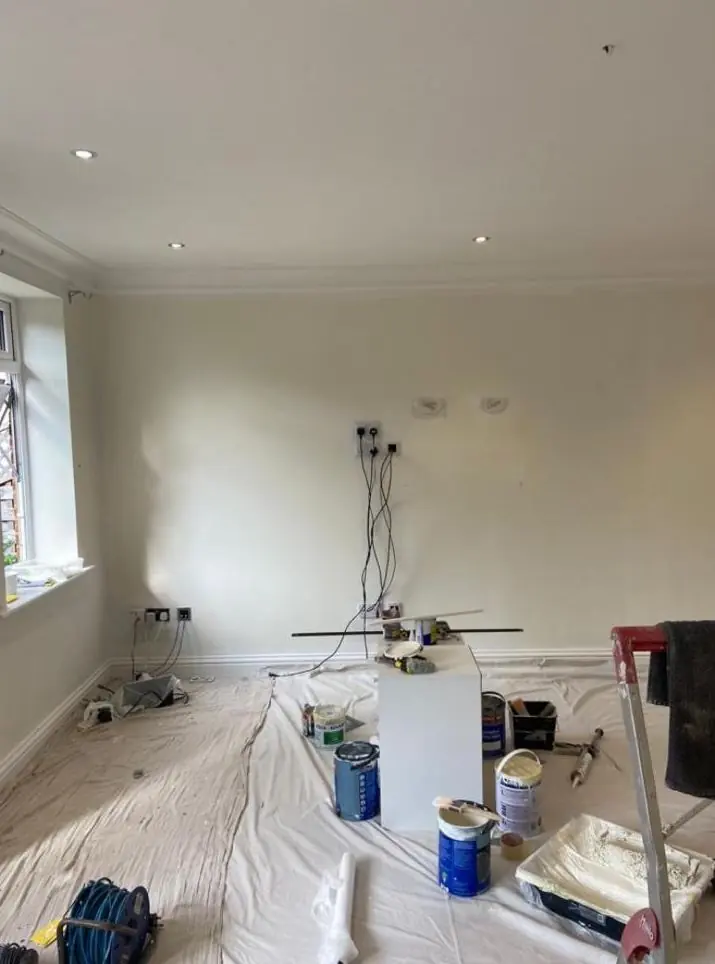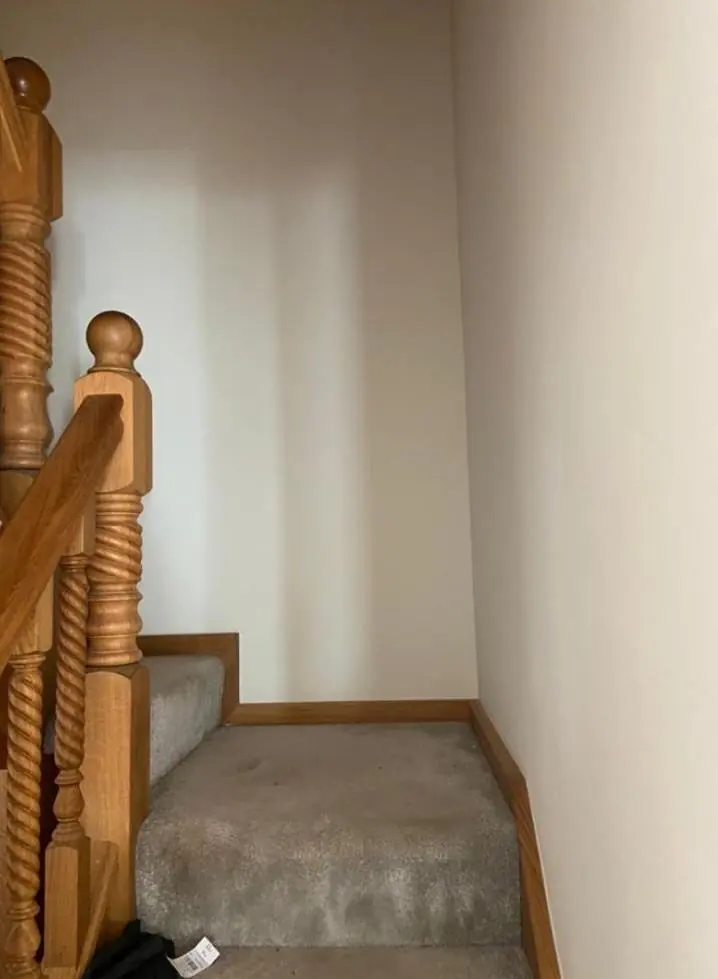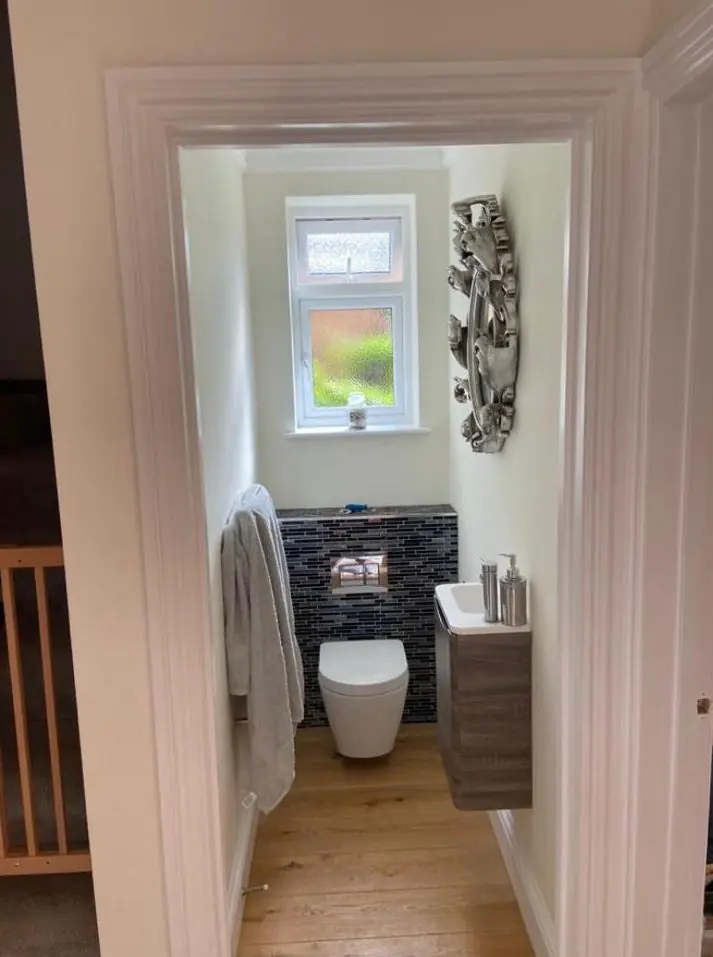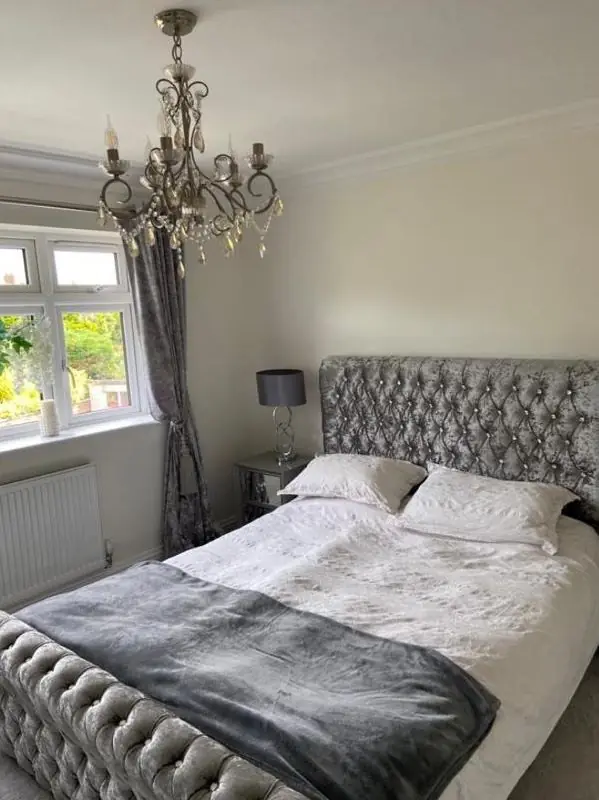
Dean paints interiors in Little Houghton, the NN7 village about 3.1 miles east of Northampton town centre off the A428 Bedford Road. In the solid-walled stone cottages that usually means breathable clay or mineral paints on the external walls, while the post-war houses on Nursery Close, Lodge Close and Home Acre take a conventional repaint.
Solid stone walls that still need to breathe
Most of Little Houghton’s historic core was built in the 17th century, with a few early 18th-century additions, as cottages and farmhouses of coursed rubble ironstone and limestone. They were laid in lime mortar and have no cavity. Damp moves through the full thickness of the wall and has to get out again somewhere, and indoors that is the inner face of the external wall.
A modern vinyl emulsion on that face acts like a skin. Moisture that used to evaporate is held behind it, so the paint blisters, the plaster underneath goes soft, and a grey bloom comes back a few months after the room was done. For those walls we use breathable claypaints or mineral paints. Where the old plaster is lime, we keep any patch repairs in lime too, so the wall behaves the same all over.
Partition walls rebuilt in plasterboard during later alterations are a different matter and take ordinary emulsion. One cottage can easily end up with two paint systems. Before quoting, Dean checks which surface is which, because after a few decades of coats it is not always obvious by eye.
Attic rooms, dormers and deep window reveals
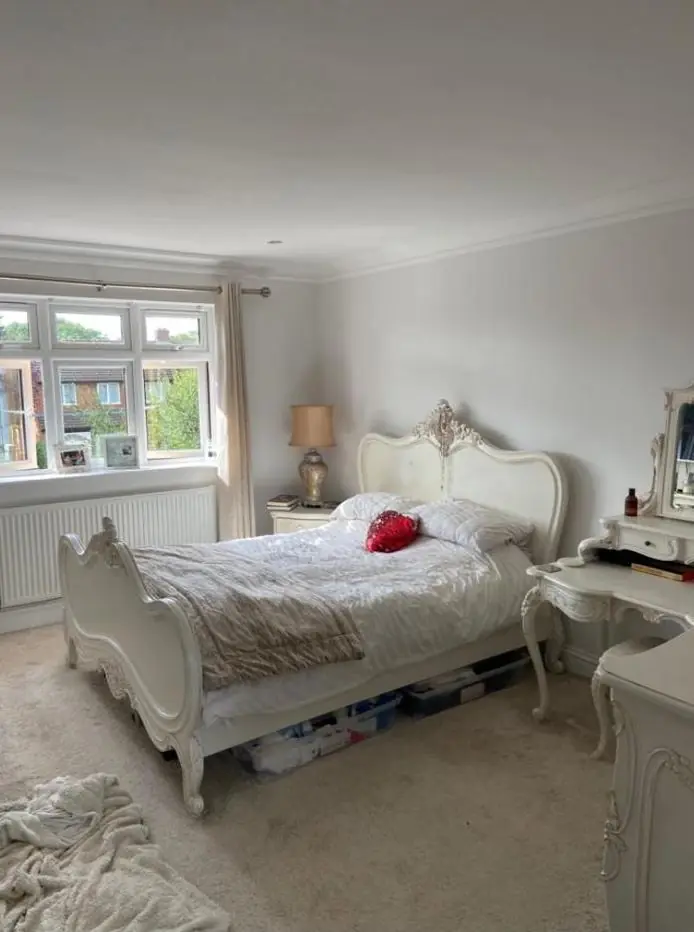
The village cottages are typically narrow in depth and wide along the road, two storeys high, often with an attic lit by a gabled dormer. That gives sloping ceilings, short lengths of wall between windows and plaster that follows the stone rather than a straight line. Cutting in along those wavy junctions takes longer than in a square modern room, so we allow for it in the quote rather than find it out on day two.
Thick walls also make deep reveals around the small timber casements and sashes, some of them under timber lintels. In winter those reveals collect condensation, so they get washed down and treated for mould where needed before being finished in the same breathable paint as the wall. Old skirtings and window boards are prepared by hand. Exposed beams are a conversation before we start: some owners want them left bare, others want them limewashed or painted.
| Property | Where you will find it | Usual wall finish |
|---|---|---|
| 17th-century stone cottage | Bedford Road, Lodge Road, Meadow Lane, Station Road | Claypaint or mineral paint on external walls |
| Victorian brick or ironstone building | Station Road, beside the churchyard | Depends on the plaster; tested first |
| Post-war infill house | Nursery Close, Lodge Close, Home Acre | Standard emulsion, mist coat on new plaster |
The closes on the edge of the village
Post-war building in Little Houghton has been small-scale and mostly on the village edges. Houses there were finished with conventional plaster and softwood joinery, and they suit a familiar sequence: fill and sand, mist coat any fresh plaster, two coats of emulsion on walls and ceilings, then satin or eggshell on doors and skirtings. Rooms are squarer and quicker to paint per square metre than in the old cottages, which is worth knowing if you are comparing figures. Our cost guide explains how room size and preparation affect what you pay.
Listed rooms and working from the roadside
The conservation area holds 38 listed buildings, and listing covers the inside as well as the outside. Repainting like for like is usually treated as maintenance, but swapping an old finish for a different one, or stripping a room back, can need listed building consent from West Northamptonshire Council. Grade II* Little Houghton House and St Mary the Virgin sit well outside the scope of an ordinary room repaint and call for a conservation specialist.
Access is the other practical point. Most cottages sit right on the road edge, few have drives, and residents park on the street and verges, with the A428 running through the middle. We agree where the van goes before the first day and carry sheets, steps and paint in from the roadside. The village is about 3.1 miles east of Northampton town centre, so it is a short trip for us. There is more on how we prepare rooms on our main interior painting page, and an overview of the whole village on our Little Houghton page.
Last updated by Dean, DH Painter & Decorator.