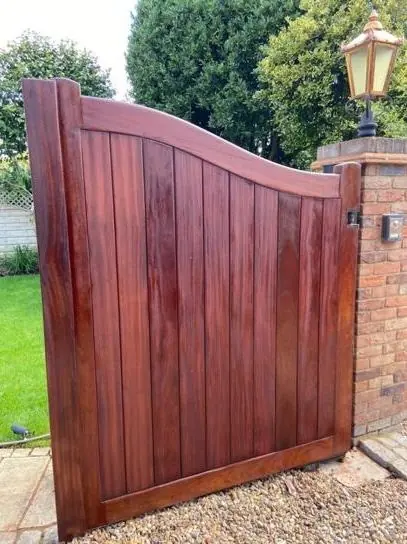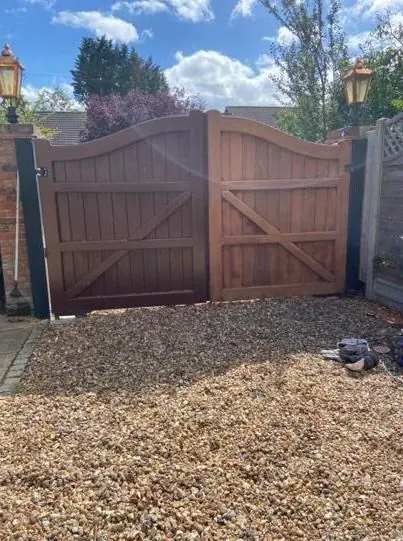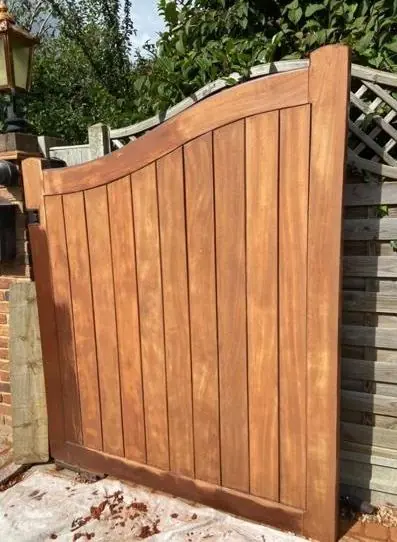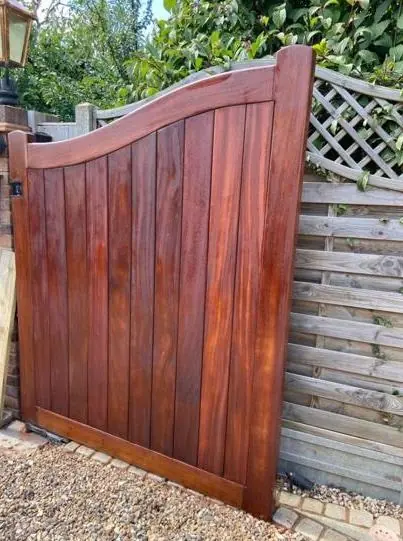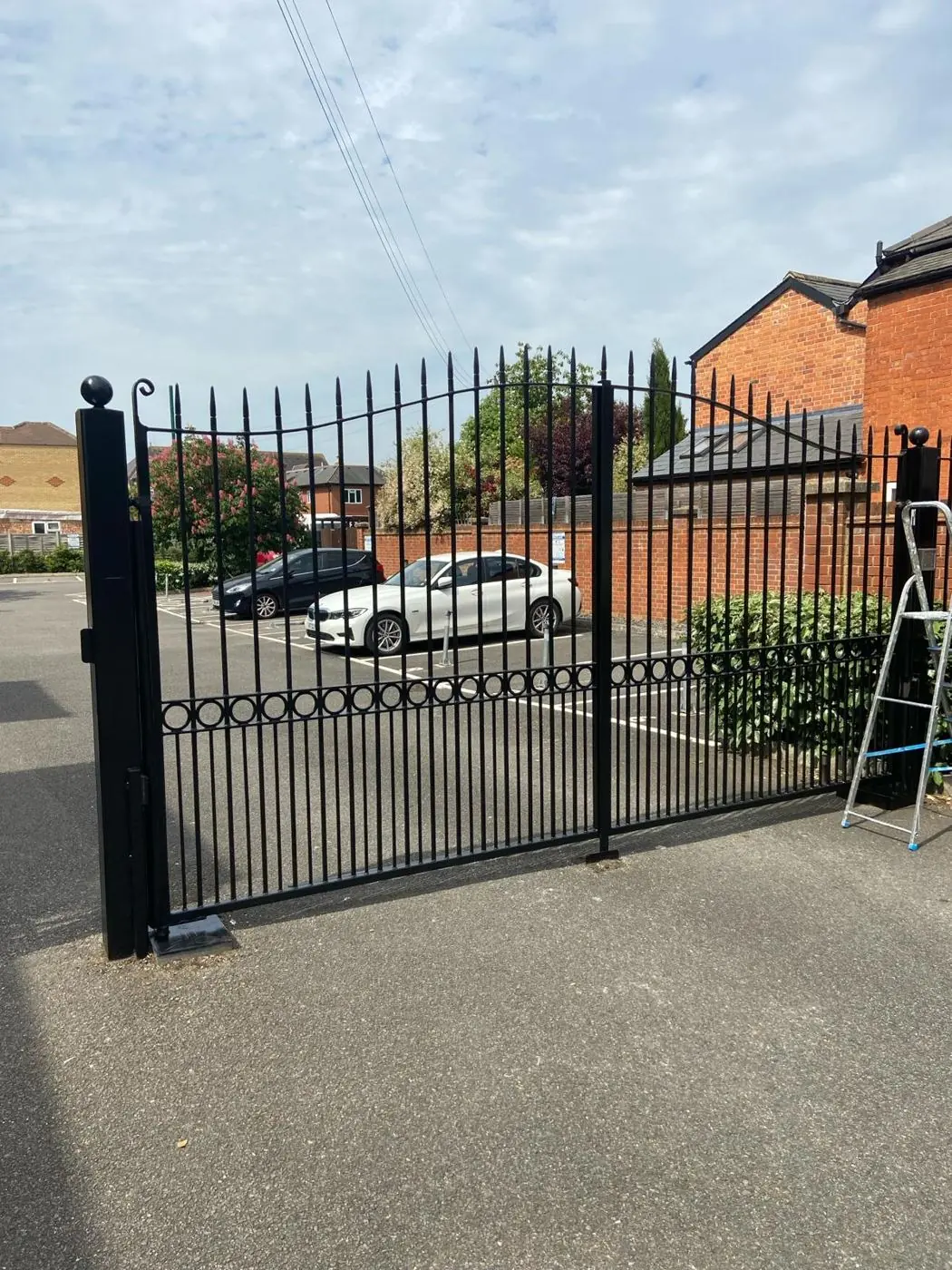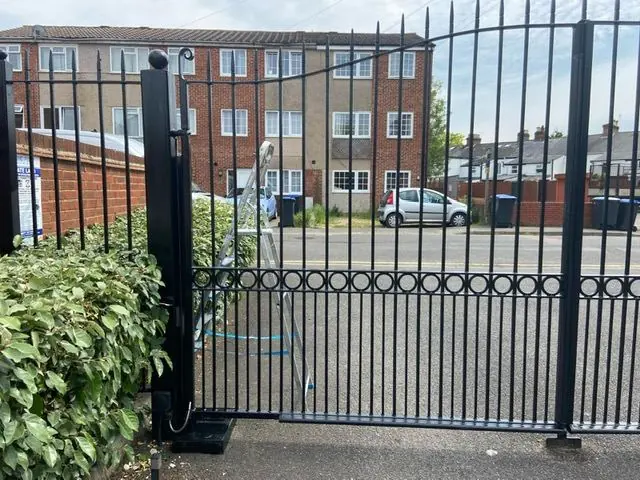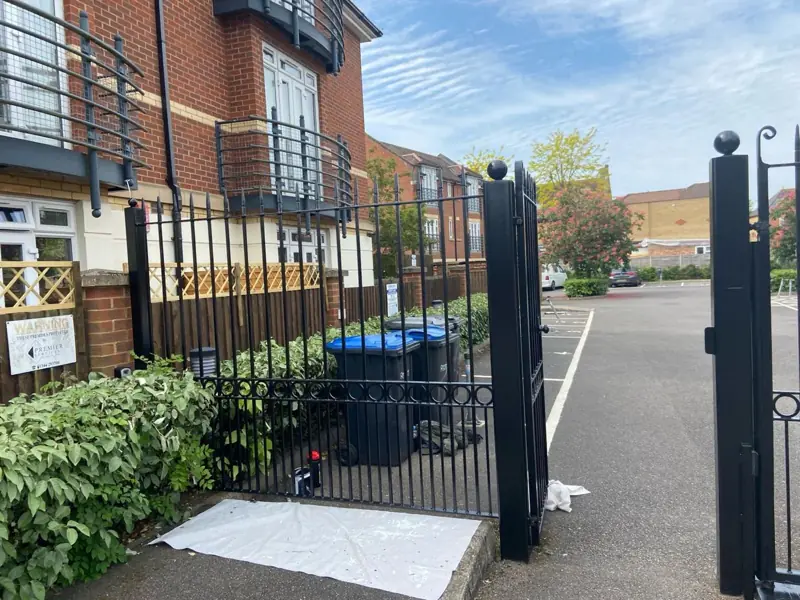
Dean at DH Painter & Decorator repaints metal gates and railings in Little Houghton, 3.1 miles east of Northampton town centre. In this walled village, ironwork is hung on stone gatepiers and seen from the road, so the work covers proper rust treatment, protecting the stone and choosing colours suited to the conservation area.
Ironwork in a walled village
High ironstone and limestone walls front the roads through Little Houghton, and where there is an opening in one there is often a gate hung between stone piers. The gatepiers and gates at Little Houghton House, whose coach house with its attached wall and gatepier is listed Grade II, are among the most visible in the village. Smaller houses have their own metal gates and short runs of railing. Because so little of the village’s frontage is anything other than stone, a rusty gate is very noticeable, and a well-kept one sits quietly against the wall the way it should.
Keeping rust off the stone
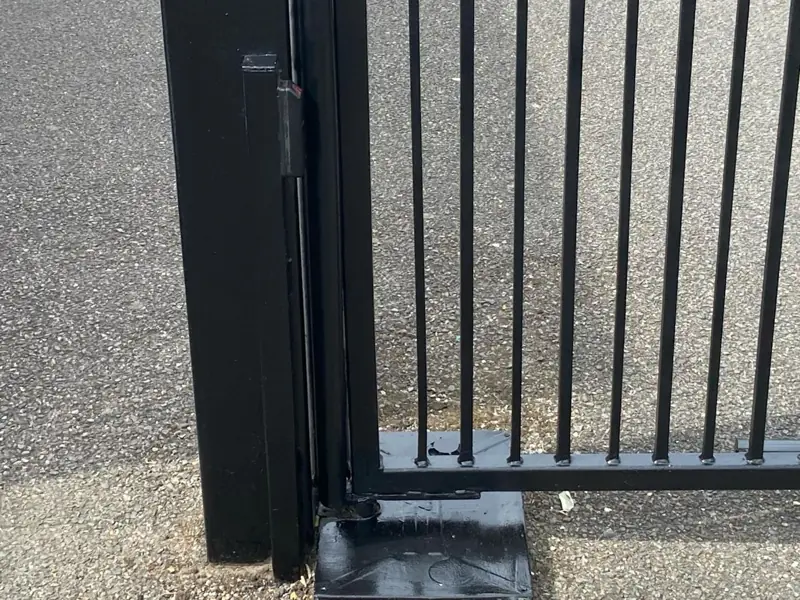
The particular problem here is the junction between metal and masonry. Where iron hinge pins and gate catches are leaded or mortared into the stone, corrosion makes the metal expand, which can crack the pier and open up the joint. Rust run-off also stains pale limestone, and while the orange tones of ironstone hide it better, the streaks still show. Our preparation therefore starts where the metal meets the wall:
- wire brushing and scraping back to sound metal, with the stone around it shielded from debris and wire marks;
- rust converter or an anti-corrosion primer worked well into the fixings and the base of each bar;
- a careful cut-in by brush at every point where metal meets stone, so no paint lands on the masonry;
- any staining on the stone noted for you rather than scrubbed at, since aggressive cleaning damages soft stone.
If a pier is already cracked or a fixing has blown, that is a job for a stonemason before we paint, and we will say so.
Colours, consent and older ironwork
Traditional finishes suit ironwork in this conservation area: black, or a dark heritage green, blue or brown. Those shades let the stone take the lead. Where a gate or railing belongs to a listed building, or is attached to a listed wall, changing its colour or finish may need listed building consent, so like-for-like repainting is the simpler path. For unlisted homes in the conservation area, a check with West Northamptonshire Council’s heritage officers before a bold colour avoids problems.
Older ironwork is often cast or wrought iron with many layers of paint, some of which may contain lead. We remove loose layers by hand and keep dust contained rather than power-sanding or flame-stripping. Where a modern galvanised gate has been fitted, it needs a specific primer to stop the topcoat peeling, which we identify at the visit.
Working on the roadside
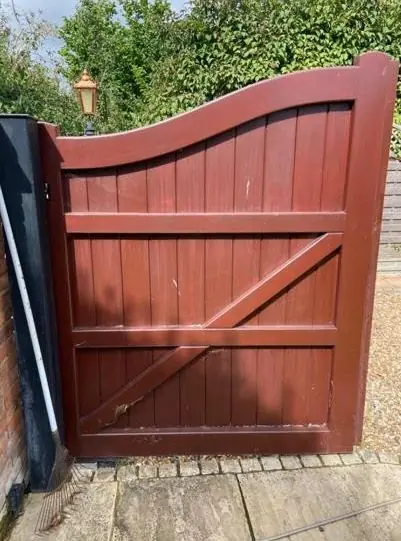
With walls fronting the roads and grass verges throughout the conservation area, many gates open onto the pavement or a verge, and some are on the A428 Bedford Road where it runs through the village centre. Most residents park on the street because few properties have drives, so we agree with you where the van can stand and work in a tight, coned area at the gate. A gate that needs to stay usable is painted in stages, so access is kept while coats dry. Shade from mature roadside trees slows drying, and the sides of the village facing west over the Nene valley catch more weather, so we plan for a dry, settled spell.
Our main metal gate and railing painting page explains the different metals and primers in detail. For other work on homes around the village, visit the Little Houghton area page.
Last updated by Dean, DH Painter & Decorator.