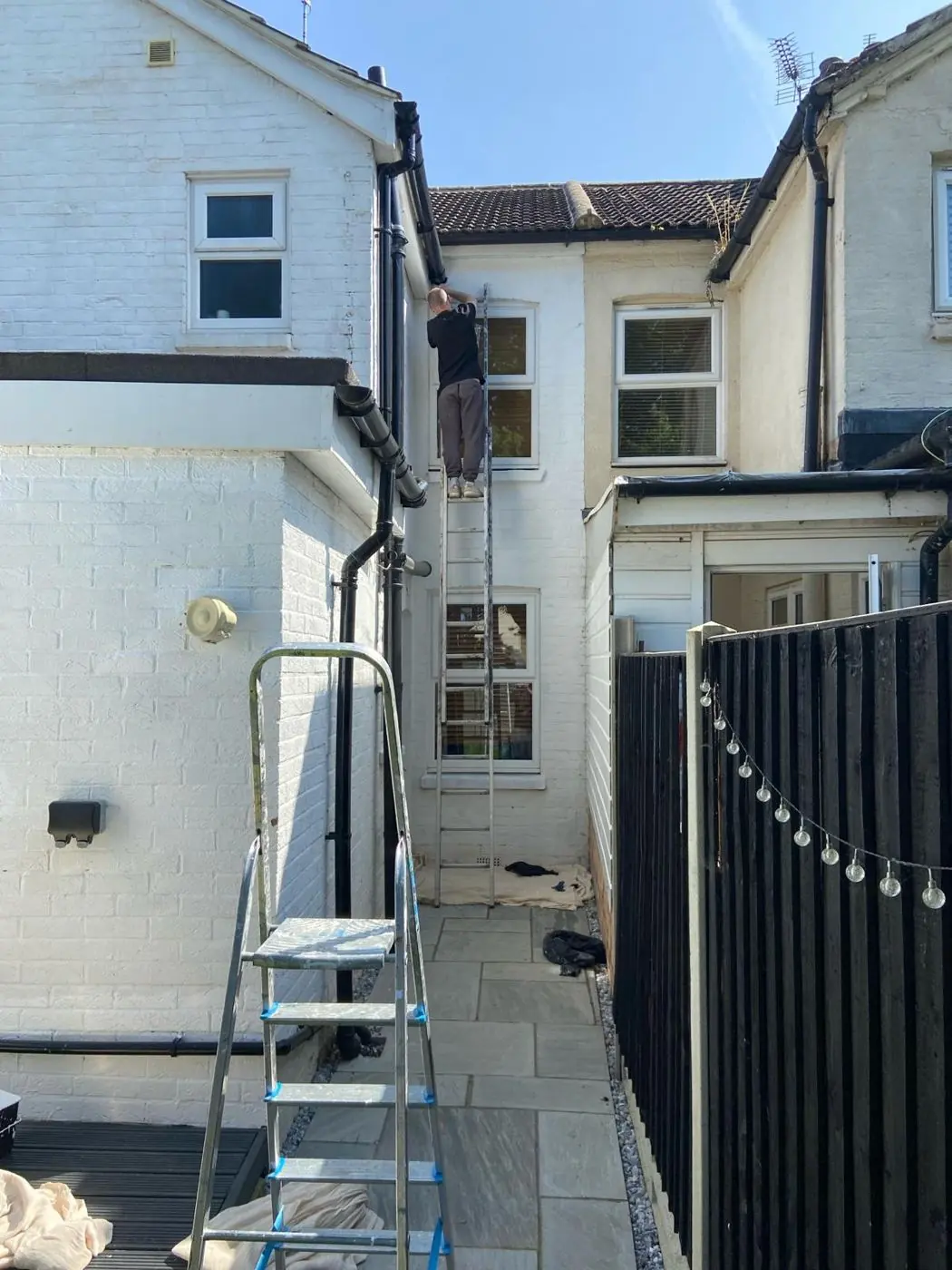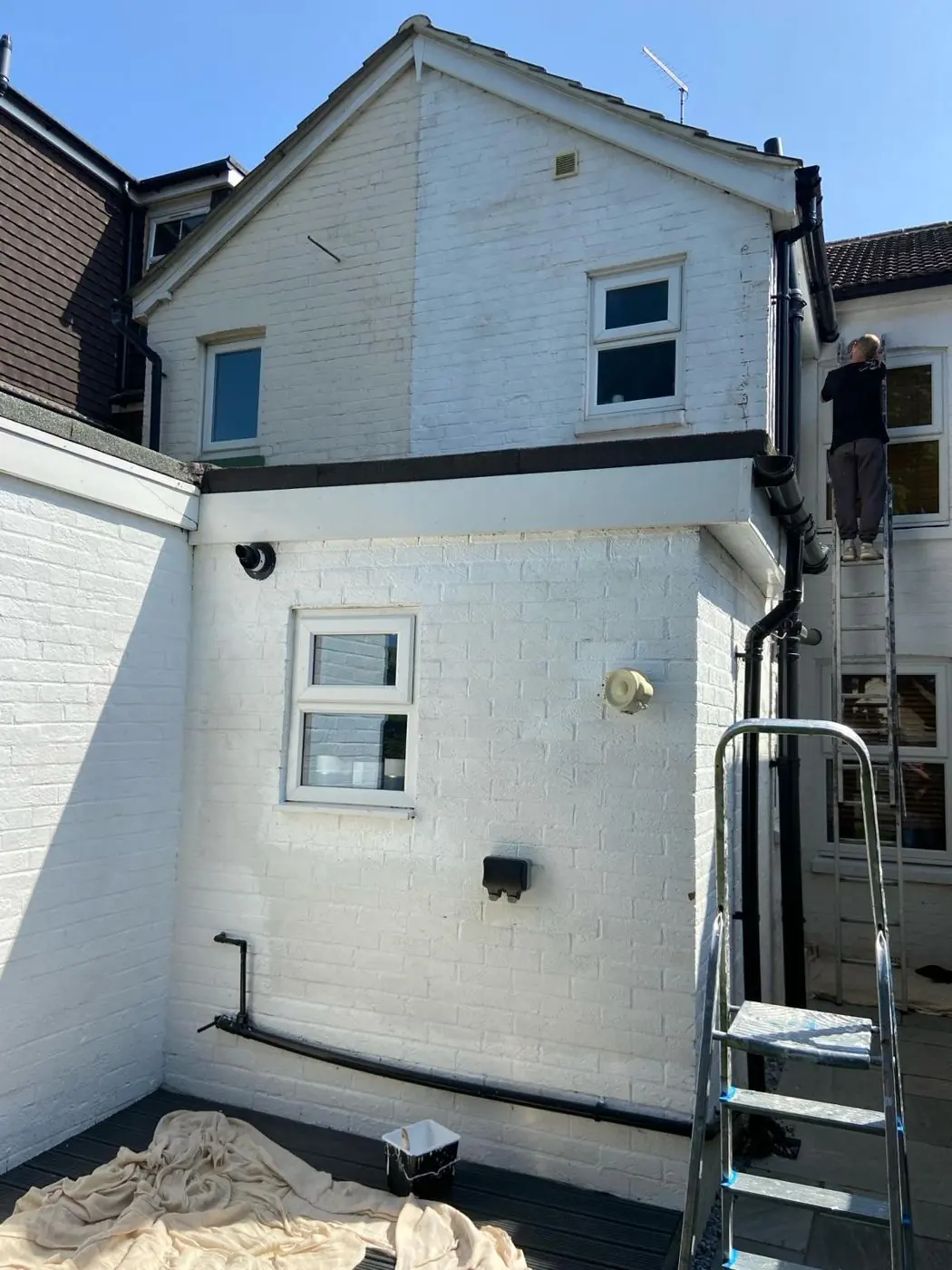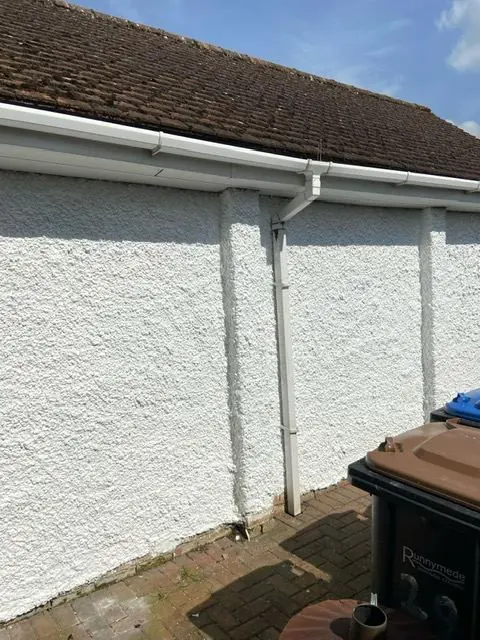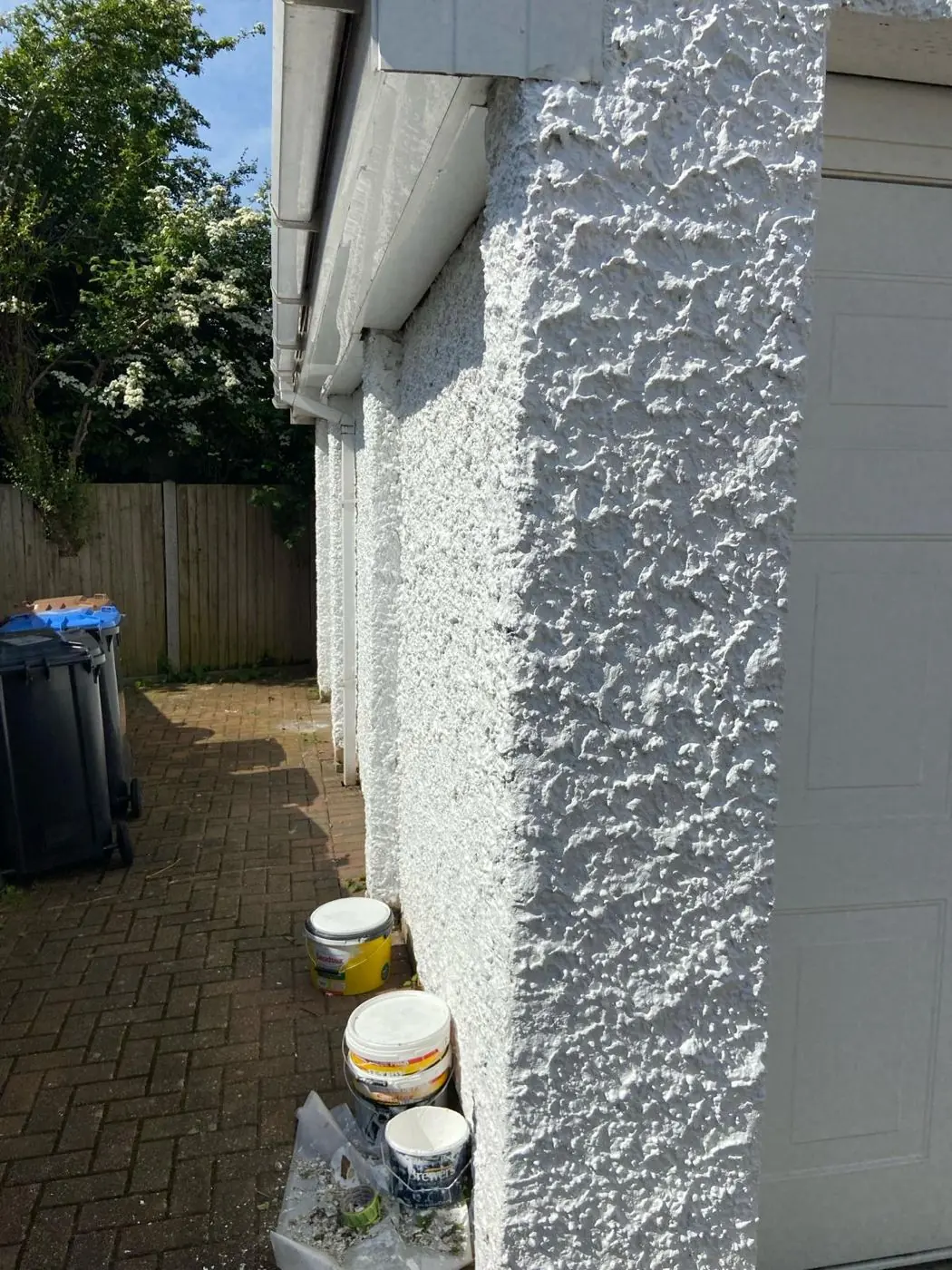
We paint the outside of homes in Overstone, a village about 5 miles north-east of Northampton town centre in the NN6 postcode area. On the old cottages the job is mostly joinery, because their lias stone should usually stay bare, while newer houses take a full exterior repaint. Dean quotes after a visit.
Most of the old stone stays bare, so the joinery is the job
In Overstone the oldest walls are almost all unpainted stone. The 18th-century cottages on Sywell Road and the mid-19th-century estate group (Whistlefield, Court House, The Dairy, Court Lodge and Court Cottages) are built in regular coursed lias, a soft limestone, and the estate houses add ashlar dressings, stone mullions and moulded stone door heads. None of that should get a coat of modern masonry paint. On these houses an exterior repaint is mostly about timber: casements, doors, porches and the odd lintel.
That joinery is old and small-scale. Holly Lodge Farmhouse has a 19th-century six-panel door and a wooden porch. Overstone Gate has diamond-leaded casements. The Victorian estate houses carry panelled doors and 19th-century casements. We prepare earlier layers carefully on work of this age and use traditional oil or linseed-based paints where they suit the timber. Paint this old may contain lead, so we test it first and keep sanding dust-free.
Thatch over the windows on the listed Sywell Road row
Nos. 102 to 110 Sywell Road are a Grade II thatched row from the early 18th century. Their leaded casements sit under wooden lintels, and the eyebrow dormers are tucked into the thatch, which overhangs the first-floor windows. That changes how the work is done:
- Ladders are placed so they never rest on or against the thatch, which limits where they can stand.
- No heat guns or open flame anywhere near the roof, so old paint comes off by hand or with a chemical stripper.
- Solvent-heavy products are kept well away from the thatch, and rags are taken off site at the end of each day.
- The small leaded frames are brushed by hand, with the glass masked bead by bead.
Most of these cottages have no front door. The listing records that, apart from a 20th-century porch on No. 104, they are entered from the rear, so the back door and its frame are the ones that get worn. We usually suggest giving those rear doors more attention than the front elevation.
Listed building consent comes before the colour card
Overstone has no conservation area, but it has 18 Grade II listed buildings and structures. On any of them, a change of colour, stripping historic finishes or painting stone or joinery that has never been painted can need listed building consent from West Northamptonshire Council. Dean checks this with you before quoting, and on a listed house we usually recommend matching the existing colour like for like. Homes off Woodland Avenue and in the streets by the lakes, such as Pine Avenue and Sycamore Drive, are not listed and can take any modern exterior system and colour you like.
Trees, lakes and slow-drying walls
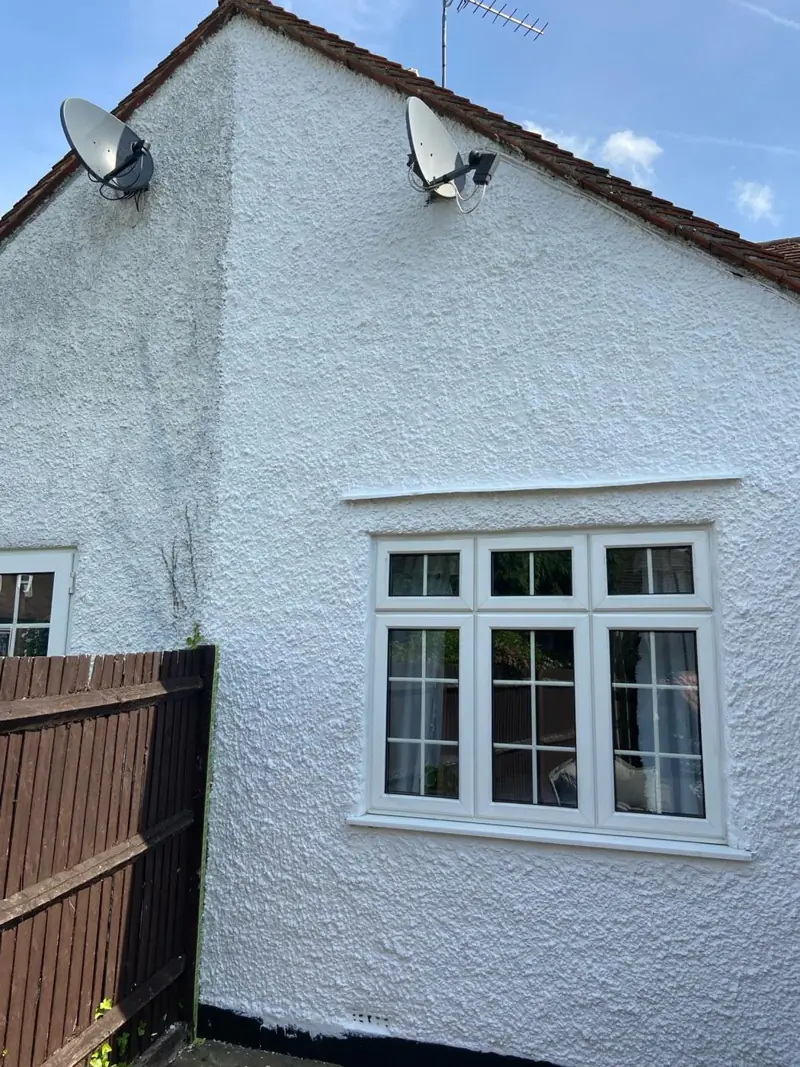
Much of the village sits among mature trees. There is parkland, a golf course, Pike Pond and Upper Pond, and woodland belts such as Cowpasture Spinney and Hayes Belt. The result is leaf fall, sap on sills, and algae on north-facing walls and timber that stays damp for days after rain. Before any top coat we wash affected surfaces with a fungicide and allow a longer drying window than we would on an open estate. Our guide to timing exterior painting explains why a few dry days matter so much under trees.
Ladders beside a through-road
Overstone is a long, linear village strung along Sywell Road, which carries through-traffic. Front elevations close to the road need careful ladder footing, cones and a sensible place to park the van, and on some houses scaffold is the safer choice. We plan that at the survey rather than on the morning.
For how we prepare and coat each exterior surface, see our main exterior painting page. Other work we cover in the village is listed on our Overstone page.
Last updated by Dean, DH Painter & Decorator.