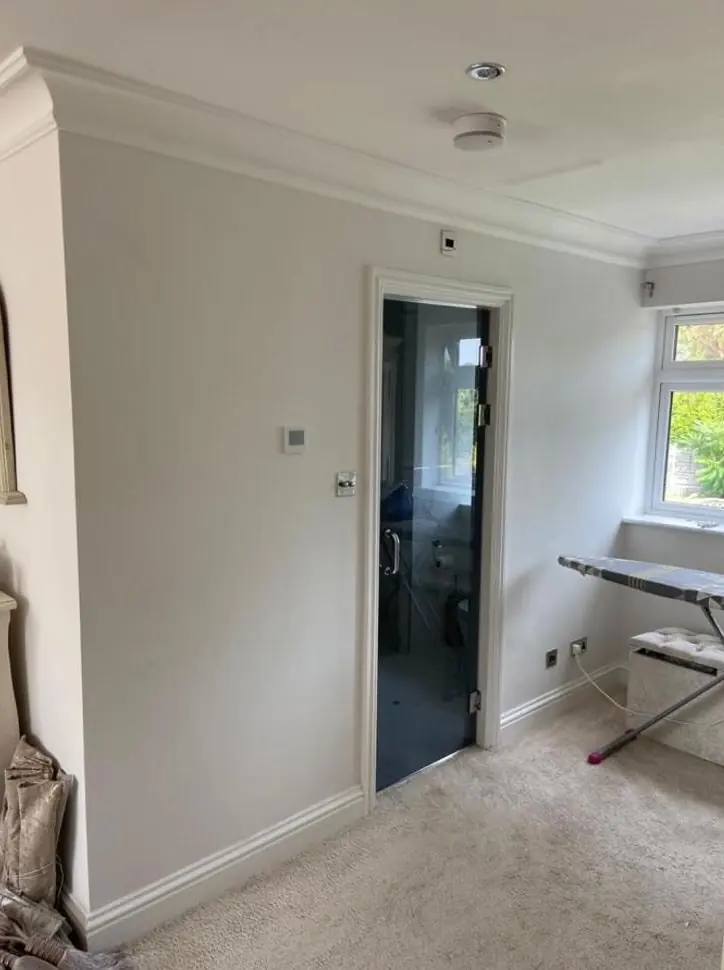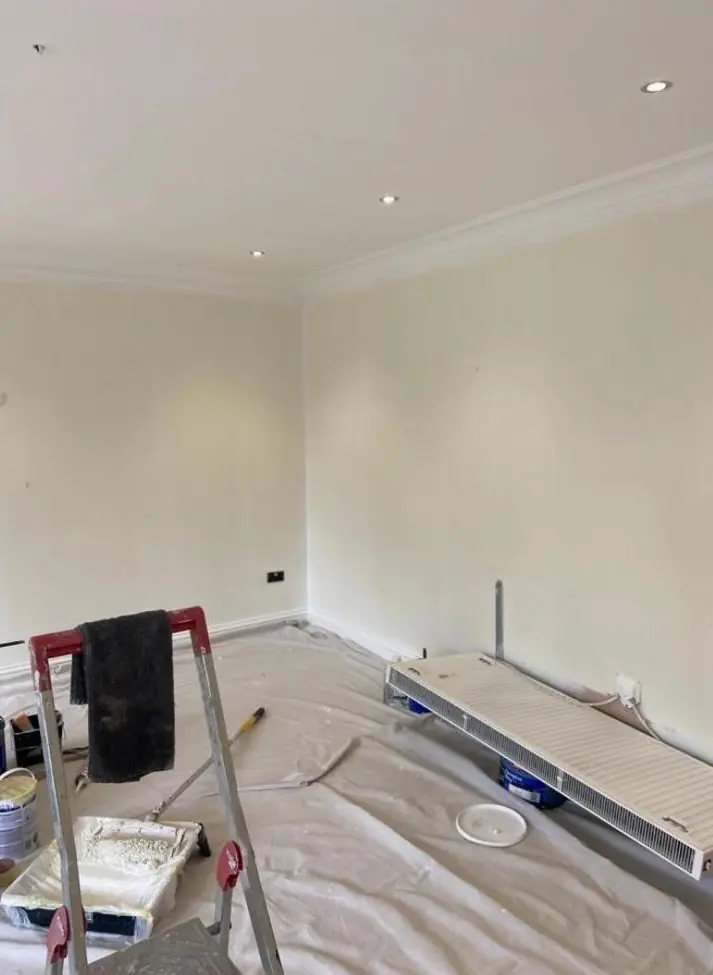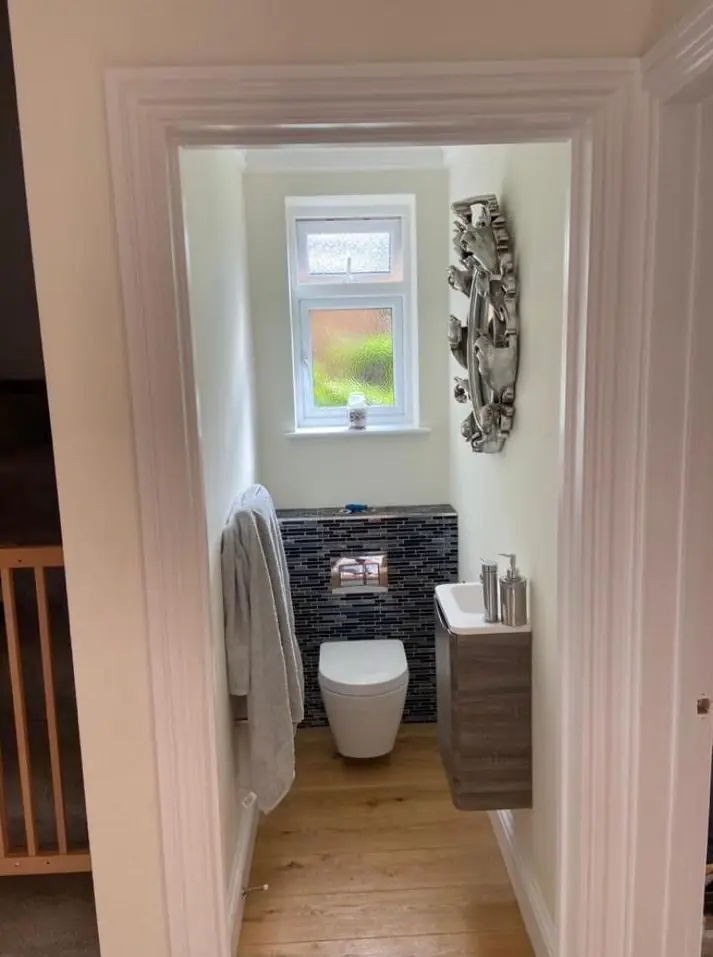
We hang wallpaper and lining paper in Overstone, about 5 miles north-east of Northampton in the NN6 postcode district. In the older lias cottages Dean lines the walls first and sets out patterns around beams and sloping ceilings; the newer homes off Woodland Avenue and by the lakes usually take a direct hang.
Walls that were never built straight
Overstone, about 5 miles north-east of Northampton town centre, has a row of early 18th-century cottages on Sywell Road and a mid-19th-century group of estate houses, all built in coursed lias. Thick stone walls finished inside with lime plaster rarely run flat or plumb, and many ceilings carry beams. Paper hung straight onto that kind of surface shows every hollow, and a pattern lined up on a wandering ceiling has drifted by the time it reaches the far corner. Hanging paper well in these cottages comes down to the work done before the first length goes up.
Why the old cottages start with lining paper
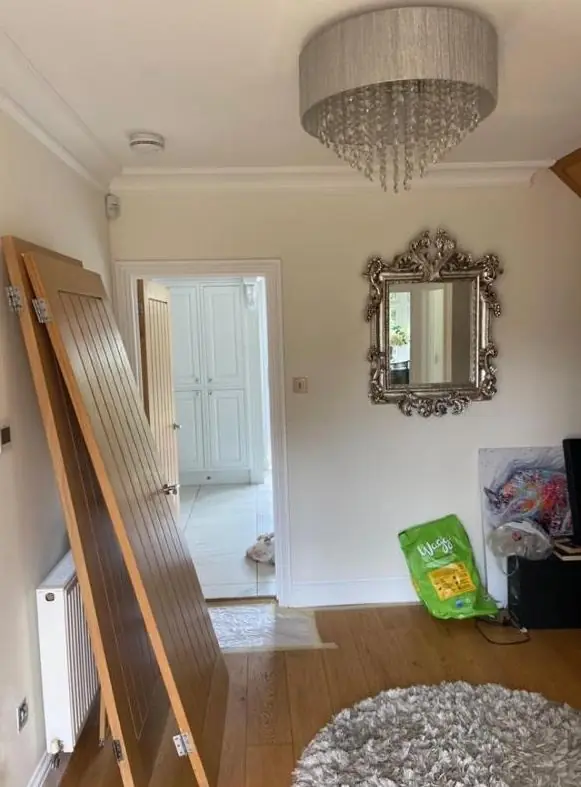
In the lias cottages Dean usually recommends lining paper first, cross-lined (hung horizontally) so its joints never sit under the joints of the decorative paper. Lining evens out small undulations, gives the finish paper a consistent surface to grip and dry on, and absorbs some of the movement between old plaster and timber. Before lining, he checks the lime plaster is dry and sound. A hollow patch or a damp area is dealt with first, because no paper will stay on it for long.
| What we find on the wall | How we deal with it |
|---|---|
| Uneven lime plaster over stone | Fill hollows with a compatible filler, size the wall, cross-line, then hang |
| A beam or out-of-level ceiling along the top edge | Set the pattern from eye level, not the ceiling, and lose the drift in the least visible corner |
| Chimney breast beside an open fireplace | Check for soot staining and heat, then centre the main motif on the breast |
| Plasterboard or skim in a later house | Make good, size and hang direct; line only where the surface is damaged |
The choice of paper matters on solid stone too. Heavy vinyls do not let moisture through, so on a lias wall that needs to dry out into the room, a paper-based or non-woven paper is usually the safer pick. Talk to us about the papers you are considering before you order.
Patterns, small rooms and narrow stairwells
Two-unit plan cottages have compact rooms, and a large pattern repeat in a small room means more offcuts. We work out the roll count against the repeat before you buy, so you are not left short halfway along a wall. Where a beam cuts across the top of a wall or a ceiling slopes, Dean decides where the strongest motif sits so it reads level to the eye even though the ceiling is not. Stairwells in these houses are narrow and steep, so papering one needs boards fitted to the staircase rather than the set-up used on a modern landing.
Listed walls and old papers
All 18 of Overstone’s listed buildings are Grade II, and the village has no conservation area. Hanging new paper on plain walls is normally decoration. Stripping historic papers, or covering original panelling or plaster detail, can affect a building’s character and may need listed building consent from West Northamptonshire Council, so owners of the listed Sywell Road row or the Whistlefield and Court House group should ask before work starts. When we strip paper in these houses, we steam gently and scrape by hand, because soft lime plaster can come away with the paper if it is soaked or forced.
The later homes in the village
Houses off Woodland Avenue and in the lakeside streets take standard hangs. Here the job is usually stripping painted-over or vinyl paper, making good, then a feature wall or a full room. Our main wallpaper hanging page explains the stripping and hanging process and the paper types we handle, and the Overstone area page describes the rest of the village’s housing.
Last updated by Dean, DH Painter & Decorator.