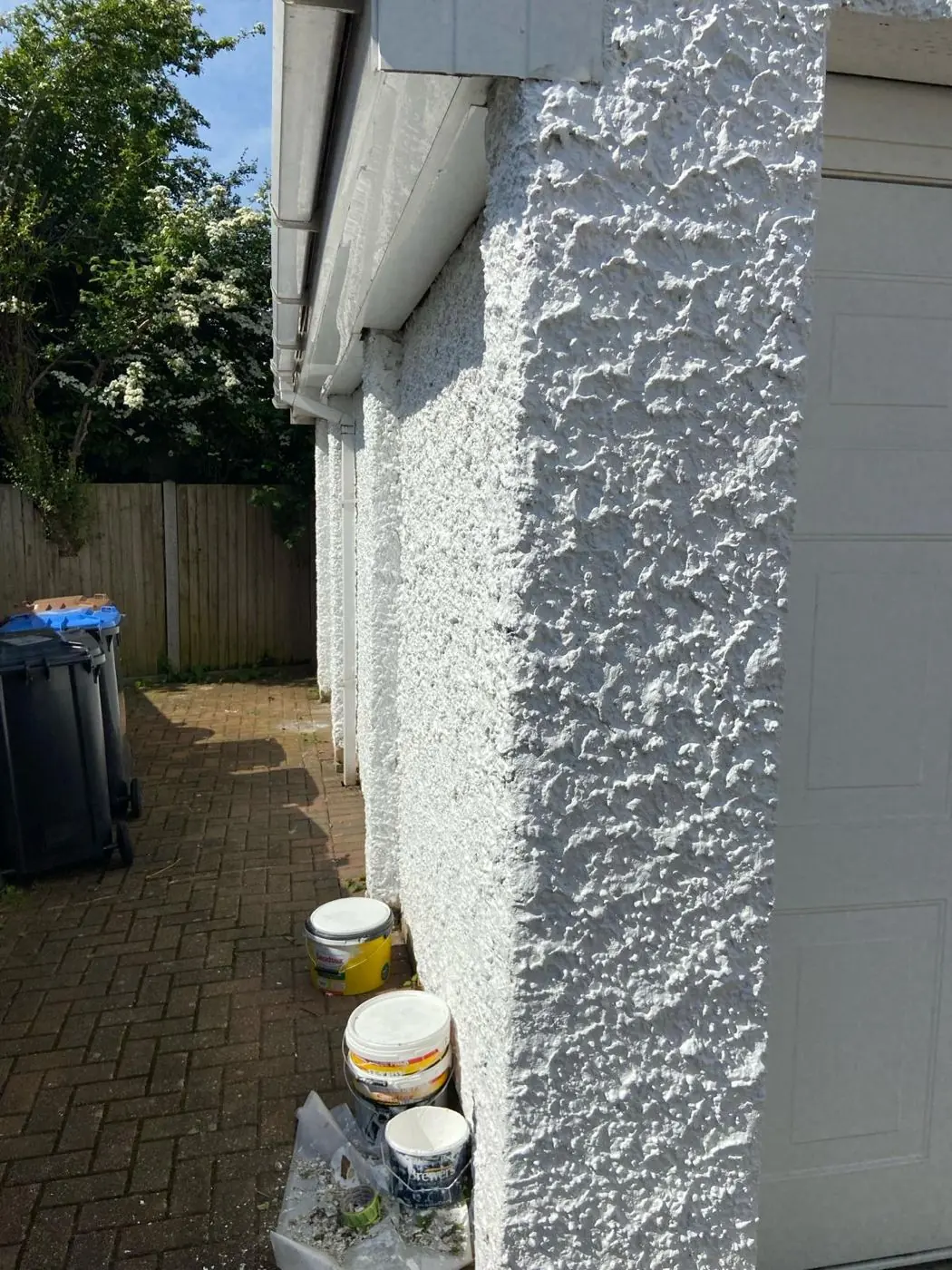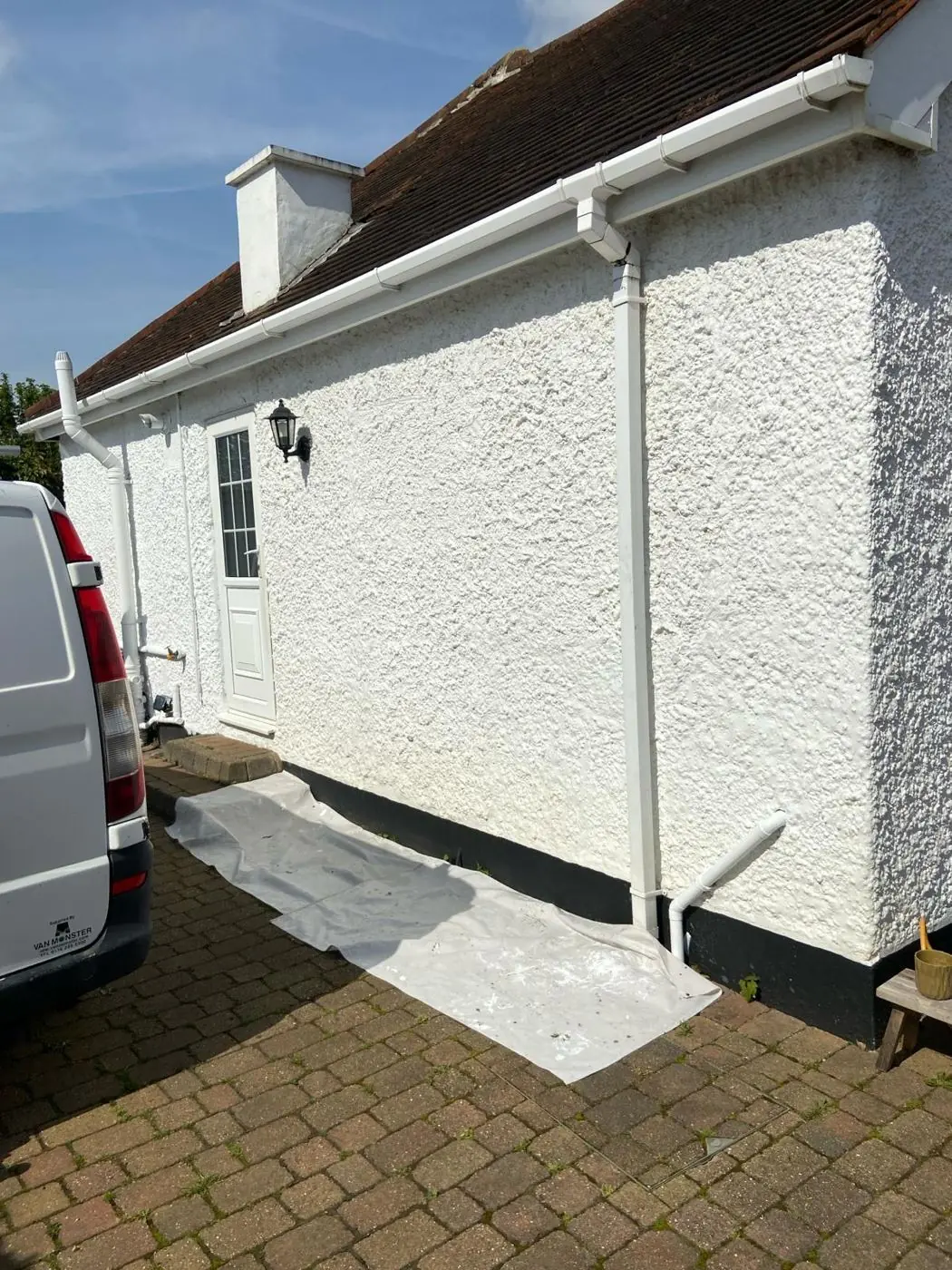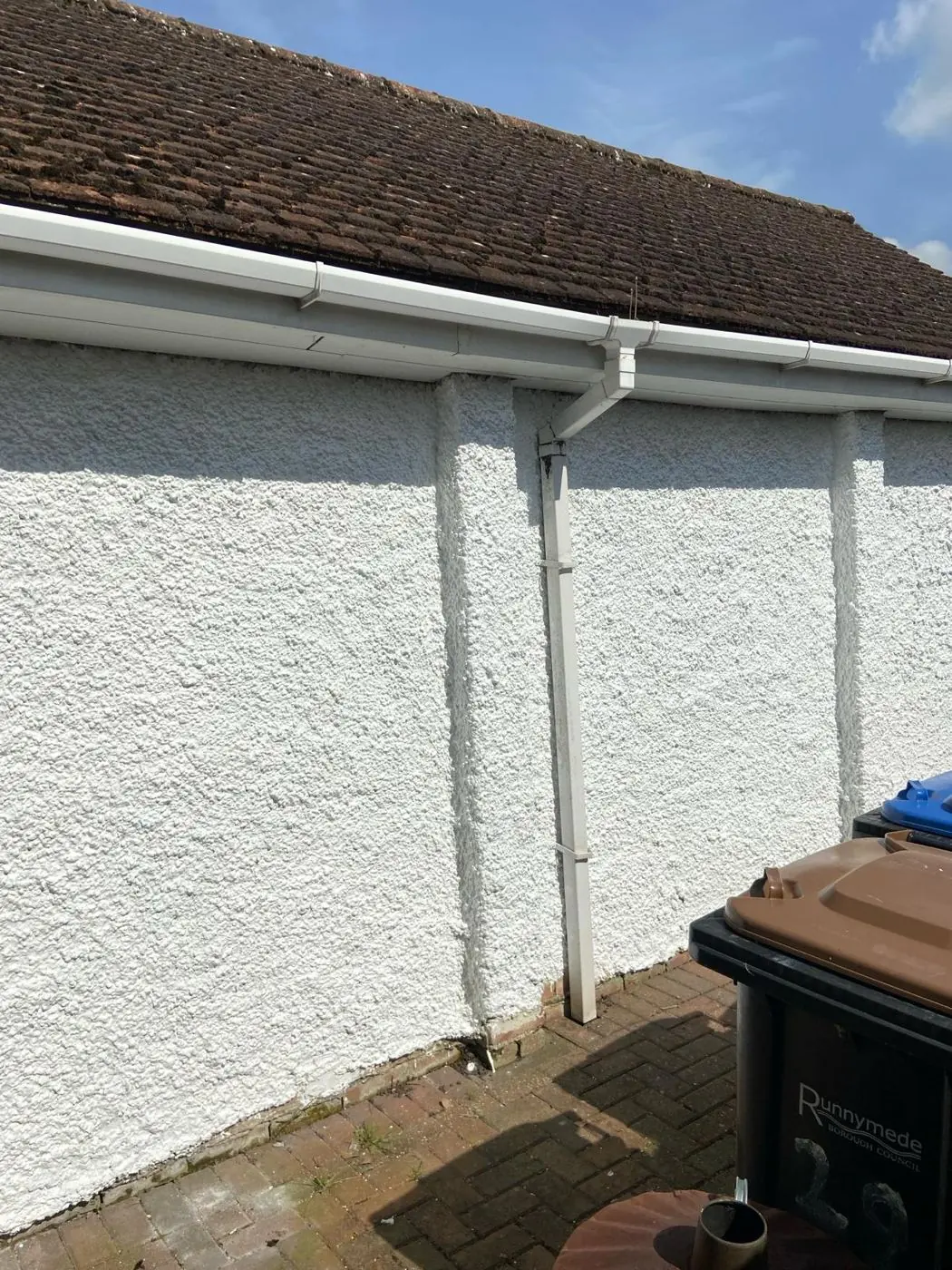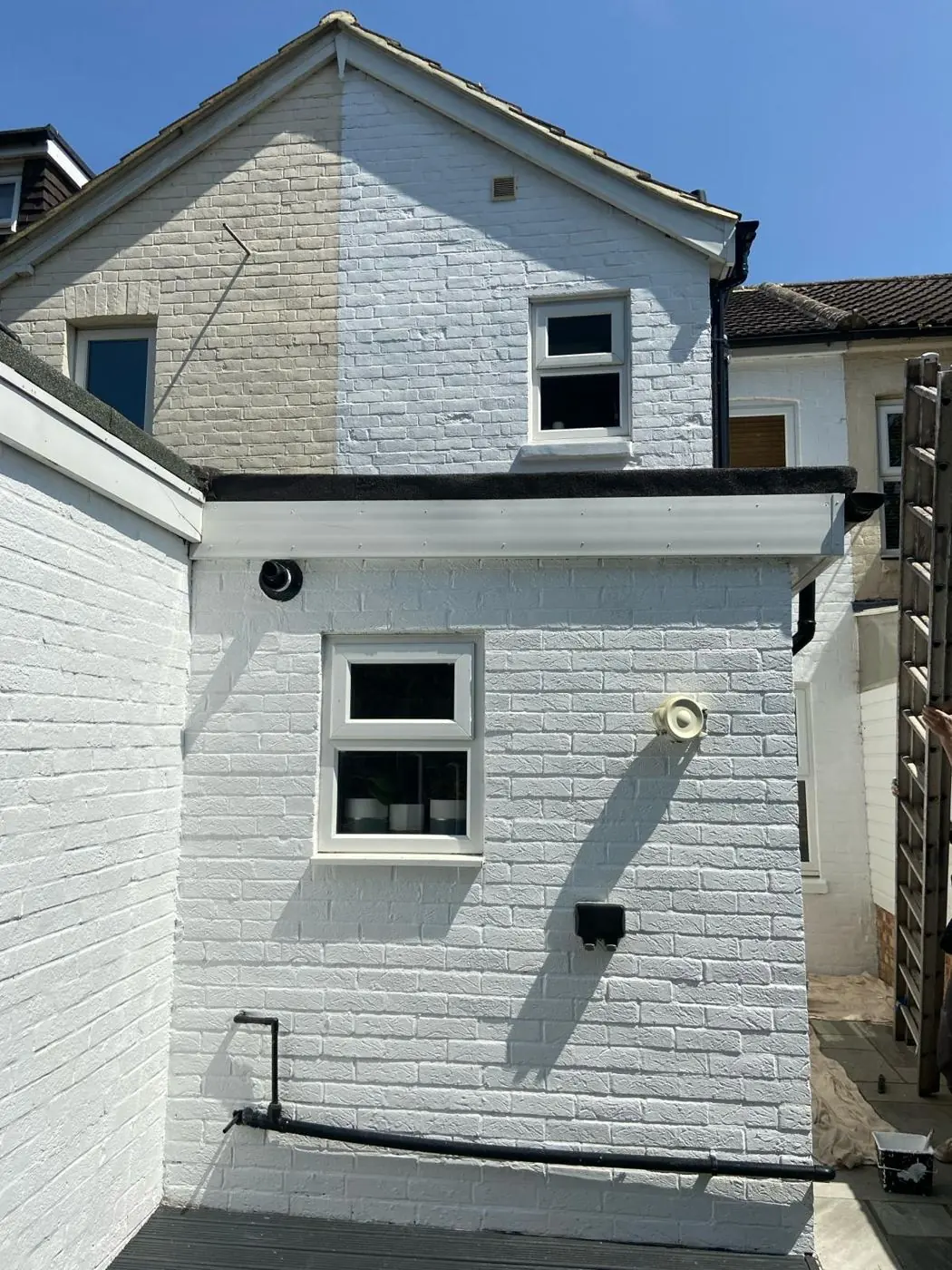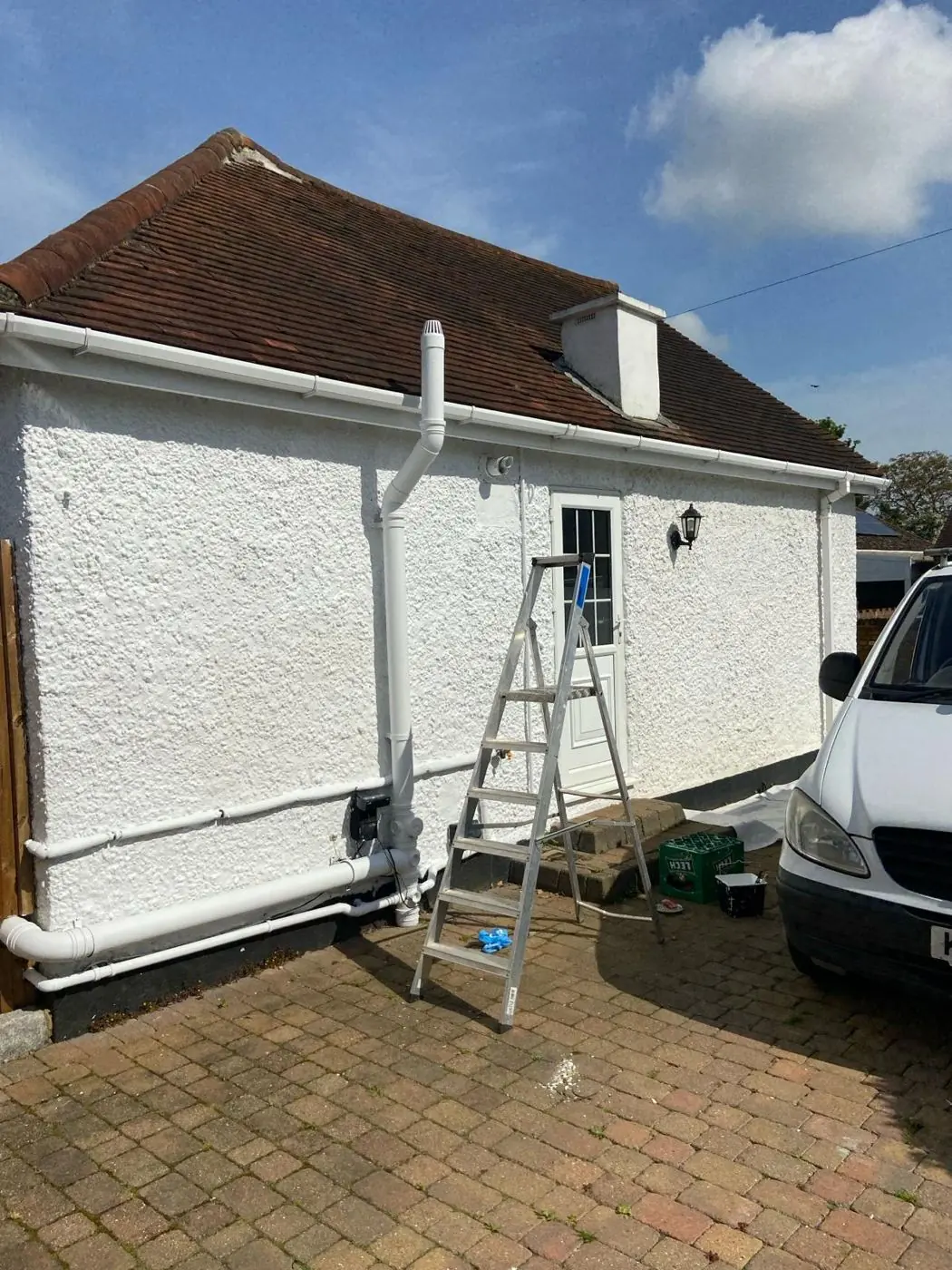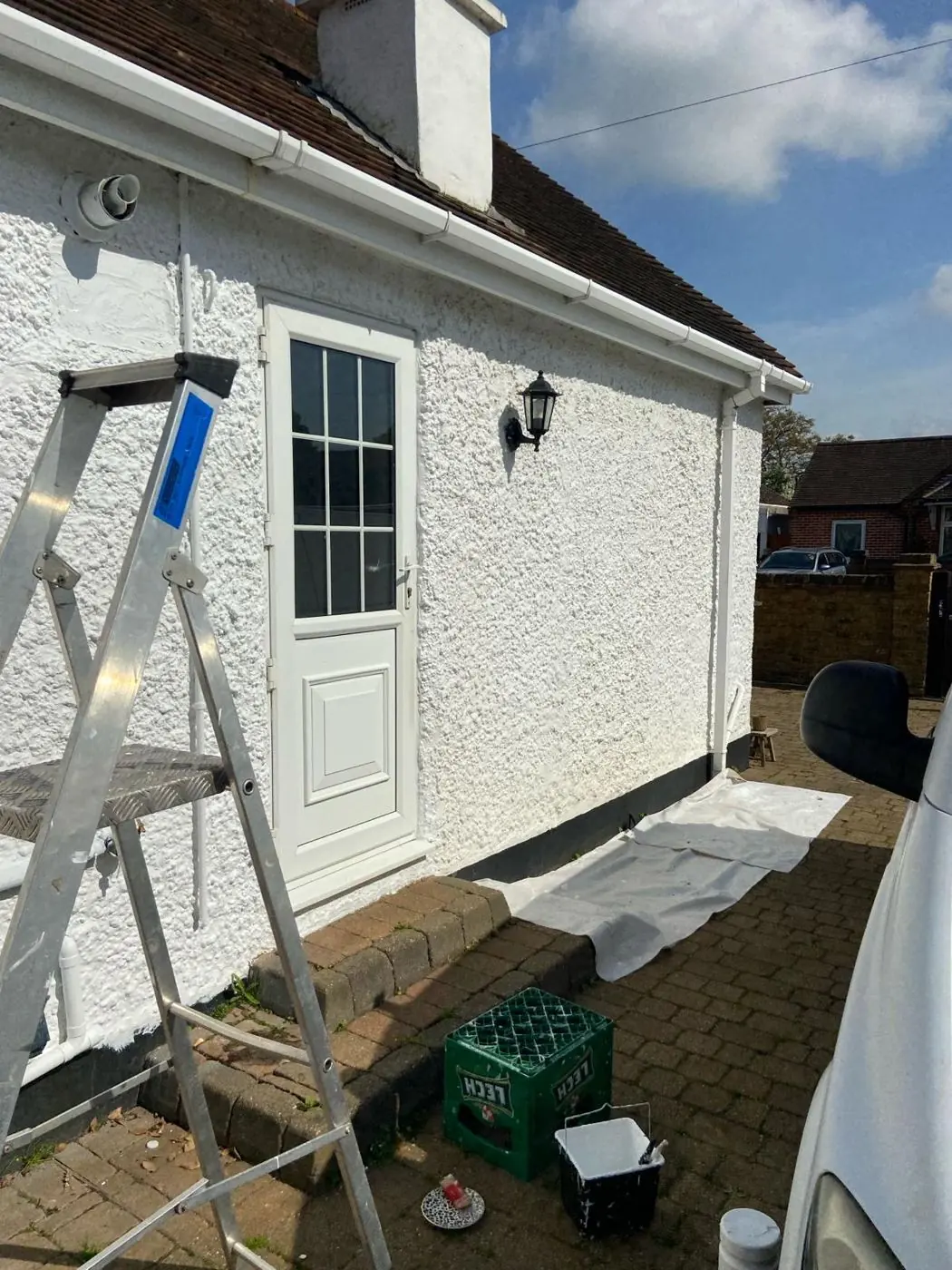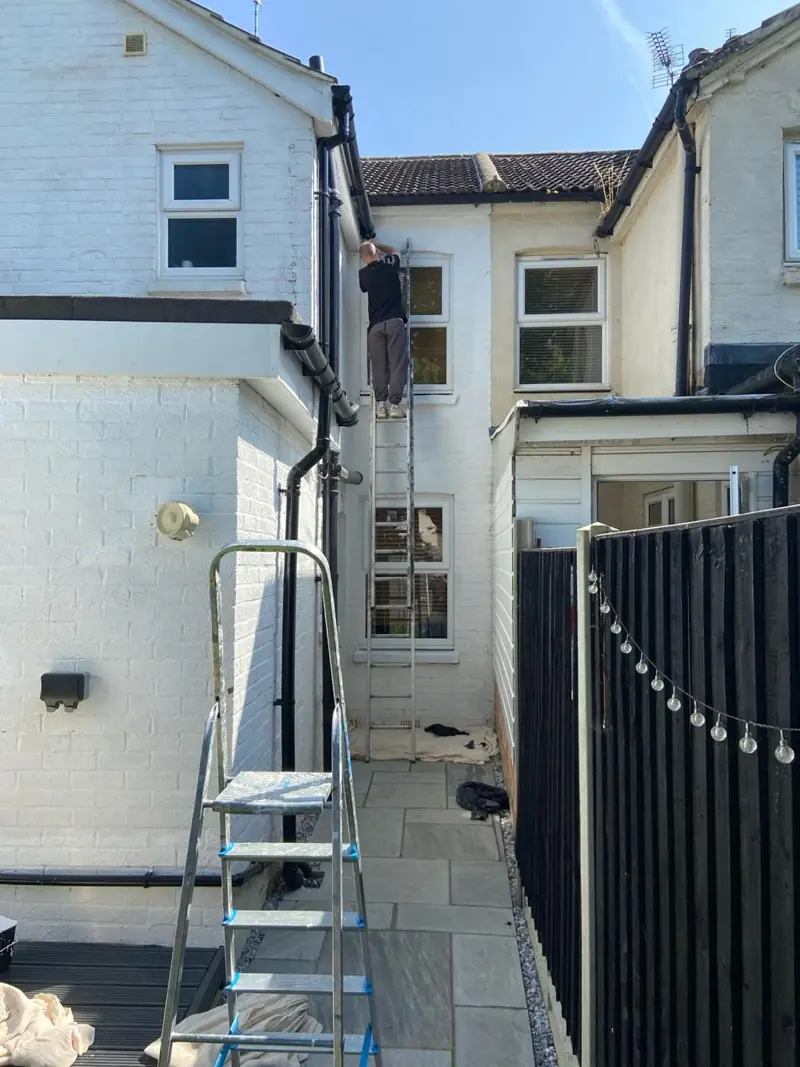
We paint render and masonry in Overstone, about 5 miles north-east of Northampton. The village's historic walls are coursed lias and ashlar limestone, which should not be sealed with acrylic masonry paint, so the first question on any job here is what the wall is made of.
Three kinds of wall in one village
A masonry job in Overstone starts with identifying the wall, because the village has very different types close together. The listings and maps show:
| Wall | Where you find it | What we would put on it |
|---|---|---|
| Coursed lias, never painted | The 18th-century Sywell Road cottages, Holly Lodge Farmhouse, Overstone Gate and the mid-19th-century estate group | Nothing. Bare stone should stay bare. |
| Lias or limestone painted at some point | Any older stone house with a previous coating | Limewash or a mineral silicate paint, after testing what is already there |
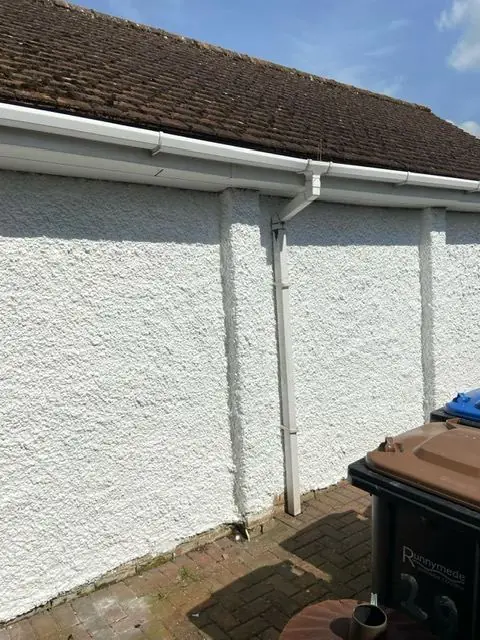
| Render on newer houses | Wherever a 20th-century or later home off Woodland Avenue or in the lakeside streets is rendered | A conventional breathable masonry paint system |
The sources we use do not record what the newer houses are built from, so we look before we specify anything. If your house is brick or rendered, it is a straightforward masonry job. If it is stone, the approach changes.
Why acrylic masonry paint is wrong for lias
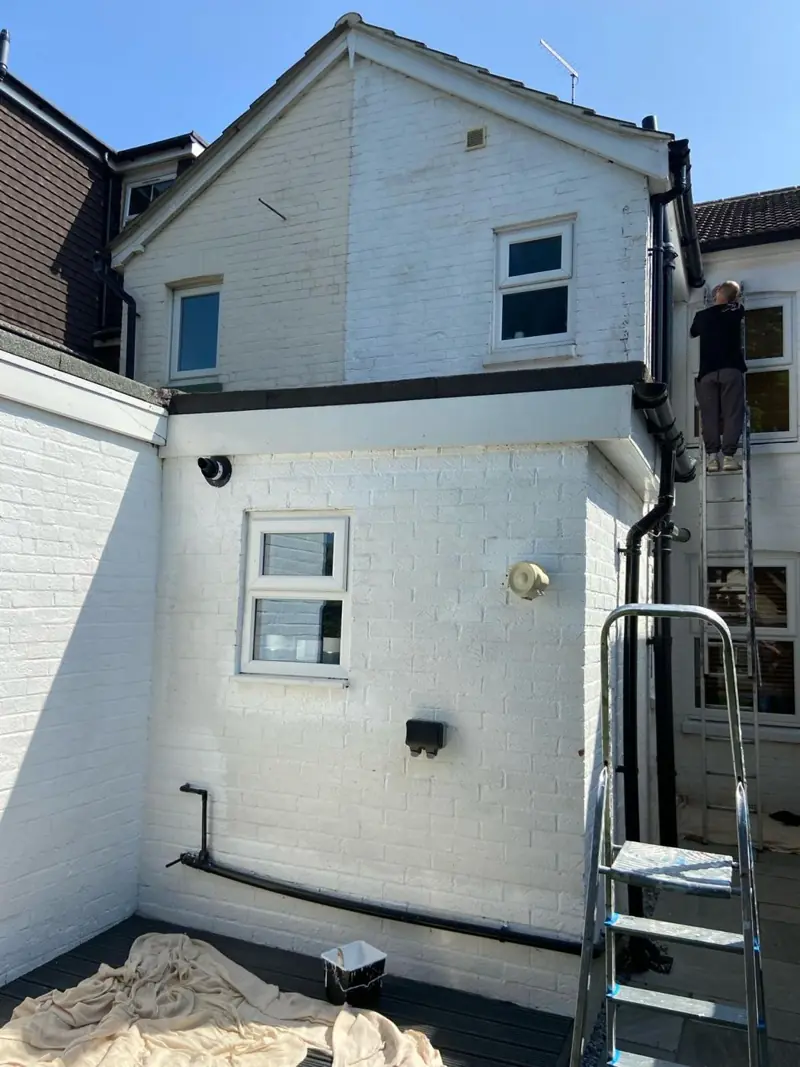
Lias is a soft limestone, and it handles water by letting it in and letting it out again. An acrylic or plastic masonry paint forms a skin that slows the drying. Moisture then collects behind the coating, the face of the stone softens, and in frost the paint and the outer layer of stone can blister and come away together. On a building that has stood since the early 18th century, that damage can happen in a few winters.
Where a stone wall in Overstone already carries paint, we test what the coating is. If it is old limewash, we refresh it with limewash. If it is a modern film that is failing, the choice is between careful removal and a mineral paint that can bond to sound mineral surfaces and still let the stone breathe. We explain the trade-offs on site. Our guide to painting render and roughcast covers the newer-house side in more depth.
Ashlar, mullions and kneelers are kept clean
The estate houses (Whistlefield, Court House, The Dairy, Court Lodge and Court Cottages) have coursed lias walls with ashlar dressings, ashlar gable parapets and kneelers, stone mullion windows and four-centred moulded stone door heads. Paint should not go on that dressed stone. When we work on the joinery or on a painted panel nearby, the ashlar is masked and sheeted, and any splash is dealt with immediately, because limestone absorbs pigment and is hard to clean once it has soaked in.
Consent, shade and the order of work
Every one of the parish’s 18 listings is Grade II. Painting bare stone, changing a wall colour or stripping an old finish on any of them can need listed building consent from West Northamptonshire Council, and we raise that before we price. There is no conservation area, so unlisted homes have no such restriction.
Many walls here face into trees from the park and spinneys and stay damp in the shade. A fungicidal wash comes first, then the wall needs to dry right through before anything is applied, and limewash in particular needs mild, damp-free days to cure. We plan stone work for the gentler parts of the year rather than squeezing it in.
The full preparation process, from crack repair to stabiliser, is on our main render and masonry painting page, and the village’s other services are on our Overstone area page.
Last updated by Dean, DH Painter & Decorator.