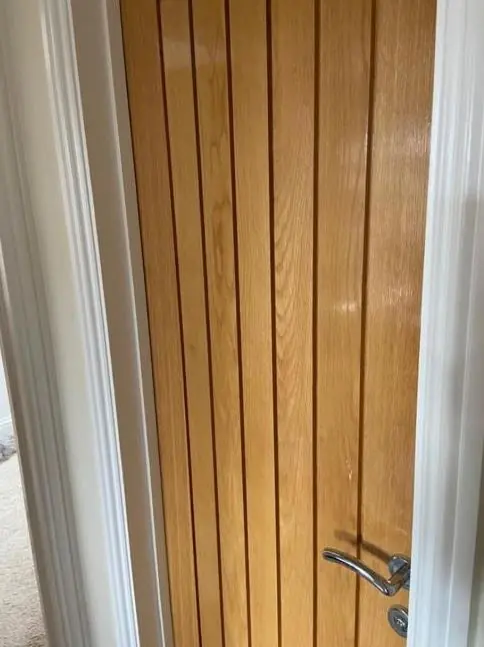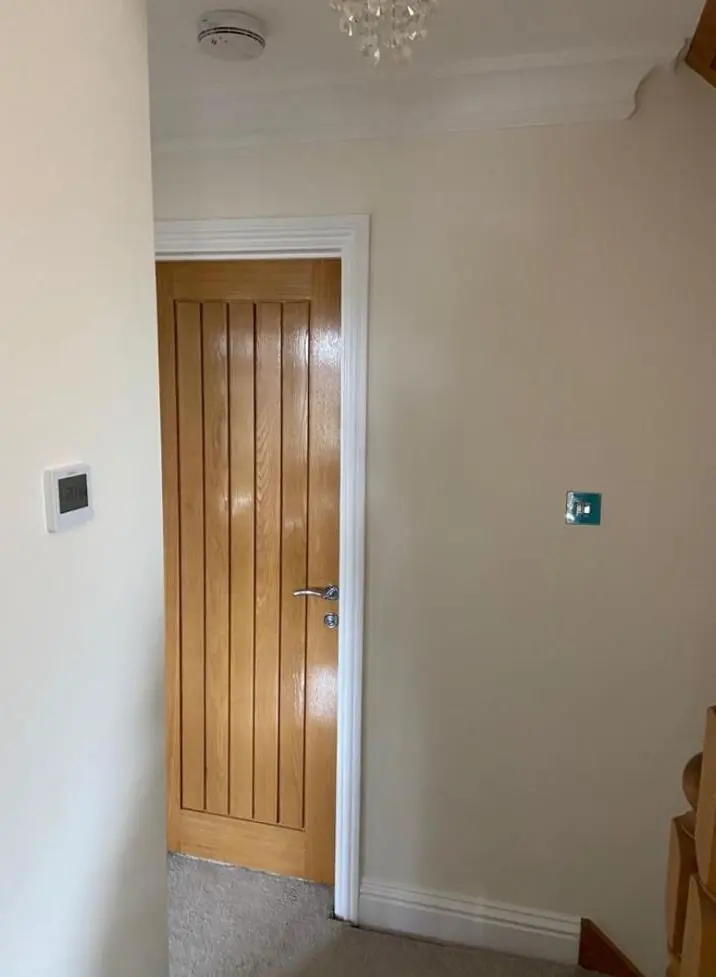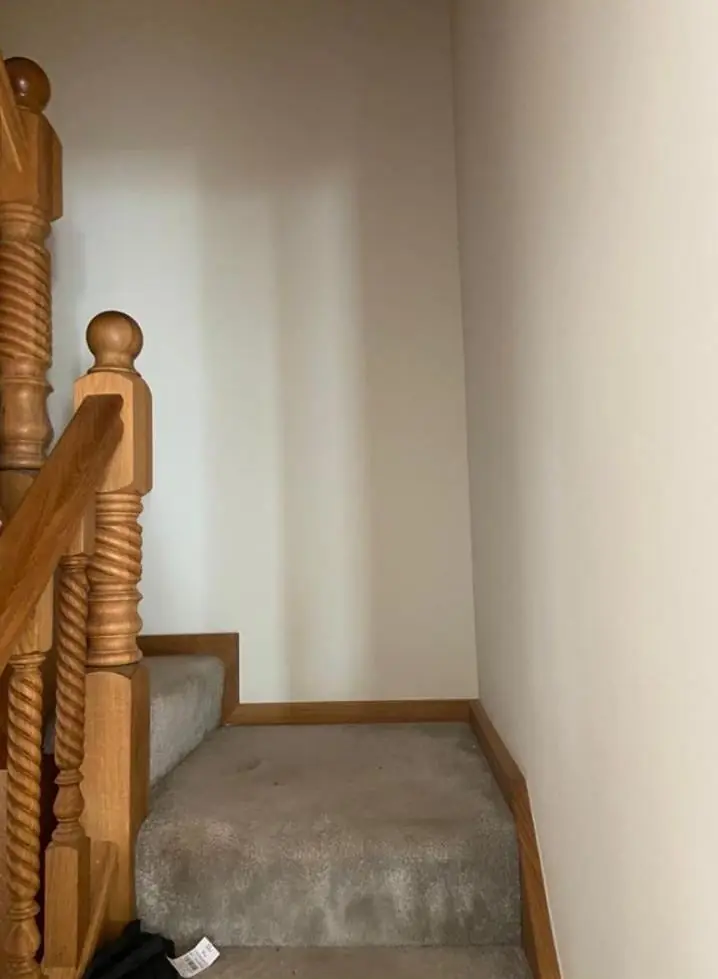
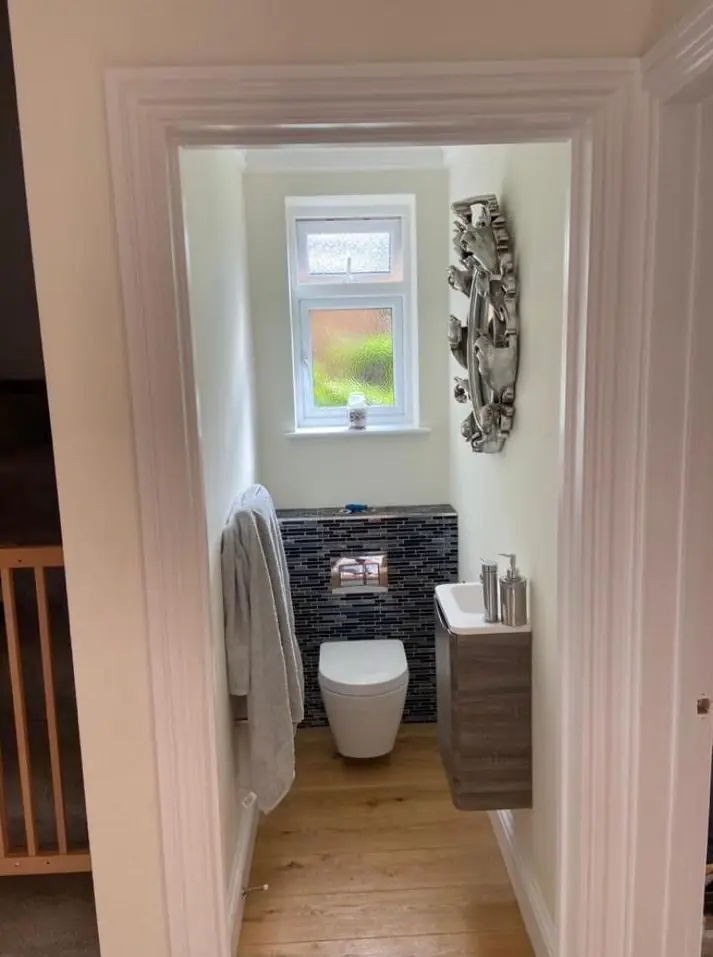
Dean paints doors, skirtings, architraves, casements and porches in Overstone, a village about five miles north-east of Northampton town centre in NN6. Woodwork here runs from 18th-century leaded casements and 19th-century panelled doors on Grade II buildings to standard joinery in the newer houses, and each needs a different approach.
On Sywell Road, the back door is the front door
The Historic England listing for Nos. 102 to 110 Sywell Road notes something unusual about this thatched early 18th-century row: only No. 104 has anything at the front, a 20th-century porch. Everyone else comes and goes from the back. That changes where the wear falls. The back door, its frame, the threshold and any porch take the daily knocks, the wet boots and the weather, while the joinery facing the road stays comparatively quiet. When we price woodwork on one of these cottages we look at the rear first, because that is usually where paint has lifted, where end grain at the foot of the door has drunk water, and where a repaint is overdue.
Across the road on the north side, Holly Lodge Farmhouse keeps its 19th-century six-panel door with a timber porch in front. Joinery of that age should be refinished like for like: same profile, a similar colour and a traditional paint, rather than a heavy modern gloss that hides the mouldings.
Thatch overhead means no heat gun
On the listed row the thatch comes down over the first-floor windows, and the leaded casements sit under wooden lintels in eyebrow dormers. Two practical rules follow. No open flame and no heat gun go anywhere near the building, so failed paint on lintels, casement frames and door heads is taken off with chemical strippers or by hand scraping. And ladders cannot lean where they normally would, because the thatch eaves block the usual positions, so we plan access around the roof rather than against it. The casements themselves are small and old, and the leaded glazing has to be cut in by hand with a fine brush.
Estate joinery at Whistlefield and Court House
The mid-19th-century estate group, which takes in Whistlefield, Court House, The Dairy, Court Lodge and Court Cottages, has panelled doors and 19th-century casements set into coursed lias with ashlar dressings and four-centred moulded stone door heads. Some points for this work:
- Lead in old layers. Paint on joinery of this age may contain lead, so we test before preparing and then use wet abrading and dust-free methods rather than dry sanding.
- Oil and linseed paints. Traditional oil or linseed-based paints suit the timber and sit well over earlier oil layers.
- Stone stays bare. The moulded door heads and mullions are masked off. Paint should not go onto the ashlar.
Our main door, skirting and woodwork page sets out our general preparation sequence. On the estate cottages the time goes mostly into testing, masking and careful stripping.
Consent, colour and the newer homes
All 18 listed buildings and structures in the parish are Grade II, and Overstone has no conservation area. For the listed ones, changing a door colour, stripping historic finishes or painting joinery that was never painted can need listed building consent from West Northamptonshire Council. We ask what has been agreed before quoting. If nothing has, we suggest checking first.
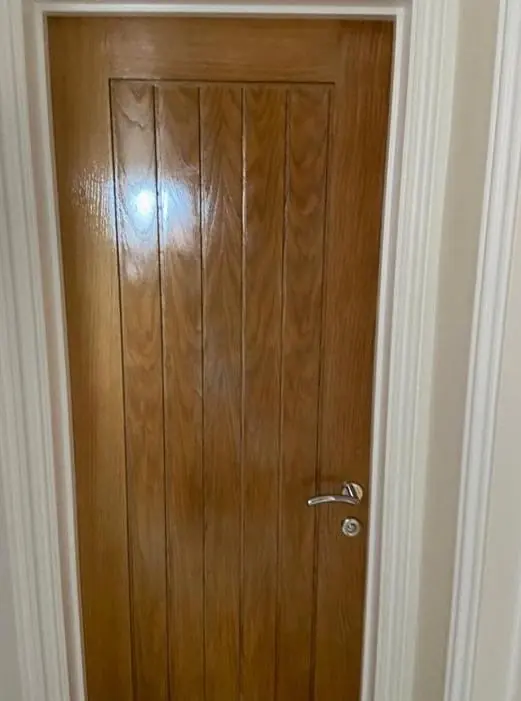
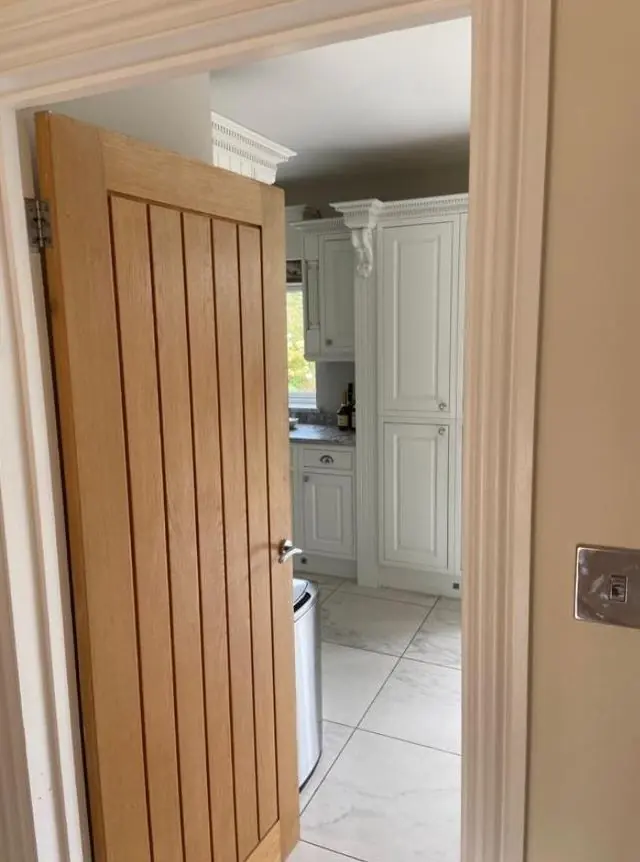
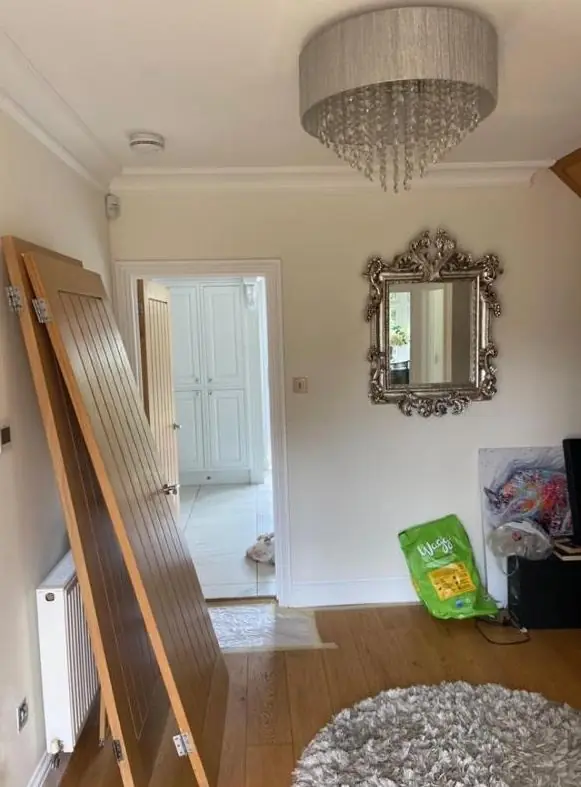
The houses on Woodland Avenue and in the lakeside streets such as Pine Avenue, Sycamore Drive and Kingfisher Court have no such controls. Inside them the work is more familiar: skirtings scuffed by hoovers, door frames chipped by furniture, and yellowed oil gloss to replace with a water-based satin that stays white. Outside, doors under the tall trees around the park collect sap and green algae on the bottom rail, so we wash them with a fungicidal cleaner and let them dry fully before priming.
| Joinery | Where in Overstone | Usual treatment |
|---|---|---|
| Rear doors and porch | Listed Sywell Road row | Hand or chemical strip, traditional paint |
| Panelled doors, casements | Estate group | Lead test, linseed or oil paint |
| Six-panel door, wooden porch | Holly Lodge Farmhouse | Like-for-like refinish |
| Skirtings, internal doors | Newer roads and lakeside streets | Water-based satin or eggshell |
More about the village’s buildings is on our Overstone area page.
Last updated by Dean, DH Painter & Decorator.