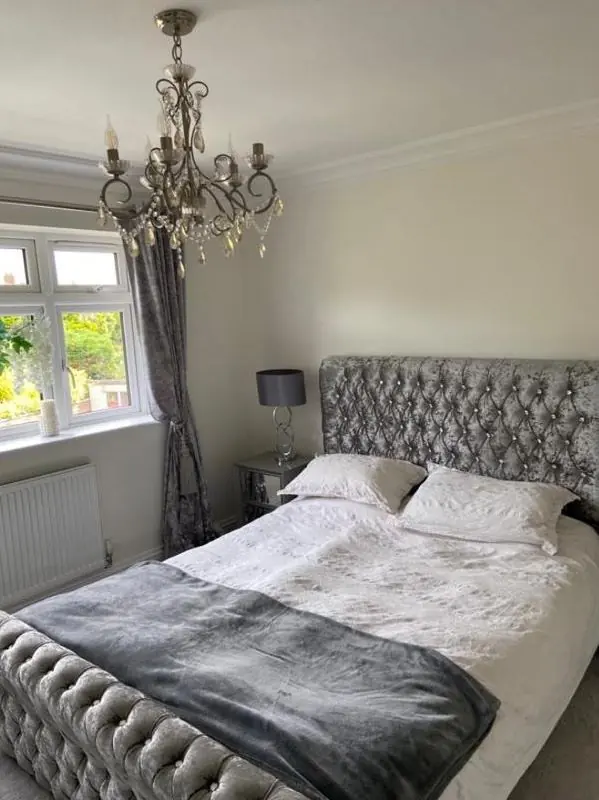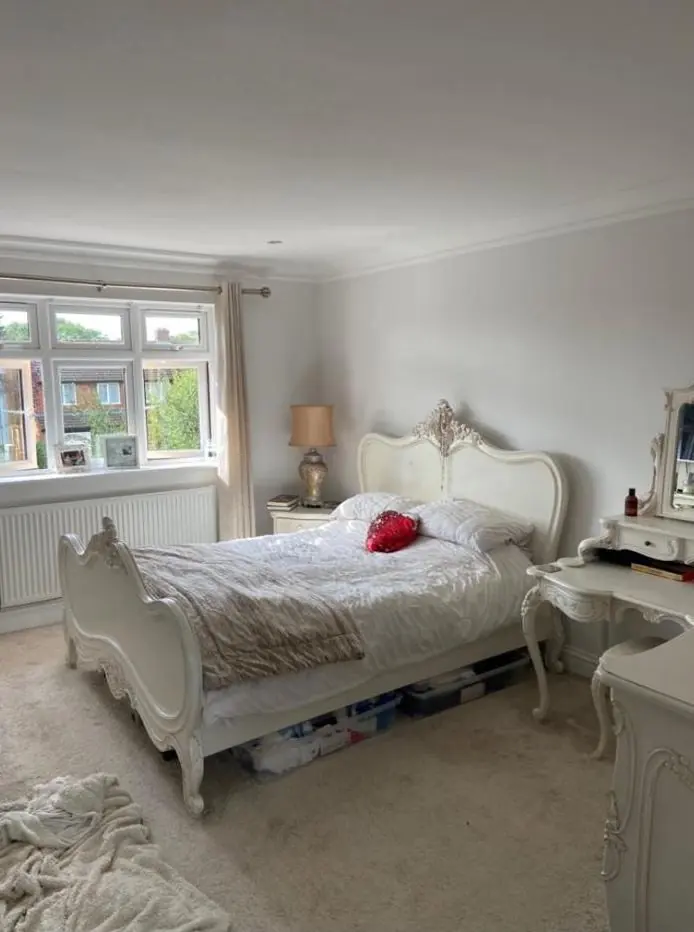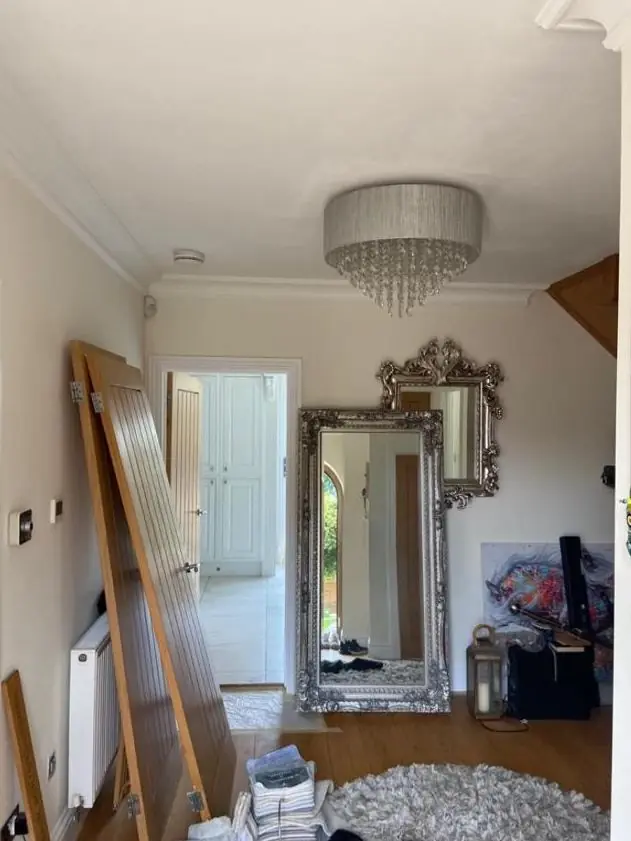
Dean gives colour and finish advice in Overstone, about 5 miles north-east of Northampton, as part of a decorating job. He looks at how the parkland trees affect light in your rooms, what listing means for joinery colours on the Grade II cottages, and which finishes suit lime and stone walls.
A village surrounded by trees and water
Overstone sits beside the former Overstone Park estate, about 5 miles north-east of Northampton town centre. Around the houses are lakes, a golf course, open parkland and woodland belts such as Cowpasture Spinney, Hayes Belt and Blackthorn Wood. Many homes sit among mature trees. That setting affects colour choice twice over. Outside, a door or window is seen against greenery and grey lias stone rather than a row of neighbouring houses. Inside, rooms screened by trees get softer, greener light than a house on an open street.
How tree cover changes a colour on the wall
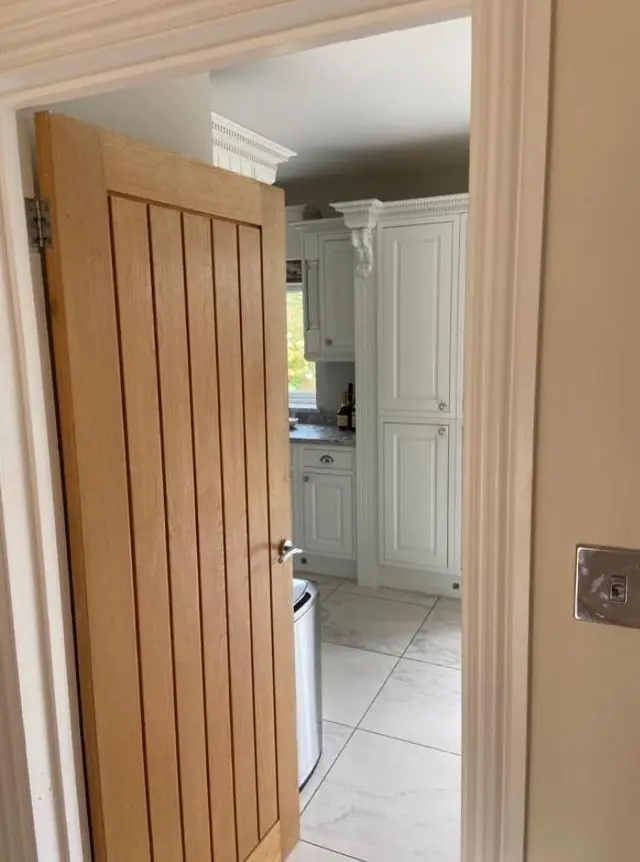
Light reflected off leaves picks up a green cast in summer, then brightens noticeably once the leaves drop. A cool grey that looks crisp on a card can turn flat and faintly green in a north-facing room behind a tree belt. Dean looks at each room at the time of day you actually use it, and for shaded rooms he generally steers towards warmer undertones that hold up in low, filtered light. We put large sample patches on two different walls and you check them morning and evening over a few days. In a house among the spinneys, it is also worth looking again after leaf fall before making a final choice for a whole floor.
Grade II joinery and the stone that stays bare
All 18 of Overstone’s listed buildings are Grade II. On the thatched row at Nos. 102 to 110 Sywell Road, on Holly Lodge Farmhouse and on the mid-19th-century estate houses, most of the walling is bare coursed lias with ashlar dressings, and that stone should stay unpainted. Colour on these houses is therefore mostly a question of joinery: leaded casements under wooden lintels, porches, panelled doors such as the 19th-century six-panel door at Holly Lodge, and the casements on the estate group.
Changing a joinery colour on a listed building can need listed building consent from West Northamptonshire Council, so ask them before choosing something new. Where you are keeping the existing colour, Dean helps describe what is there now, including the paint type and sheen, so a like-for-like repaint is specified accurately. Traditional oil or linseed-based paints on period joinery also come in their own colour ranges, and it helps to know that before you settle on a shade.
Freedom in the newer streets
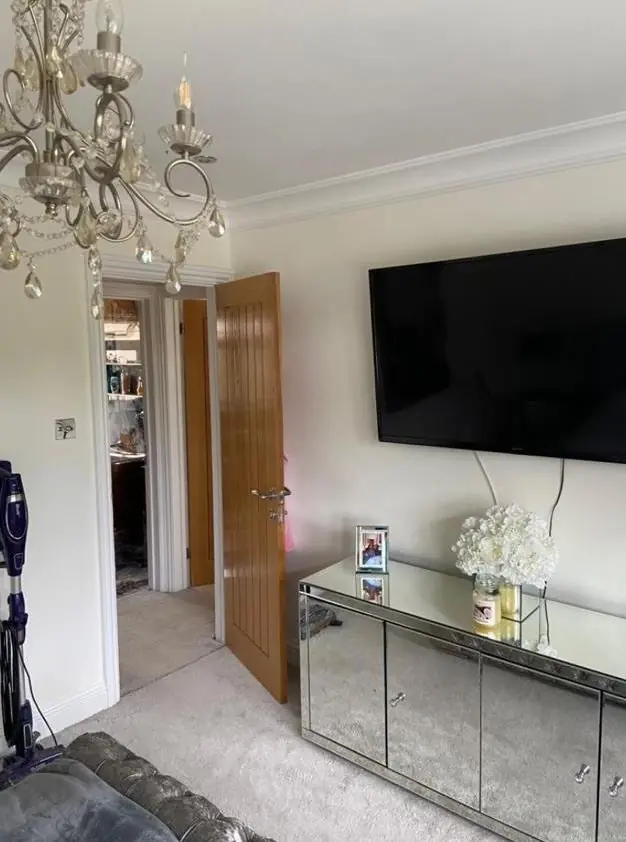
Overstone has no conservation area, so the later homes off Woodland Avenue and in the lakeside streets such as Pine Crescent, Woodside and Kingfisher Court are free to use modern colours inside and out. The parkland setting suits muted greens and stone tones, which sit quietly against trees and water. These are the starting points Dean typically suggests in the village:
| Situation | Where to start |
|---|---|
| Room behind a tree belt, facing north | Warm whites and soft stone shades that do not turn green |
| Room looking out over open farmland | Cooler greys, greens and blues hold their colour well |
| Front door on a later house among trees | Muted green, stone or deep blue-grey |
| Joinery on a listed cottage | Match what is there; get consent before any change |
Finish matters as much as shade
Sheen changes how a colour reads. On uneven lime-plastered walls in the old cottages, a flat or chalky finish hides the undulations that a mid-sheen would pick out. Breathable mineral and clay paints suitable for those walls come in narrower ranges than standard emulsions, so the shortlist starts there. In the newer homes, kitchens and halls get a wipeable finish. For the full approach to light direction, undertone and sampling, see our main colour and finish advice page, and for the village’s other properties, the Overstone area page.
Last updated by Dean, DH Painter & Decorator.