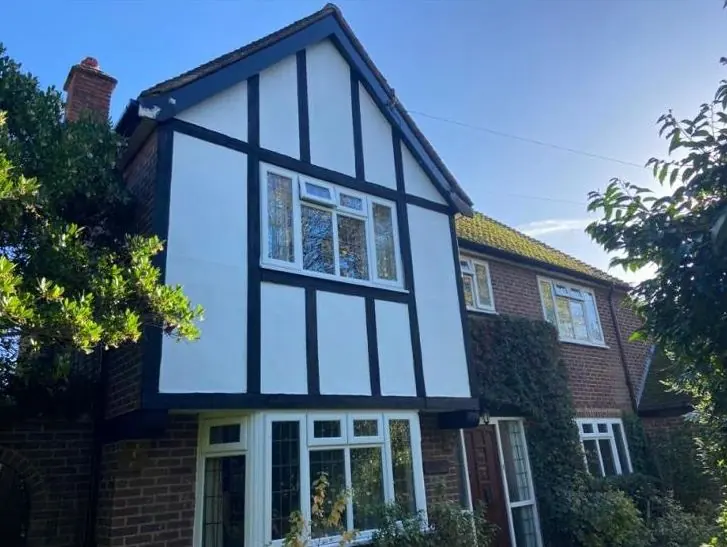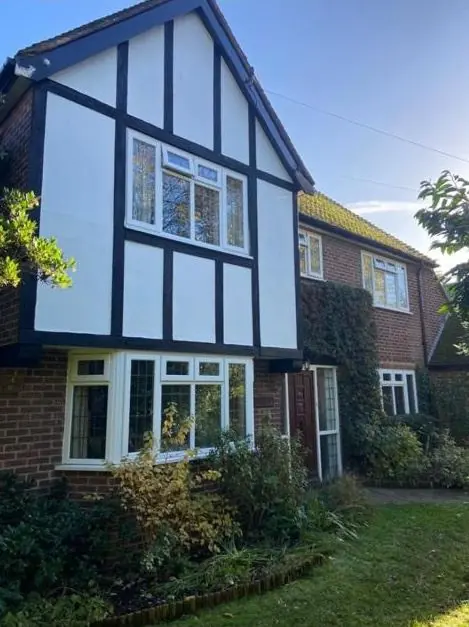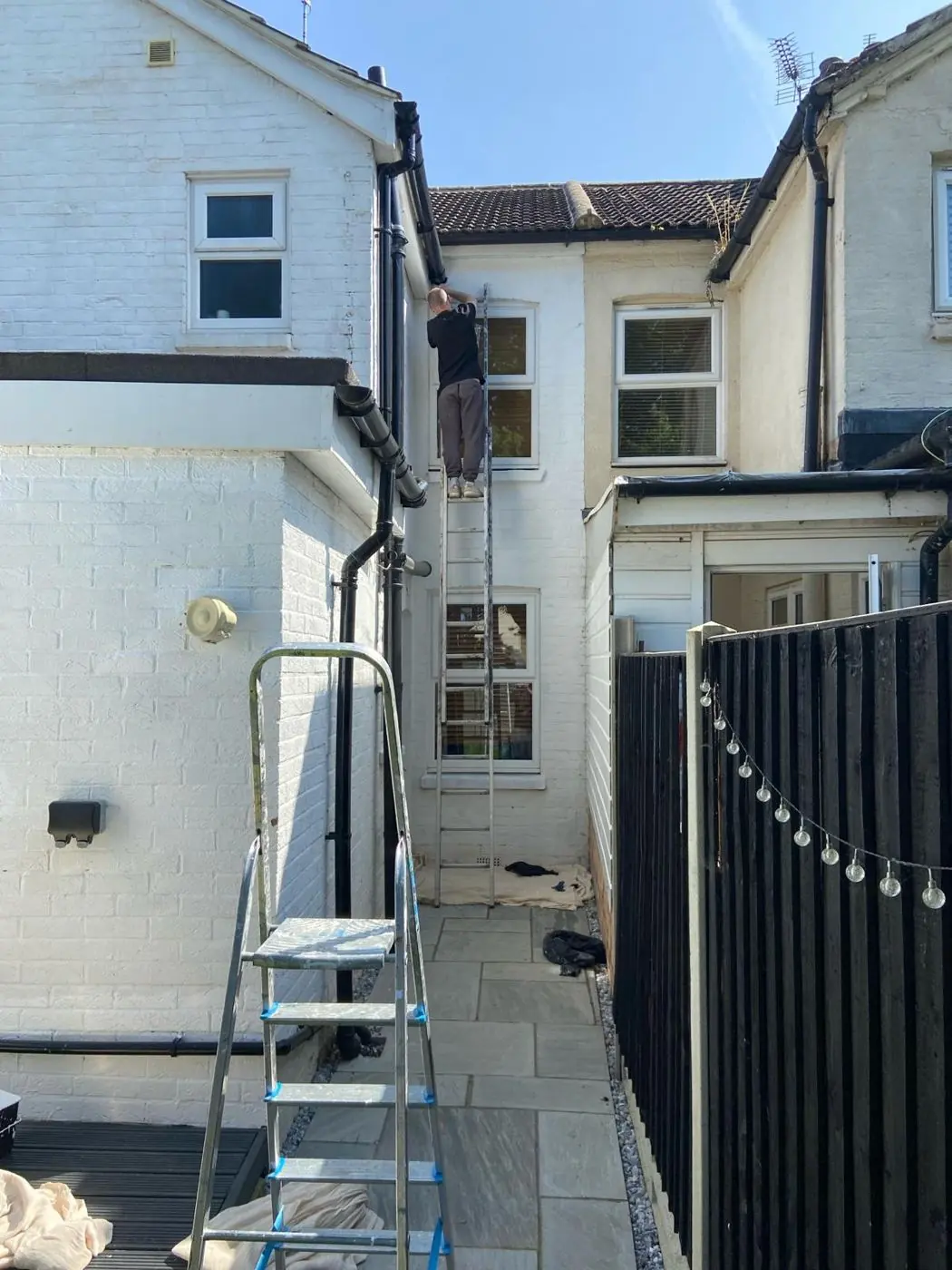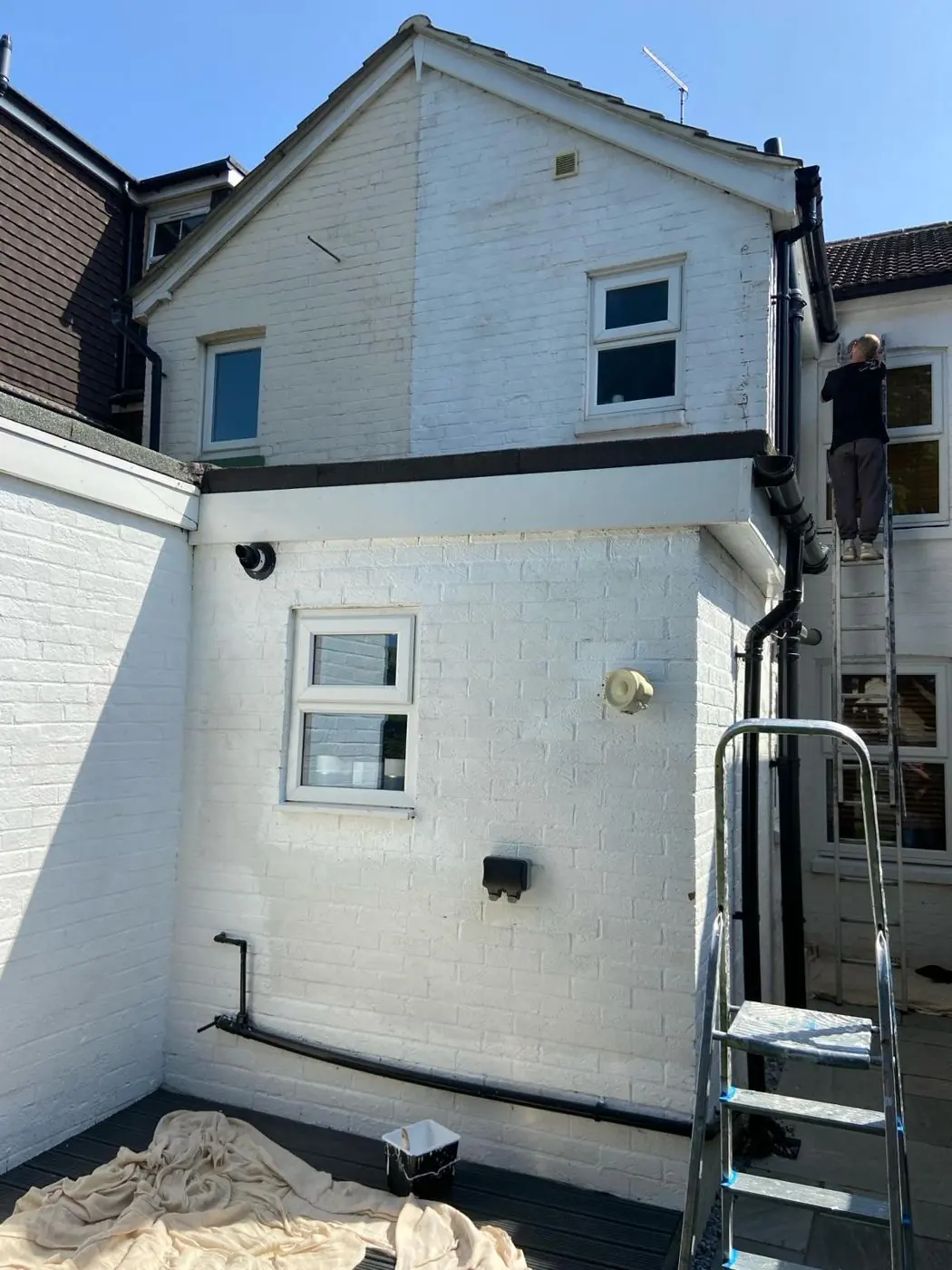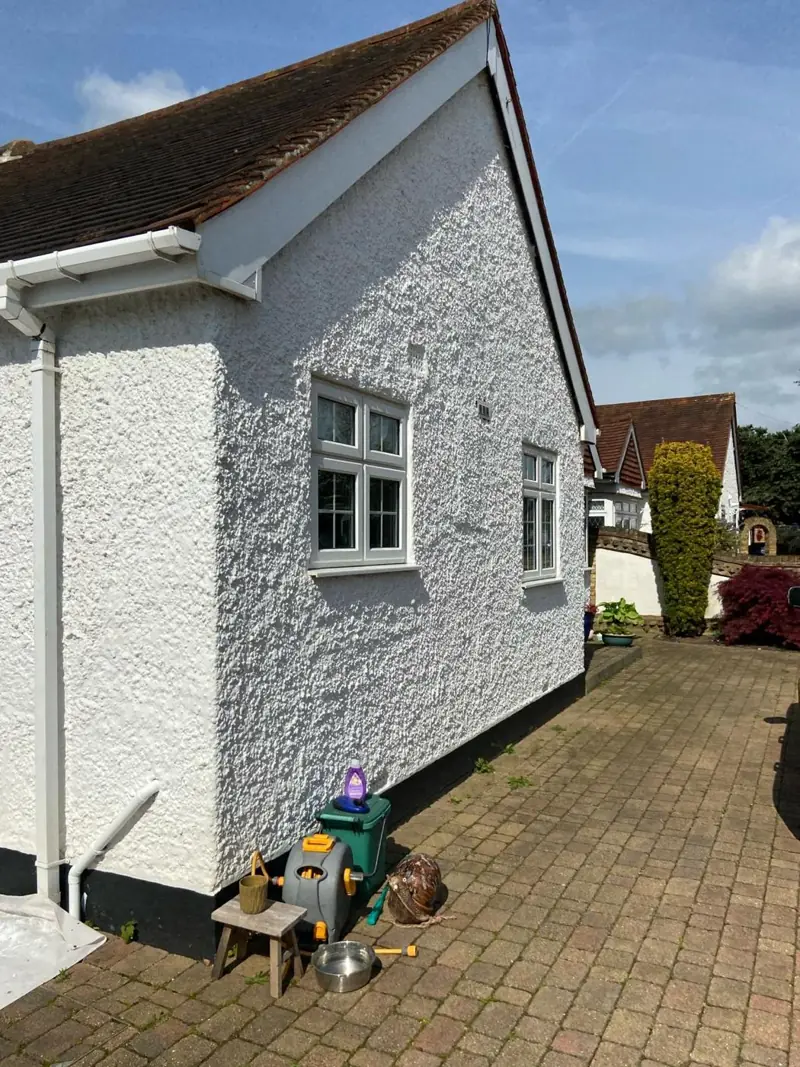
We paint timber fascias, soffits, gutters and downpipes in Overstone, a village about 5 miles north-east of Northampton. Most of this work here is on the newer houses, because the thatched cottages have no fascias at all, and tree debris means cleaning comes first.
Which houses have fascias to paint
Not every roof in Overstone has boards to paint. The Grade II thatched row at 102 to 110 Sywell Road has no fascias or soffits at all, because the thatch simply runs out over the eaves. Other old houses in the village, such as Holly Lodge Farmhouse and Overstone Gate, have plain tile roofs, and the estate group has ashlar gable parapets with kneelers. That leaves the homes off Woodland Avenue and in the residential streets by the lakes, such as Pine Crescent, Park Lands, Woodside and Kingfisher Court, as the main places where painted roofline timber is found.
The sources we use do not record when each of those houses was built or what its boards are made of, so we check at the survey. If they are timber, we paint them. If they are uPVC and you want a colour change, we discuss whether that suits the house and the conditions.
Where an older house does have timber barge boards on a gable, or a wooden porch with its own small fascia, we check whether it is one of the Grade II listed buildings. If it is, any change of colour or finish is checked against listed building consent first, and like-for-like repainting is our starting point. On the unlisted newer homes there is no such restriction, because Overstone has no conservation area.
A roofline under trees needs clearing first
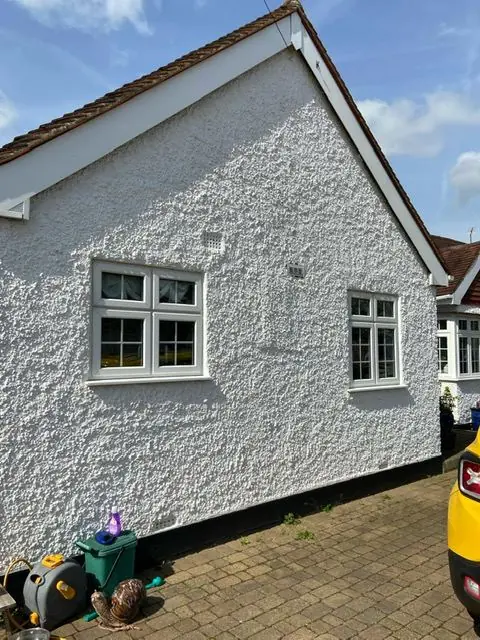
This is the part that makes fascia work in Overstone different from an open estate. Many homes sit among mature trees from the park, the golf course and the woodland belts such as Gashouse Spinney and Blackthorn Wood. Over a year that means:
- Gutters packed with leaves, seed cases and moss, which overflow and soak the back of the fascia.
- Green algae and black staining on soffits that rarely see the sun.
- Sticky sap spots on the face of the boards that paint will not stick to.
- Timber that stays damp for days, especially on north-facing eaves.
So the sequence here is clean before paint. We scoop out the gutters, flush the outlets so we can see whether they leak, wash the boards and soffits with a fungicide, and give the timber time to dry out. Only then do we scrape, fill, prime and coat. Painting over a soffit that is still damp, or over live algae, would mean the new paint lifting within a season or two.
Soft timber at the gutter line
Where gutters have overflowed for years, the bottom edge of the fascia and the ends of the soffit boards are the first places to soften. We probe these before quoting. Small soft patches can be cut out and filled with a two-part resin; anything worse is a carpentry repair, and we tell you before painting rather than coat over rot. On older boards the paint may also be lead-based, so it is tested and prepared without dry sanding.
Ladders, the road and a long drying window
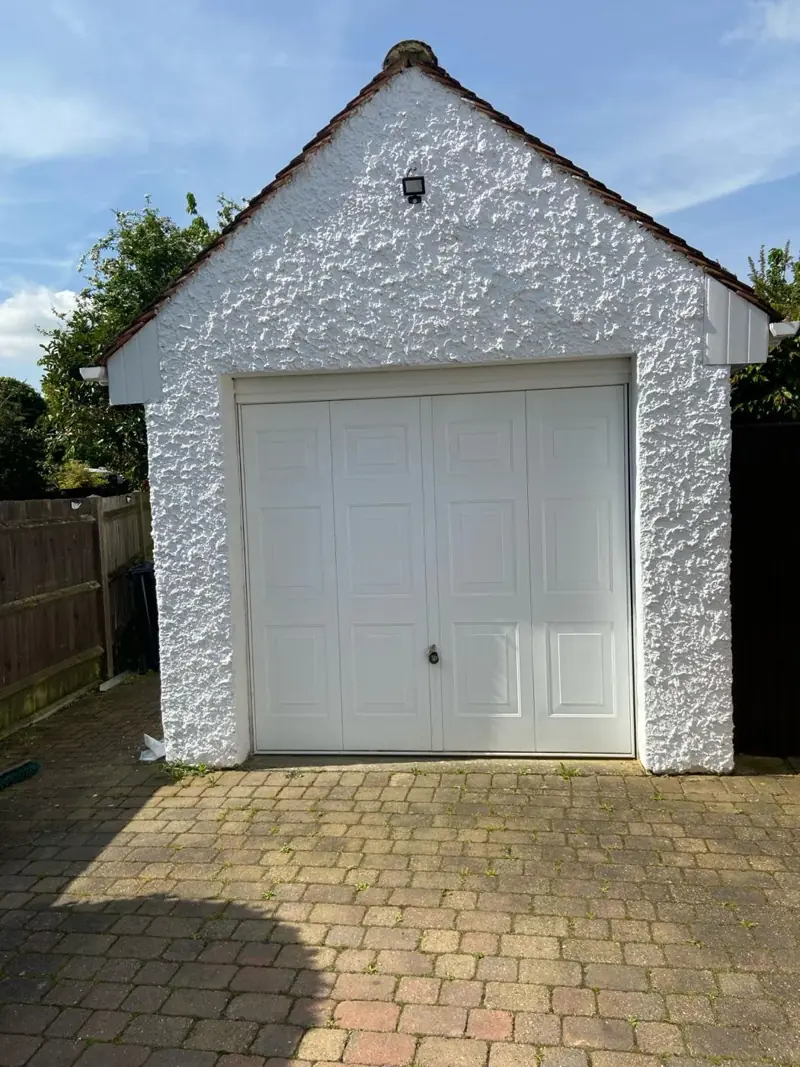
Sywell Road carries the village’s through-traffic, so eaves on houses close to the road need ladder footing and space for the van that does not block the carriageway. On larger or taller houses a tower can be quicker and safer than repeated ladder moves. Under trees we also allow longer between coats, as boards in shade dry slowly even on a fine day. Our guide to exterior painting weather explains how we pick the days.
The full process, with products for timber and coatings for gutters and downpipes, is on our main fascia and soffit painting page. For other painting in the village, visit our Overstone page.
Last updated by Dean, DH Painter & Decorator.