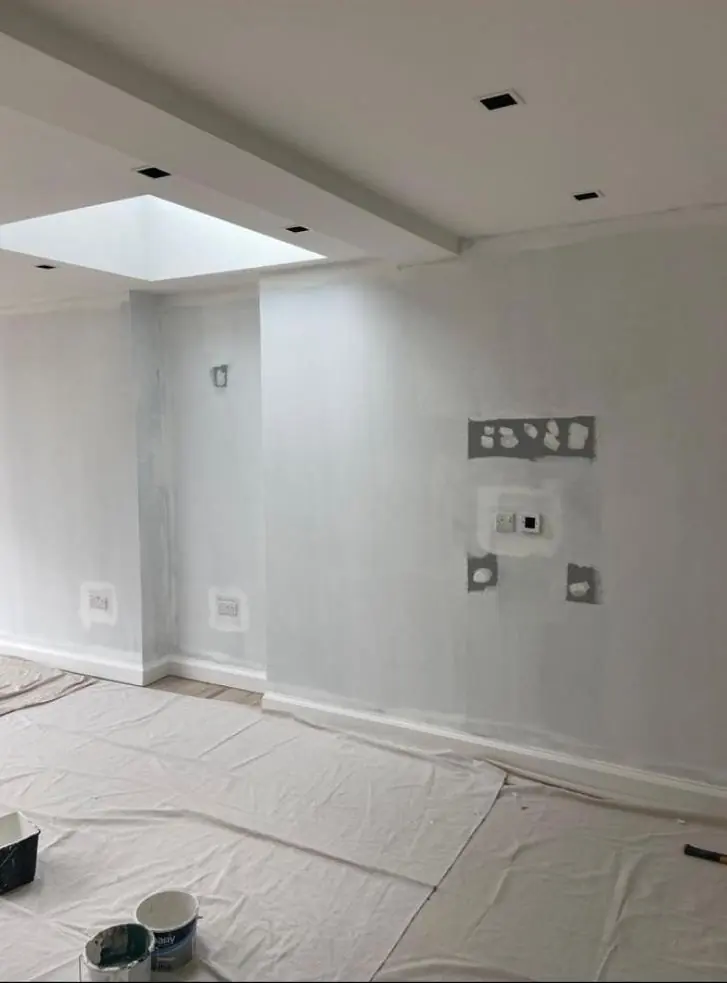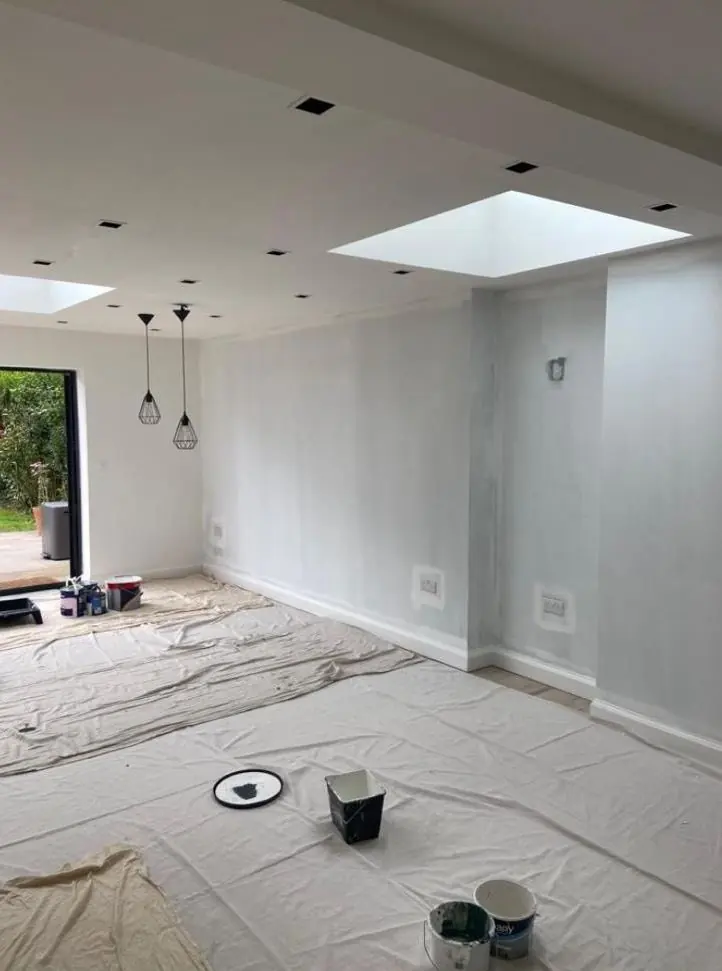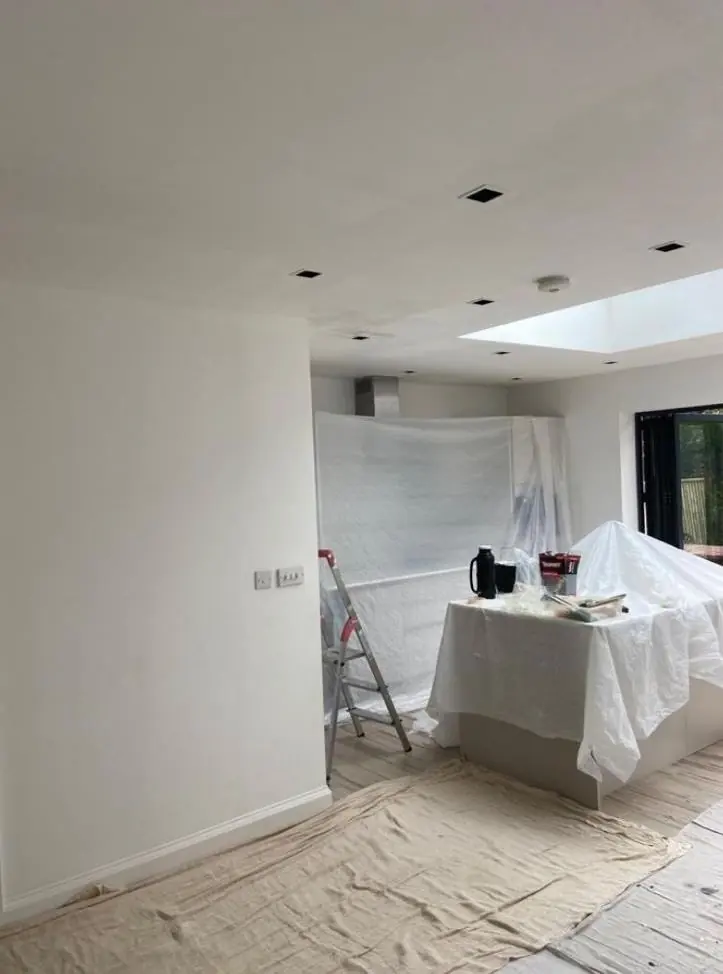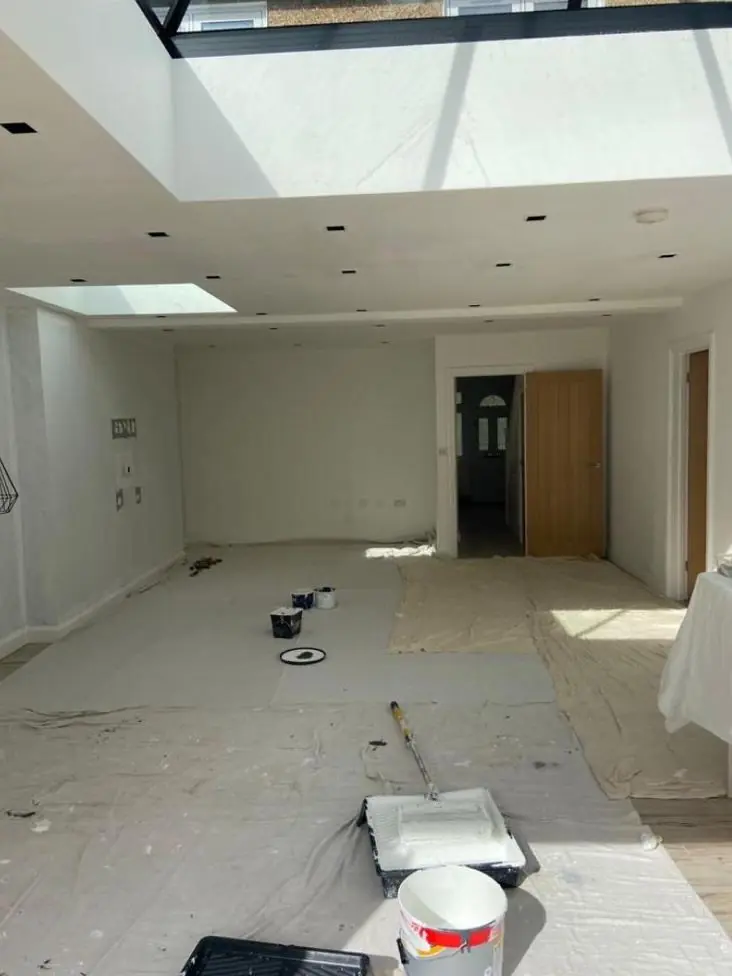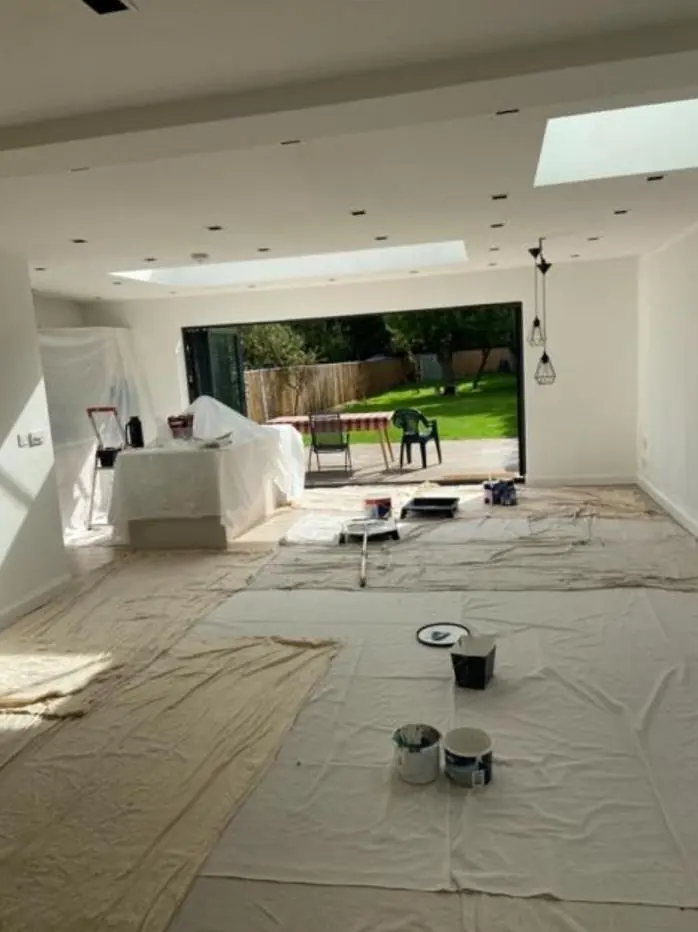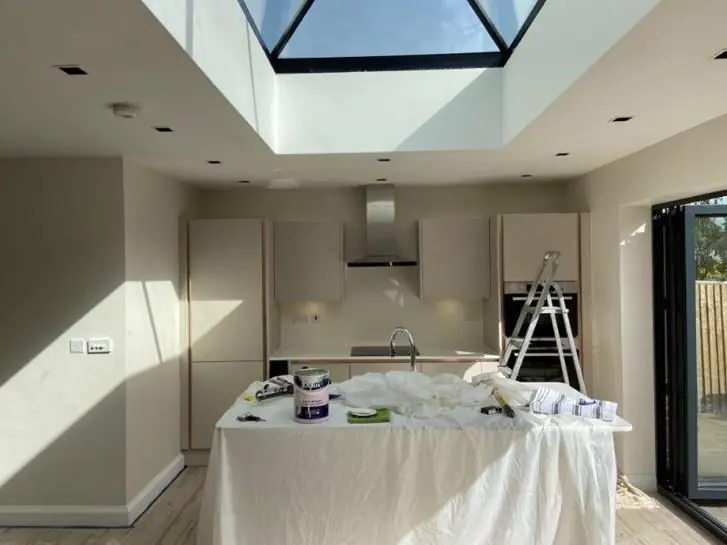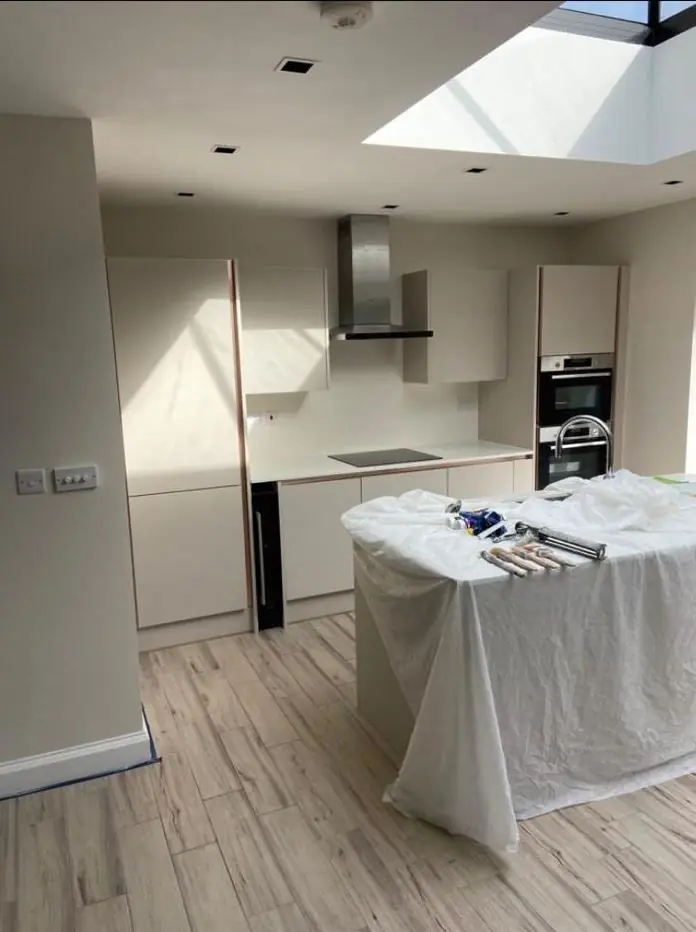
Dean mist coats and decorates new plaster and extensions in Overstone, five miles or so north-east of Northampton along the A43. The main difference from town work is where new gypsum meets old lime plaster on the village's 18th and 19th-century stone cottages, because the two need different paint.
Old lime, new gypsum, one wall
The listing for the thatched row at Nos. 102 to 110 Sywell Road records 20th-century rear extensions behind the 18th-century coursed lias cottages. That pattern of an old stone cottage with a newer addition at the back is where new plaster painting in Overstone becomes more than a mist coat. Inside, the original rooms are generally lime plaster on stone, and the extension is gypsum on block or board. The two materials behave differently:
- Lime plaster stays slightly porous and needs to release moisture, so it wants a breathable paint.
- New gypsum is very absorbent at first and needs a diluted mist coat to seal it before full coats.
- The line where they meet moves a little as the building settles, so a hairline crack often shows along it.
If one paint system goes across both, either the lime side gets sealed in or the gypsum side is poorly bonded. We treat them as two surfaces and pick a finish that looks the same on both. Along the junction, where cracks keep coming back, we use a flexible filler or a lining strip before painting.
What goes on first
| Surface | First coat | Things to watch |
|---|---|---|
| New gypsum skim in an extension | Diluted contract matt or a dedicated mist coat | Must be fully dry: pale and even, with no dark patches |
| Patch repairs in old lime plaster | Breathable mineral or clay-based paint | Lime repairs cure slowly, so allow longer |
| Junction of old and new | Flexible filler, then the matching topcoat | Expect some movement in the first year |
| Replastered rooms in newer houses | Standard mist coat | Usual drying times apply |
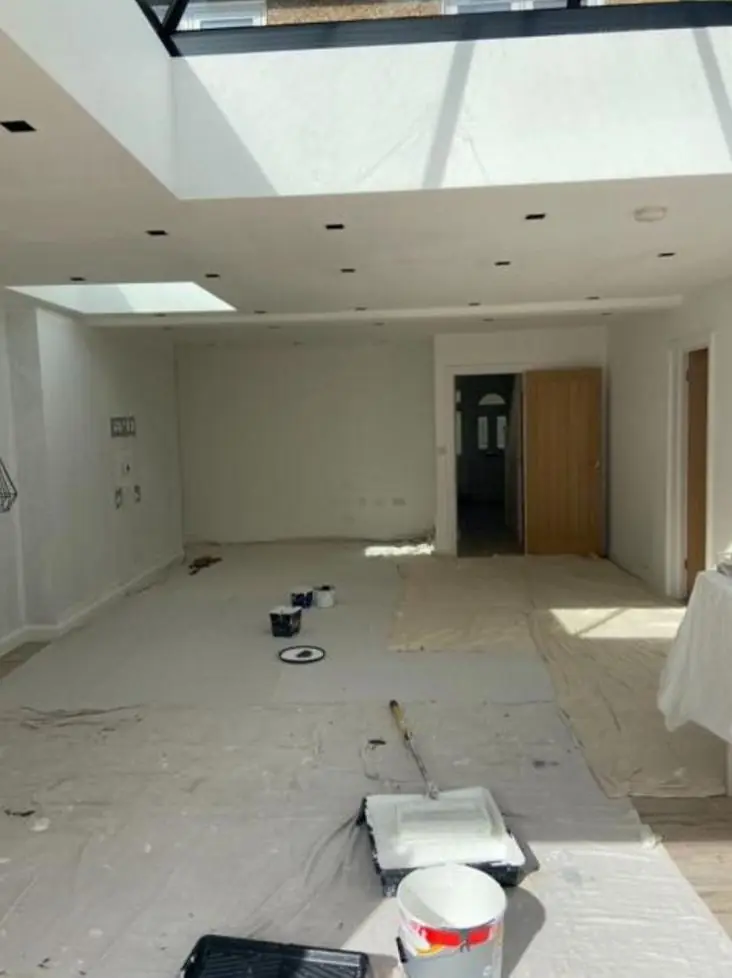
Our guide to painting new plaster and mist coats explains dilution and drying times in detail. The main new plaster and extension painting page covers how we handle a standard extension from bare skim to finished room.
Drying out under the trees
Overstone is surrounded by parkland, lakes and spinneys, including Cowpasture Spinney, Gashouse Spinney and Hayes Belt, and many houses sit among mature trees. A new extension on a shaded side of the house can stay cool and damp for longer than the plasterer’s rule of thumb suggests. We check plaster colour and use a moisture meter instead of counting days. If a room is still drying, we advise waiting rather than sealing damp plaster under emulsion, because that is how peeling and blistering start.
The same shade affects the outside of an extension. New render or masonry paint on a north-facing wall under trees will pick up algae quickly unless it is washed and allowed a good drying window before coating.
Listed homes and the newer roads
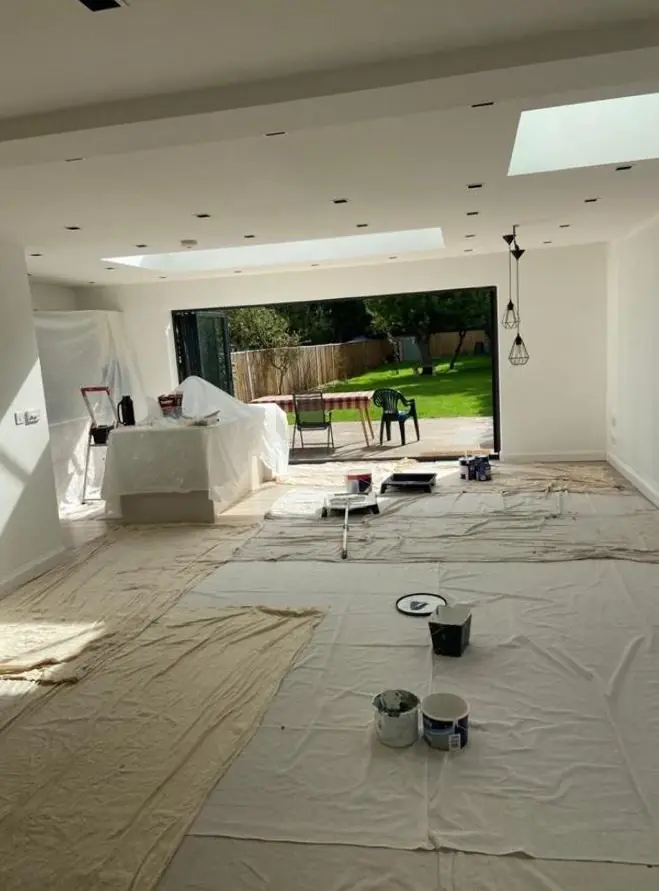
There is no conservation area here, yet the parish counts 18 Grade II listings. Building an extension onto a listed house is a planning and consent matter in its own right. Decorating inside the new part is not usually an issue. Where new work meets historic fabric, though, such as making good around an opening in a lias wall, the finish on the old side should stay breathable, and changes to the historic rooms may need listed building consent from West Northamptonshire Council.
Houses on Woodland Avenue and in the streets by Overstone Lakes are not under those controls. Replastered rooms and loft or kitchen extensions there follow the normal sequence: mist coat, two finish coats, then woodwork. For a wider look at the village, visit our Overstone area page.
Last updated by Dean, DH Painter & Decorator.