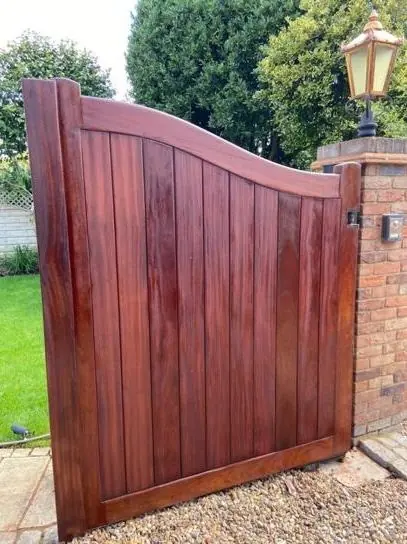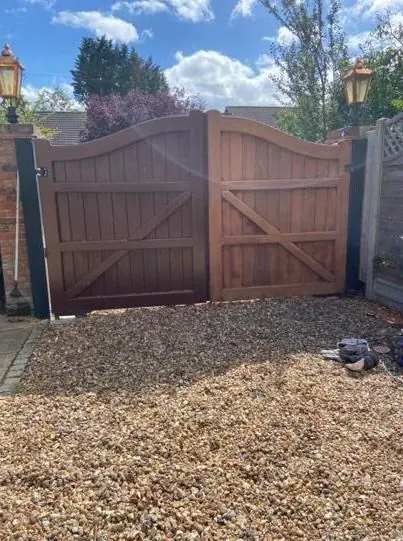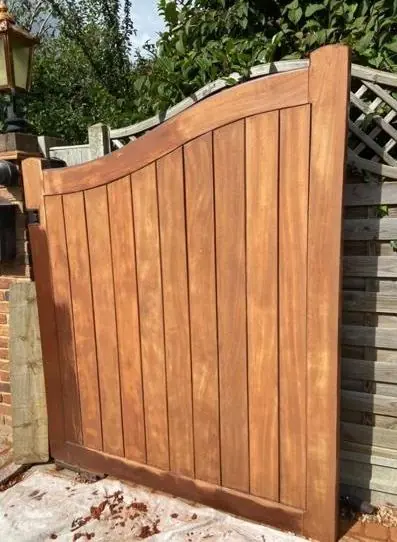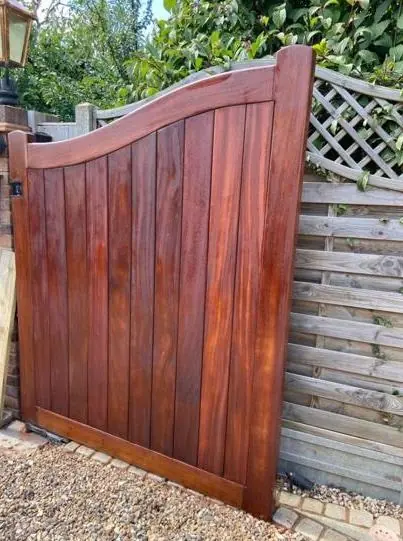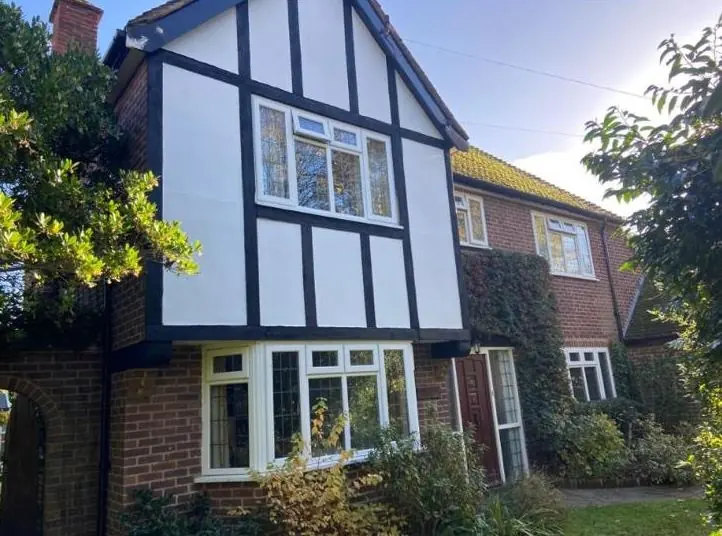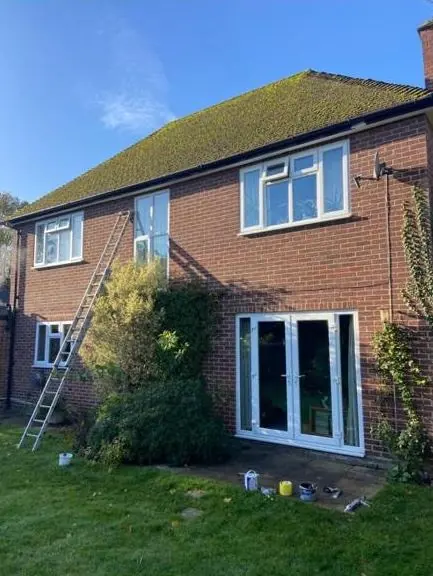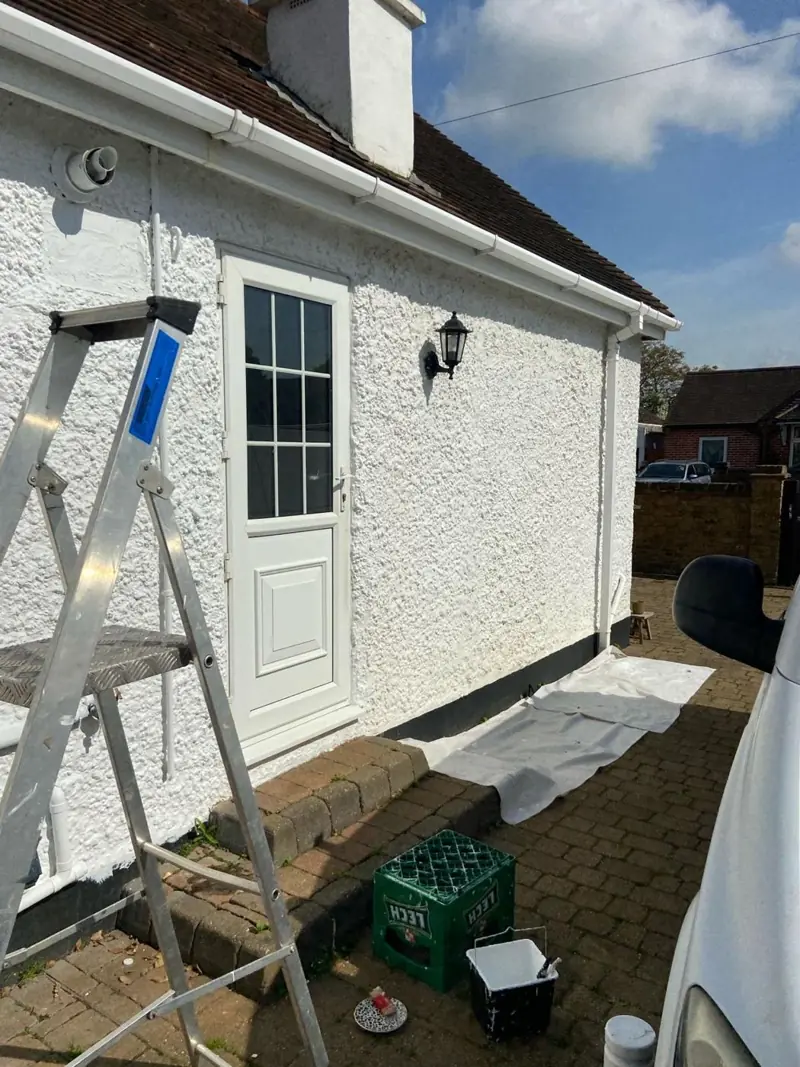
Dean paints the outside of houses in Moulton, NN3, a large village about 4.3 miles north-east of Northampton town centre. In the old core that mostly means timber windows, doors and porches on bare stone walls; on the 20th century estates it is a standard repaint of joinery, fascias and fences.
A stone core ringed by brick
Outside work in Moulton splits cleanly in two. The historic heart, around West Street, Church Street, Church Hill, Cross Street, High Street, Chater Street and Stocks Hill, is made up of 17th and 18th century farmhouses, cottages and short terraces in coursed local ironstone and sandstone, some thatched, most two storeys and one room deep. Around that core sit the 20th century estates: Oakley Drive, Albone Close, Pytchley View and Grove Farm Lane to the east, and Stewart Close, Jeyes Close, Carey Close, Pound Lane and Lunchfield Lane to the west, plus newer schemes such as Honeystones and Church Mews.
The two halves need different jobs. On the stone houses there is very little wall to paint, because the ironstone is meant to be seen. The work is the joinery. On the estates, which fall outside the conservation area, a repaint covers the usual run of front door, window frames, fascias, gutters and garden timber, with no heritage controls on colour.
Casements, plank doors and doorcases
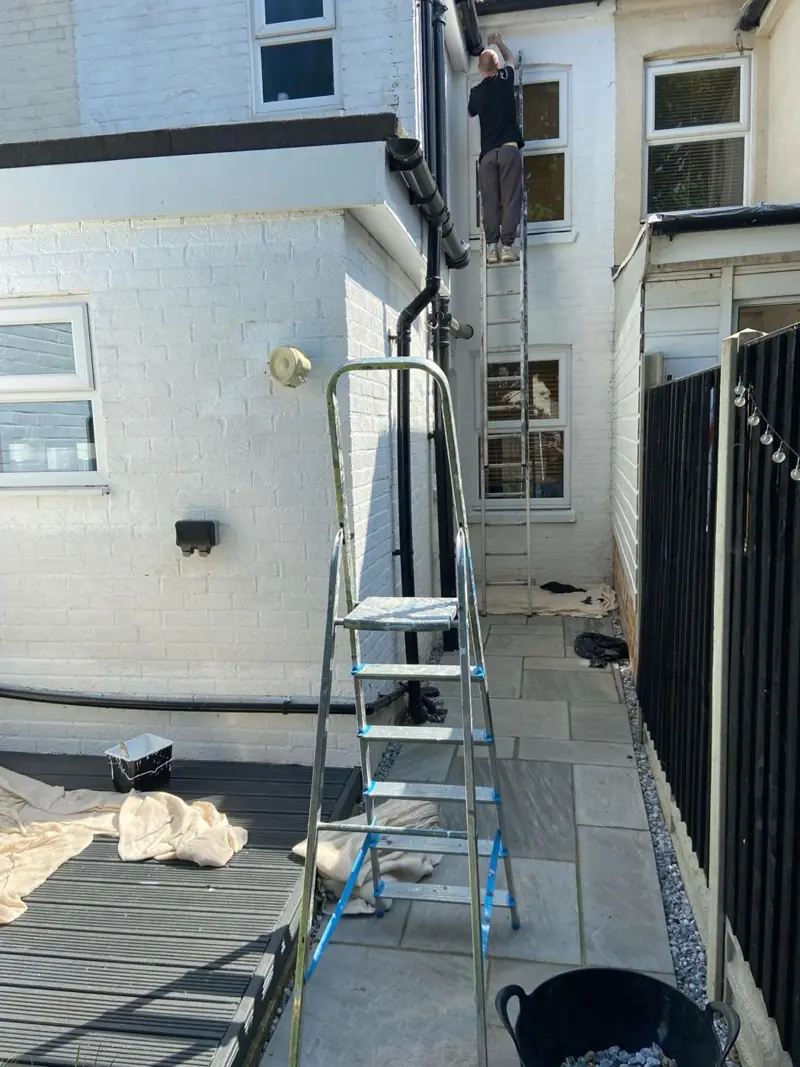
The 2017 conservation area appraisal describes small timber casements, traditionally painted white, with timber or stone lintels above them. It expects painted windows in the core to stay white or a sensitive colour based on the original. When we repaint a cottage casement here, we keep the existing colour unless the owner has already agreed a change with the council.
The doors are the other main item. Older cottages have ledged timber plank doors; the later Georgian houses, The Manor House on Northampton Lane North among them, have six-panelled doors in moulded wooden doorcases, some with fanlights and stone surrounds. These are prepared by hand and refinished, not filled heavily or swapped for something new. Leaded lights and wooden mullion-and-transom casements, as at Carey Cottage on West Street and The Old Hall on Pitsford Road, take slow, careful cutting-in around the lead and glass.
Two things never get paint on them: the ashlar quoins and stone lintels around windows, and the pavement-level coal shutes found along the old streets. We mask them off before any joinery work starts.
Thatch, steps and lanes without pavements
A thatched cottage changes how we set up. The eaves are low, upper windows often sit tight under the thatch, and ladders can only go where they will not bear on the straw. Heat guns and any naked flame are ruled out near thatch, so old paint is removed by scraping and sanding instead.
Getting to the house can be harder than the painting. Cross Street and Church Hill are narrow and often have no pavement, and buildings stand right at the edge of the road. Church Street, West Street and Chater Street have raised stone pavements edged in red bull-nosed brick, and the Church Street terrace is reached up flights of stone steps. A tower may need a level base built on the steps, and a van may need to unload and move on. On Stocks Hill parking is tight and there is a one-way system, with spaces behind the Co-op and on Barlow Lane.
Permissions before a colour change
Moulton has 42 listed buildings, and several terraces carry Article 4 controls that remove the right to change paint without permission: 24 and 39-49 West Street, 14-30 Church Street and 10 High Street. If you live in one of these, a like-for-like repaint is normally straightforward, but a new colour should be cleared with West Northamptonshire Council first. Dean will raise it at the quote stage rather than halfway through the job.
For how we prepare and paint each exterior surface, see our exterior painting service. Our guide on when to paint outside covers the weather window, and the Moulton area page covers inside work in the village too.
Last updated by Dean, DH Painter & Decorator.