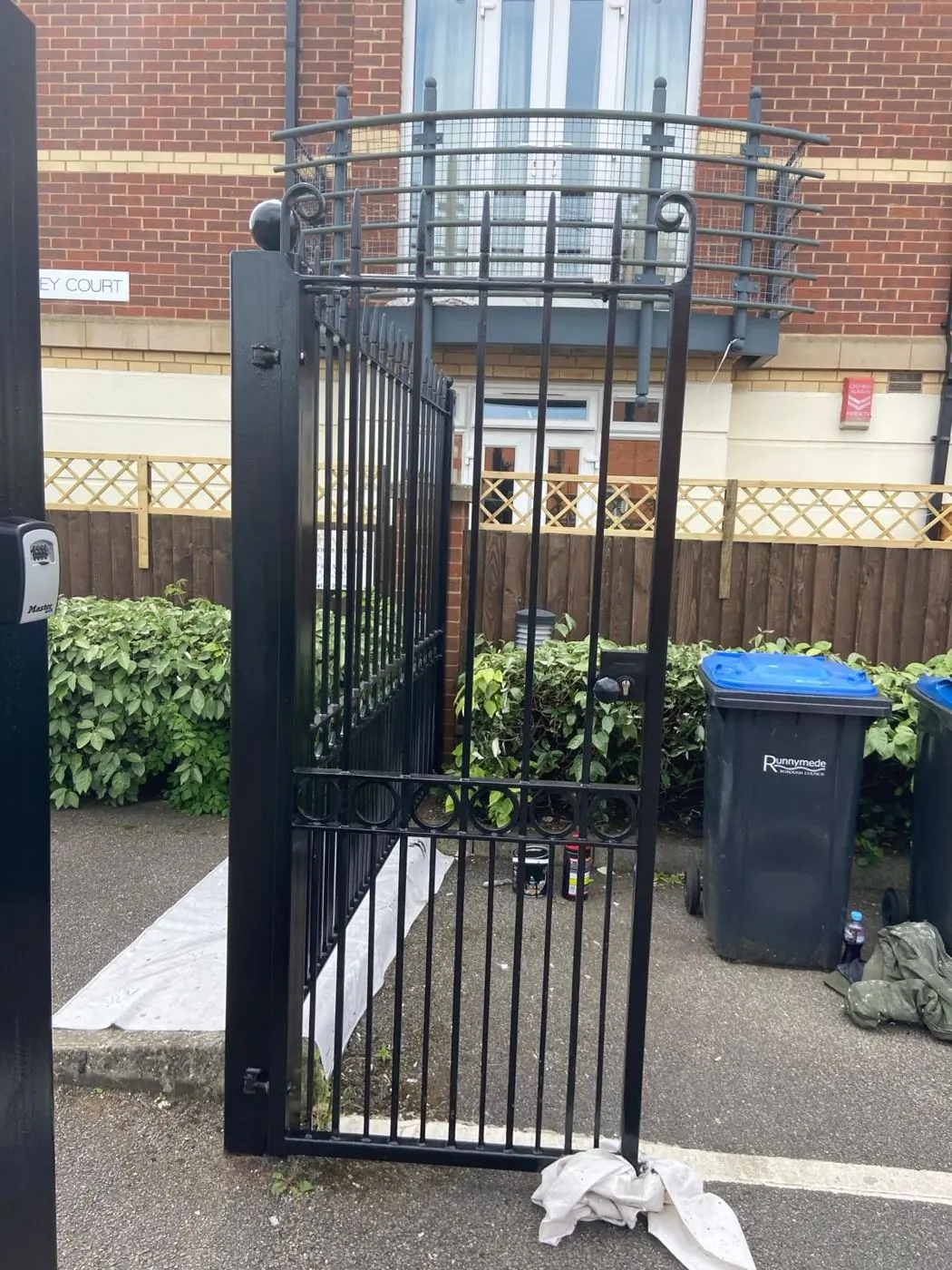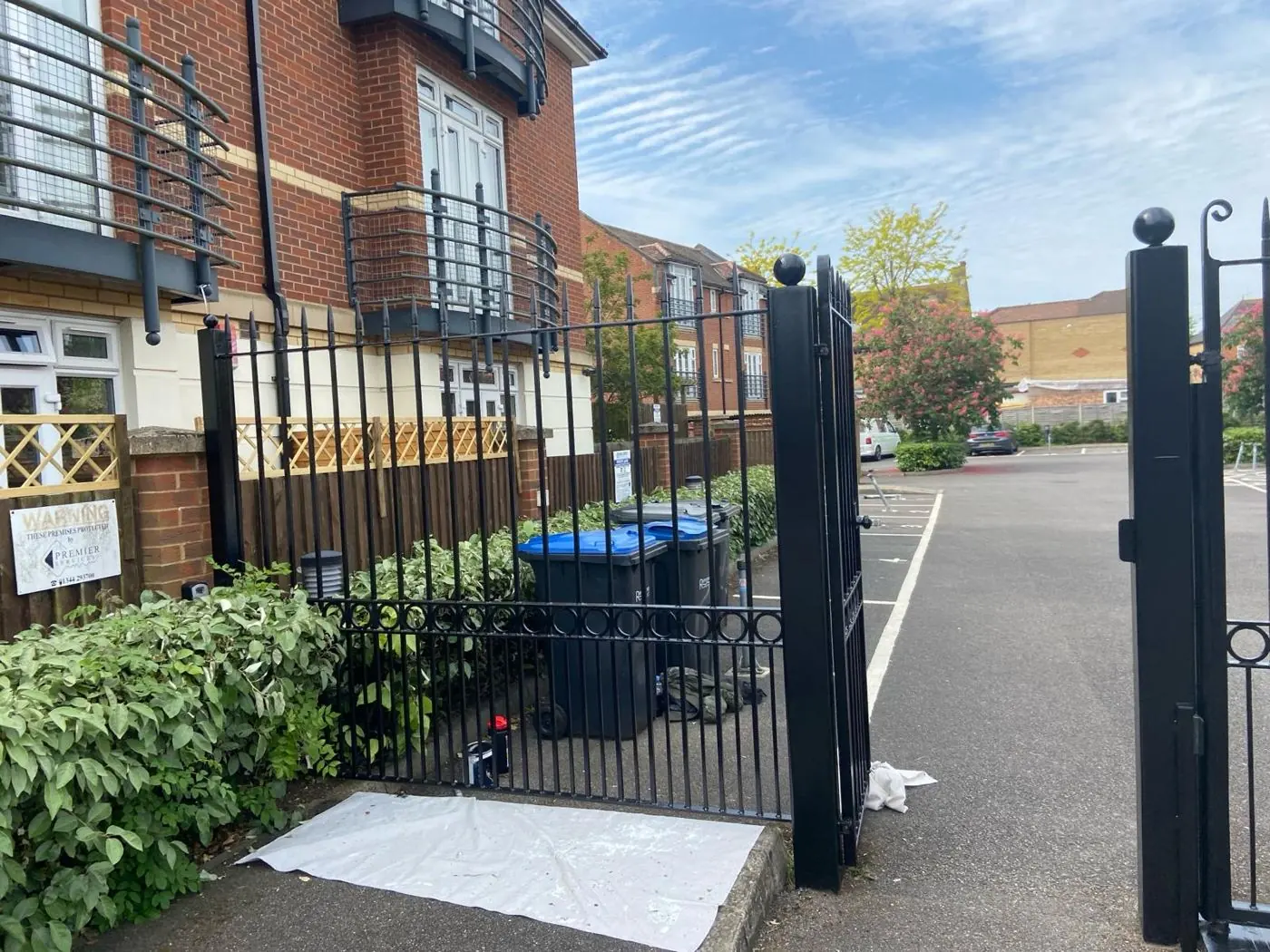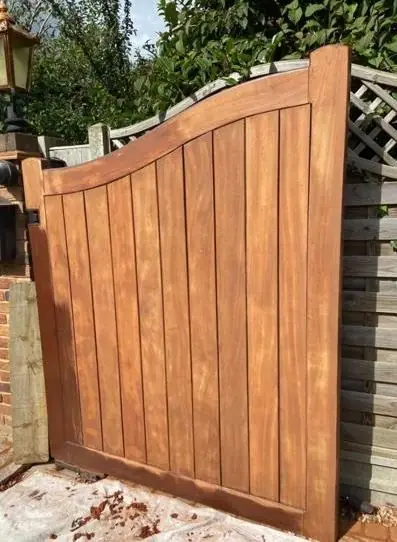
We stain and treat garden fences and timber gates in Overstone, about 5 miles north-east of Northampton town centre. Many boundaries here run against woodland, parkland or farmland and sit in damp shade, so preparation and product choice matter more than usual.
Boundaries that face woods, fields and parkland
Overstone is not a tight grid of back gardens divided by matching panels. The village is long and linear, and around it are Overstone Park, the golf course, farmland next to Church Farm and woodland belts including Cowpasture Spinney, Hayes Belt, Gashouse Spinney and Blackthorn Wood. Gardens on the edge of the village and in the streets by the lakes, such as High Woods, Woodside and Cherrytree Walk, can have boundaries that face trees or open ground rather than a neighbour’s lawn.
Those outer runs of fencing tend to be long, and they get the worst of the conditions. Wind comes across open land on one side, while the other side stays shaded and damp. When we price a fence here, the length and its exposure matter as much as the number of panels.
Damp shade, algae and leaf litter
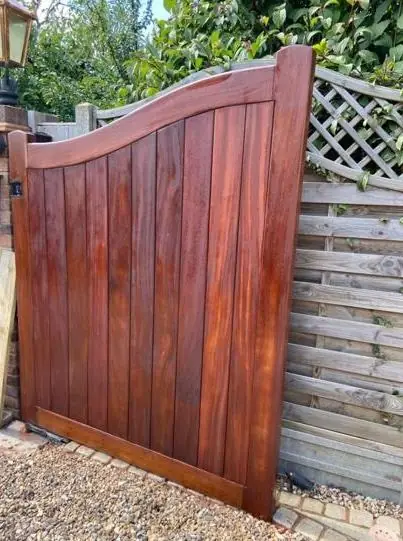
Timber next to a spinney or under park trees has a hard life. Leaves pile up against the gravel boards and hold water, the lower boards go green, and sap and bird droppings mark the tops. A stain brushed straight onto that will not soak in and will peel or stay patchy. Our preparation for shaded Overstone fences is:
- Rake the leaf litter away from the base so the bottom boards and posts can breathe.
- Scrub or wash off loose dirt and green growth.
- Apply a fungicidal treatment and leave it to work.
- Wait for the timber to dry right through, which under trees can take several dry days.
- Brush on a breathable stain that lets moisture out of the wood, paying extra attention to end grain and post tops.
A film-forming paint on a fence that stays damp tends to blister, because water in the wood has nowhere to go. For most boundaries here we suggest a breathable, water-repellent stain, accepting that the shaded side will want recoating sooner than a sunny one.
Gates on the older houses and the newer streets
On the 18th-century cottages along Sywell Road the rear of the house is the working side, since most of the listed thatched row is entered from the back. Where a timber gate or garden door leads to that entrance, it gets used every day and wears quickly. We take off latches and hinge plates where possible, coat all edges including the bottom rail, and refit the hardware once the stain has dried.
If a gate or fence forms part of the setting of a Grade II listed building, a big change, such as switching from a natural timber look to a strong painted colour, is worth checking with West Northamptonshire Council. There is no conservation area in the village, so on the newer houses off Woodland Avenue and by the lakes you can choose any shade.
Choosing a colour that suits a parkland edge
Boundaries that face woodland or the park are seen against trees for most of the year. Mid and dark browns, muted greens and natural cedar tones tend to sit quietly in that setting, while very pale stains show algae and leaf staining sooner. Dean can bring sample boards so you can see a colour against your own fence before committing.
For products, stain versus paint and how we treat new and old timber, read our main fence and gate staining page. Our Overstone page covers the other work we do in the village.
Last updated by Dean, DH Painter & Decorator.