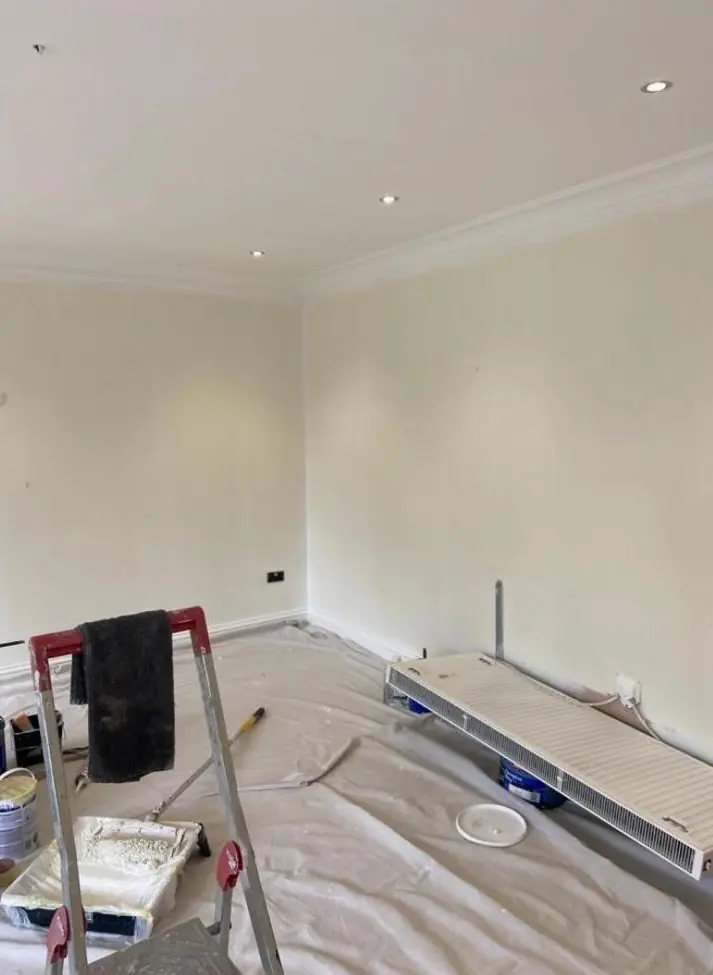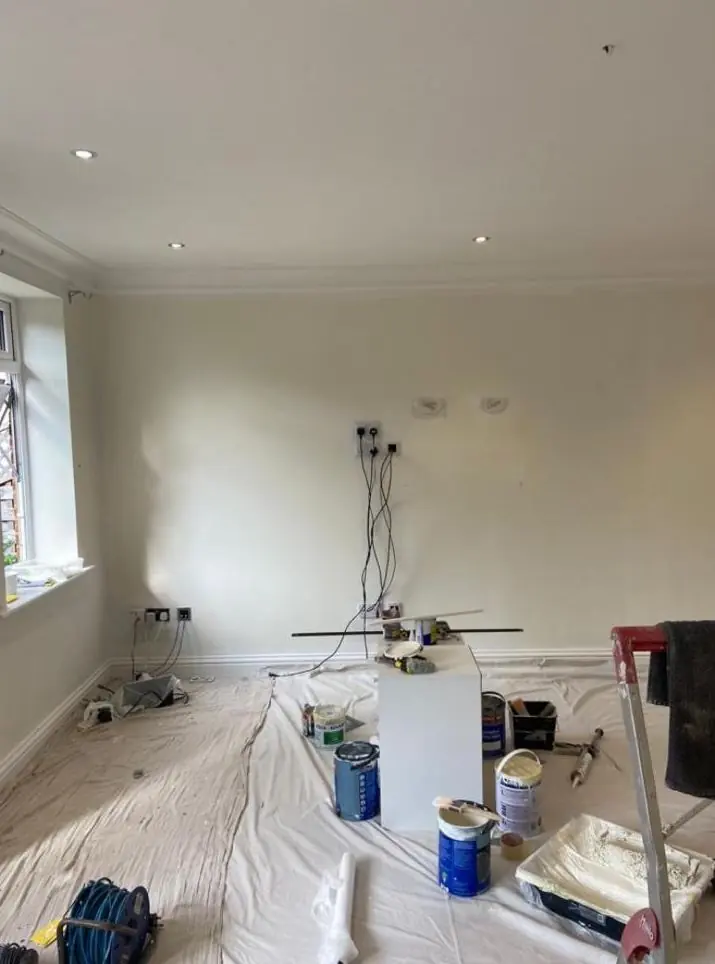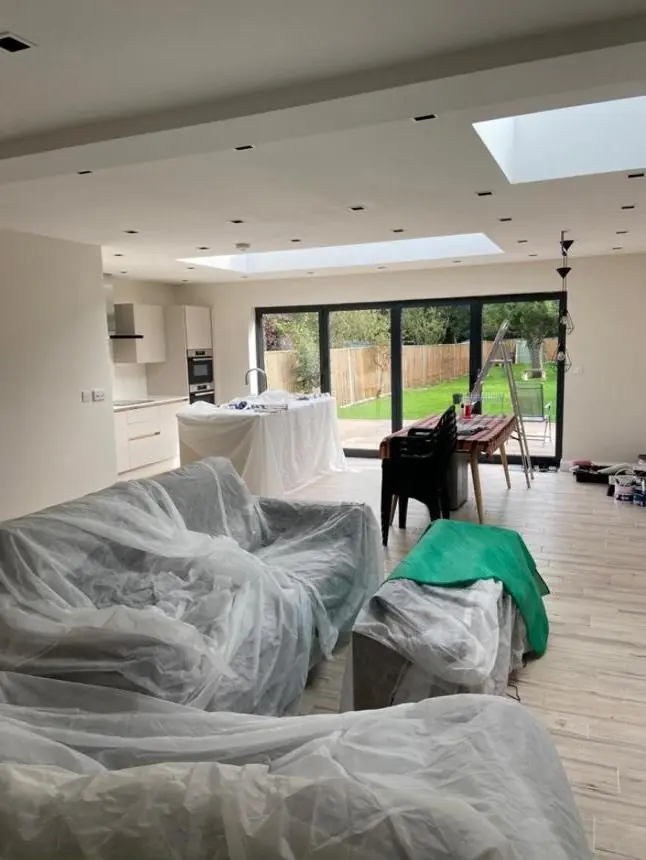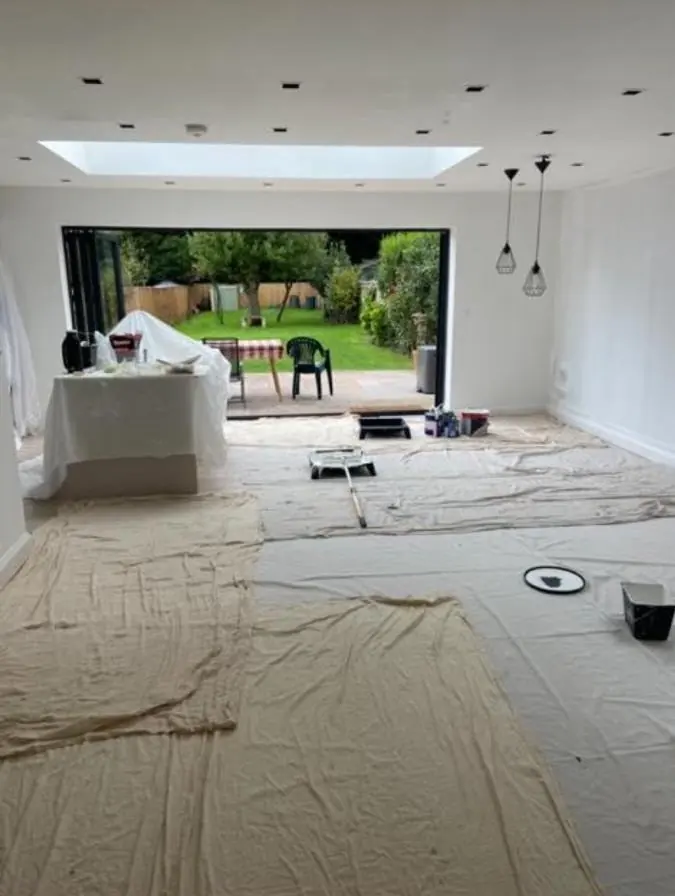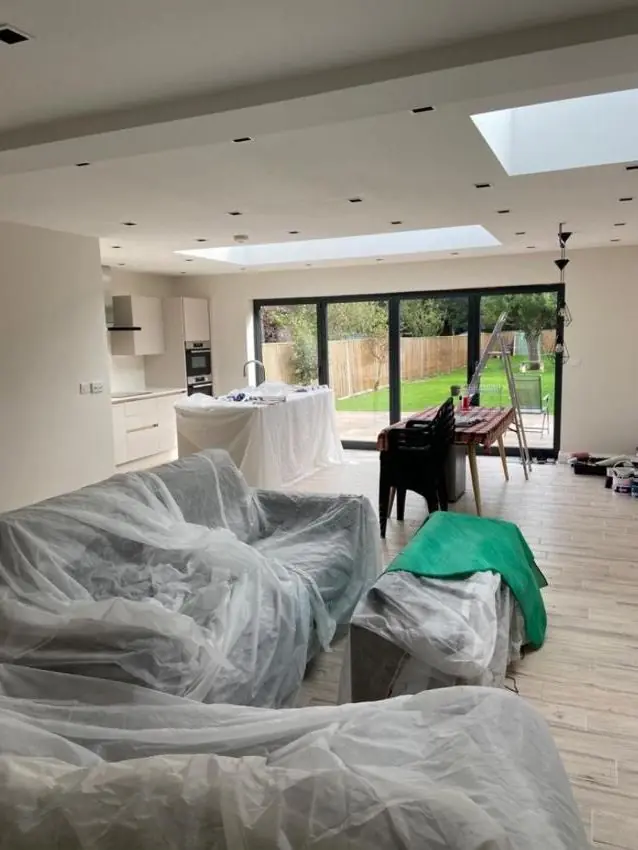
DH Painter & Decorator decorates new plaster in Queen's Park, NN2, from our Northampton base 1.3 miles to the south. Dean checks the plaster is dry, applies a breathable mist coat and finish coats, and quotes free once your plasterer is done.
Where fresh plaster comes from in a Queen’s Park terrace
The bay-fronted terraces on Balmoral Road, Edinburgh Road and Stanhope Road were built with enclosed rear gardens, and that back plot is where most new building work on a house like this goes: a rear extension off the kitchen or dining room, or a loft room under the main roof. Each one leaves a run of new plaster that has to be sealed before it can be decorated. Inside the original house there is a second source. Victorian plaster that has cracked, blown or been chased out for rewiring is often patched or re-skimmed, so a single room can end up with old and new surfaces side by side.
Old walls meeting a new skim
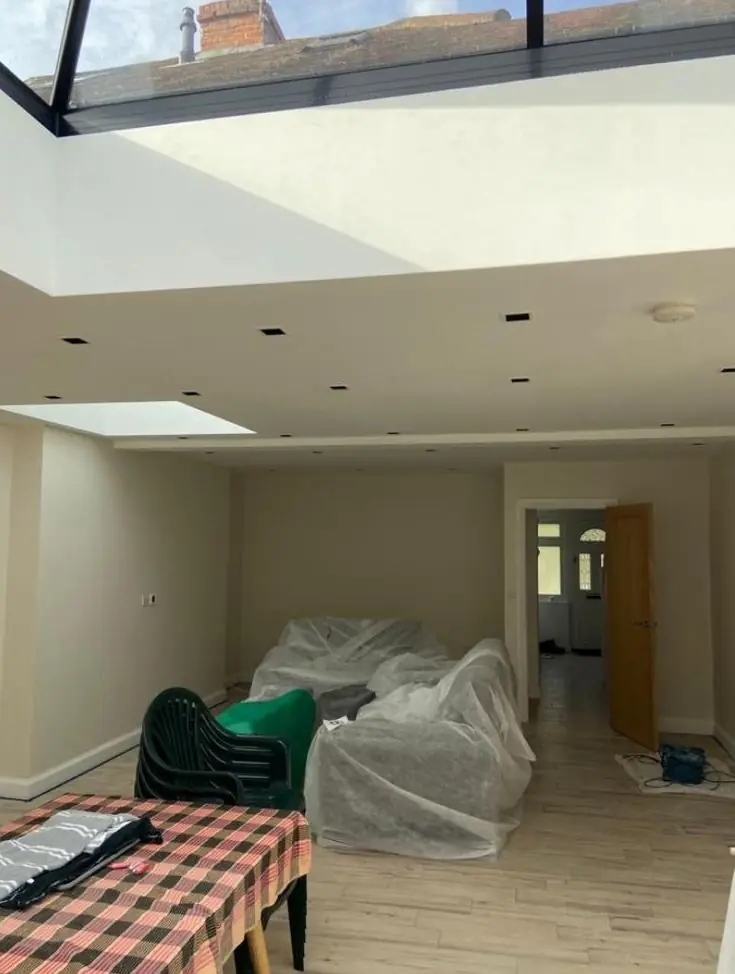
The joins are where things go wrong. Where a fresh skim meets original plaster, or where a knocked-through dining room meets the lounge, the two surfaces absorb paint at different rates. Put a full-strength emulsion straight over both and you get flashing, a patchy sheen that shows the outline of the repair under side light from the bay window. We mist coat new areas so they take up paint the same way as the surrounding wall, spot-prime patches, and then run finish coats across the whole wall so the colour reads as one surface.
Older walls in these houses may not be gypsum at all. If a repair has been made in lime, or new gypsum sits against original lime plaster, we use a breathable paint system rather than a vinyl emulsion that could trap moisture. We check what the wall is made of before choosing the coating.
Conversion flats in the former church
Queen’s Park has a notable conversion on Kingsthorpe Road: the former Primrose Hill Congregational Church, turned into flats in 2005. Refits in buildings like these can involve new partitions, boarded and skimmed ceilings and replastered walls inside the flats. Decorating new plaster inside a flat is routine for us. In any converted or modern block, the managing agent may also set rules on working hours, lift use and where materials can be stored, so we confirm those before the first visit.
Drying, timing and getting kit to the back of the house
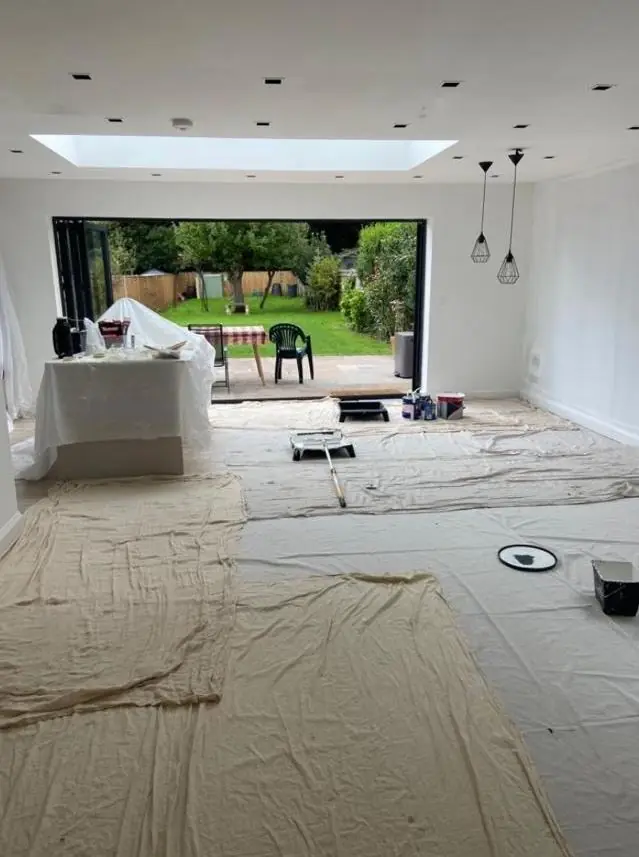
New plaster in a rear extension can take weeks to dry fully, depending on thickness, season and heating. We look for an even, pale colour with no dark patches before mist coating, and we won’t rush a ceiling that is still damp, because the paint will fail. Our guide to mist coating new plaster covers the method step by step.
Access matters too. A Balmoral Road house with a gated side passage makes this easy, but most mid-terraces don’t have one, so the podium, dust sheets and paint for an extension at the back come through the front door and hall. We protect that route through the house as carefully as the new room. Parking is on the street, so materials arrive for the day rather than being left outside.
Full details of what an extension decorating job includes, from snagging to new MDF skirtings, are on our new plaster and extension painting page. For other services in the district, visit our Queen’s Park page.
Last updated by Dean, DH Painter & Decorator.