
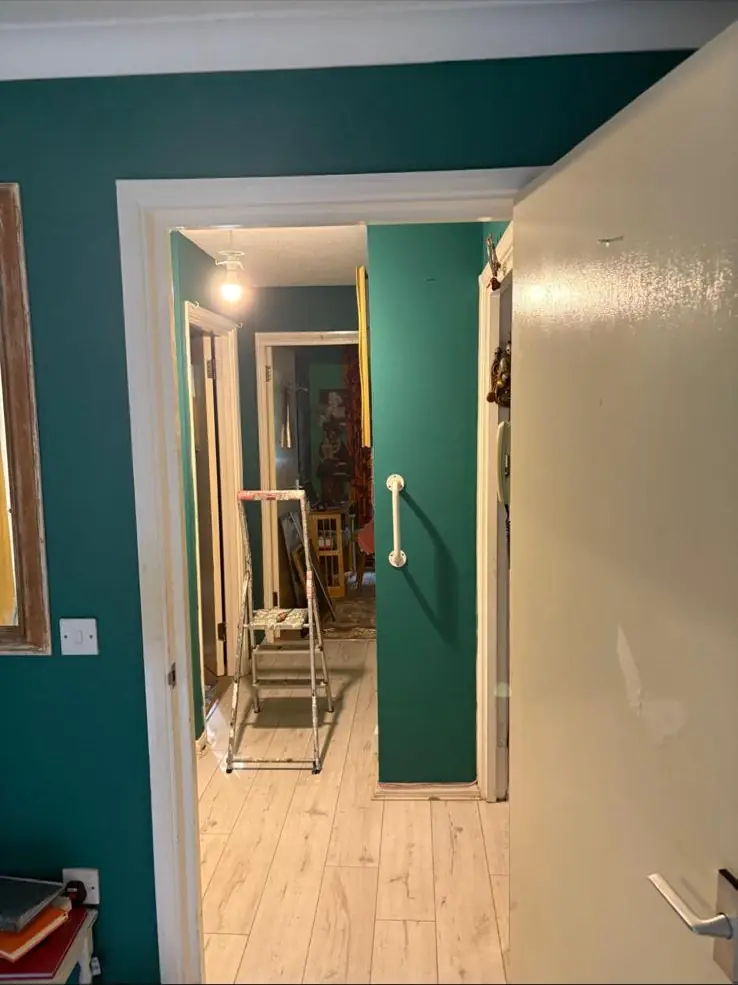
We paint new plaster in St James, NN5, the terraced district just west of Northampton town centre, about 0.6 miles away. Fresh plaster here usually means a rear extension on a Victorian terrace, a ground floor replastered after damp treatment, or a new home or conversion, with more than 70 homes planned on the former St James tram depot.
New homes planned for the old tram depot
The St James tram depot on St James Road opened in 1904 for electric trams and closed in 2013. Church’s bought it in 2014, and West Northamptonshire Council bought it in November 2023. The council plans more than 70 homes there, keeping the Grade II listed 1933 office building and, if it proves practical, the depot’s front and rear facades. When those homes are built, a run of fresh plaster will come to St James Road.
New homes are not new to the district. The Valuation Office Agency records about 90 homes built between 2009 and 2025 in one of the two core Census areas alone, from infill and conversions. Any of them is handed over with bare or lightly painted plaster that is still drying, and the first decoration is worth getting right because it is what everything later sits on.
Is my extension ready to paint?
A rear kitchen or bathroom extension is the most common source of new plaster in an existing St James house. Energy certificates for several terraced houses record a second wall type, cavity wall, alongside the original solid brick, which is what a later extension looks like on paper. The two dry at different rates: a skim on new blockwork in a heated extension dries faster than a patch on the original solid brick wall it adjoins. Signs that plaster is ready:
- an even, pale pink colour with no darker patches, especially in corners and behind radiators;
- no cool or damp feel when you rest the back of your hand on it;
- enough time: typically a week or more for a skim and several weeks for thicker backing plaster, in a warm, ventilated room.
Replastering after damp treatment near the river
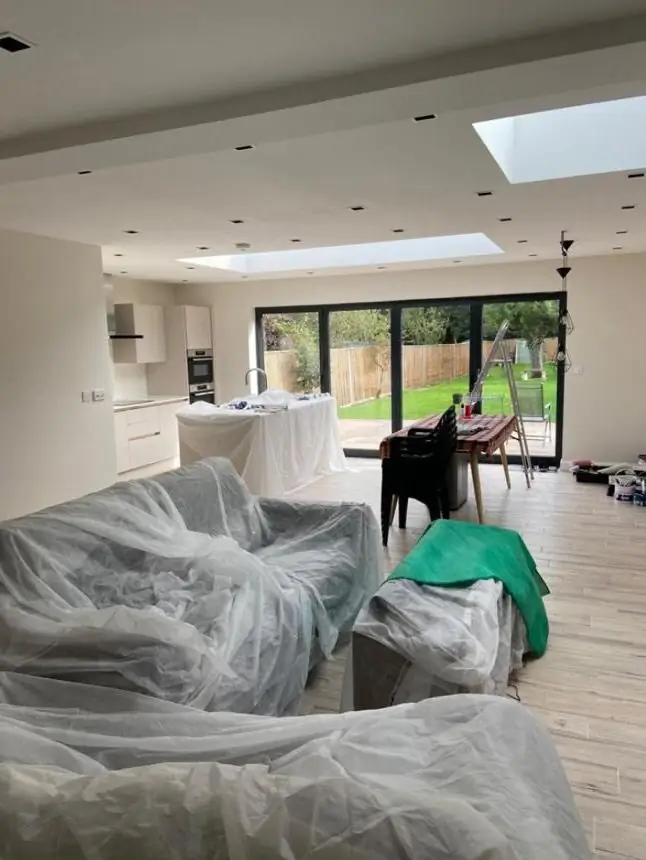
Much of the low-lying Victorian core, the streets between St James Road and the Nene, sits inside the Environment Agency’s flood zones: 47 of 72 postcode points checked in the core, before allowing for flood defences. Houses there are among the most likely to have had an injected damp-proof course and their lower walls hacked off and replastered, often with a renovating or salt-resistant plaster. That takes longer to dry than a skim, and it must not be sealed with a vinyl paint before it has. Ask the damp contractor which system went on and how long they advise, and we follow that system’s guidance and use a breathable paint.
| Where in St James | Plaster | First coats |
|---|---|---|
| Rear extension on a terrace | New skim on board or blockwork, next to old plaster | Mist coat once dry, then two full coats over both |
| Ground floor on a low street, after damp work | Renovating or salt-resistant plaster | Wait the system’s drying time; breathable emulsion only |
| New home or conversion | Fresh skim throughout | Mist coat; fill shrinkage cracks after the first heating season |
Conversions are the other source. 3.3% of households in the core live in part of a converted or shared house, and since the borough-wide Article 4 direction of November 2020 any new small HMO here needs planning permission, so conversion work tends to come with plans and a builder’s programme. New partition walls, boxed-in pipes and fire-rated ceilings all arrive as fresh board and skim, and they need the same drying time and mist coat as an extension before the first tenant moves in. Bathrooms and shower rooms in a conversion then get a moisture-resistant finish over the mist coat.
| Fact | Detail | Source |
|---|---|---|
| St James tram depot | Opened 1904, closed 2013, bought by the council in November 2023; more than 70 homes planned | West Northamptonshire Council |
| Depot office | Grade II listed 9 August 2024, to be kept in the redevelopment | British Listed Buildings |
| Homes built 2009 to 2025 | About 90 in LSOA 033D (Valuation Office Agency) | GOV.UK |
| Zone 3 flood points | 31 of 72 postcode points in the core, the highest-risk zone | planning.data.gov.uk |
Mist coat first, then the finish
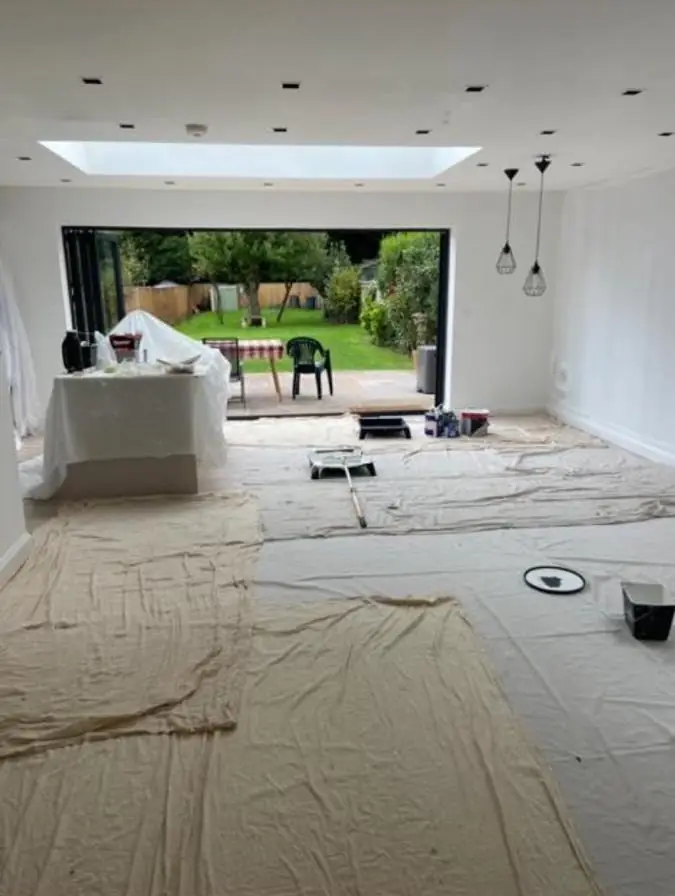
A mist coat is a thinned first coat of plain emulsion that soaks into the plaster and gives later coats something to bond to. It needs a paint without vinyl, because vinyl sits on the surface and can peel off new plaster. Our guide to painting new plaster with a mist coat covers mixing and drying, and the main new plaster and extension painting page covers the full method. If you would rather paper the new walls, see wallpaper hanging in St James; the St James area page covers everything else.
Last updated .


