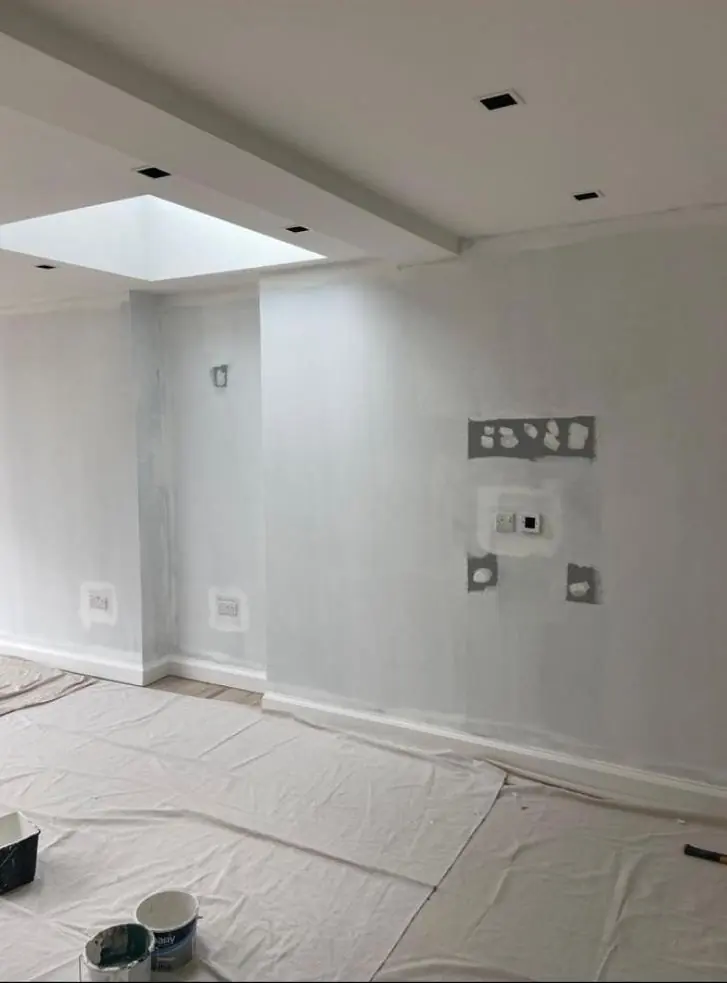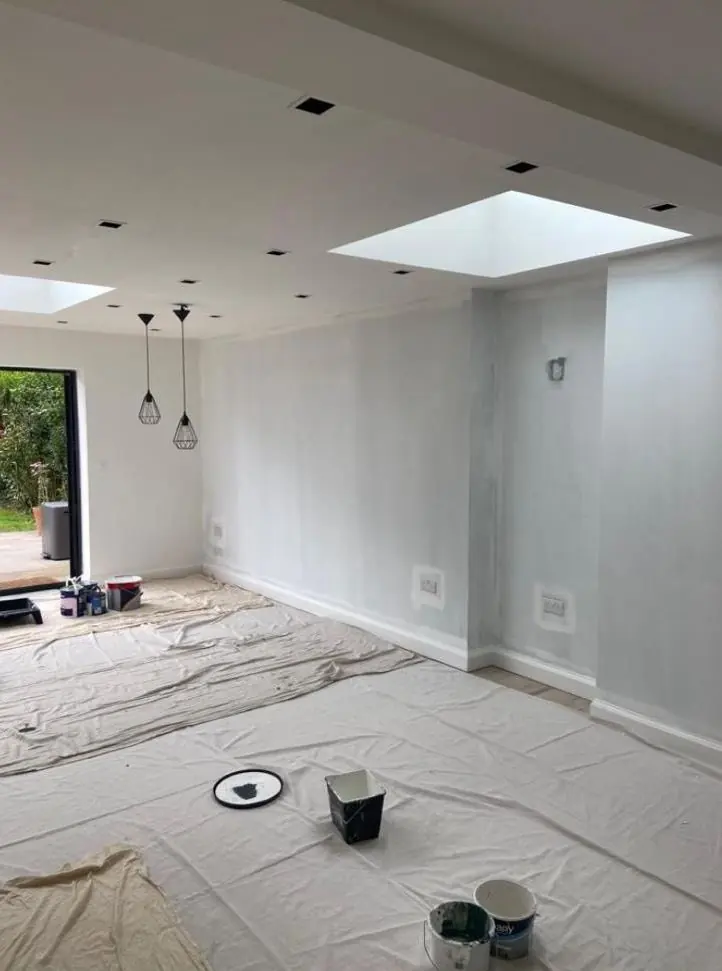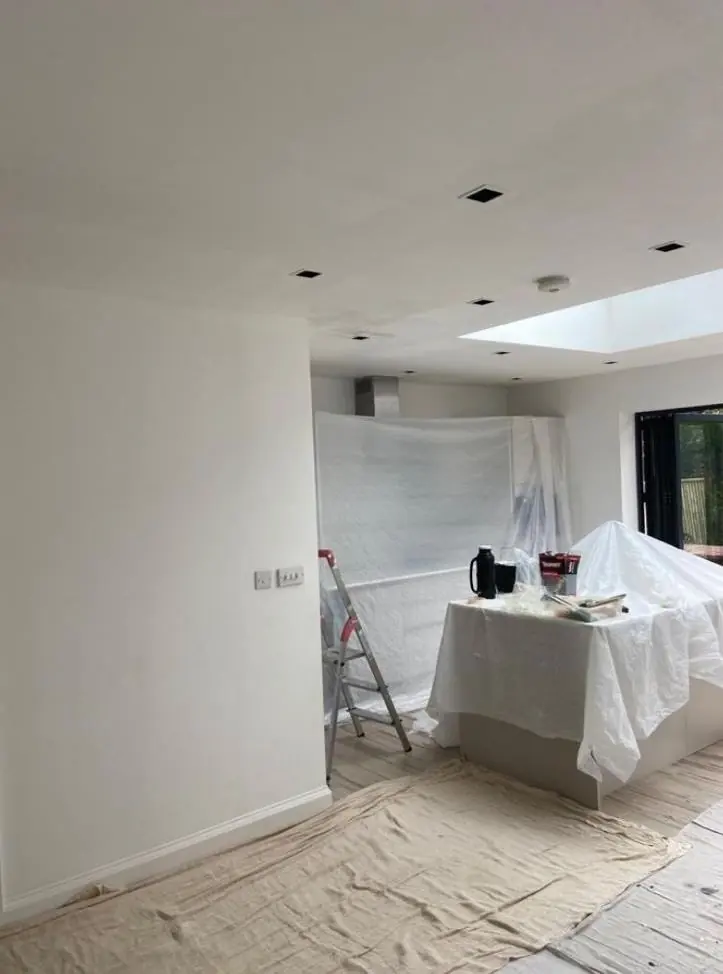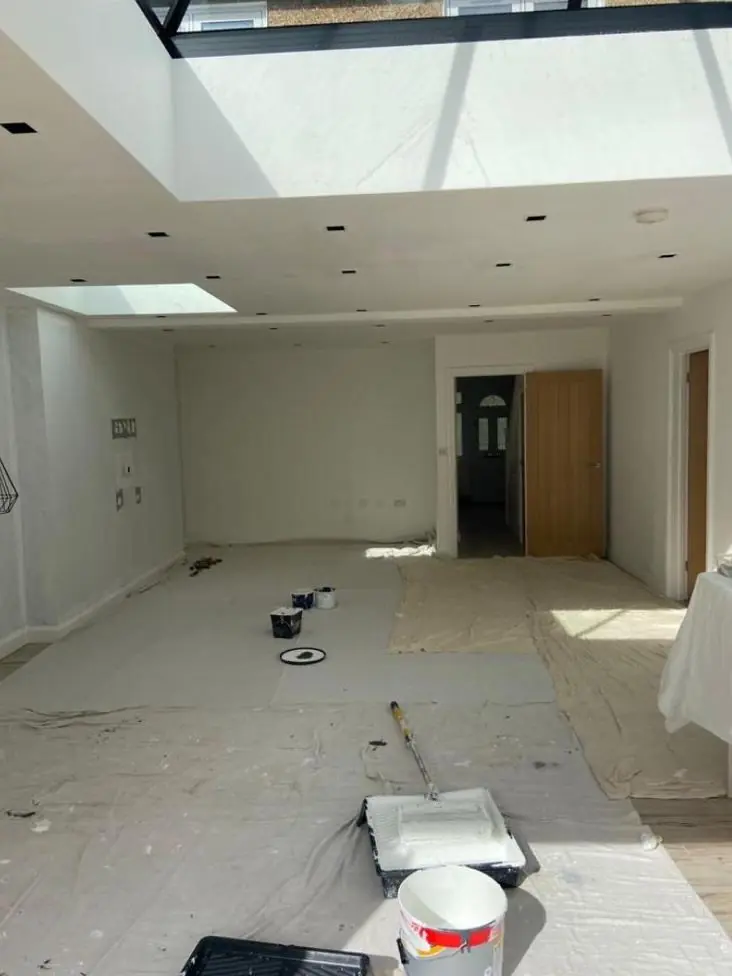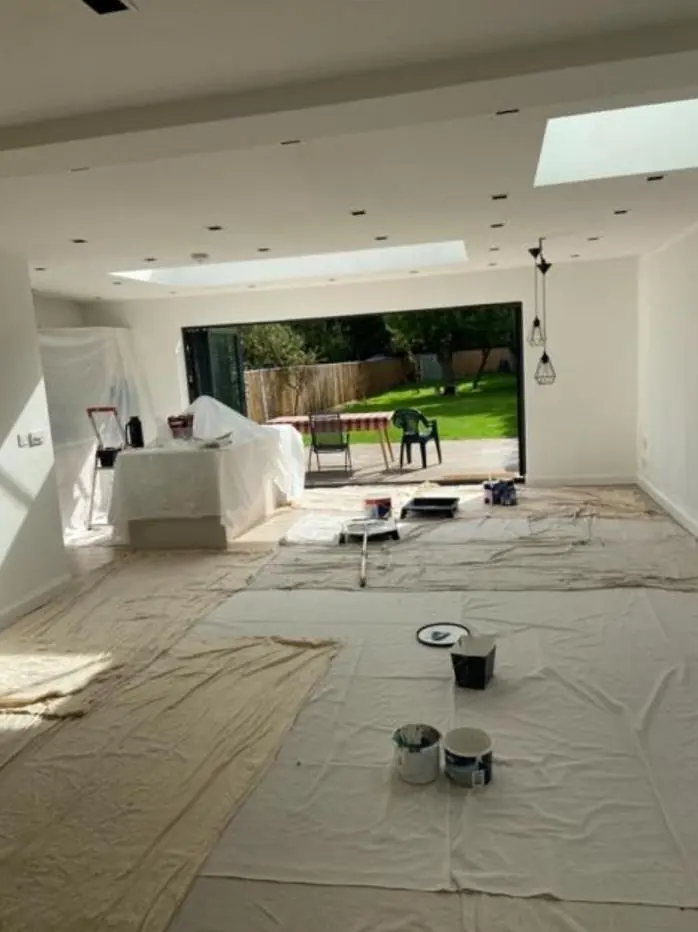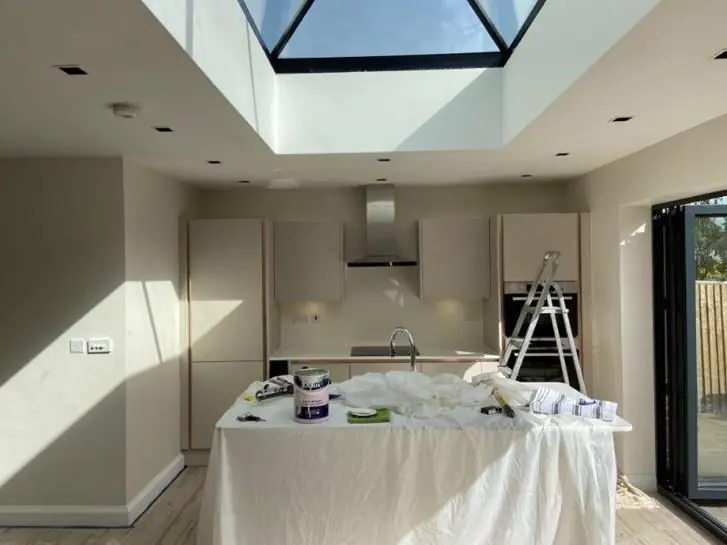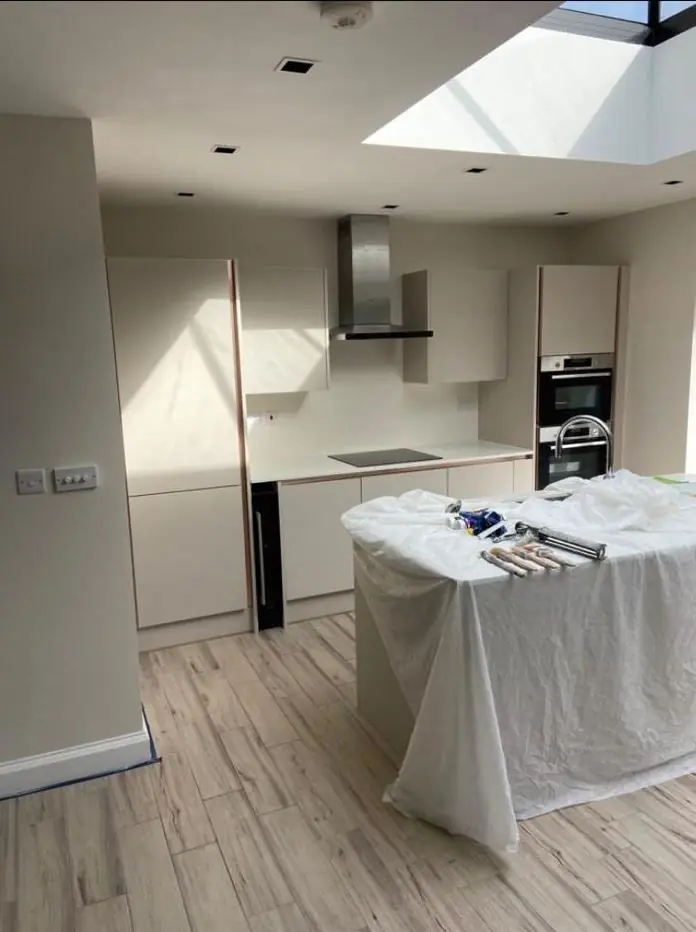
DH Painter & Decorator decorates new plaster in Kingsley, NN2, a mile and a half north-east of Northampton's centre. Dean comes in after the builder or plasterer to mist coat and finish extensions, remodelled kitchens and reskimmed rooms, paying particular attention to where new gypsum meets the original Victorian walls.
Where new plaster turns up in a Kingsley house
Most houses in Kingsley date from the late Victorian period, and the newest plaster in them is usually at the back. In the two-bedroom terraces such as Junction Road, the layout is a front sitting/dining room with the kitchen behind, so when owners remodel it is the rear kitchen that gets rebuilt, extended into the garden or replastered after new units and wiring go in. In the larger villas on Kingsley Road, East Park Parade and St George’s Avenue, new plaster tends to follow rear extensions, bathroom refits and rewiring, where chases are cut and then made good.
The 1990 Article 4 Direction on those villa streets is concerned with front elevations and side elevations visible from the front: doors, windows, porches, roofs and boundaries. It says nothing about decorating a rear extension. Planning for the building work itself is a matter for you, your builder and West Northamptonshire Council. Our part starts once the plaster is on the walls.
Fresh gypsum next to 1880s lime
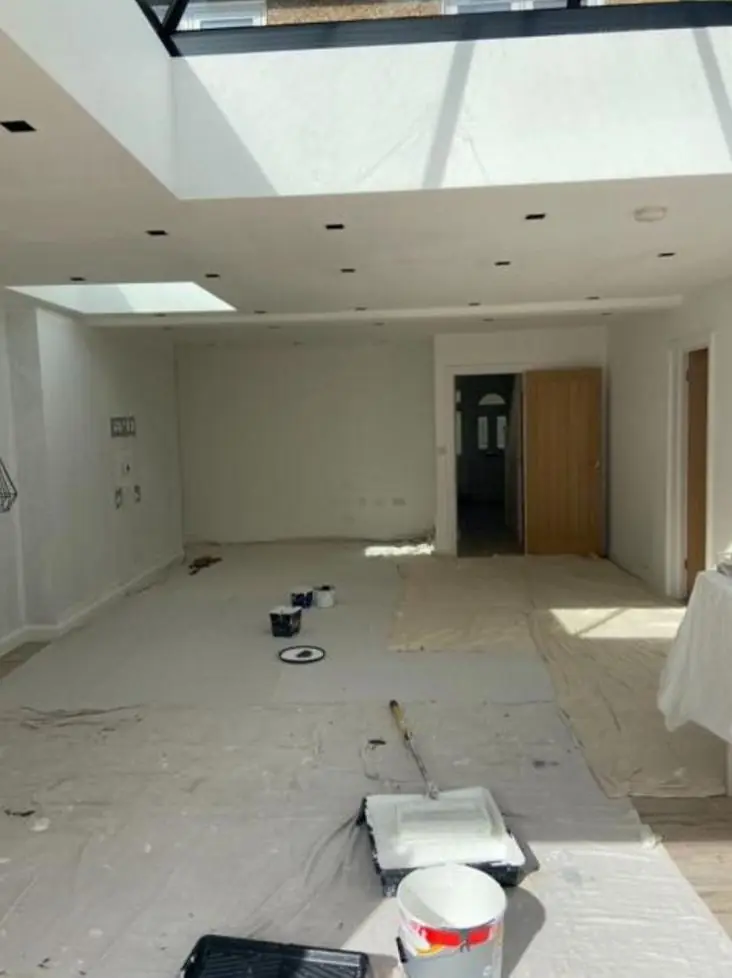
This is the part of the job that is particular to houses of this age. The original walls in Kingsley’s late-Victorian houses are generally lime plaster, often on lath for ceilings and partitions. A new extension or a reskim is gypsum. The two behave differently: lime stays slightly flexible and breathes, while gypsum is harder and dries to a uniform, very absorbent surface. Where they meet, at the opening knocked through to a new extension or along the edge of a patch repair, you often get a fine crack and a visible change in texture.
- We check the junction before any paint goes on, and cut out and fill a hairline crack with a flexible filler rather than painting straight over it
- On the old lime-plastered walls we stay with breathable emulsions, so moisture is not trapped in the older wall
- On new gypsum the first coat is a thinned, breathable mist coat that soaks in and gives the finish coats something to grip
- Where the old and new walls are in one room we use the same top coat on both, so colour and sheen match across the join
If one wall of an old room has been reskimmed and the others have not, the new wall will look flatter and smoother. Sometimes a light skim of filler and sanding on the old walls, or lining paper, brings them closer together. We will point that out at the quote rather than after the paint is on.
Drying times, access and getting the order right
Fresh plaster has to dry before it is sealed. Painting too early traps moisture and causes flaking or patchy colour later. A rear extension built through winter in a house with on-street parking and no confirmed rear access also tends to have every trade’s materials carried through the hall, so we usually suggest decorating the new room first and the hall afterwards. Our guide to painting new plaster and the mist coat sets out how to tell when a wall is dry and how the coats build up.
The rest of a Kingsley extension job
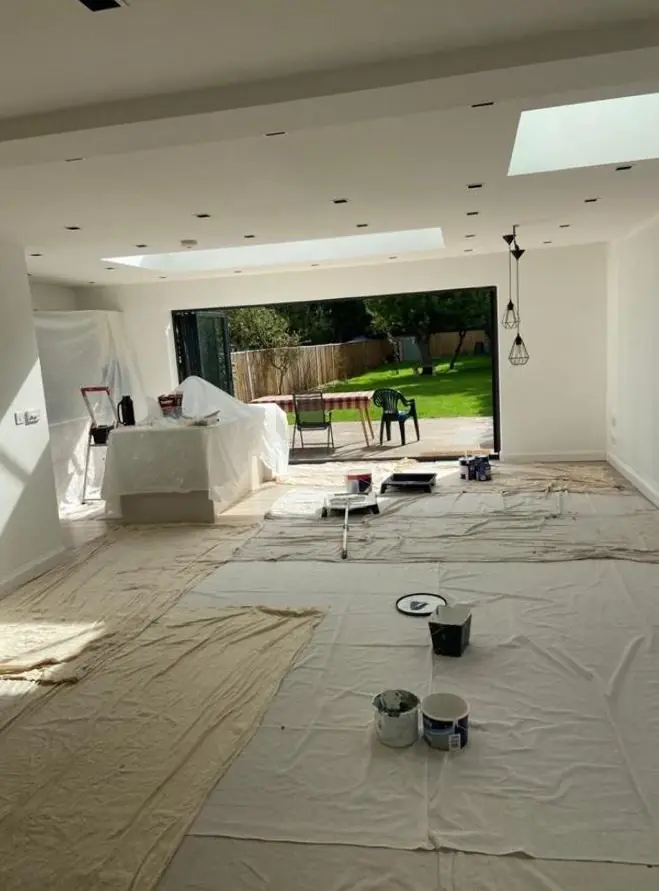
Once the walls and ceiling are sealed, new softwood skirtings, architraves and window boards need knotting, priming and undercoat before their finish coats. In a villa, new joinery in an extension rarely matches the deep Victorian mouldings in the original rooms, and some owners prefer to pick it out in a different colour rather than draw attention to the difference. Others paint all the woodwork one colour so the eye runs through. Either way, we fill nail holes, caulk the joins against the new plaster and paint the edges of new doors so they do not swell.
The full process is on our new plaster and extension painting page. For more about Kingsley’s houses, see the Kingsley area page.
Last updated by Dean, DH Painter & Decorator.