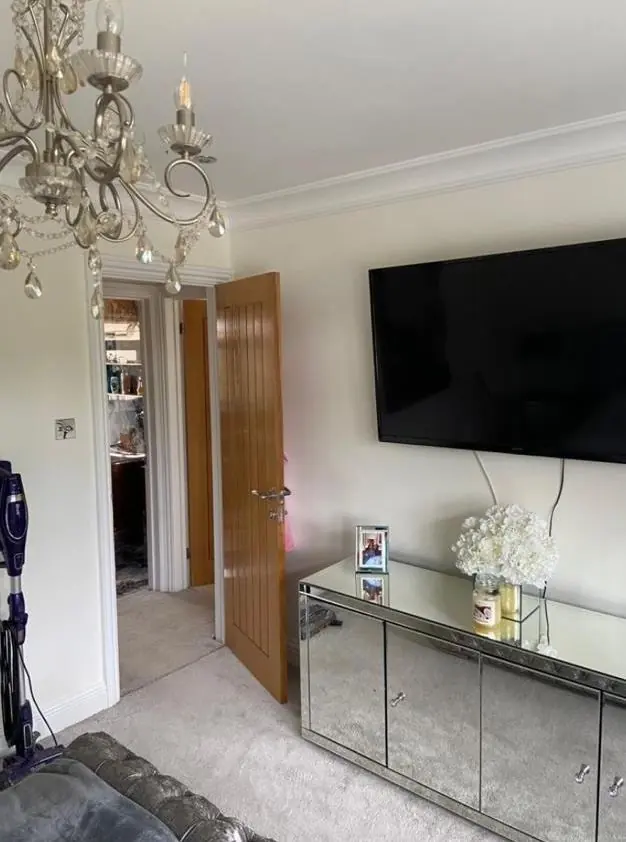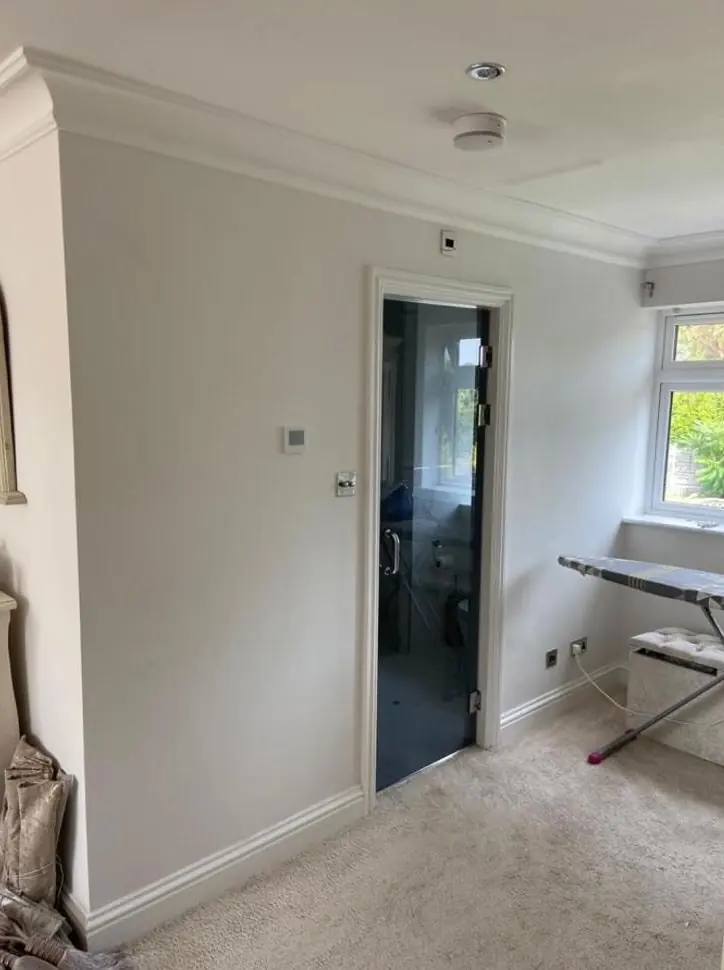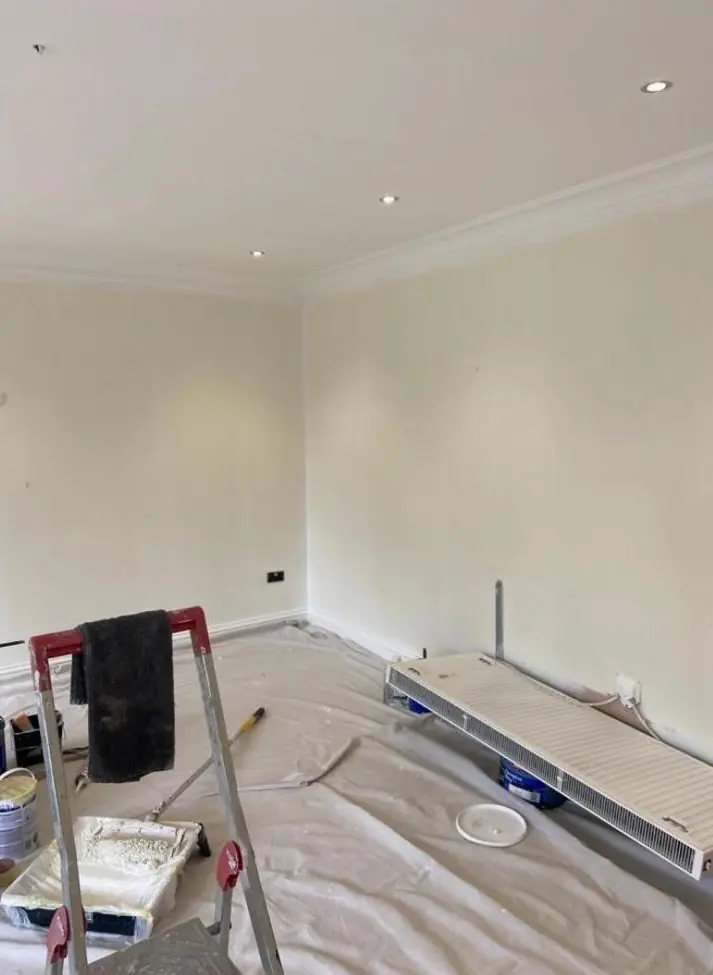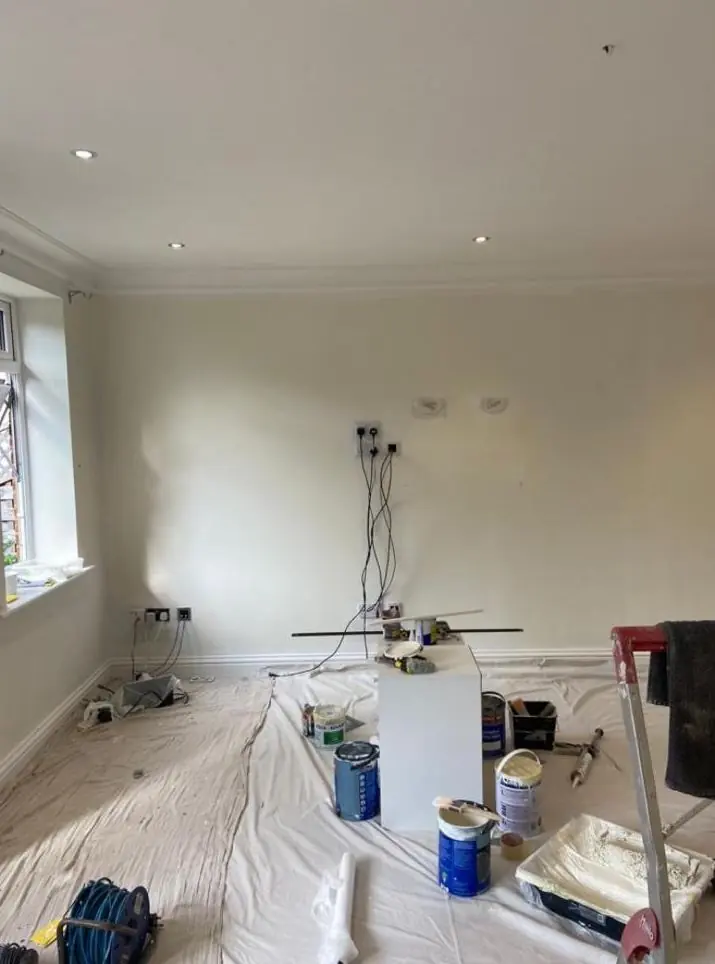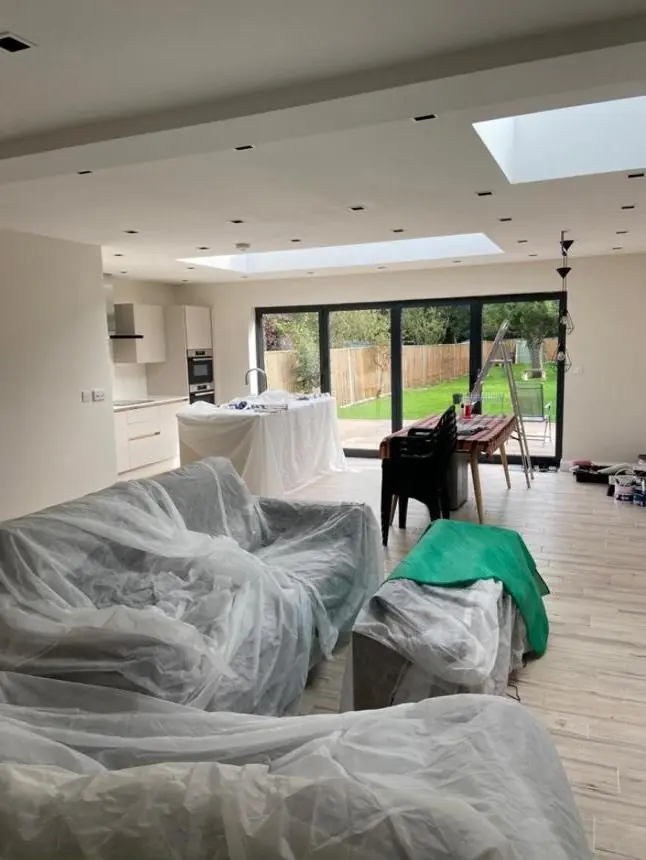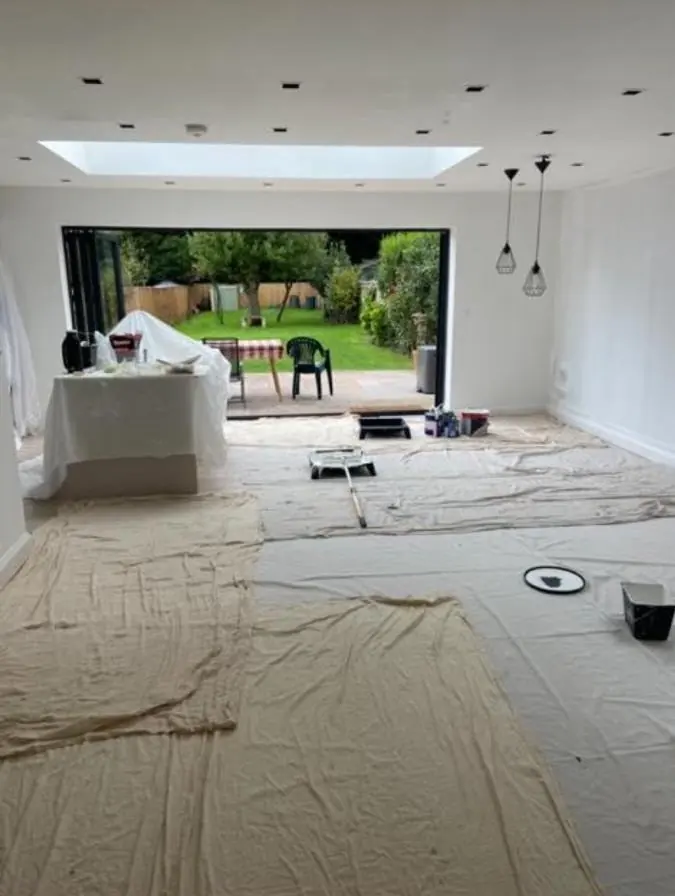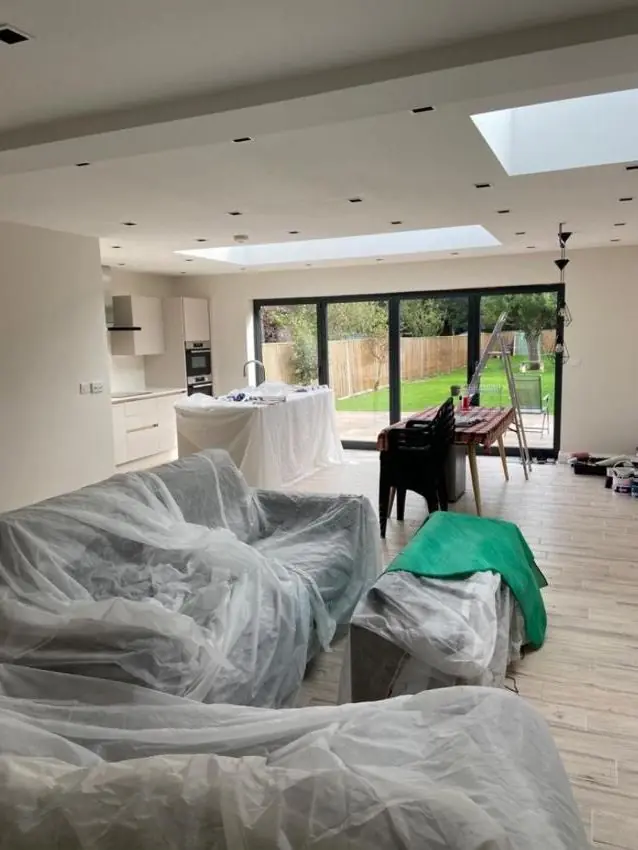
Dean at DH Painter & Decorator decorates new plaster in Dallington, NN5, about 1.3 miles north-west of Northampton town centre. That includes first decoration of new homes at Dallington Grange and re-skimmed rooms or extensions in the suburb's older housing.
Why Dallington has so much fresh plaster
Much of Dallington’s housing is decades or centuries old. What sets it apart is because of Dallington Grange, the large extension on the north-western edge of Northampton beside Harlestone Firs, where Persimmon, Charles Church and others are building around 3,000 homes. Every one of those houses starts life with new gypsum plaster on its walls and ceilings and a coat of builder’s emulsion over the top. That coat is applied to get the house handed over, not to last. It is thin, often patchy on ceilings, and marks the moment furniture goes in.
The step-by-step process for new plaster is covered on our main new plaster and extension painting page and in our mist coat guide. Below is how it applies to Dallington’s mix of new and old buildings.
Redecorating a Dallington Grange new build
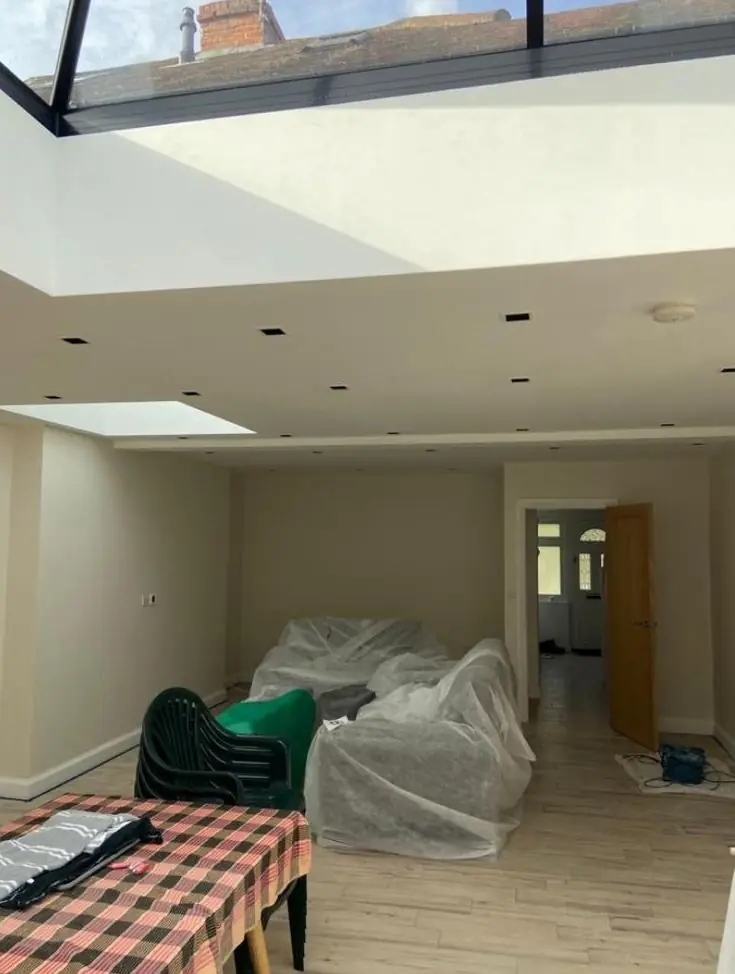
Where builder’s emulsion is already on the walls, a mist coat is no longer the question; the job is to get a durable finish over a weak base. We check how well the existing coat has bonded, wash down any marked areas, and fill the hairline cracks that open in corners and along ceiling lines as the house dries out and settles. Then two finish coats go on in a paint chosen for the room: a wipeable matt for living areas and bedrooms, something tougher for kitchens and bathrooms.
| Stage | What usually happens |
|---|---|
| Handover | Builder’s emulsion on walls and ceilings, factory-primed or thinly glossed joinery |
| First months | Heating dries the structure; settlement cracks appear at corners and joints |
| After the first winter | Cracks filled and caulked, then full finish coats |
Owners who want colour straight away can have rooms painted early, as long as they accept that some crack filling and touching in will follow.
If any walls were left bare by the builder, such as a garage converted later or a room plastered after handover, they get a proper mist coat of thinned contract matt before anything else, so the topcoats grip rather than peel.
Extensions on the older streets
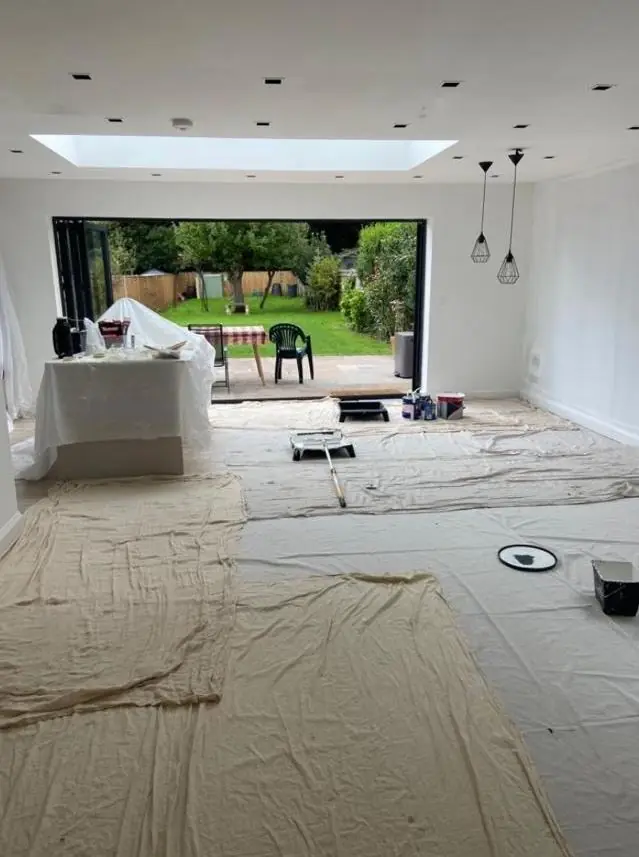
Outside the new estate, fresh plaster in Dallington usually means an extension or a re-skimmed room in one of the 20th-century semis and terraces off Harlestone Road, or in a bungalow. The decorating sequence is the same, but the joins matter more. A new kitchen extension meets an older wall that has its own paint layers, so the line where old plaster stops and new begins is checked for cracks and level before both are painted together for an even finish.
In the conservation area around Dallington Green, Raynsford Road and Brook Lane, the position is stricter. Extensions to listed buildings need listed building consent, and new work in a conservation area may face planning controls on appearance. That is for the owner and their builder to settle before the plaster goes on. Once it does, we decorate to whatever finish the consent specifies.
Where new plaster meets old sandstone
Dallington’s oldest houses are built of sandstone rubble, and their original internal finishes are often lime-based. When part of such a house is replastered or extended, the new gypsum and the old lime walls behave differently. Lime walls need to breathe, so we use a breathable emulsion on the original walls rather than a vinyl that traps moisture, even where the new extension walls get a standard finish. The brook valley setting and its damp mornings make that breathability more important, not less.
We confirm plaster is dry with a moisture check before sealing it, rather than guessing from the colour. For a broader view of decorating in the area, see our Dallington page.
Last updated by Dean, DH Painter & Decorator.