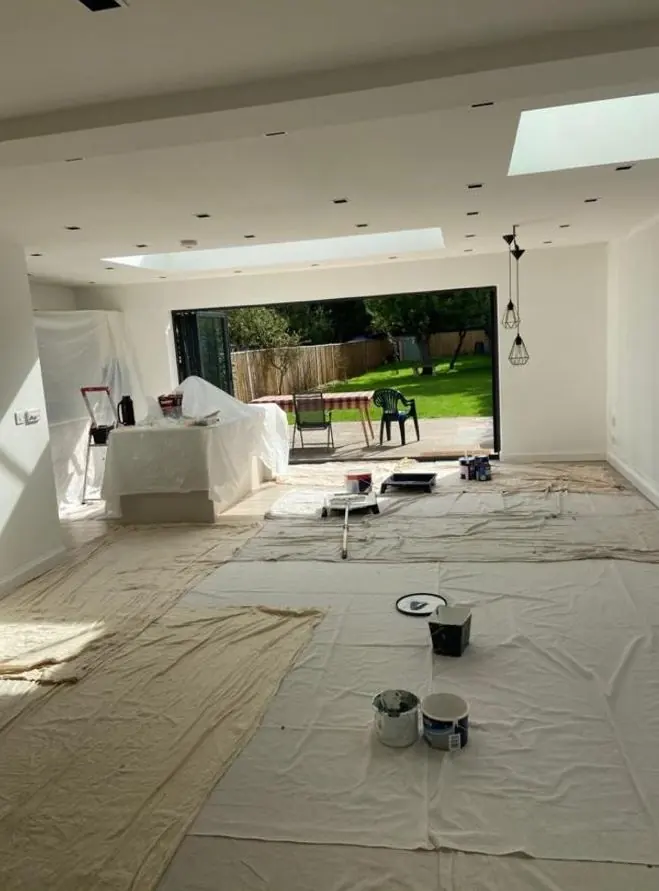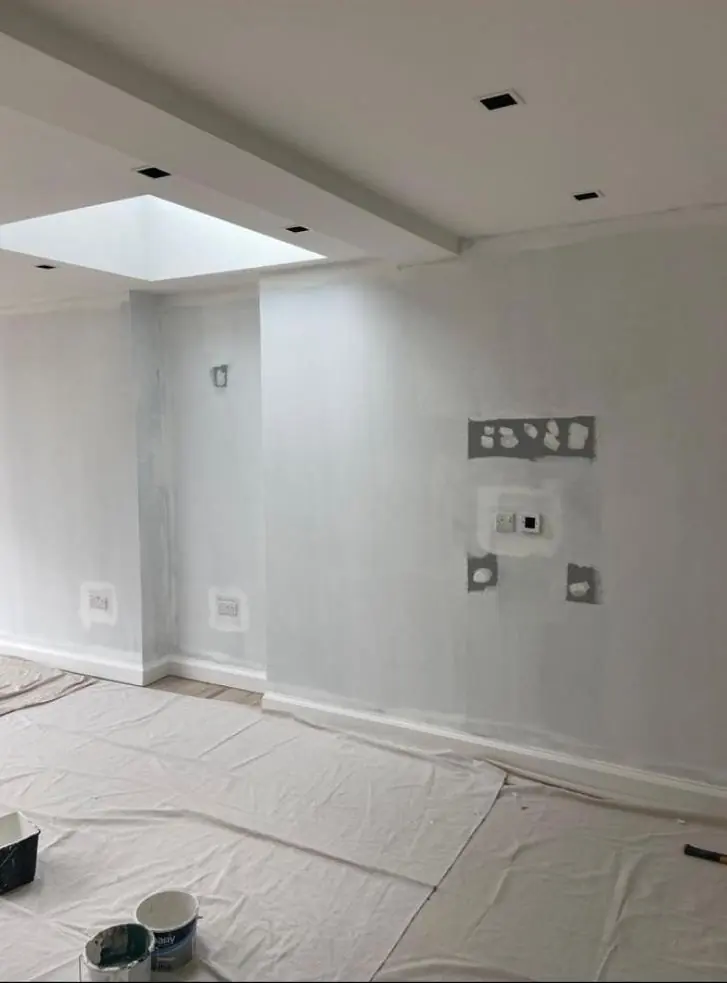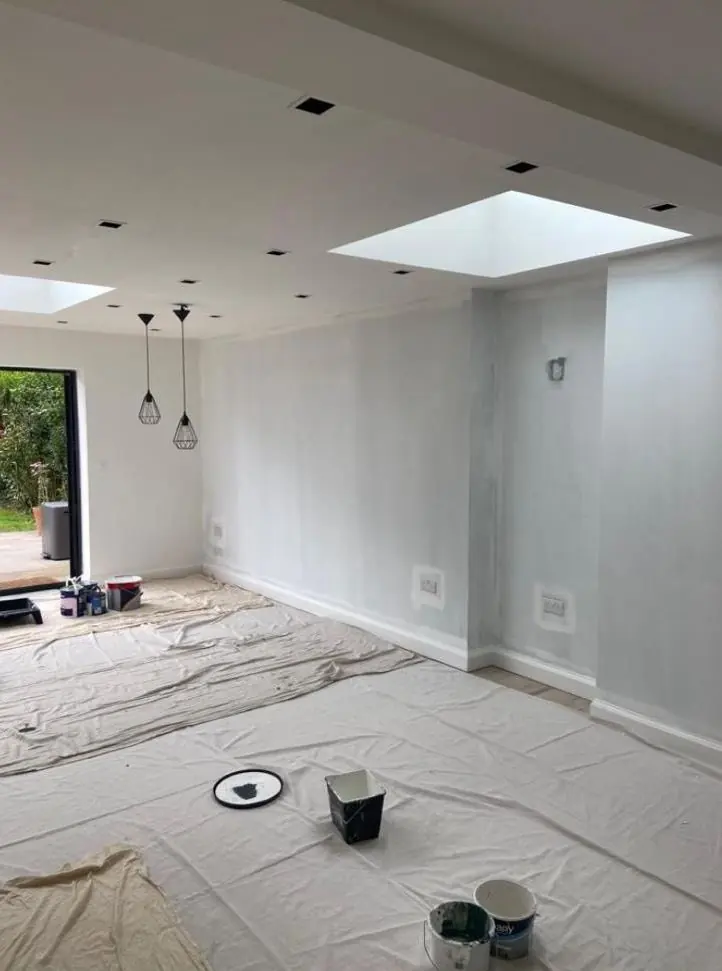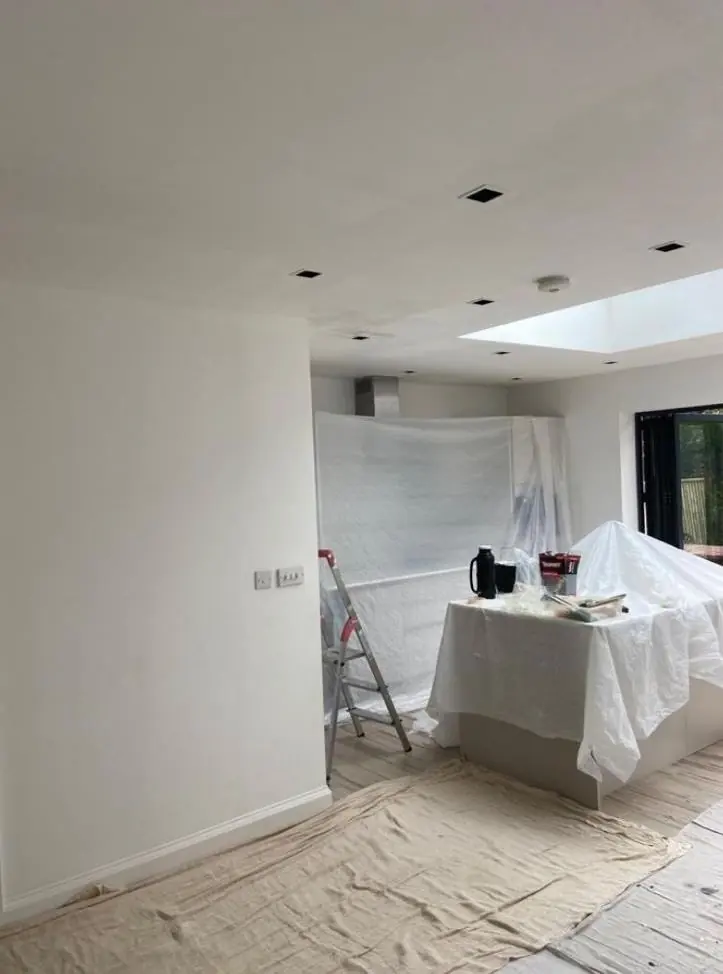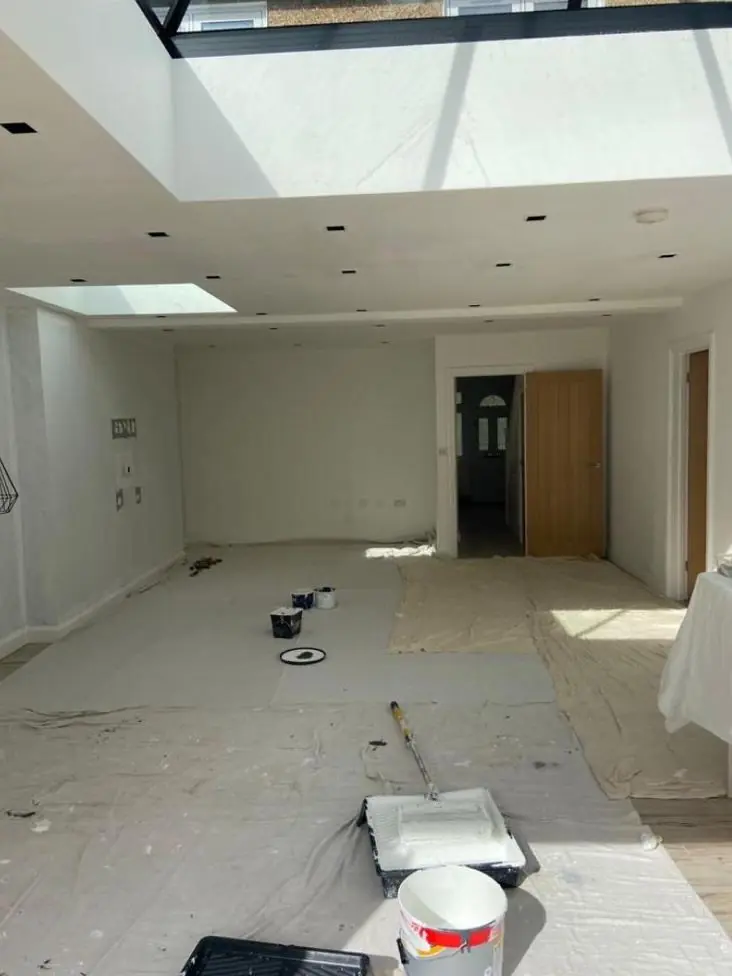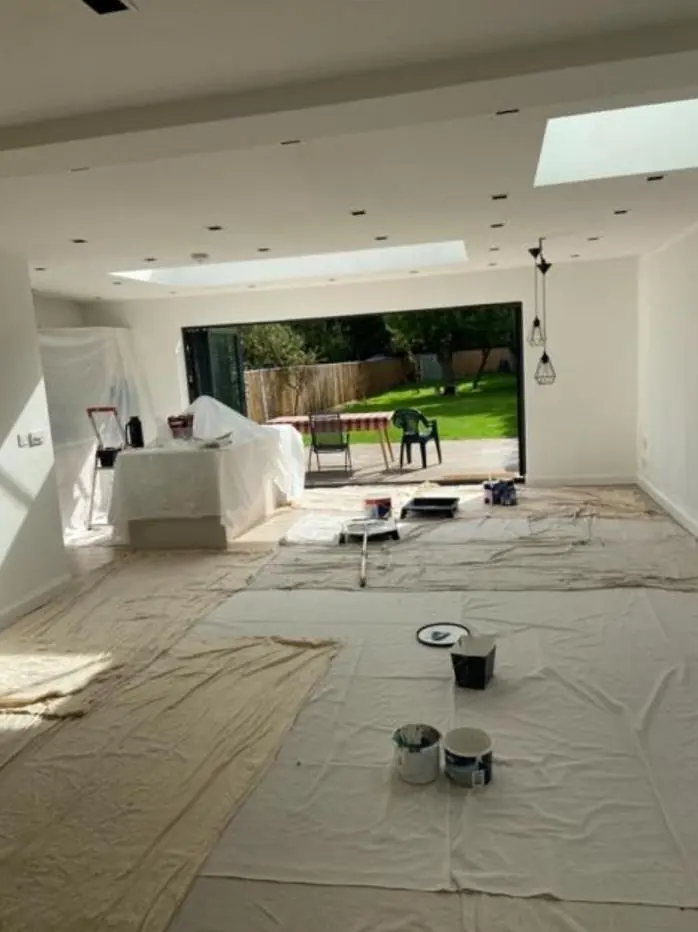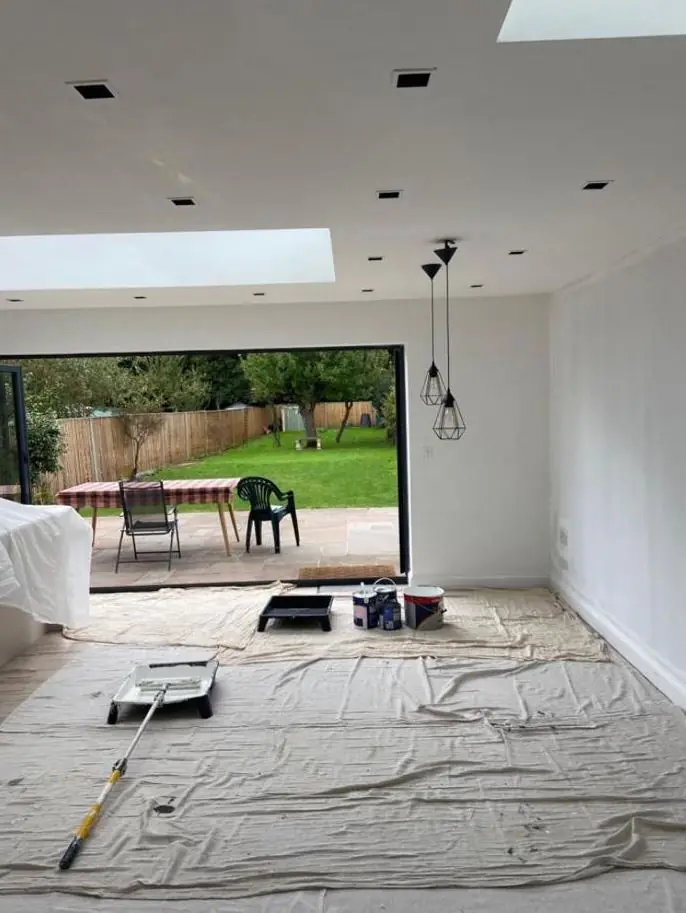
DH Painter & Decorator decorates fresh plaster in Spencer, NN5 7, a mile north-west of Northampton town centre and half a mile or so from the railway station. That means new extensions and re-skimmed rooms in the estate's 1930s-50s semis, plus repaired and replastered walls in its 2000s and recent flats.
Why new plaster turns up all over NN5 7
Spencer is not a district of large new builds, but three kinds of property here are likely to produce fresh plaster:
- Extended and refurbished semis. The late-1930s to 1950s semi-detached houses on Pembroke Road, Tenby Road and Swansea Road have side and rear gardens, which leaves room for a single-storey extension or a kitchen knock-through. Each one leaves new walls and ceilings to decorate.
- Re-skims in older rooms. When decades of wallpaper and paint come off a mid-century wall, the old plaster underneath is often uneven or blown in patches, and a skim coat is the cleanest fix. Chimney breasts and the walls around replaced windows are common spots.
- Making good in newer flats. Lyttleton Road was mostly built between 1986 and 2009, and Countess Road is mainly flats with a median build year of 2019. Walls in newer buildings often show settlement cracks in the first years, and where these have been cut out and made good, the repairs need sealing before any colour goes on.
The full process, from moisture checks to finish coats, is on our main new plaster and extension painting page. Below is how it applies to Spencer’s houses and flats.
Joining an extension to a mid-century house
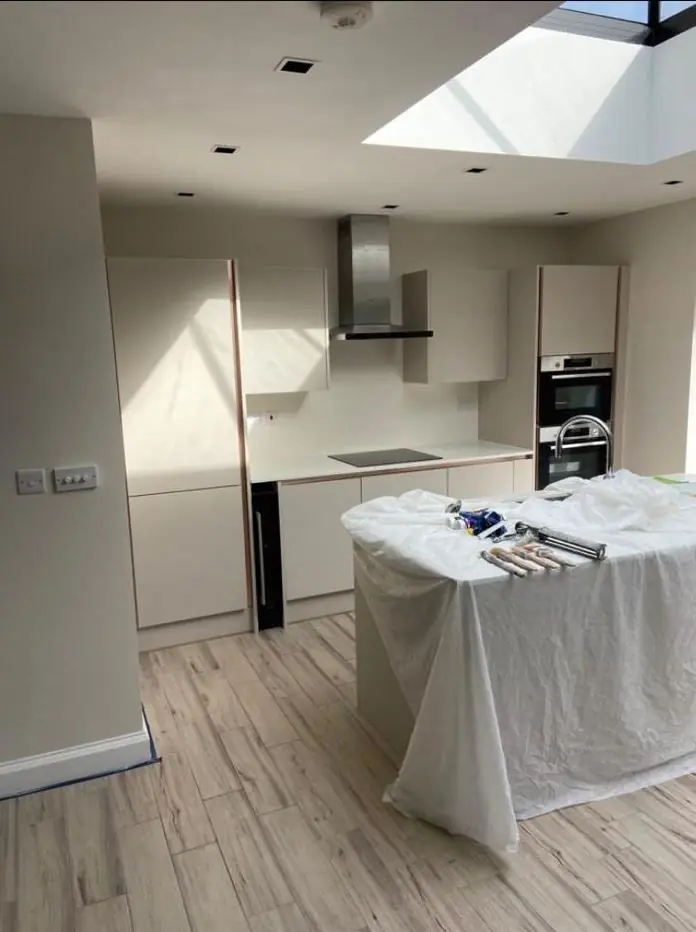
With an extension on a 1930s-50s semi, the tricky part is usually the junction where the new room meets the existing house, not the new walls themselves. The old walls were decorated many times over decades, while the new walls are bare, thirsty plaster. Painted straight over with the same emulsion, the two surfaces dry to a different sheen and the line between them shows.
So on a Spencer extension we mist-coat only the new plaster, lightly key and spot-prime the old walls where they join, and run the finish coats across both in one go. Where a builder has opened up a wall between kitchen and dining room, the plastered reveals and new lintel areas are treated as new work too, even if the rest of the room is not.
Thin mist coats and patience with drying
A skim coat on a party wall or an external wall in an older house can take longer to dry than people expect, particularly in winter. Before painting, Dean checks for an even pale colour across the whole wall, including behind radiators and in corners. Then comes a watered-down, breathable contract matt mist coat, never vinyl or a sealer that stops moisture escaping. The mist coat shows up trowel marks, pinholes and small cracks, and those are filled and sanded before the two finish coats. Our mist coat guide explains the reasons behind each step.
Repairs in Spencer’s recent and social-rented flats
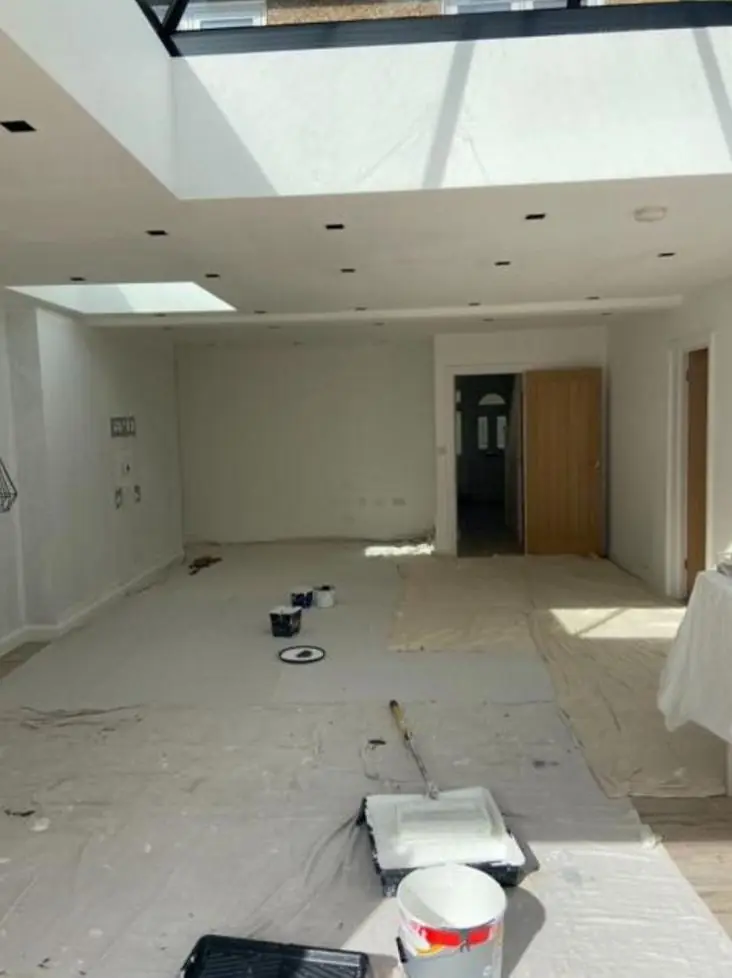
Many flats around Countess Road are privately rented, and many on Lyttleton Road, Cardigan Close and Spencer Haven are social housing. In these homes new plaster usually comes from patch repairs rather than whole rooms: a cracked ceiling made good, a wall replastered after a leak, or chases filled after electrical work. Small patches cause their own problem. Paint them straight over and they “flash” as dull or shiny squares. We seal each patch and then repaint the whole wall, or the whole ceiling, so the finish is even.
| Spencer property | Where new plaster comes from | Main decorating issue |
|---|---|---|
| 1930s-50s semi | Rear extension, knock-through, re-skim | Matching old and new walls at the join |
| 2000s house or flat, Lyttleton Road | Settlement cracks made good | Patches flashing through the finish |
| Recent flat, Countess Road | Repairs between tenancies | Tight timescales versus drying time |
We cover Spencer from our Northampton base, a mile or so away. Find more on the Spencer area page, or call Dean on 07539 779 036 once your plasterer has a finish date.
Last updated by Dean, DH Painter & Decorator.