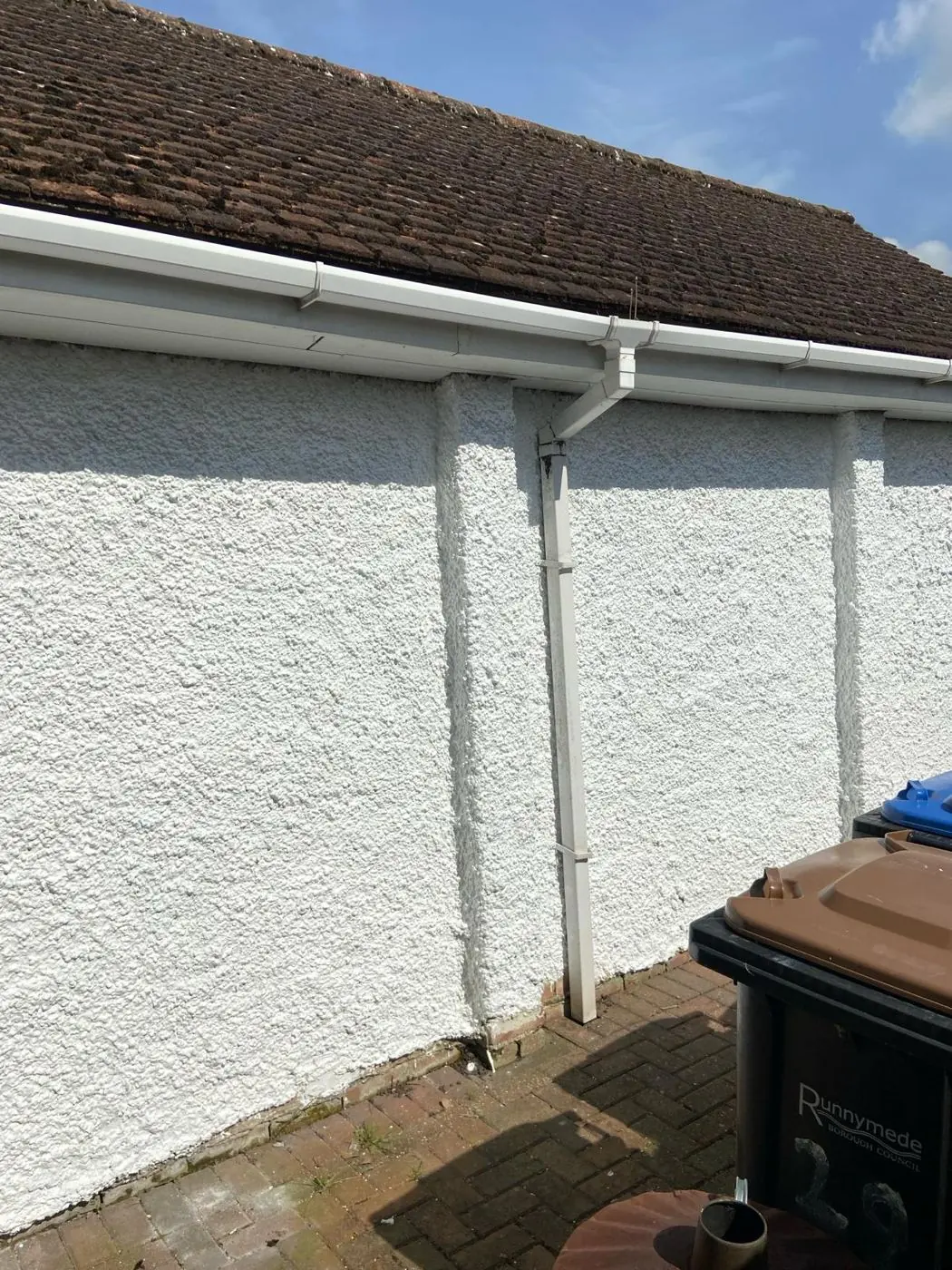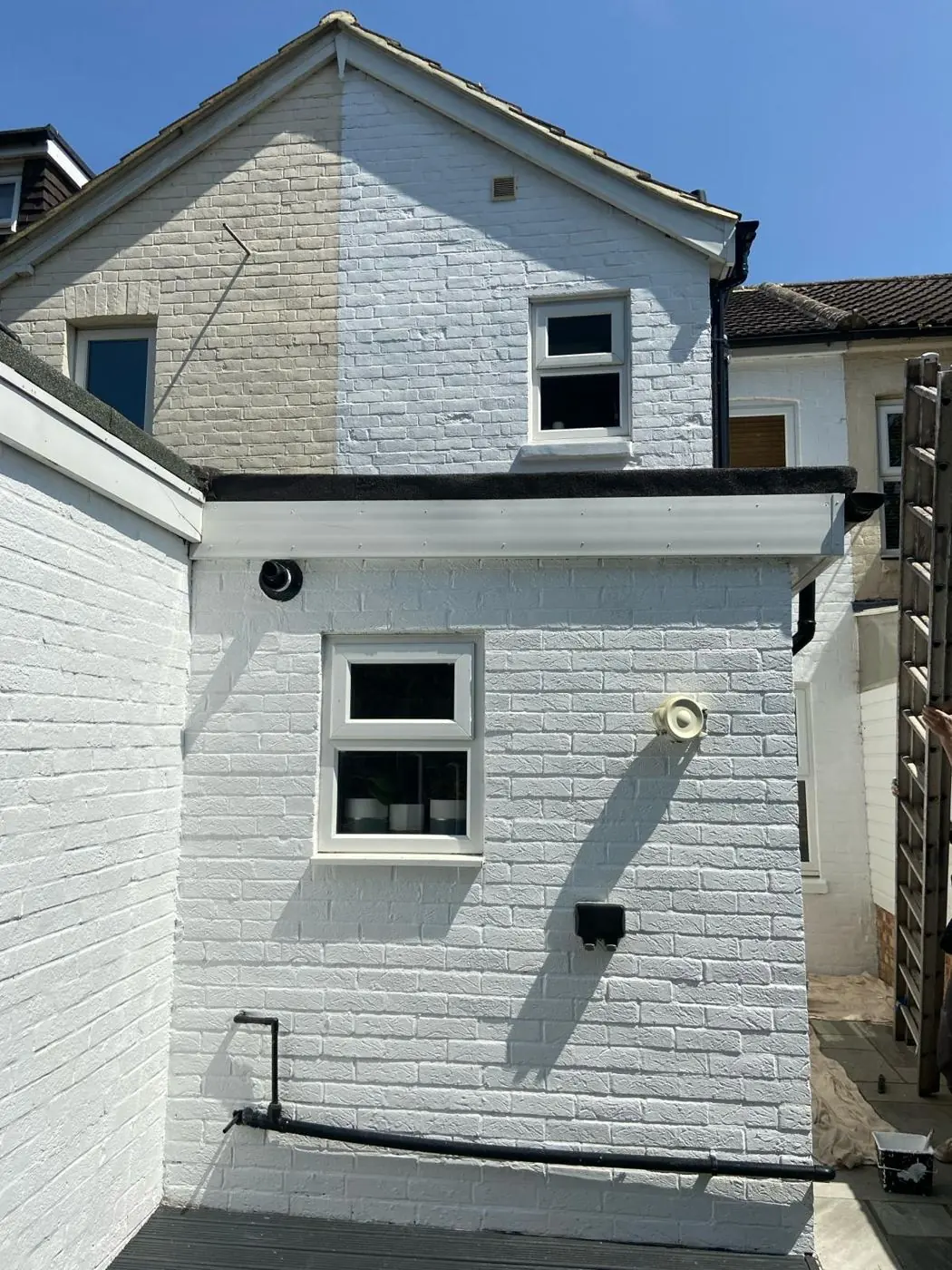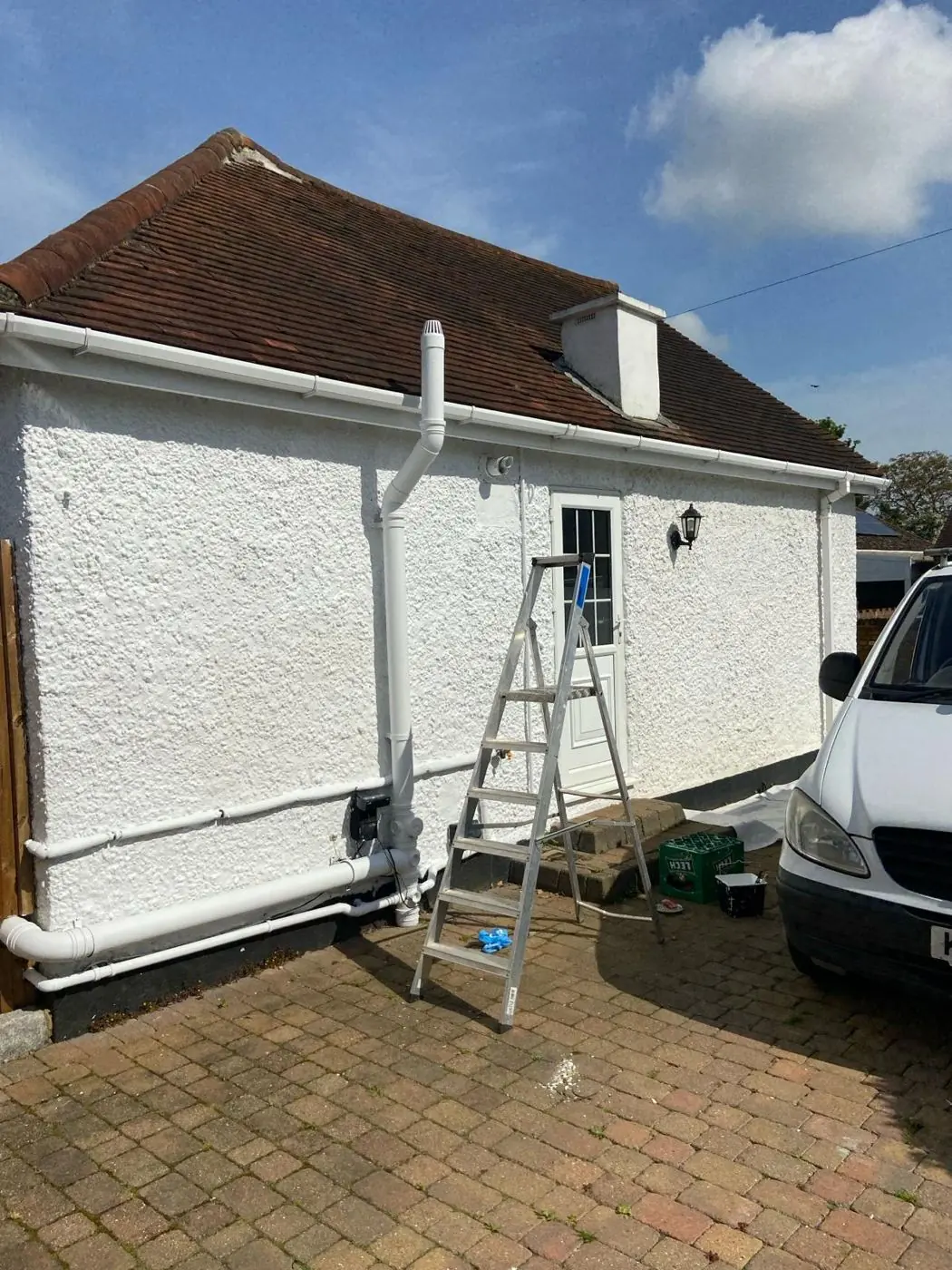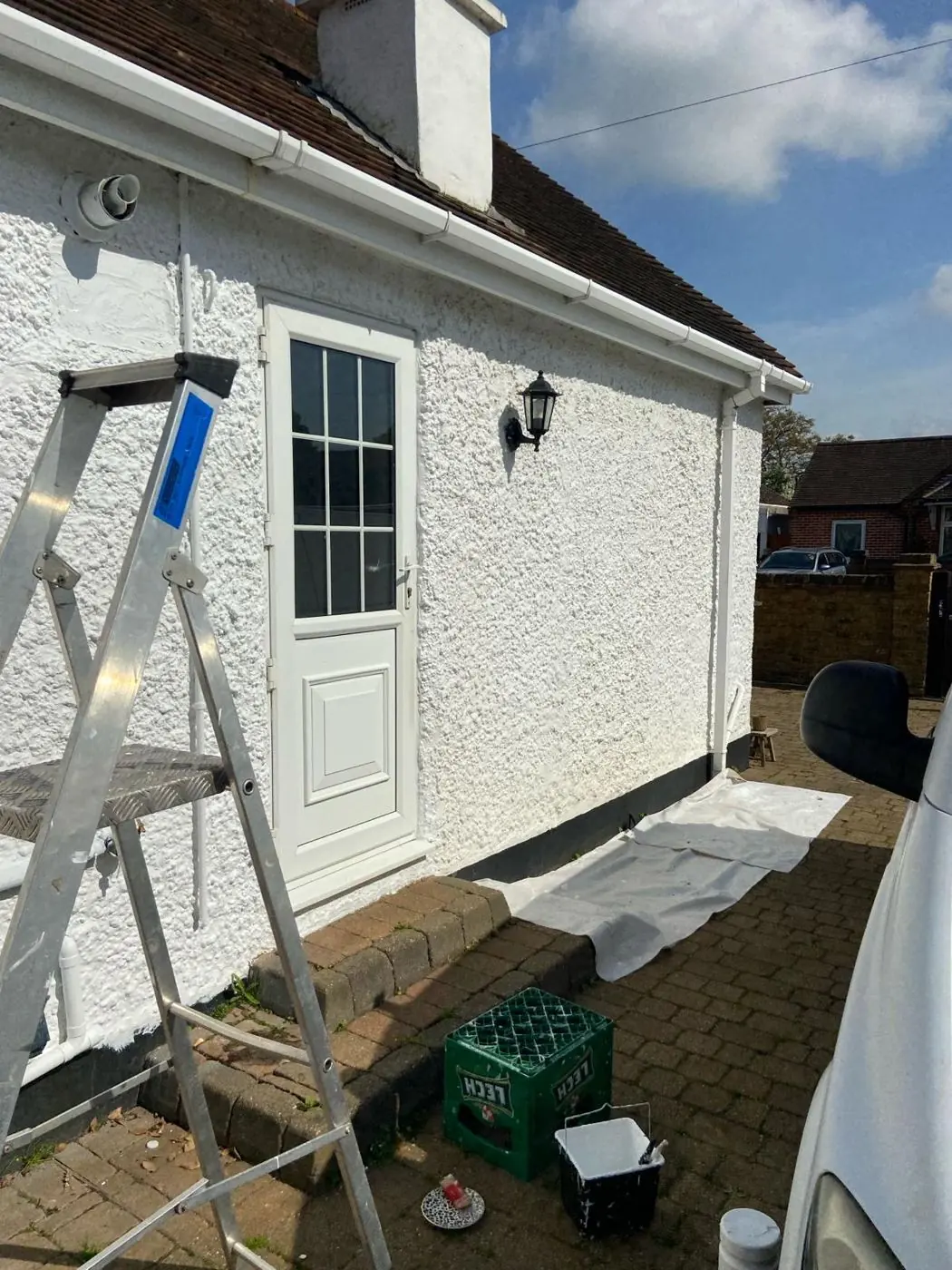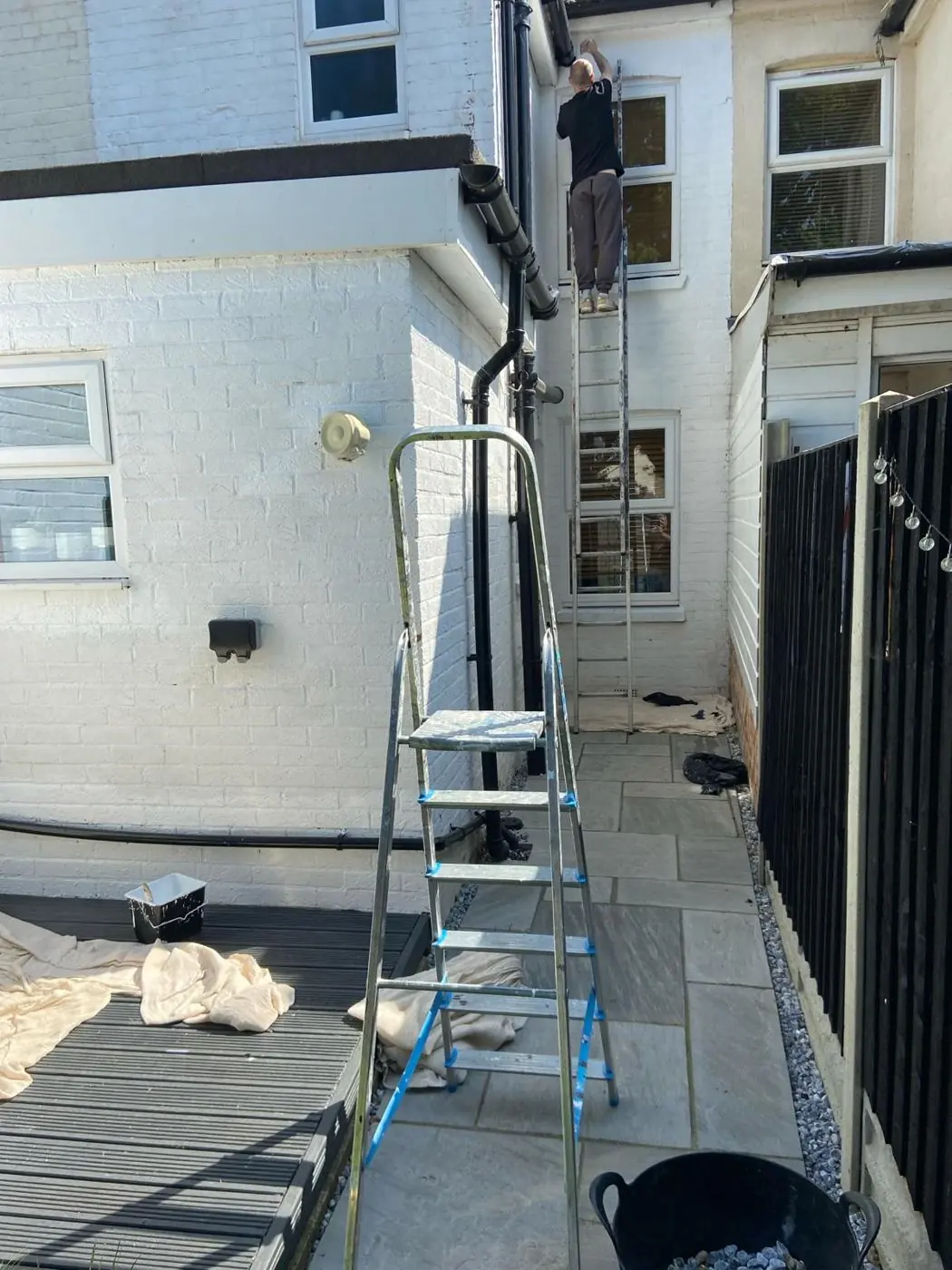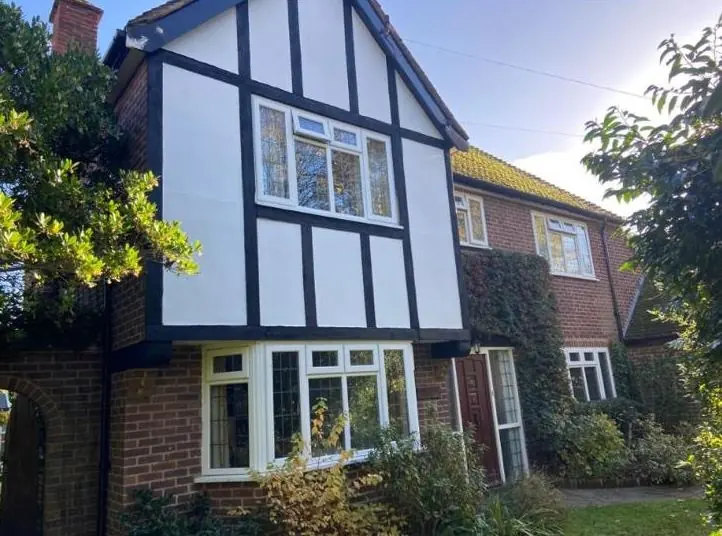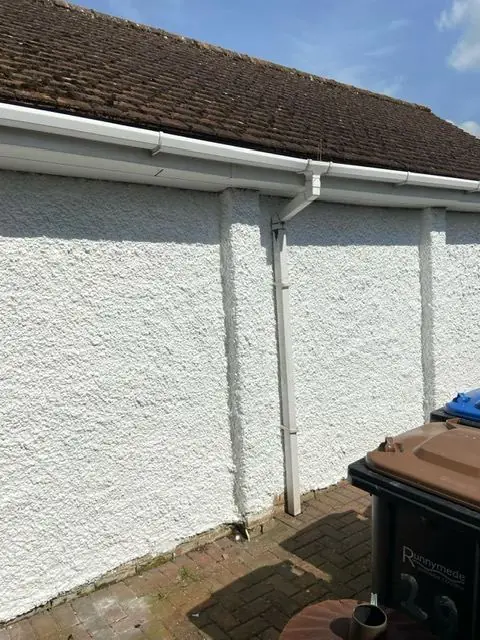
Dean paints rendered and masonry walls on houses in Dallington, NN5, about 1.3 miles north-west of Northampton town centre. The work is mainly on 20th-century and newer rendered homes outside the conservation area; the historic sandstone buildings in the old village should be left unpainted.
Where masonry paint belongs in Dallington, and where it does not
Masonry painting in Dallington starts with knowing which walls should not be painted. The village’s most recognisable walls, around Dallington Green, along upper Raynsford Road and at the Raynsford Almshouses, are sandstone. Some of it is coursed rubble, some dressed ashlar, and the historic core is bare stone. That stone is meant to take in moisture and let it out again, and a modern plastic masonry coating stops the second half of that cycle. Water then sits behind the film, frost works on the face of the stone, and the paint blisters off taking the surface with it.
So the honest answer for the listed and older buildings is that the walls are not a painting job. Masonry painting in Dallington is for the rendered and previously painted houses, which are found in the suburban streets outside the conservation area.
| Wall type | Where you find it | Our approach |
|---|---|---|
| Sandstone rubble and ashlar | Old village core, conservation area | Leave unpainted; any treatment must be breathable and agreed with the conservation officer |
| Brownstone rubble barn walls | Converted farm buildings such as Old Dairy Farm, Brook Lane | Usually left bare; ask before any coating |
| Rendered or previously painted walls | 20th-century houses around Harlestone Road and beyond the old core | Clean, repair and two coats of breathable masonry paint |
| Newer render | Dallington Grange, where it has been used | Check the builder’s finish and the render system before painting |
Rendered houses outside the old village
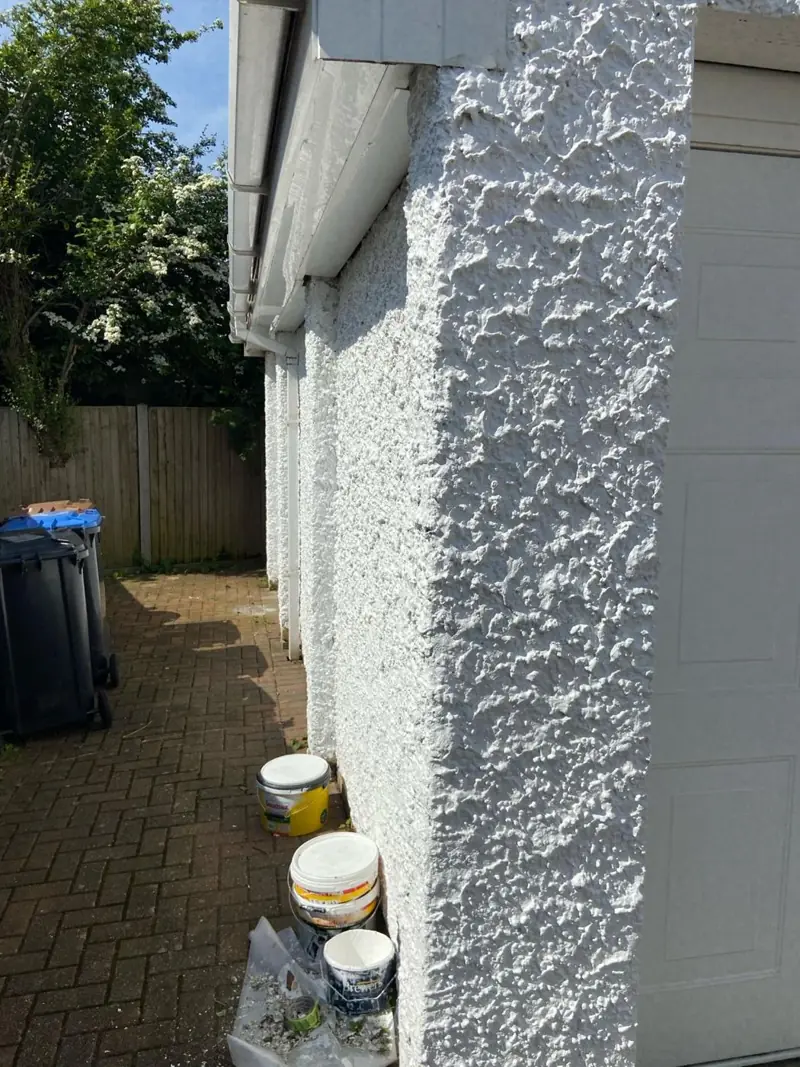
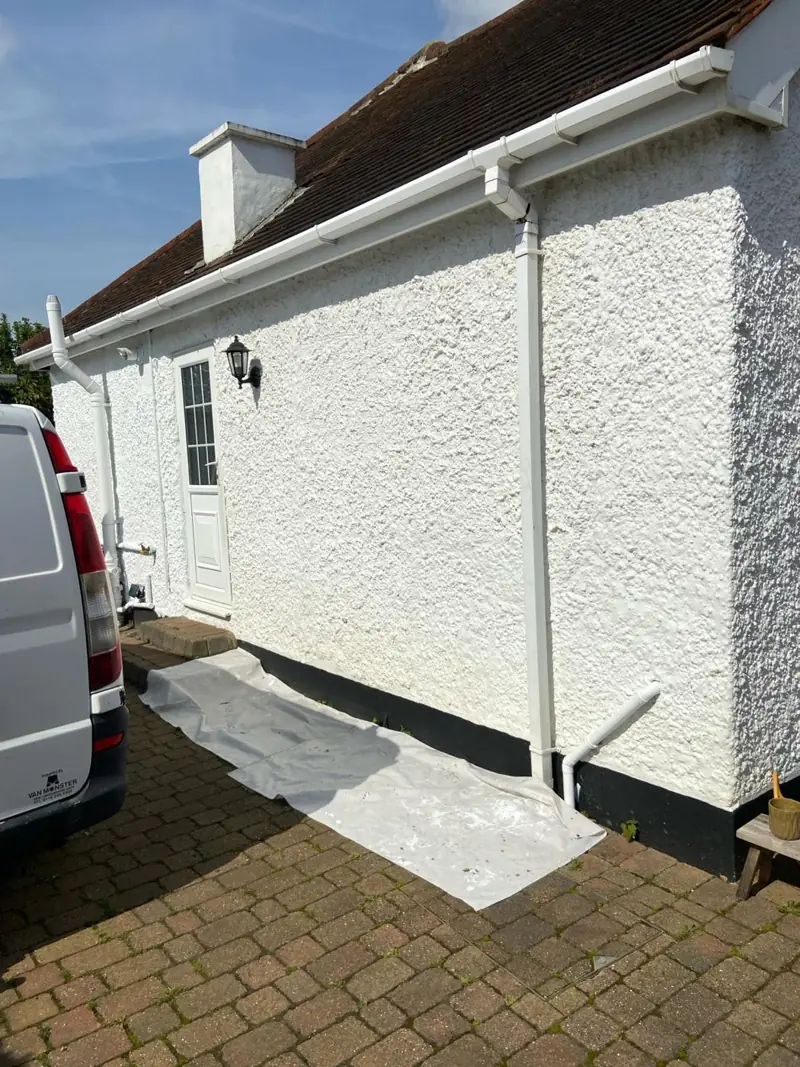
Beyond the conservation boundary Dallington is ordinary suburban Northampton: terraced and semi-detached houses with some flats and detached homes, according to sales records for the NN5 7 sector. Where those houses have render or painted brick, the job is the usual one done well. The walls are surveyed for hollow or cracked patches, washed, treated for growth, stabilised where chalky, filled and then finished in two coats of a breathable masonry paint. The full process is on our main render and masonry painting page, and our guide to painting render and roughcast explains how to tell a sound wall from one that needs a plasterer first.
The valley floor and green growth on walls
Dallington’s older streets drop into the valley of the Dallington Brook, which is cut into Upper Lias clay a few metres below the surrounding ground. Clay holds water, the brook keeps the air damp, and the mature trees along it shade walls for much of the day. North-facing and tree-shaded render here tends to grow algae faster than the same wall on an open hilltop estate. Before we paint, growth is killed with a fungicidal solution and given time to die back before being scrubbed away. Skipping that step means the new coat goes on over live spores and the green comes back through.
The damp also narrows the working window. Masonry paint needs a dry wall and settled weather either side of application, so we watch the forecast and do not start a render job in a wet week just to keep to a date.
Before you book
If your house is on the edge of the conservation area and you are not sure which side of the line it falls, check with West Northamptonshire Council. If a wall has been painted in the past and the paint is now failing on stone, that is a different conversation, and we will tell you plainly whether repainting or careful removal is the better route. You can read more about the area on our Dallington page.
Last updated by Dean, DH Painter & Decorator.