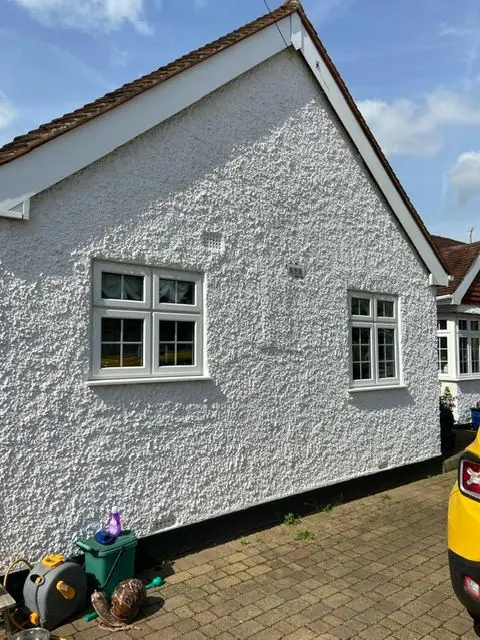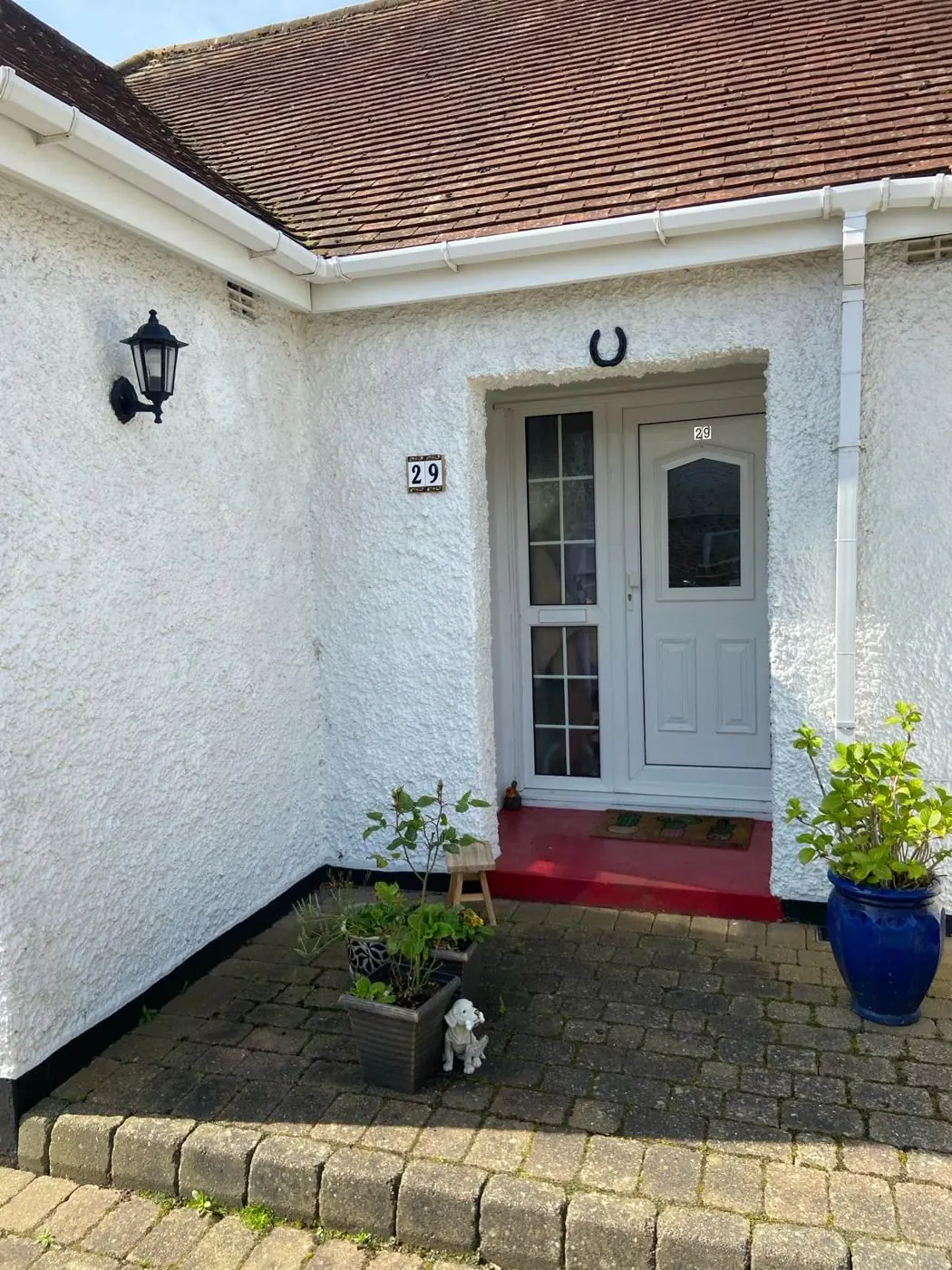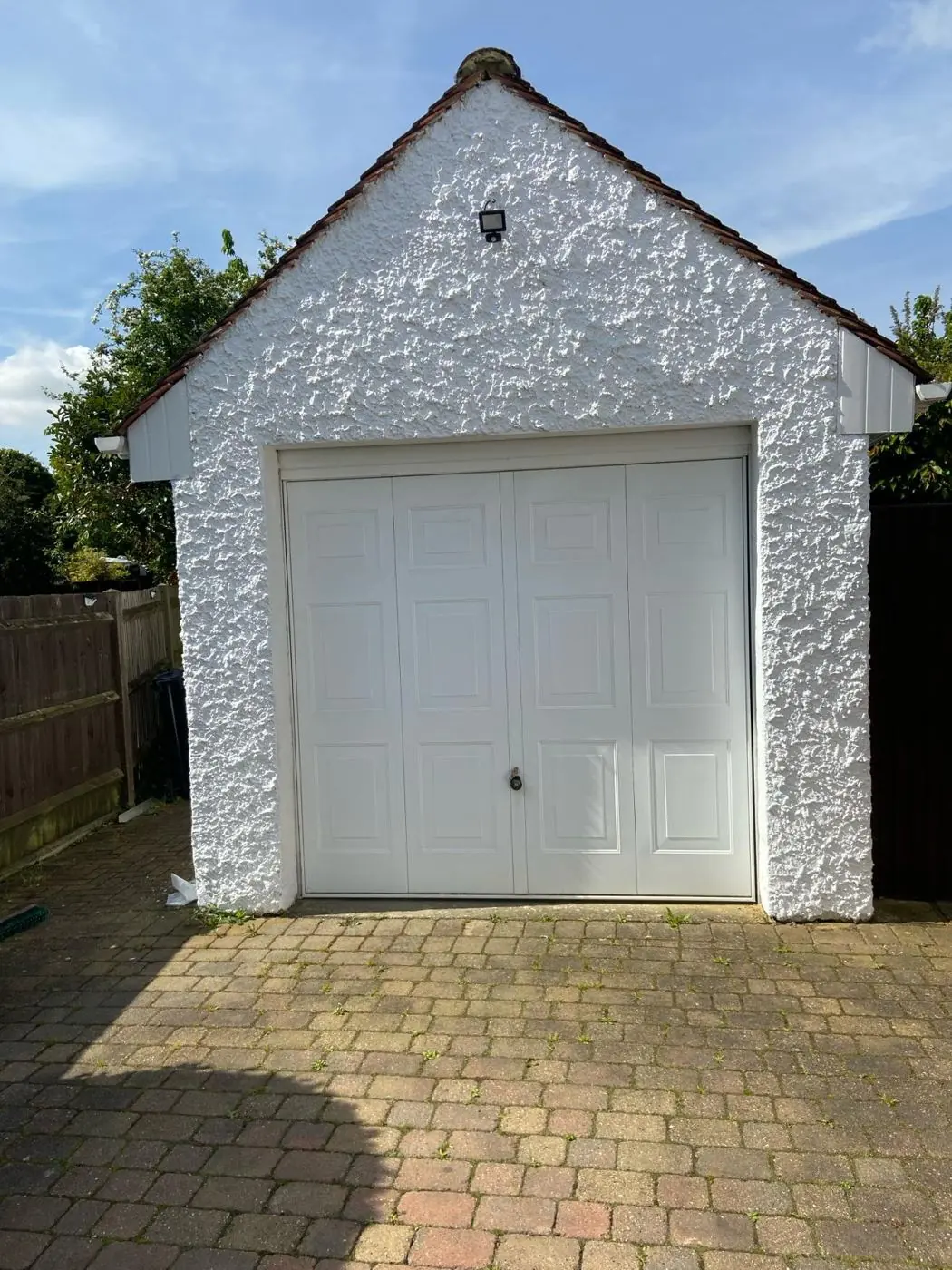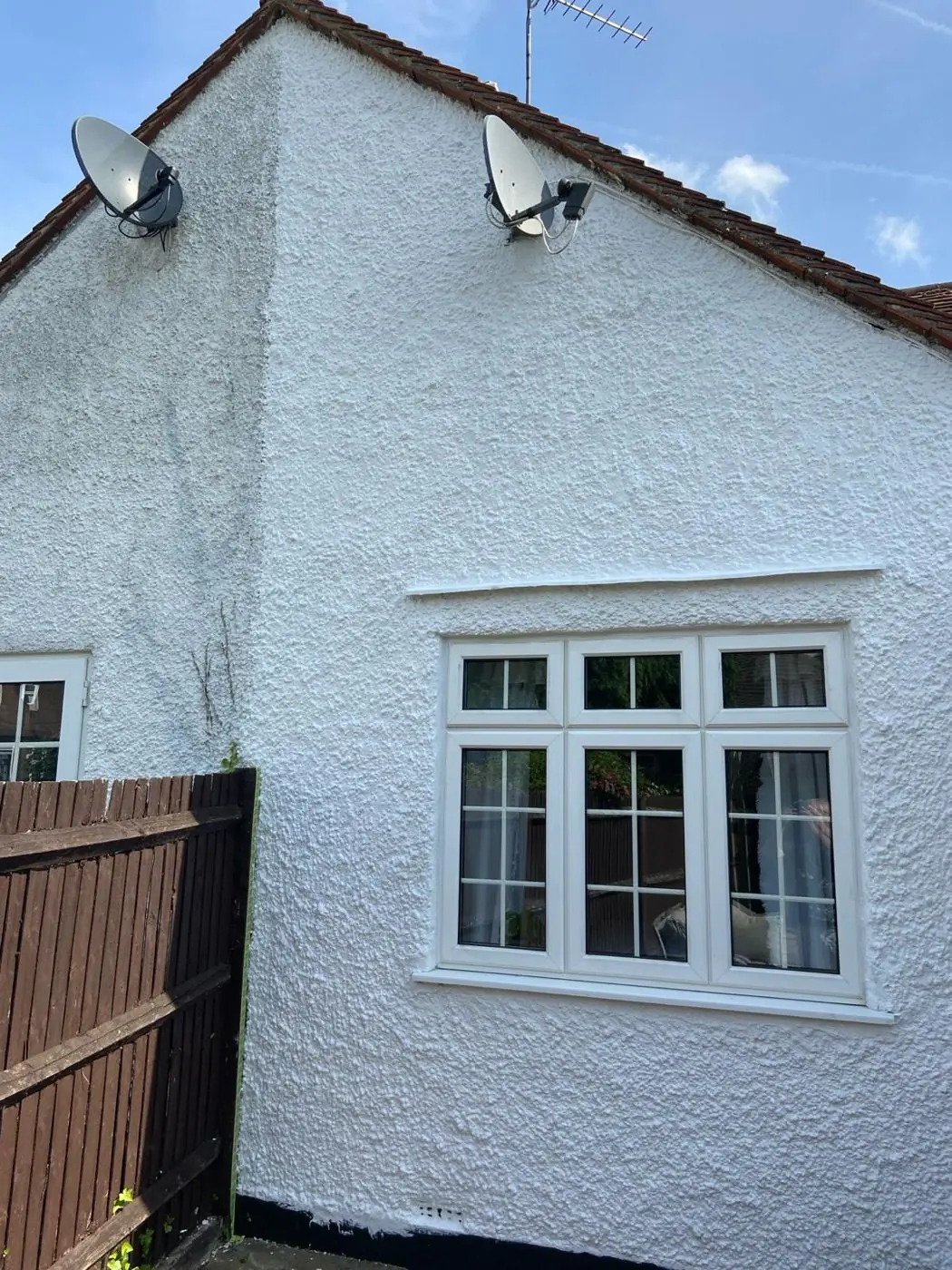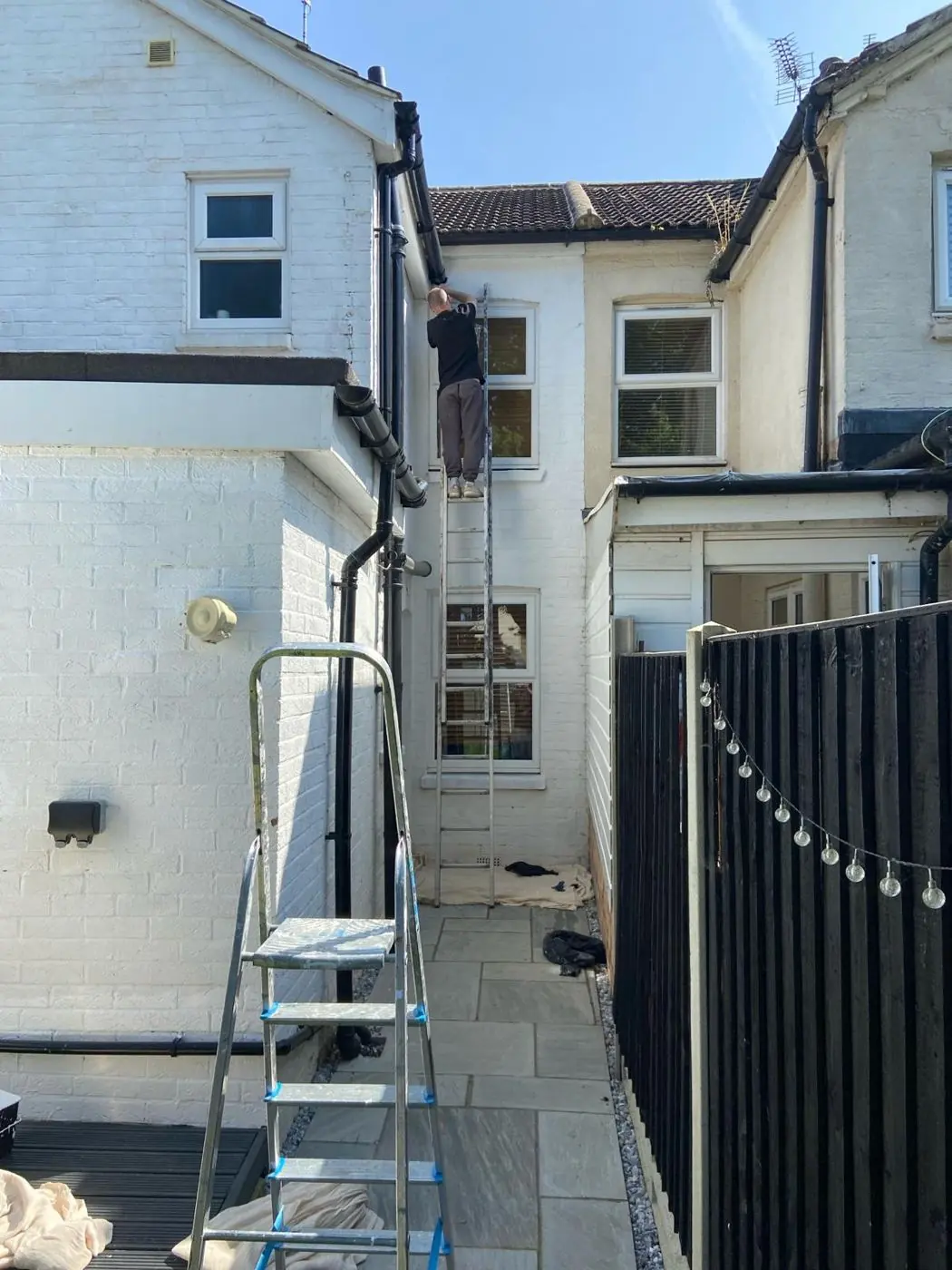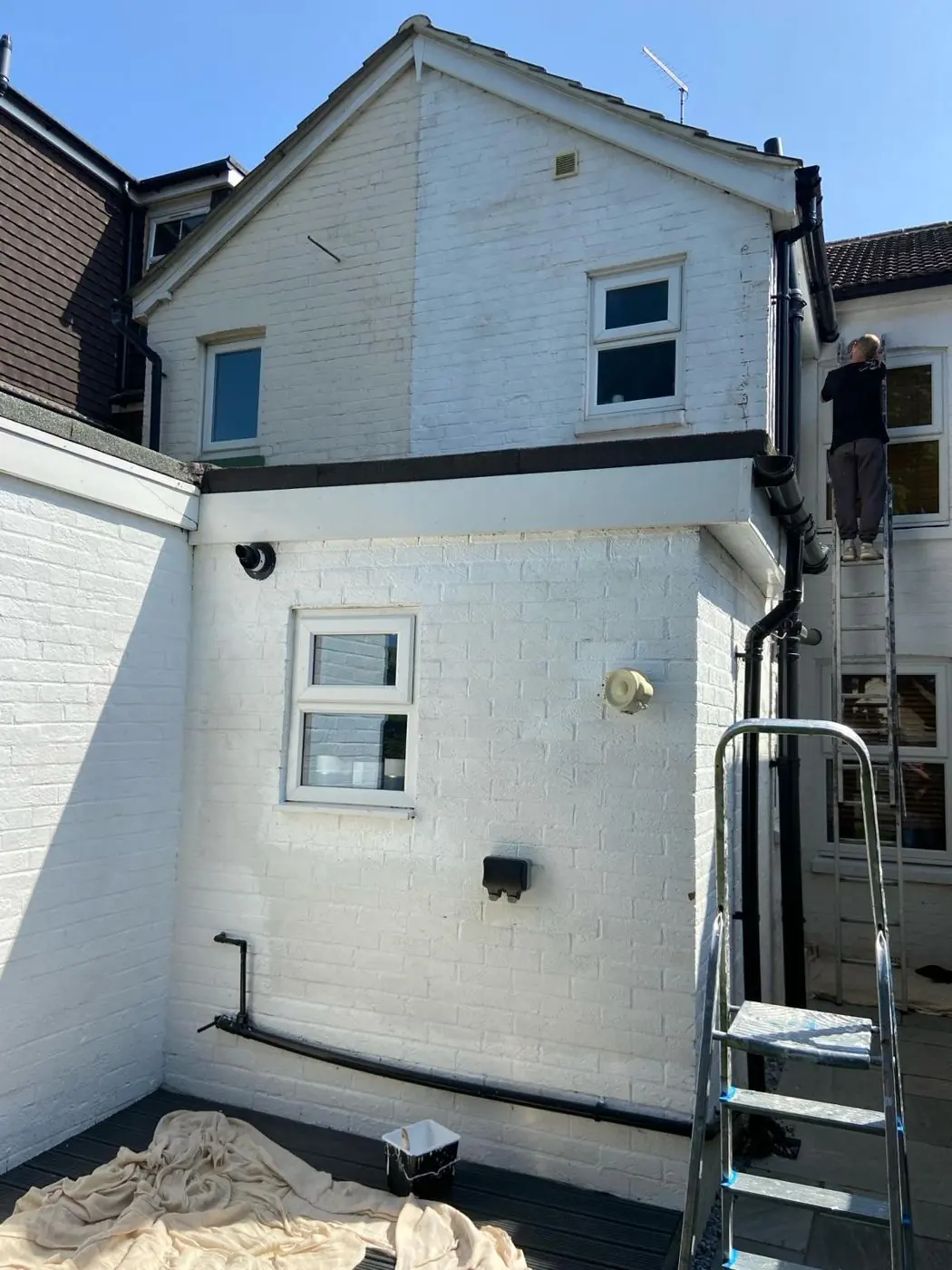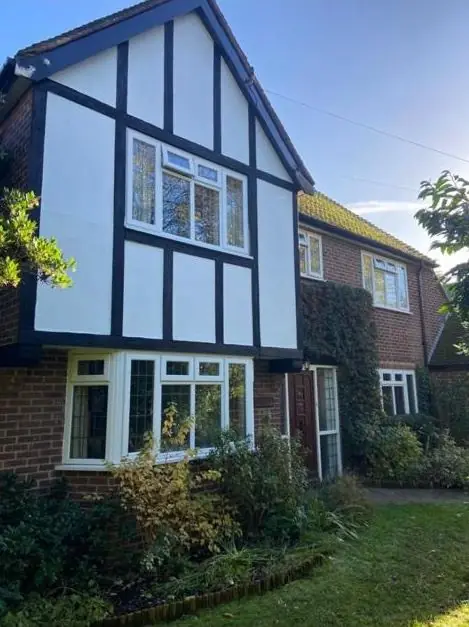
Dean paints render, pebbledash and masonry on homes in Spencer, the NN5 estate on rising ground about a mile north-west of the town centre. Every job starts with a survey of the wall, then crack repair, algae treatment and two coats of breathable masonry paint suited to how exposed the house is.
Start by finding out what the wall is
There is no published appraisal of the Spencer estate’s building materials, so we don’t assume anything about a house before seeing it. What can be said is that mid-century council-built semis and terraces like those on Pembroke Road, Tenby Road and Swansea Road often carry render or pebbledash on at least part of the elevation, sometimes the full front, sometimes a band above the ground-floor windows, sometimes only the side wall. Brick, smooth render and dashed render each need different preparation, so the first visit is spent working out what is on the wall and what condition it is in.
That survey covers more than the paint. Dean taps render to find hollow or blown patches, looks at how cracks run, and checks gutters and downpipes above any damp staining, because a leaking joint will ruin new masonry paint within a season. The general method is described on our render and masonry painting page, and our guide to painting render and roughcast explains why breathable paint matters.
How each wall type is handled
| What we find | Where it tends to turn up in Spencer | Approach |
|---|---|---|
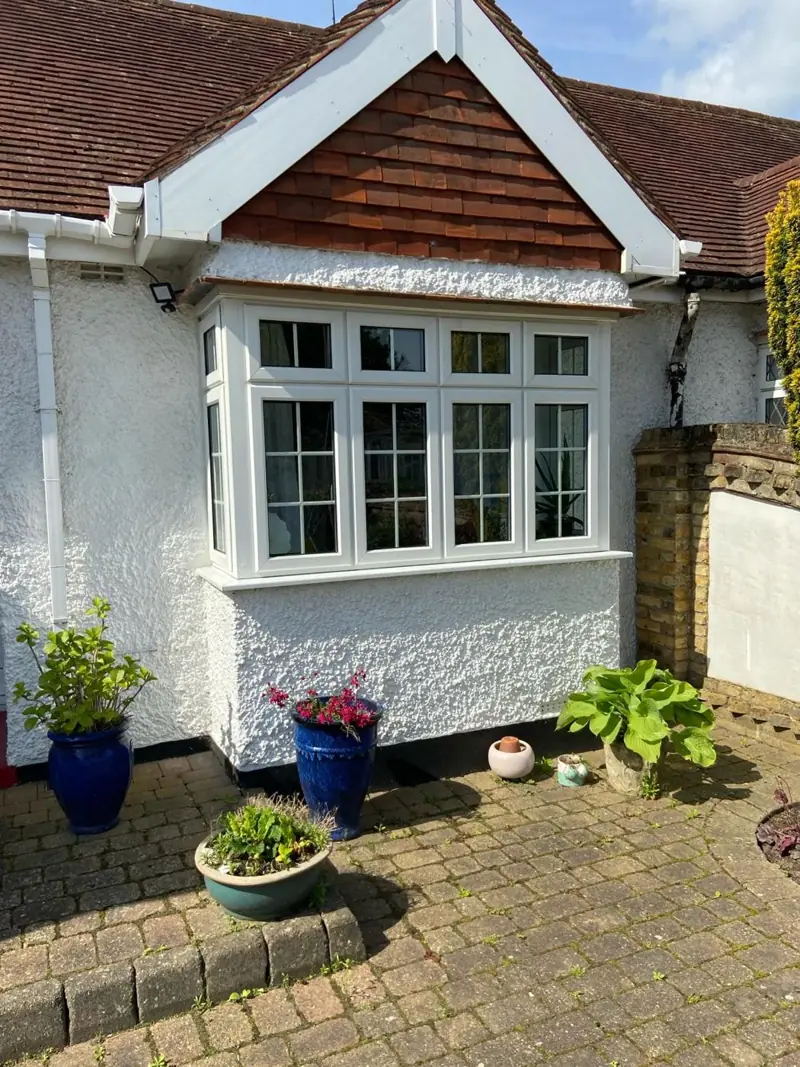
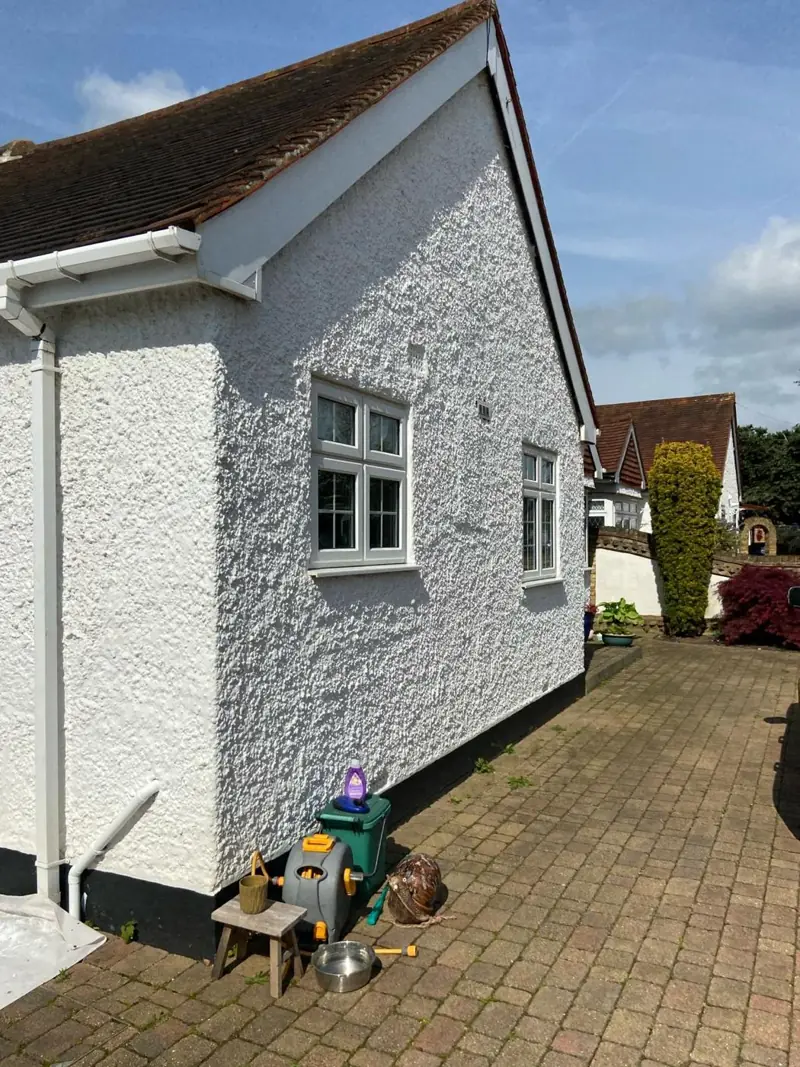
| Pebbledash or roughcast panels | 1930s-50s semis and short terraces across the estate | Fungicidal wash, stabiliser on chalky areas, crack filling, then a masonry paint applied with a deep-pile roller and brushed into the stones |
| Previously painted smooth render | Varies house by house, so it is checked on site | Scrape loose paint, fill and feather cracks, two coats of breathable masonry paint |
| Bare facing brick | Varies street by street and is not recorded | Usually wiser left unpainted; once brick is painted it has to be repainted for good |
| Cement-rendered historic stone | The Grade II Spencer Club on Tennyson Close | Specialist case, covered below |
Hill, shade and road dirt
For a small estate, Spencer has a surprising spread of exposure. Lyttleton Road lies low, near 64 metres, while Gladstone Road tops out above 80, and render high on that slope is hit harder by rain blown in on the wind. Fine cracks in that render let water in behind the coating, and once frost gets to work the paint lifts in sheets. On those walls cracks are raked out and filled properly rather than bridged with paint.
Main-road elevations bring their own trouble. Exhaust film from the A4500 and A428 sits on the texture of pebbledash and stops paint bonding, so those elevations are washed down thoroughly and left to dry before any stabiliser goes on. Shaded rear walls lower on the estate are more likely to carry green algae, which is killed with a biocide and brushed off, not painted over.
The listed exception on Tennyson Close
Spencer is not a conservation area, and painting the render on an ordinary estate house needs no special consent. The Spencer Club, formerly Broadlands, is different. It is Grade II listed, and its 17th-century ashlar stone has been cement rendered. Any work to the outside of a listed building that affects its character can need listed building consent, and an old stone wall behind a cement skin needs to be able to lose moisture. A job like that starts with a conversation with the owners and the council’s conservation officer, not with a tin of standard masonry paint.
For the many ordinary semis, bungalows and maisonettes around it, Dean will look at the walls, explain what they need and give you a free quote. Housing association tenants should note that the walls belong to the landlord, so ask them before booking anything. More on the district is on our Spencer area page.
Last updated by Dean, DH Painter & Decorator.