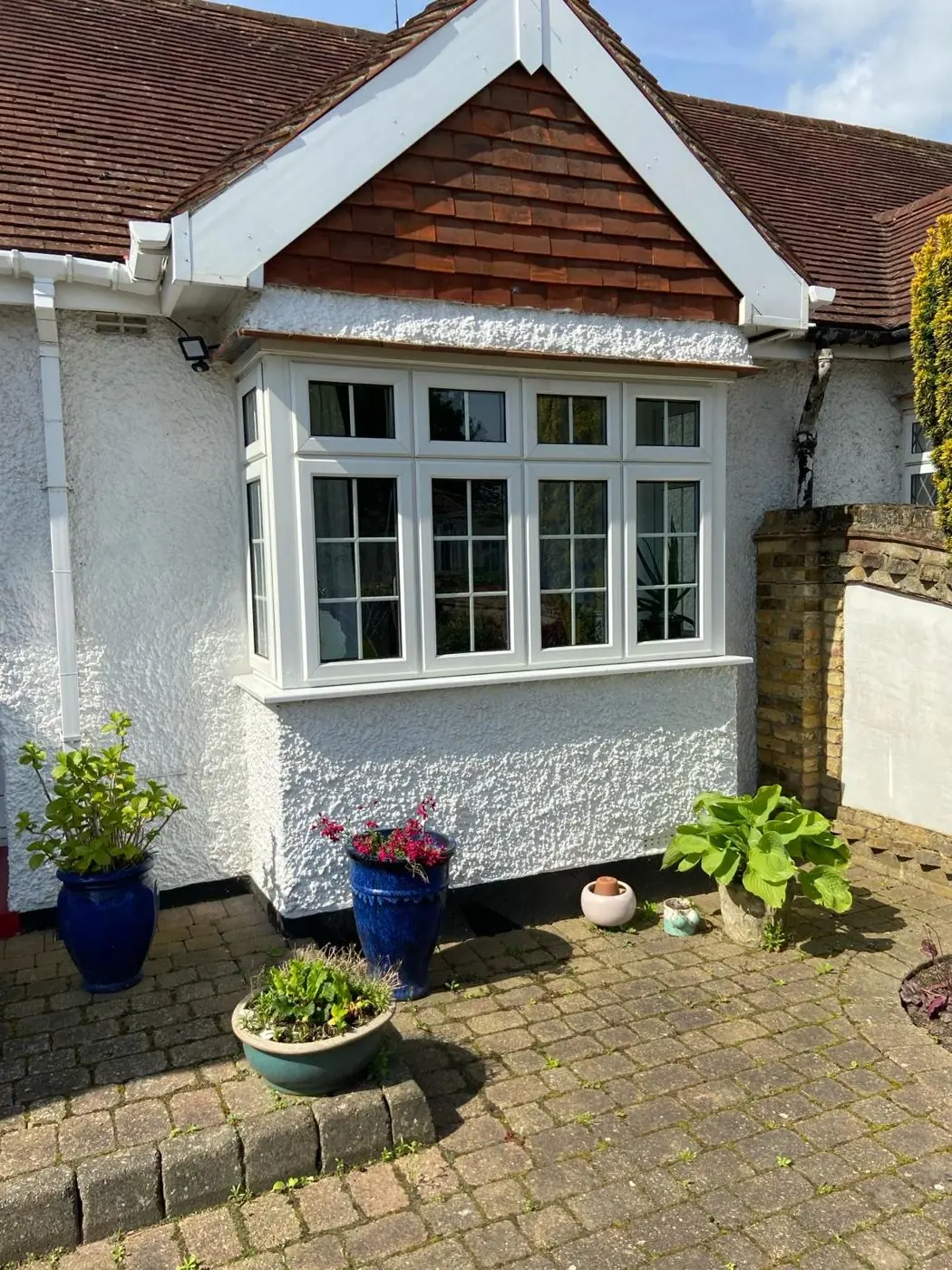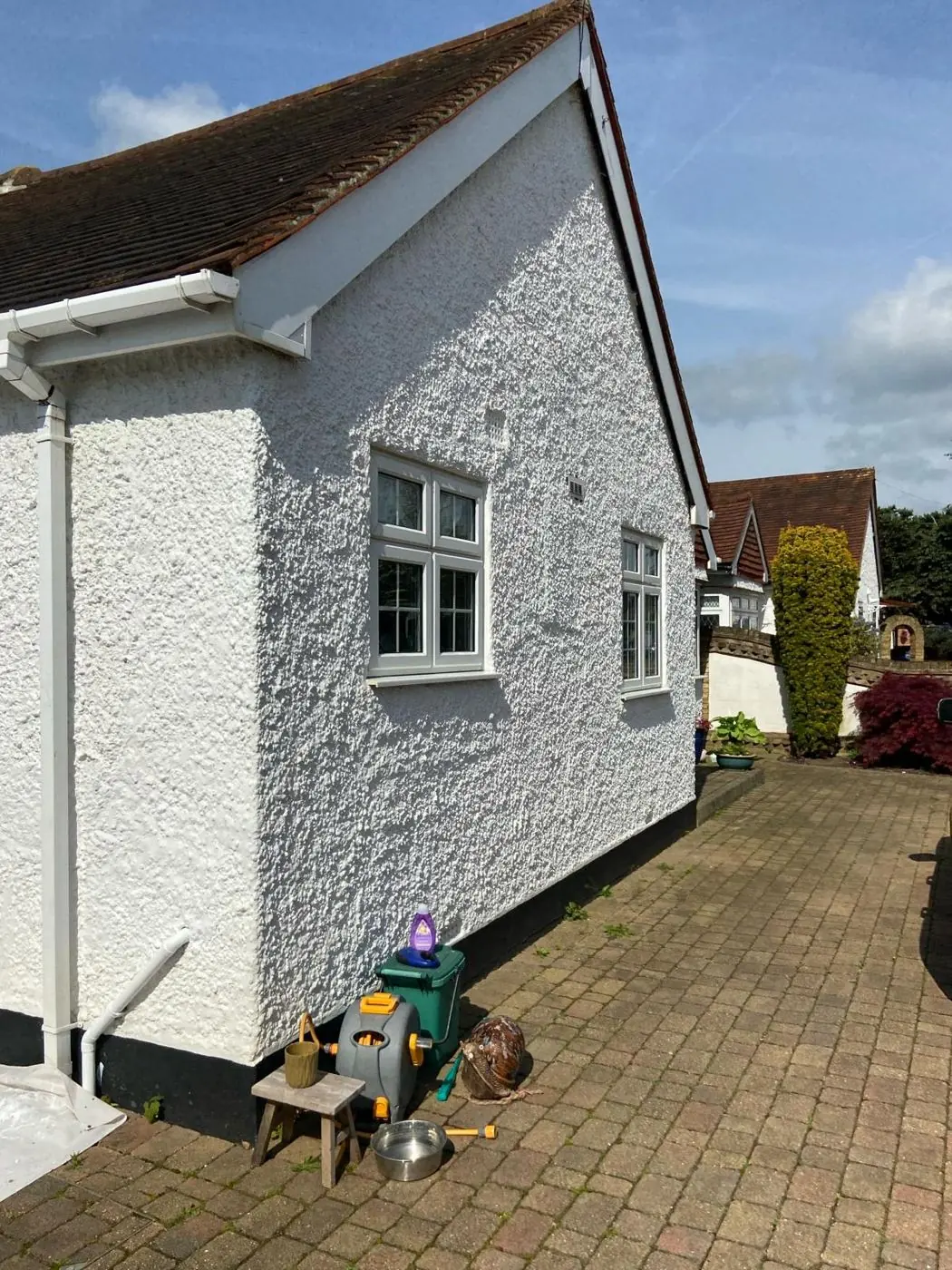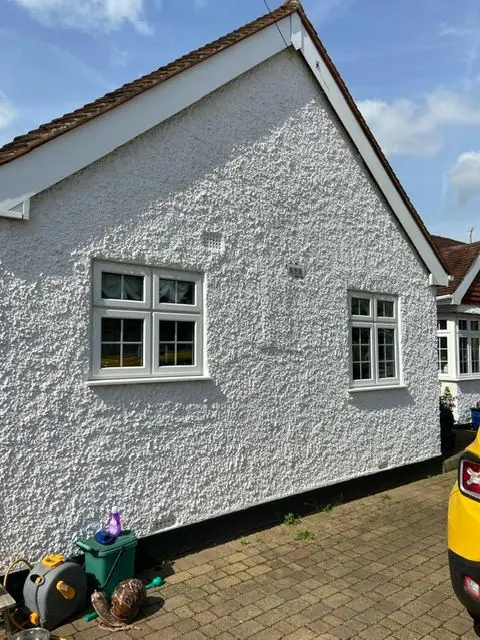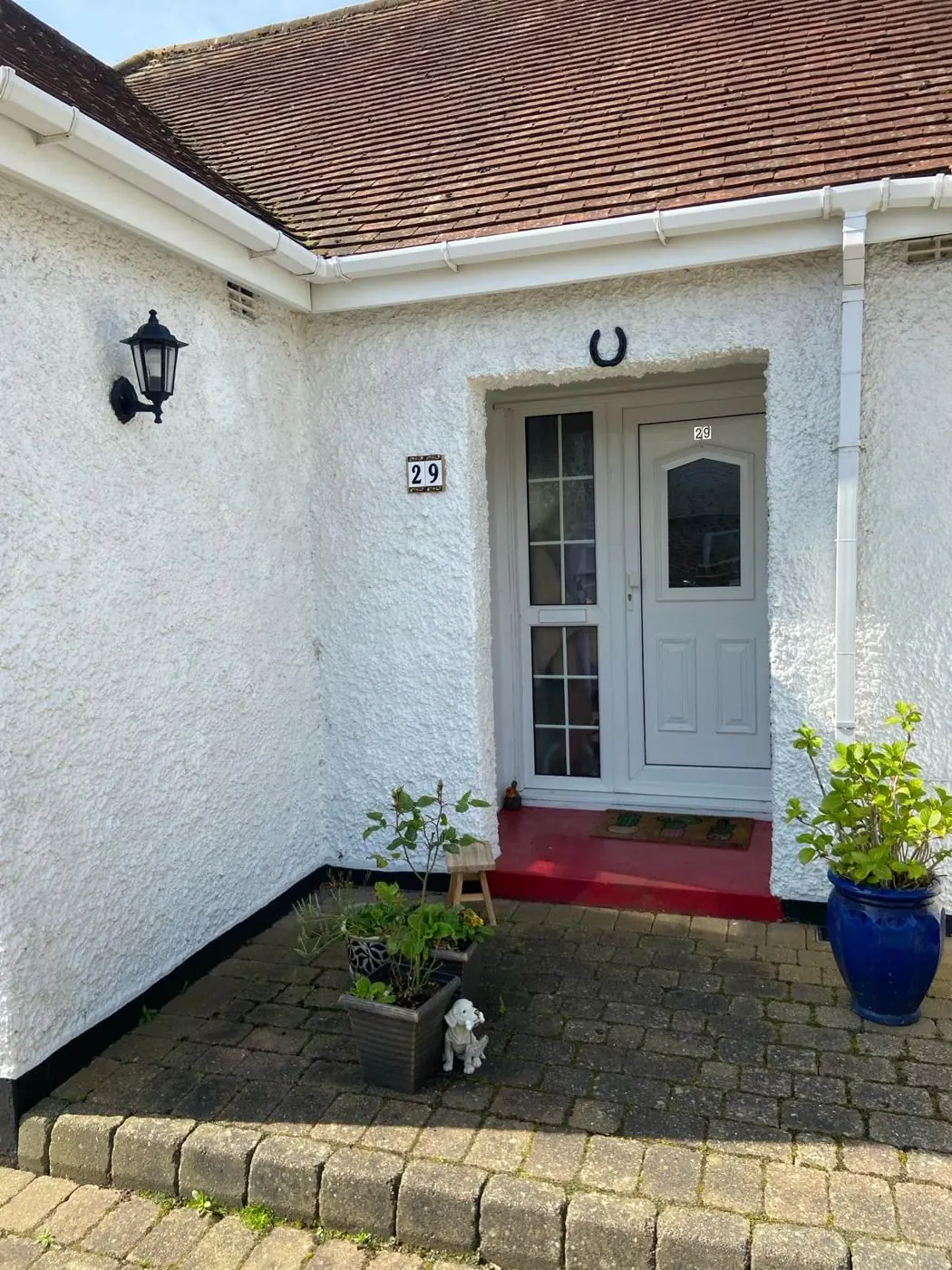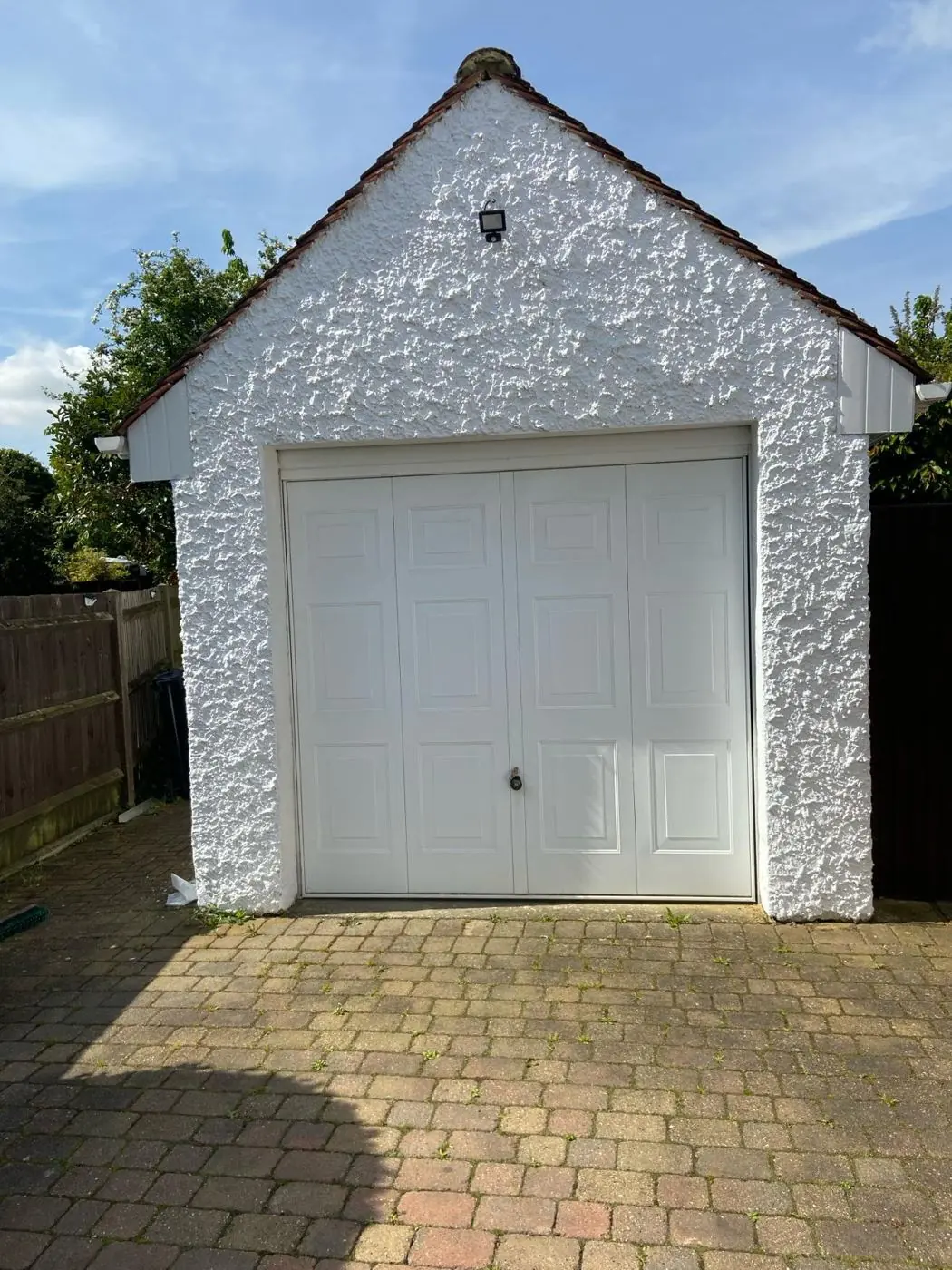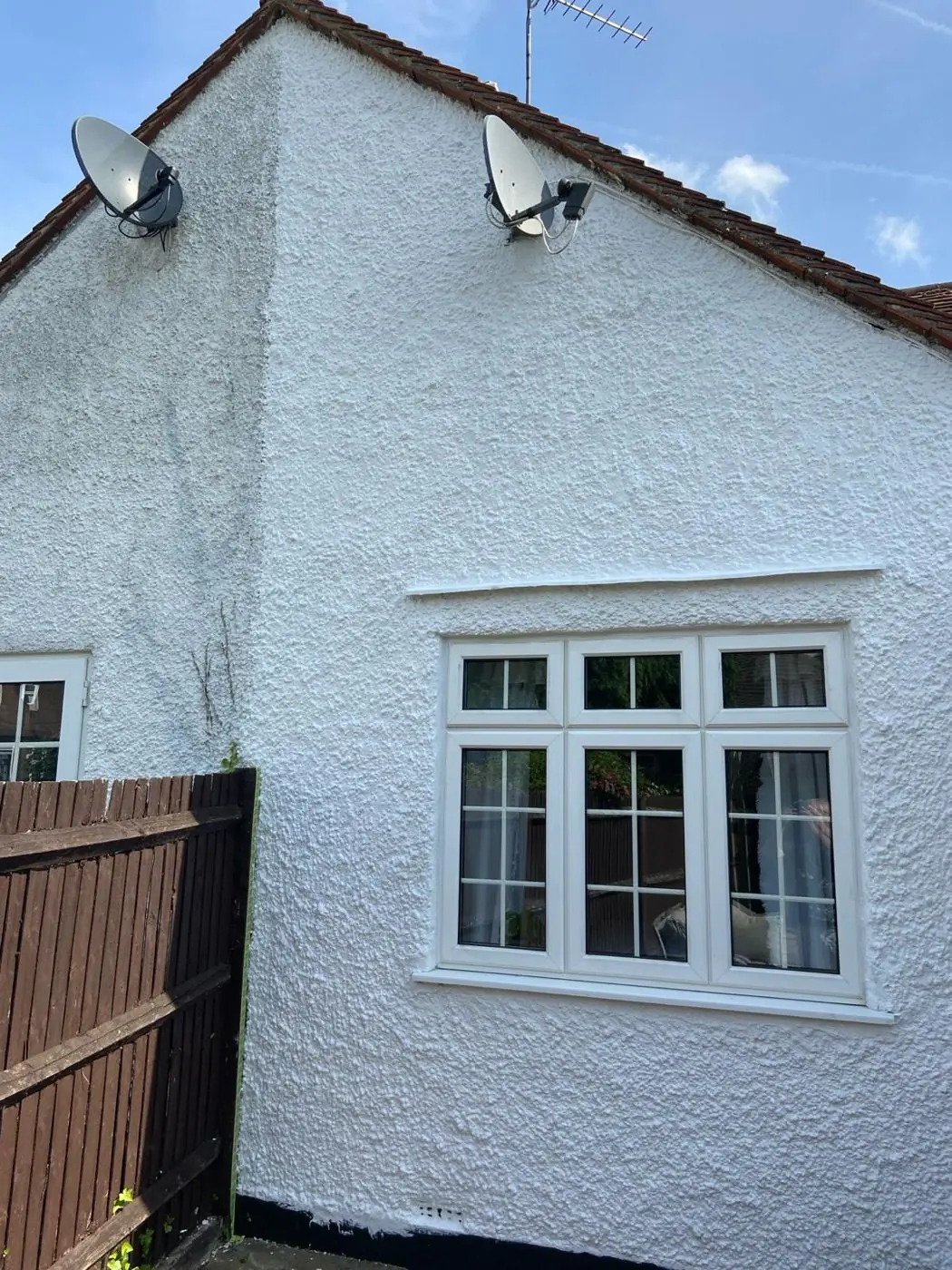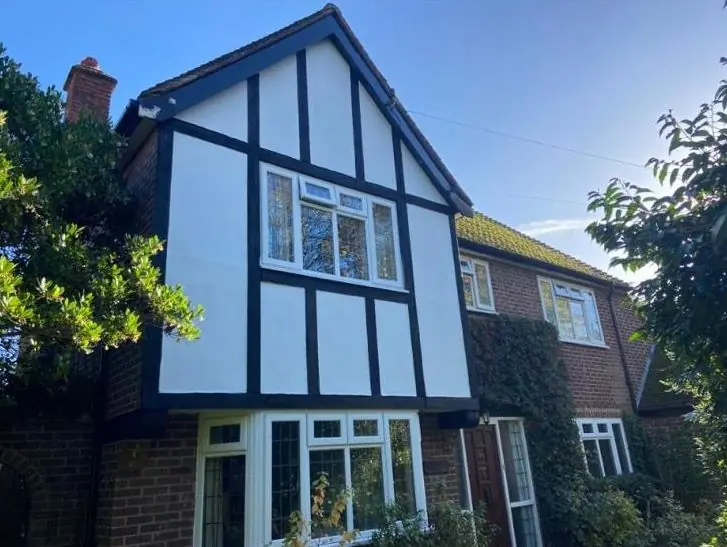
We paint stucco and rendered masonry in Kingsley, on the north-east side of town in NN2, about 1.5 miles out. The work here is mostly the bay fronts and stucco details of the Victorian villas along the Racecourse, repaired and coated with breathable paint rather than sealed.
Red brick and stucco: knowing which is which
The conservation-area houses in Kingsley mix two materials on the same front. The walls are red brick, and the bays, porches and dressings are stucco or render, sometimes stone. Before any masonry job here we walk the elevation and mark up which surfaces were designed to be painted and which were not.
| Surface | Typical place in Kingsley | What we do |
|---|---|---|
| Stucco or rendered bay front | Villas facing the Racecourse | Wash, cut out and fill cracks, breathable masonry paint |
| Stucco columns, pilasters and capitals | Entrance porches | Hand-brushed, built up in thin coats so the detail stays sharp |
| Exposed red brick | Main walls of villas and terraces | Left unpainted; cleaned only if asked |
| Datestone plaques | Terraces at the east end of the Racecourse | Masked, never coated |
| Brick that has already been painted | Some side or rear walls | Breathable coating, no plastic finish |
The town has local examples of how the brick was meant to look. Kingsley Park Middle School on St George’s Avenue, Grade II listed and built in 1915, is red brick in English bond with ashlar dressings, and Kingsley Park Methodist Church on Kettering Road is red brick in Flemish bond with limestone dressings. Painting brick like that on an Article 4 frontage would change the character of the street and cannot be undone neatly, so we advise against it.
Why old render needs to breathe
Older render on houses of the 1870s to 1890s, like these, is often lime-based. Lime lets moisture move in and out of the wall. A heavy, plastic-type masonry coating stops that, the damp gets trapped behind it, and within a few winters the paint blisters and the render behind can loosen. We use breathable masonry finishes on these fronts, and where a previous coating has started to bubble or peel we scrape it back to sound material before repairing.
Cracks are cut out to a clean edge rather than skimmed over, then filled with a compatible repair material and allowed to cure. Hollow-sounding patches are pointed out to you on the survey, since a plasterer may need to cut out and re-render them before we paint. The render and roughcast guide explains the sequence in more depth, and the general method sits on our render and masonry painting page.
Shade, sap and green staining under the trees
Street trees line the three park-side roads, and the Racecourse avenues date from plantings in the early 1900s, the 1920s and 1953. Those trees are now mature, and they drop sap and leaves and keep parts of the frontages damp and shaded. On a Kingsley survey we expect to find green algae on render bays and stone sills, especially low down and on north-facing returns. It is killed off with a biocidal wash and left to work before the dead growth is brushed away, because paint applied over live growth lifts within a season.
If branches overhang the front and need cutting back to give access, bear in mind that tree work in a conservation area needs six weeks’ notice to the council. That is the owner’s job to arrange, and we plan our dates around it.
Stucco detail is brush work
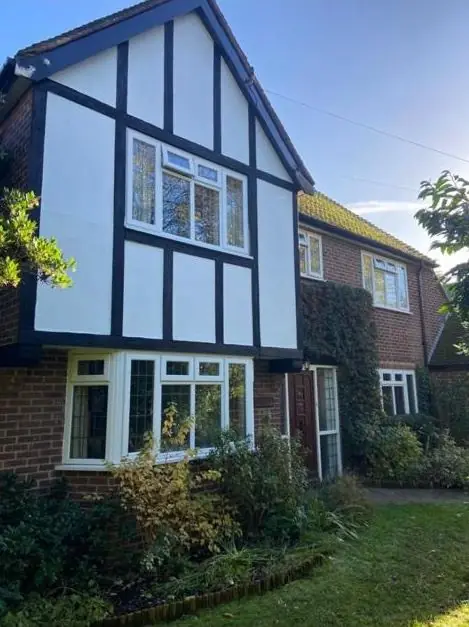
Porches with columns, capitals and corbelling are where a Kingsley masonry job takes its time. Every flute and moulding is cut in by brush, coats are kept thin so they do not clog the detail, and the joinery next to it is protected. For the other trades a Kingsley villa front tends to need, start from the Kingsley area page.
Last updated by Dean, DH Painter & Decorator.