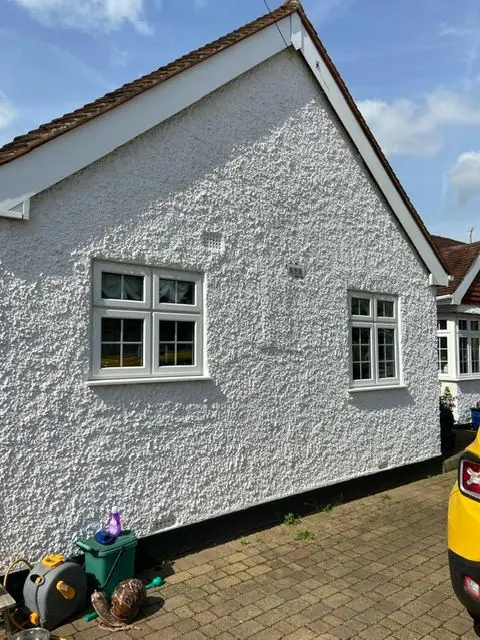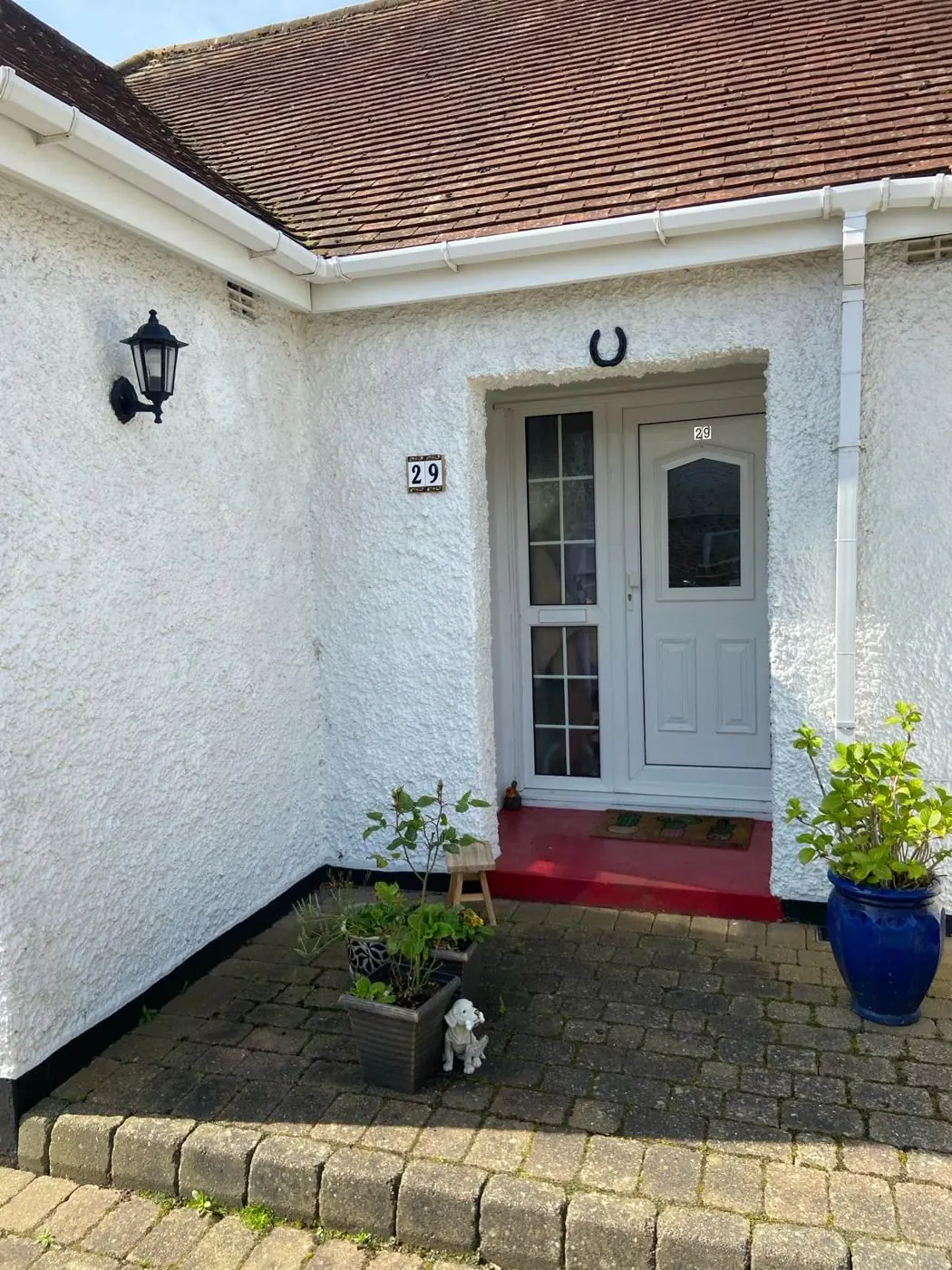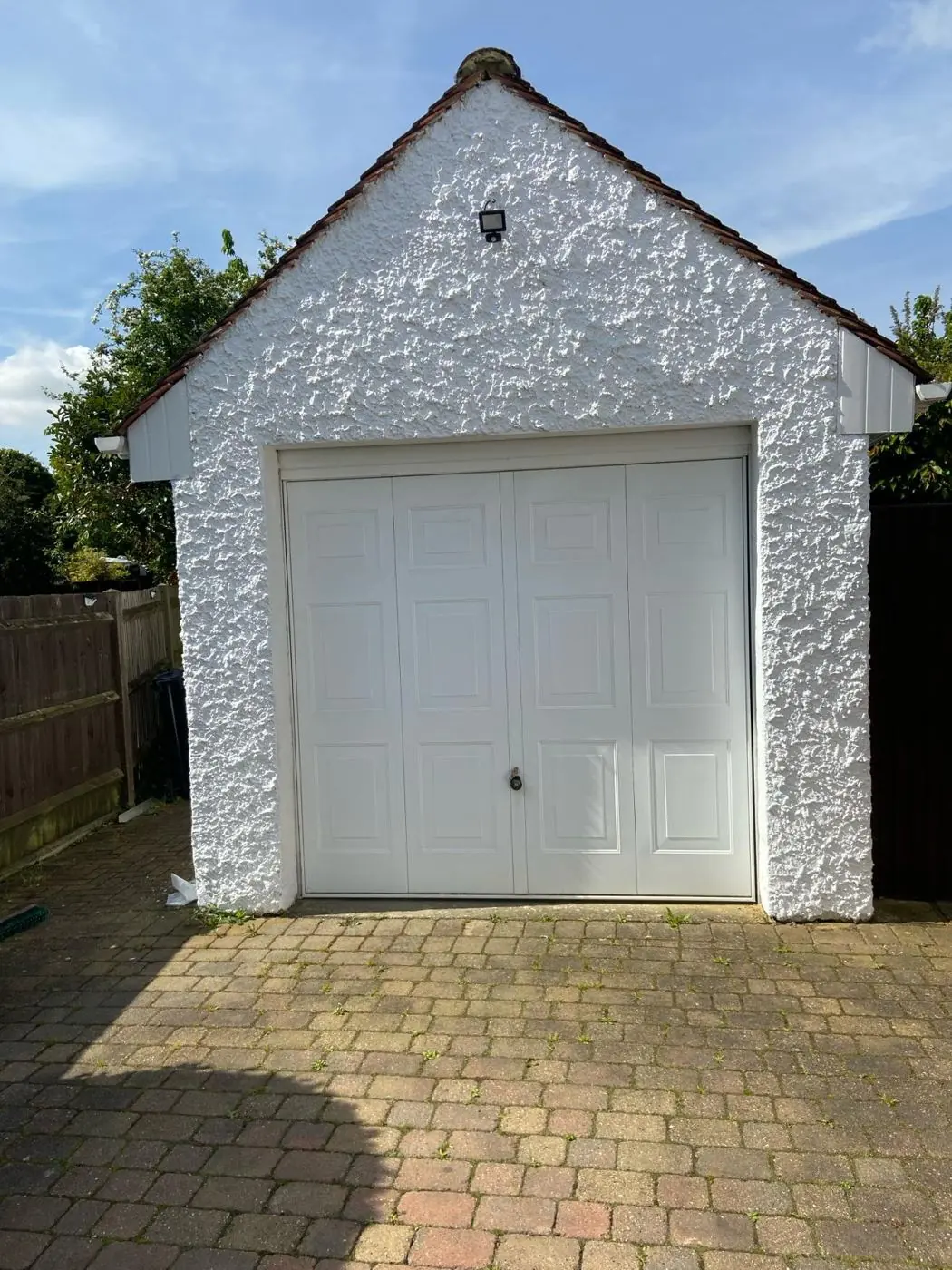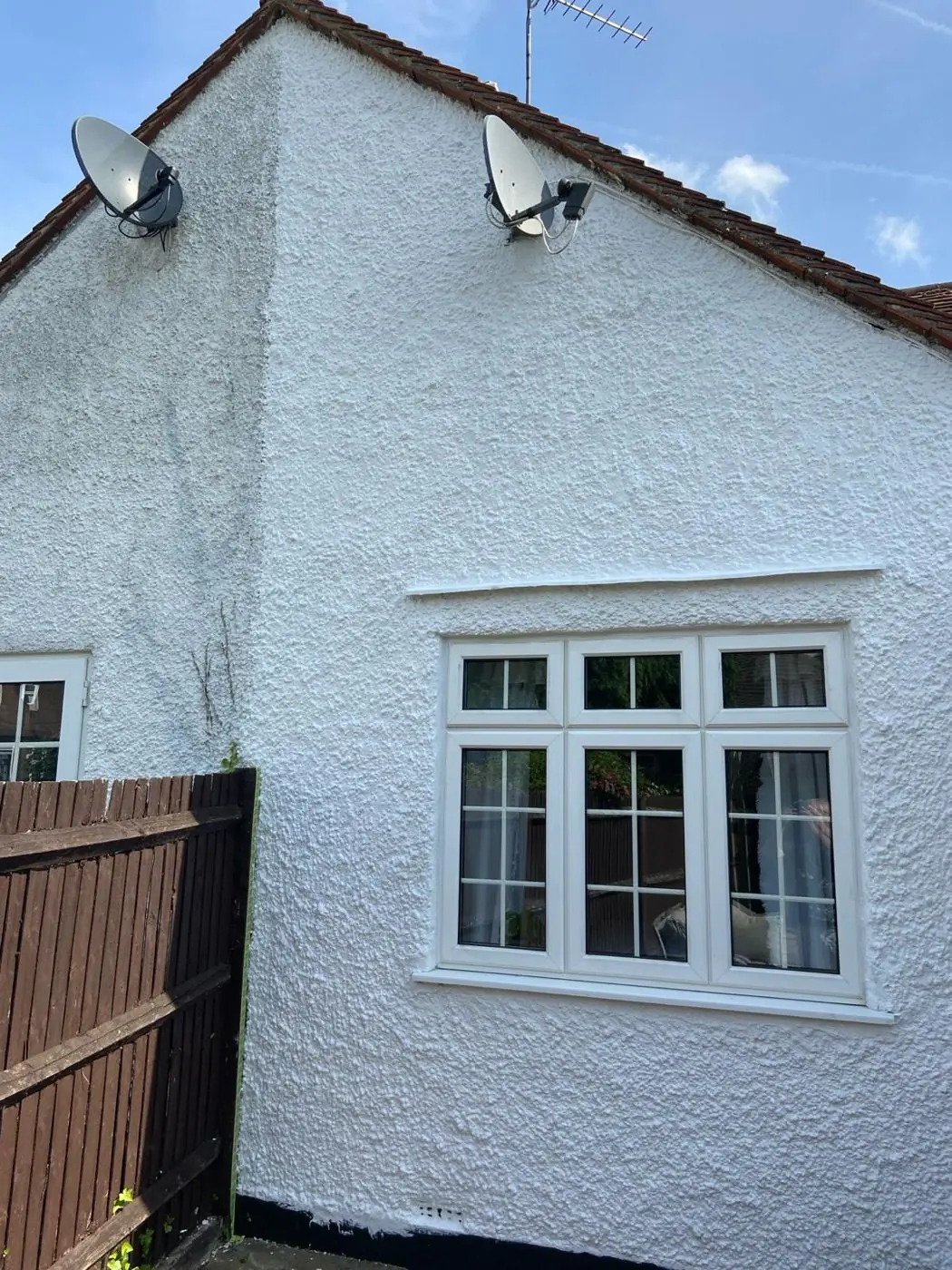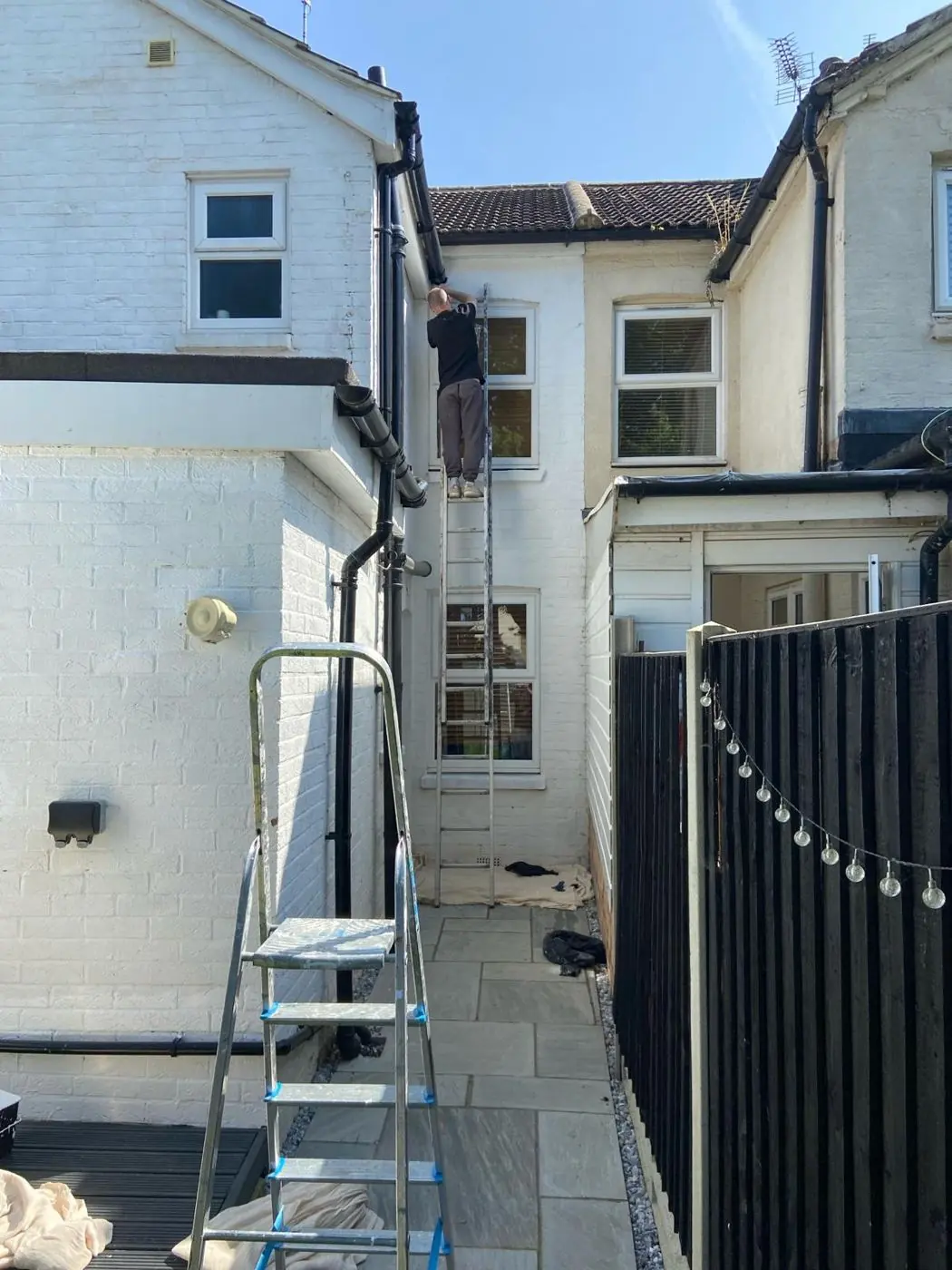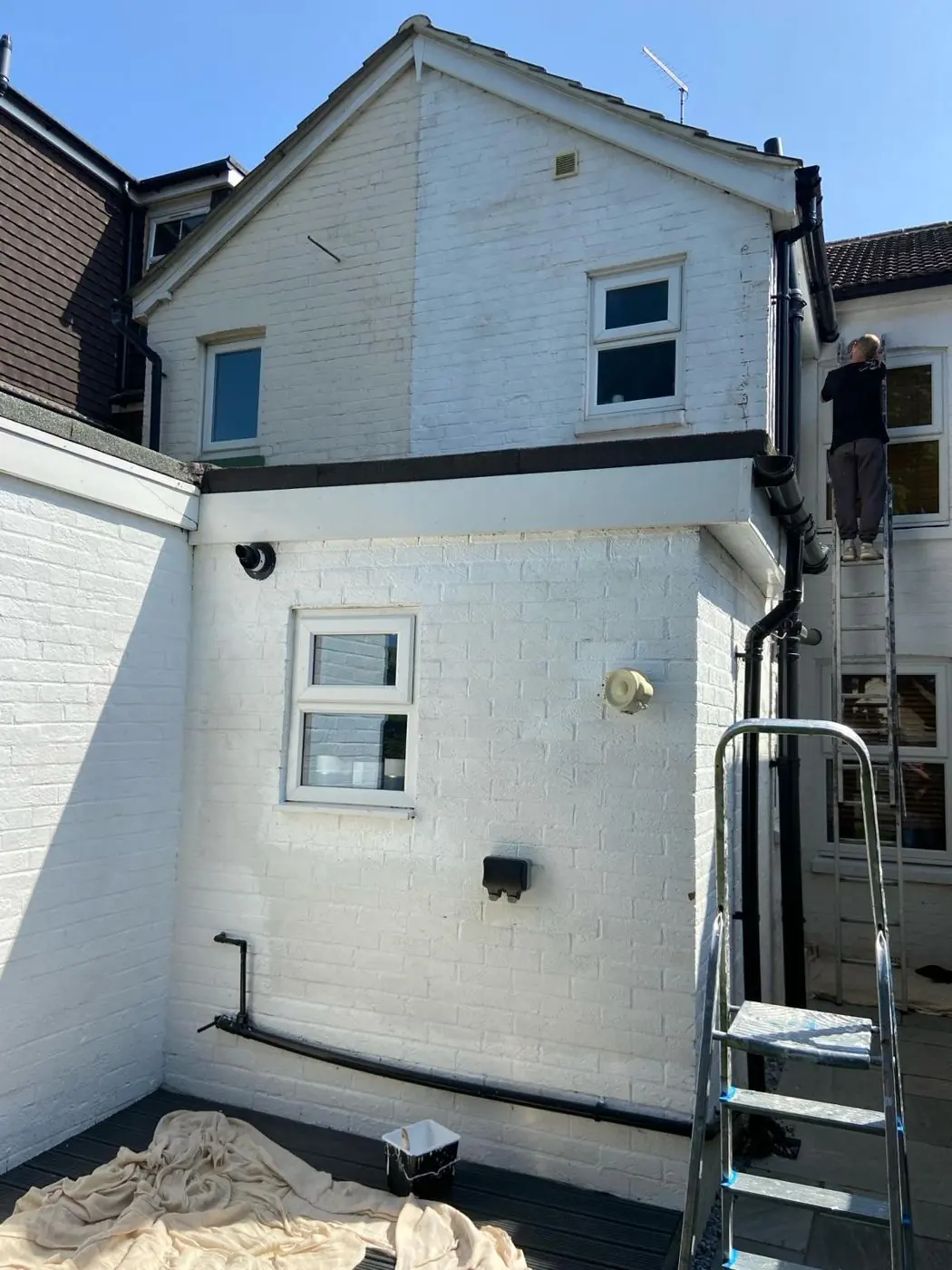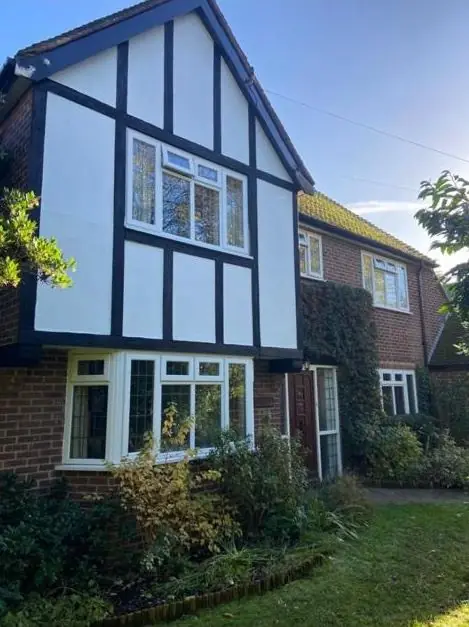
Dean paints render and masonry in Queen's Park (NN2), on the north side of town, 1.3 miles from the centre. The work here is mostly older painted stucco, rendered bays and painted stone dressings, which need breathable paints that suit lime-rich backgrounds, and in the nearby Barrack Road Conservation Area some front walls are covered by an Article 4 Direction.
Where masonry paint belongs here, and where it does not
Walk along Balmoral Road or Edinburgh Road and most of what you see is red brick. That brick was built to be left bare, and on solid-walled Victorian houses a coat of the wrong paint can hold moisture in the wall that would otherwise dry out through the face. So the first question we ask on a Queen’s Park front is whether a surface was ever meant to be painted. Unpainted facing brick should normally stay that way.
The masonry that does need painting is easy to pick out. Some of the older properties, particularly the mid-to-late 19th century terraces on the Kingsthorpe Road approach, have painted stucco or rendered fronts. Some bays are rendered rather than built in brick or timber. Then there are the painted stone sills, architraves, lintels and cornices with console brackets that frame the windows on the three-storey townhouses. Each of these takes a different approach.
Old stucco needs paint that lets it breathe
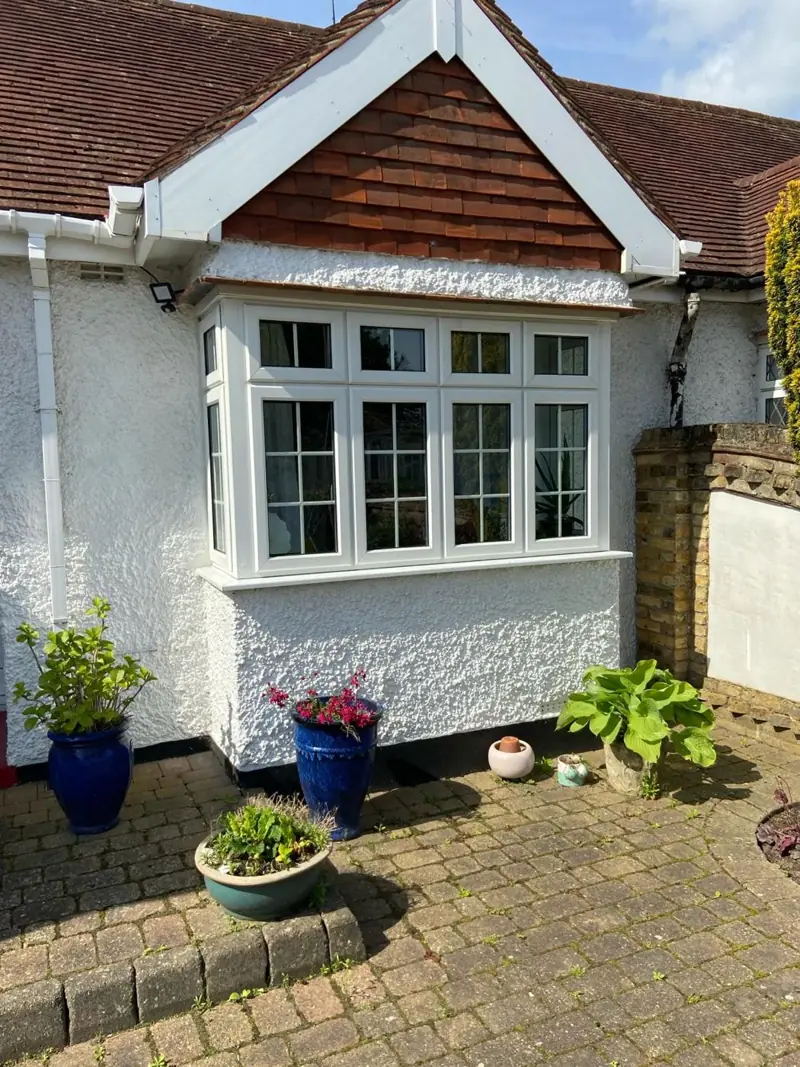
Stucco on a house of this age is often lime-based or lime-rich. Lime moves a little and passes moisture, and it relies on that moisture getting out. A dense acrylic masonry paint applied over it can trap damp behind the film. The usual result is blistering, then flaking, then render that softens and comes away underneath.
Before we price a stucco front, Dean checks three things:
- What is already on the wall. A mineral or silicate paint will not bond over an existing acrylic coating, so the current finish narrows the choice.
- Whether the render is sound. We tap the wall to find hollow or blown patches. Fine cracks are raked out and filled with a compatible filler, but larger blown areas need a renderer before any paint goes on.
- Where the water is coming from. A leaking gutter or a failed sill above a patch of damp render has to be fixed first, or the new paint will fail in the same place.
Our guide to painting render and roughcast explains how the different render types behave over time.
Stone dressings on the townhouse terraces
The painted dressings on the Kingsthorpe Road terraces are moulded, and each repaint adds another layer that softens the profile. We remove only loose and flaking paint, feather the edges and keep filler thin. Coats are applied sparingly so the edge of a console bracket or the line of a cornice still reads from the pavement. Where a sill has lost its drip and water runs back into the wall, we point that out, because paint cannot fix a stone that sheds water the wrong way.
Nearby, the Grade II* Church of the Holy Trinity on Balmoral Road, built in squared rubble and ashlar, shows the area’s unpainted stone at its plainest. Bare natural stone that has never been painted should stay bare, and any work to a listed building needs Listed Building Consent before anything starts.
The conservation area next door
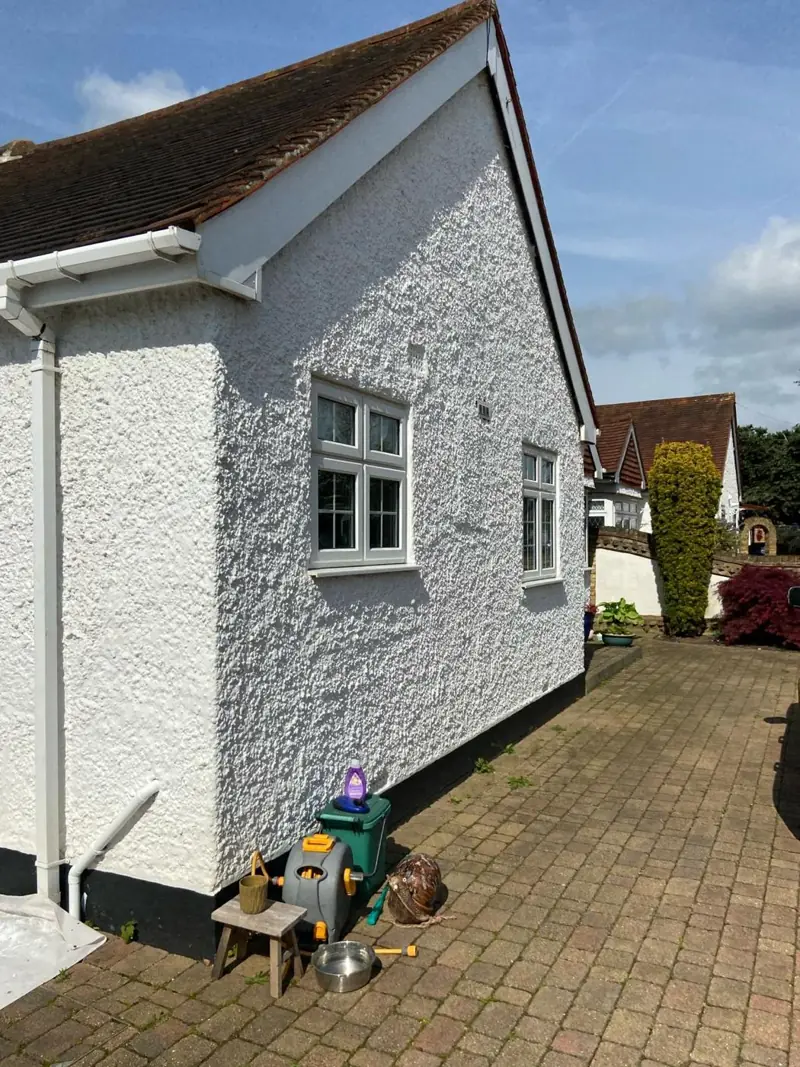
The Barrack Road Conservation Area runs south from Queen’s Park along Kingsthorpe Road. Its Article 4 Direction, in force since 2000, brings painting or cladding of exterior walls visible from the highway under planning control. If your front lies inside it, a change of colour on a rendered front or a first coat on bare brick needs checking with West Northamptonshire Council first. Like-for-like maintenance is a different question from a visible change, and we will tell you which one your job is so you can confirm it with the council.
The full method, from fungicidal wash to the final coat, is on our main render and masonry painting page. Our Queen’s Park area page covers the rest of the work we take on in the district.
Last updated by Dean, DH Painter & Decorator.