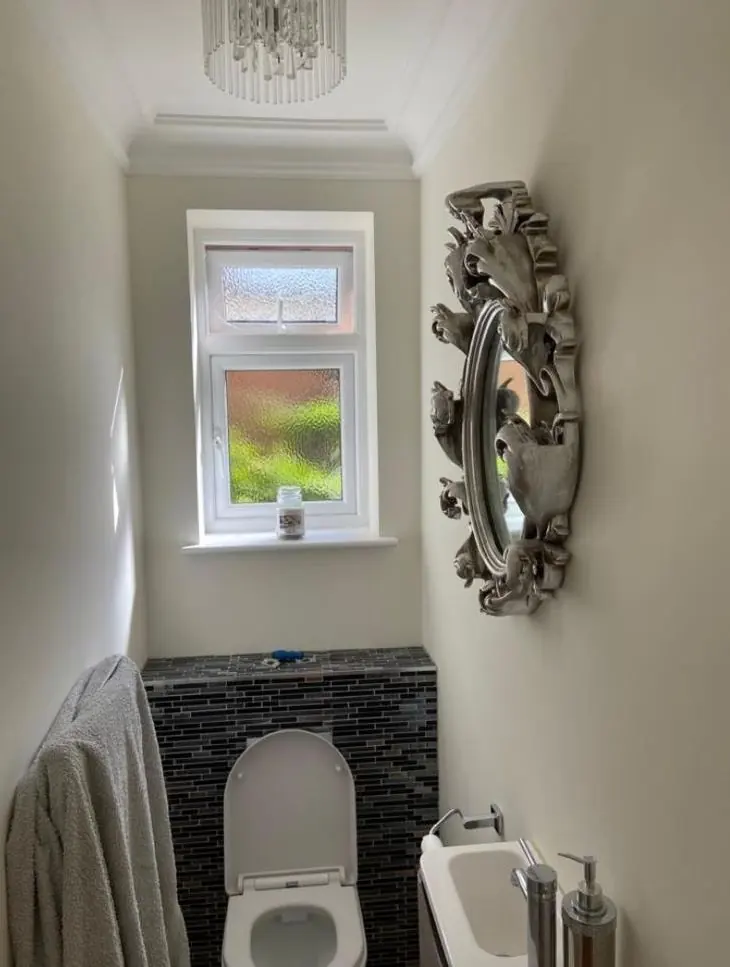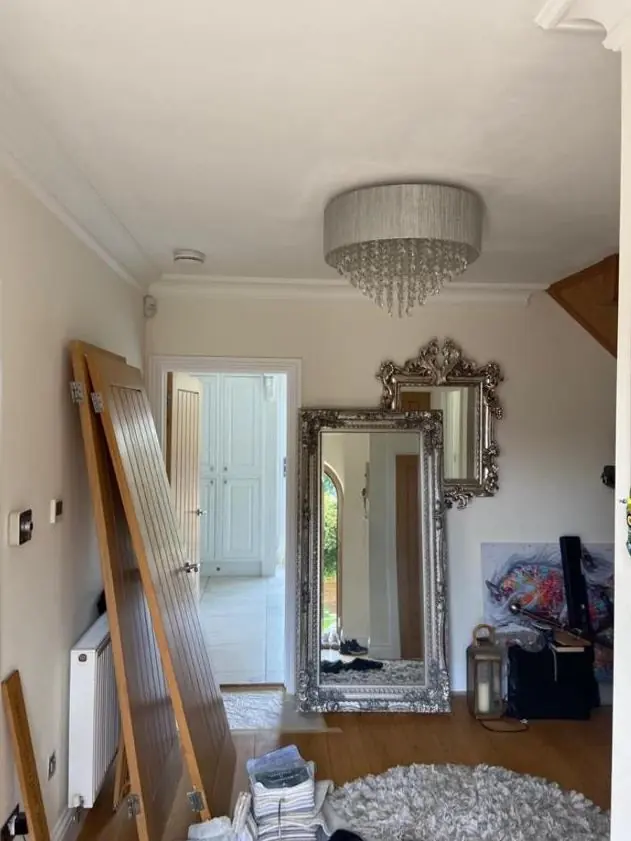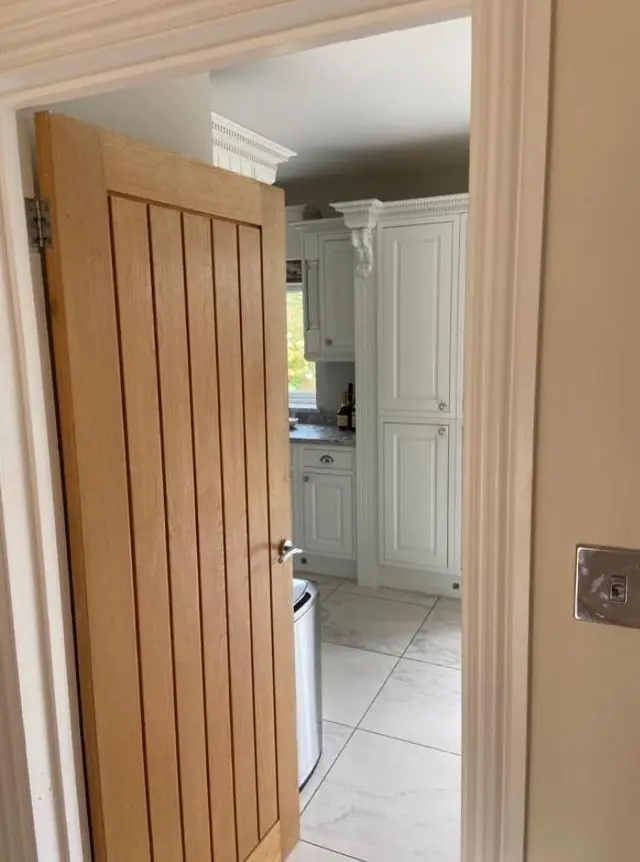
We decorate hallways, staircases and landings in Sywell, a village in the NN6 postcode roughly six miles north-east of Northampton town centre. The building that shapes most of this work is the two-storey 1860s estate cottage, with a compact stair running between thick stone walls.
A tight stair between thick walls
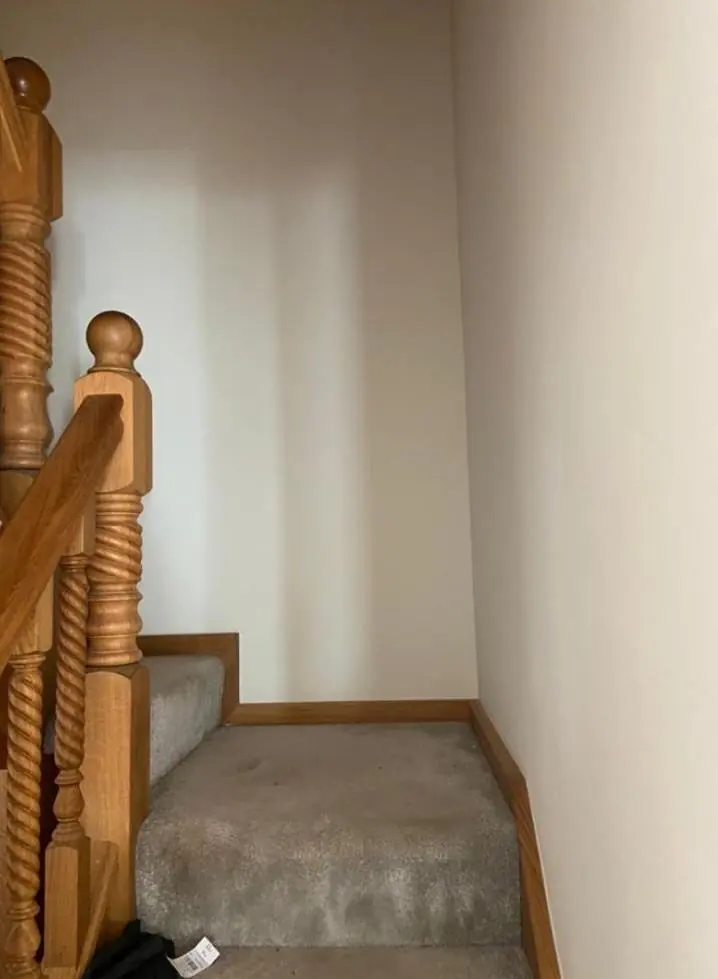
The Main Street cottages were built in 1860-64 as two-storey pairs and short terraces with solid coursed lias walls. Their stairs tend to be compact, fitted between masonry rather than rising through a big open hall. That makes the job tight rather than tall. There is less wall area than in a three-storey town house stairwell, but less room to stand, nowhere to lean a long ladder and hardly any space to put down a paint kettle.
We use stair platforms and adjustable steps that sit on the treads, with a staging board where the landing gives us something to bridge to. In a narrow cottage stair the kit has to come down more often, because the household still needs to get up to bed. We plan the order of work so the flight is clear and usable at the end of every day.
What the walls are made of matters
Solid lias walls like these normally carry lime plaster inside, and a stair wall in an old cottage often runs up against an outside wall. Two problems come up again and again in that situation.
- Old vinyl or acrylic coats over lime. Previous owners may have used a heavy wipeable paint, and on a solid wall it can trap moisture and blister, often low down by the bottom step or on the outer wall of the landing.
- Uneven surfaces. A stair wall in a cottage built in the 1860s is rarely flat, and light from a landing window shows every ripple through a sheen finish.
Where the plaster is lime, we choose a breathable emulsion in a matt or soft finish that hides the wall’s movement, and patch with compatible materials rather than gypsum wherever possible. Hard-wearing does not have to mean plastic. Some breathable paints have decent scrub resistance for the hand-height band where a hallway takes knocks from bags, bikes and shoulders.
Handrail, spindles and strings
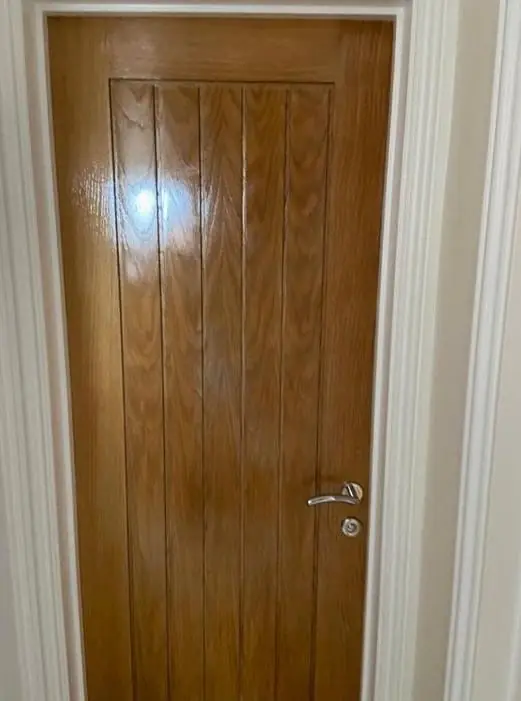
On a compact stair the woodwork is a large share of the job: strings, handrail, newel and spindles, plus skirtings that step up the flight. We clean and key the handrail properly, because hands leave grease on it every day and paint will not grip a greasy rail. Treads and risers are painted only if you want a painted stair, using a floor-grade product on alternate treads so the stair stays in use. Our standard approach to access, sequencing and finishes is set out on the hallway, stairs and landing decorating page.
Grade II and Grade II* interiors
Sywell Hall is listed Grade II* and has a large dogleg staircase around central columns as well as 17th-century panelling. That is protected historic fabric. Any decoration there would need specialist assessment and consent before work began, and it is not something to approach as a routine stair repaint. The Main Street cottages are Grade II, and listing covers interiors as well as outsides. Repainting like for like is normally fine, but stripping old joinery or removing period features from a hall may need consent from North Northamptonshire Council.
Newer homes in the parish are more straightforward. Park homes at Overstone Lakes are generally single-storey with no staircase, so a hallway there is usually painted alongside the other rooms using primers suited to board walls. You can read more about Sywell’s buildings on our Sywell page.
Last updated by Dean, DH Painter & Decorator.