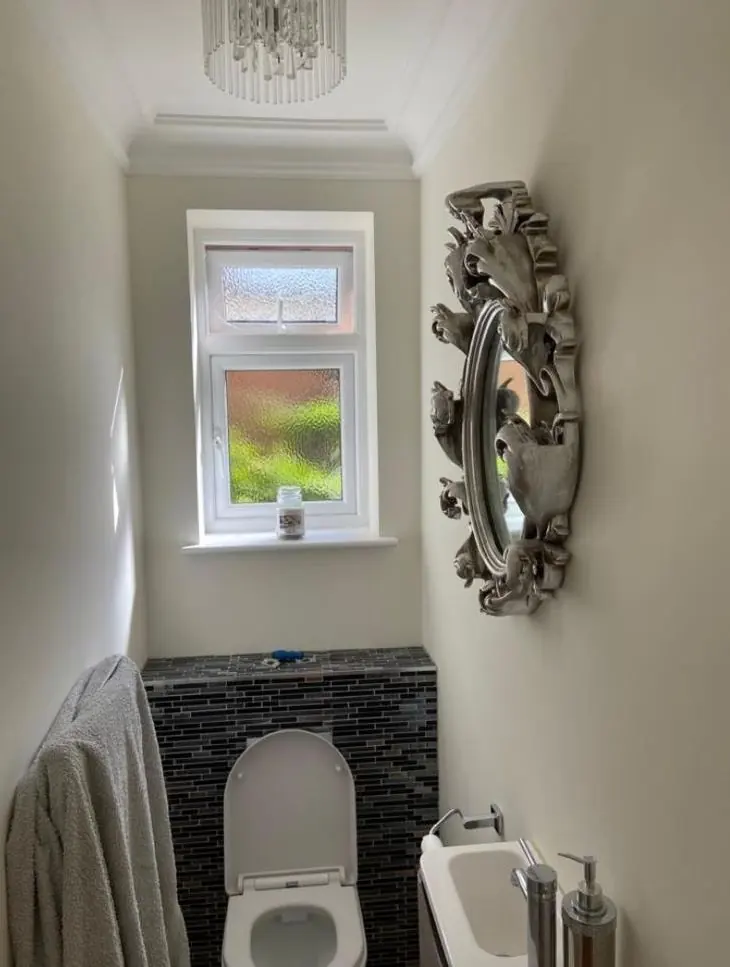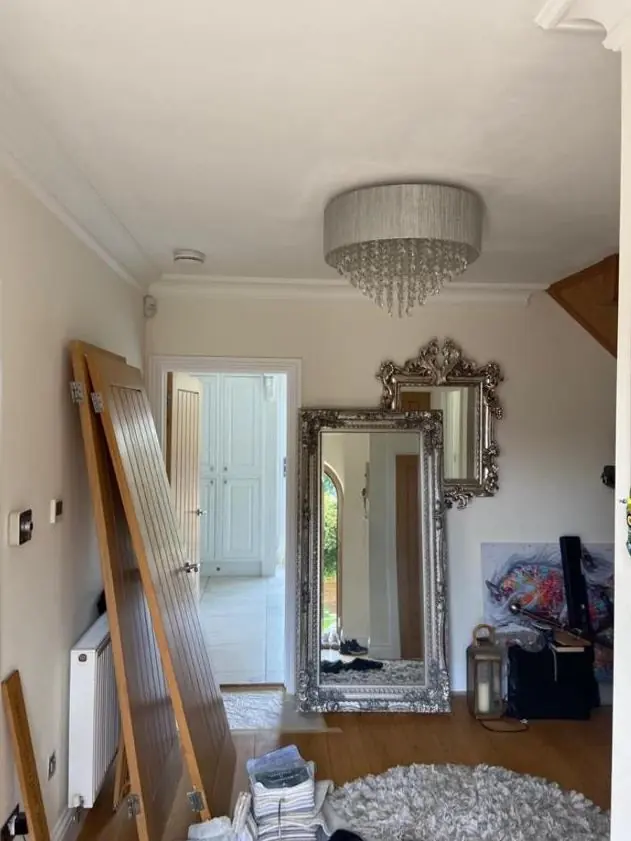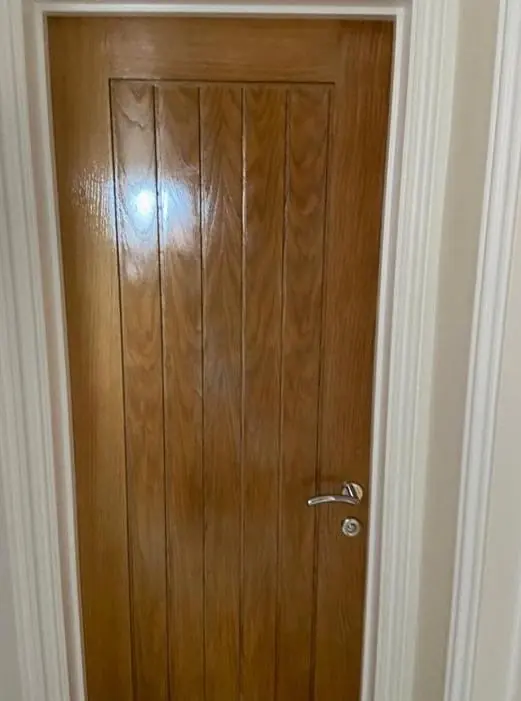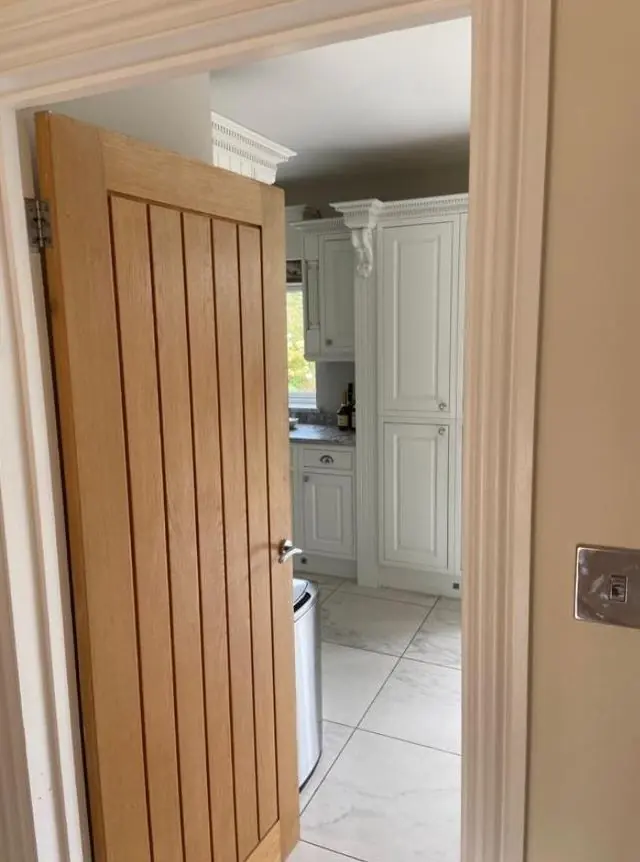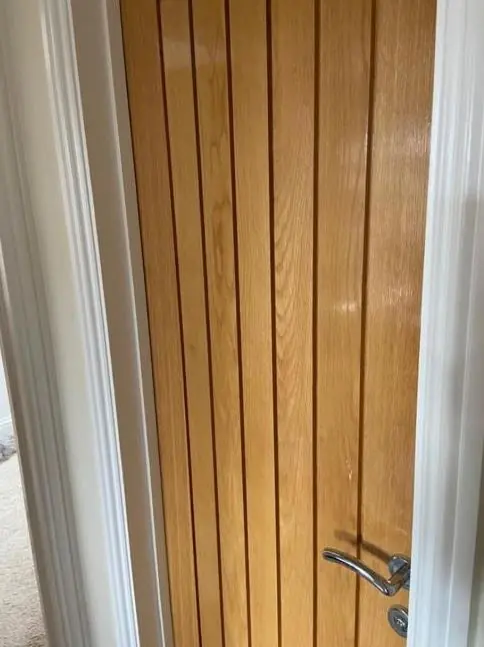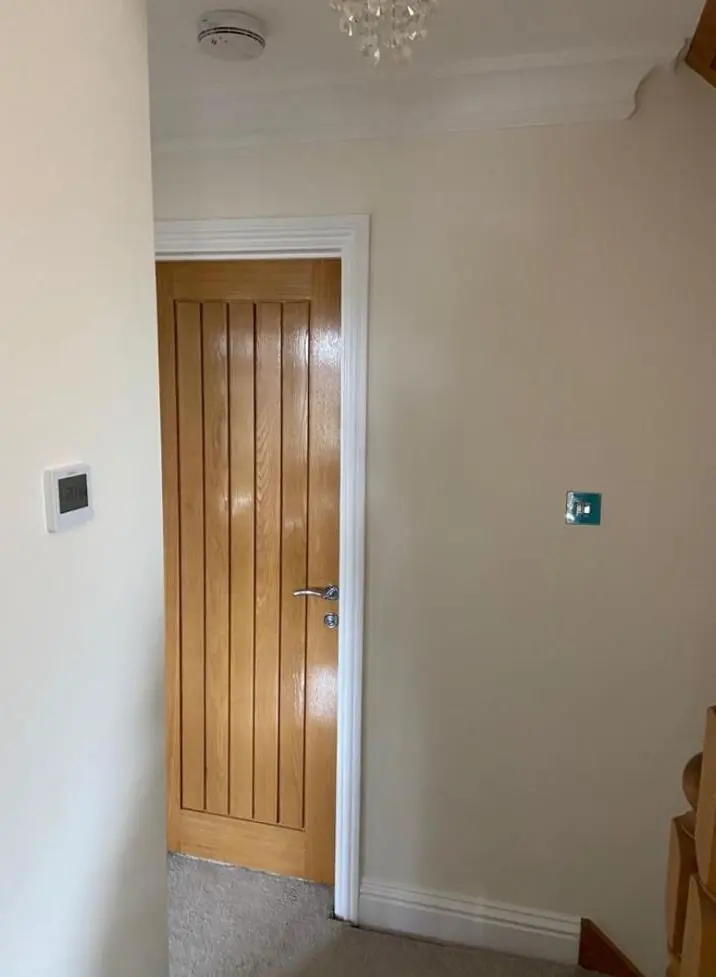
DH Painter & Decorator paints internal and external doors, skirtings, architraves and other joinery in Sywell, about 5.9 miles north-east of our Northampton base. Much of the woodwork on Main Street belongs to Grade II listed estate cottages of 1860-64, so we choose the preparation and finish to suit each building.
Woodwork on the Overstone estate cottages
Sywell’s older houses mostly date from a single campaign of 1860-64, the rebuild carried out for Lady Overstone. The cottages on Main Street and at 32 and 32A Church Lane stand as pairs or as terraces of four to five houses, built of coursed lias with brick dressings. Their listing descriptions pick out the joinery that gives them their character: gabled porches with arched openings, two-light wood-mullioned windows, double sashes and, on the old school, a plank door. Those are the surfaces we paint. The lias itself stays bare.
One detail matters more than people expect. The listings record 20th-century doors on many of these cottages, hung in openings that are far older. A replacement leaf can be a different timber, sometimes with a factory primer or an old varnish on it, and it usually sits in a frame carrying a century more paint than the door. We treat door and frame as two separate surfaces, keying or stripping each as it needs, then bring both to one finish so the porch reads as a whole.
Preparing old joinery before any paint goes on
- Old paint on cottage frames and porch boards can contain lead. We test before sanding and switch to wet abrading where it shows up, rather than dry power sanding.
- Arched porch heads and the top faces of mullions hold water. We dig out soft timber, fill with a flexible exterior filler and prime bare wood the same day.
- Plank doors move with the seasons, so the joints between boards are left free. Caulking them shut only cracks and lets water in behind the paint.
- Some timber windows carry cast-iron lozenge glazing bars. Those get rust treatment and a metal primer of their own before the woodwork coats go on around them.
The general method we follow on doors, frames and skirtings across the county is on our door, skirting and woodwork painting page.
Inside: skirtings against solid stone walls
Solid lias walls are usually finished inside with lime plaster, and that affects the skirting as much as the wall above it. Old plaster tends to be soft along the top edge of the board, so a hard bead of decorator’s caulk there can pull away or crack as the wall breathes. We fill gaps in short runs, use a flexible filler where movement is likely, and keep the emulsion on the wall breathable so moisture is not driven down behind the board. Cottage skirtings are rarely dead straight either, and a careful hand-cut line looks better than masking tape stuck along a wavy wall.
Skirtings and internal doors in these cottages have usually been glossed in oil many times over, and old oil gloss turns yellow. Where you want a white that stays white, we key the old gloss, prime it to bond and change over to a water-based satin or eggshell. If you would rather keep an oil finish because it suits an 1860s interior, we can do that too.
Listed rows, door colours and consent
The 6.8-hectare conservation area, in place since 1977, holds 15 listed buildings. Repainting doors and joinery like for like is normally fine. A new front door colour on a listed cottage, or swapping a traditional finish for something very different, may need listed building consent, so check with North Northamptonshire Council before committing to a new scheme. The rows were built to match, and a door colour that sits comfortably with its neighbours will look right for longer than one that fights them.
Doors in the parish’s newer houses and in the Overstone Lakes park homes are a different job. Their doors and trims are usually factory finished, and we pick primers that bond to those surfaces rather than products meant for old softwood. For the rest of the village’s housing, from Sywell Hall to the aerodrome, see our guide to Sywell.
Last updated by Dean, DH Painter & Decorator.