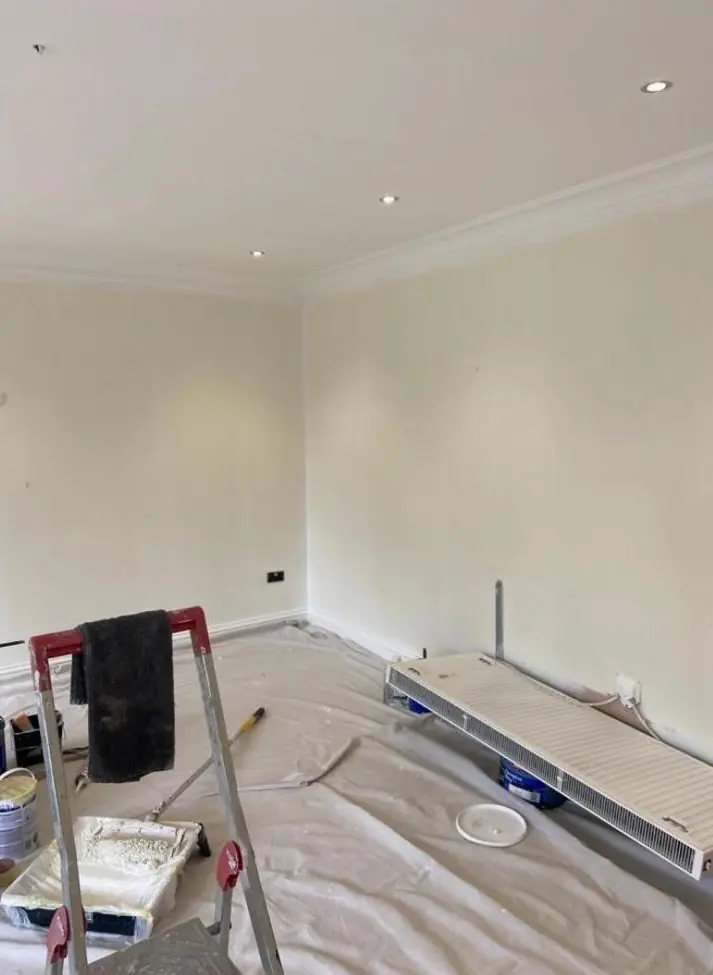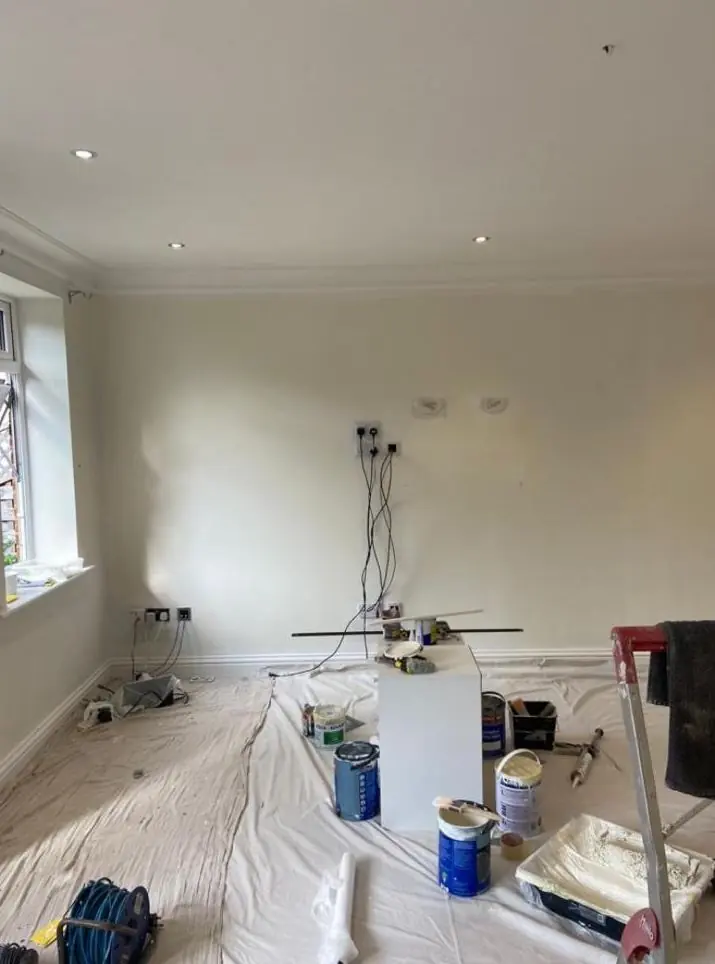
DH Painter & Decorator hangs wallpaper in Sywell, the NN6 village roughly 6 miles out of Northampton to the north-east. Dean lines the uneven solid walls of the 1860s Main Street cottages before papering, sets patterns out from the room's focal point, and primes factory boards in the park homes on Ecton Lane.
Papering against coursed lias
Wallpaper hanging in Sywell is shaped by one fact: the village core dates from Lady Overstone’s 1860-64 rebuild, and the Main Street and Church Lane cottages from that rebuild have solid walls of coursed lias. Stone walls of that age are seldom flat or plumb, and the plaster on them tends to follow every undulation. Paper shows each hollow, and a patterned design drifts off line when it follows a wall that leans. In these houses the preparation decides most of the result.
Lining paper does the levelling
On an uneven cottage wall we normally hang lining paper first, cross-lined horizontally so its joins never sit under the joins of the finish paper. It evens out minor ripples, gives the decorative paper a consistent surface to bond to, and lowers the chance of a heavy paper pulling away where old plaster is weak. Where the wall is probably lime, we check it is dry and sound, and look for damp low down on outside walls. Papering over a damp patch on solid stone only hides a problem that comes back as staining and lifting edges. If a wall is damp, Dean will tell you and suggest it is sorted before any paper goes up.
Old layers come off first. Older houses often have paper that has been painted over, or several papers stacked on top of each other. We steam with care, because lime plaster softens and gouges more easily than modern gypsum.
Where to start the pattern when nothing is square
Because no cottage room is truly square, we do not start in a corner and work round. Dean finds the focal point first, usually the chimney breast or the wall you face on walking in, and centres the pattern there on a plumb line. Any mismatch is pushed to the least visible corner, often behind the door. Half dormers upstairs add sloping sections where the pattern meets the ceiling at an angle, and the deep window reveals cut through solid stone need paper wrapped and cut so the motif carries on cleanly. A large-repeat design wastes more rolls in rooms like these, so we work out the roll count against the actual repeat before you order.
Larger rooms and traditional papers
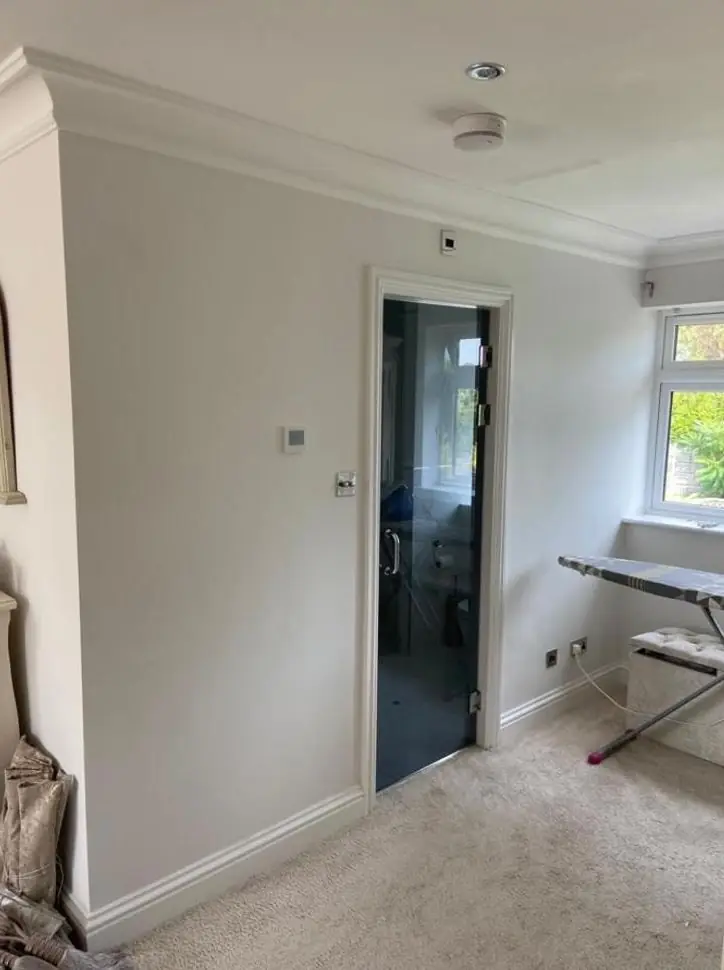
The bigger rooms in the village’s older houses can carry a traditional paper well. A stripe, damask or pulp design suits a house of the 1860s. Pulp papers stretch when pasted and tear easily, so they need consistent soaking times and gentle handling. On a staircase between solid walls, as in many two-storey cottages, the long drops are measured individually because the stair wall rarely runs true from top to bottom. Grade II* Sywell Hall sits in a different category, where any wallcovering has to respect a listed interior and consent questions come before choosing a design.
Park homes and newer houses
At Overstone Lakes on Ecton Lane, park home walls are factory boards rather than plaster, often with a decorative facing. Paper will not hold reliably on a vinyl-type face without the right primer, and the joint strips between boards may need removing or filling flush first. Newer houses in the parish take paper well on prepared plasterboard or skim. The full process, and the types of paper we hang, is on our wallpaper hanging service page, and more about the village is on the Sywell area page.
Last updated by Dean, DH Painter & Decorator.