DH Painter & Decorator gives colour and finish advice in Sywell, about 6 miles north-east of Northampton, as part of a decorating job. For the matching Grade II cottages on Main Street, Dean focuses on restrained joinery colours that suit the estate row; newer homes and Overstone Lakes park homes have more freedom.
A street designed to be seen as a set
Sywell’s Main Street reads less as a run of separate houses than as one estate scheme. The cottages were built together in 1860-64 for Lady Overstone, in pairs and rows of four or five, sharing the same coursed lias, brick dressings, slate roofs and gabled porches. Of the 15 listed buildings in the 6.8-hectare conservation area, 13 are Grade II and 2 are Grade II*. That makes exterior colour on these houses less about personal taste and more about fitting into a group. One bright front door in a matching row looks like a break in the pattern rather than a feature.
Where colour actually goes on a lias cottage
The stone on these cottages should stay unpainted, so the questions are about joinery: the two-light wood-mullioned windows, double sashes, gabled porches, doors and the timbers under the oversailing eaves. The stone and the brick dressings already set the palette. Muted off-whites, stone shades, soft greys and quiet greens tend to sit comfortably against them, while brilliant white can look stark next to weathered stone. Where a row already shares a colour, matching it is usually the sensible choice.
The Old School House and Village Hall is a useful reference point on the same street. Its wooden loggia of octagonal columns and its plank door are painted, while the rusticated lias and the moulded stone surround are left alone, which shows how the estate buildings were meant to look: painted timber framed by bare stone.
Because these are listed buildings, an external colour change is not automatic. Repainting in the same colour and type of finish is the safe default; a new colour or a switch of paint system may need listed building consent from North Northamptonshire Council. We would rather you checked with the council before choosing than had to repaint afterwards.
Iron and timber in the same window
Many of the cottage windows, and those at the Old School House, have cast-iron lozenge glazing bars set within timber frames. They usually look right in the frame colour, but iron and wood need different primers, and a metal paint and a timber paint can differ slightly in sheen. Dean will say how close a match is realistic and whether satin or eggshell suits the age of the house better than high gloss.
Inside: thick walls and modest windows
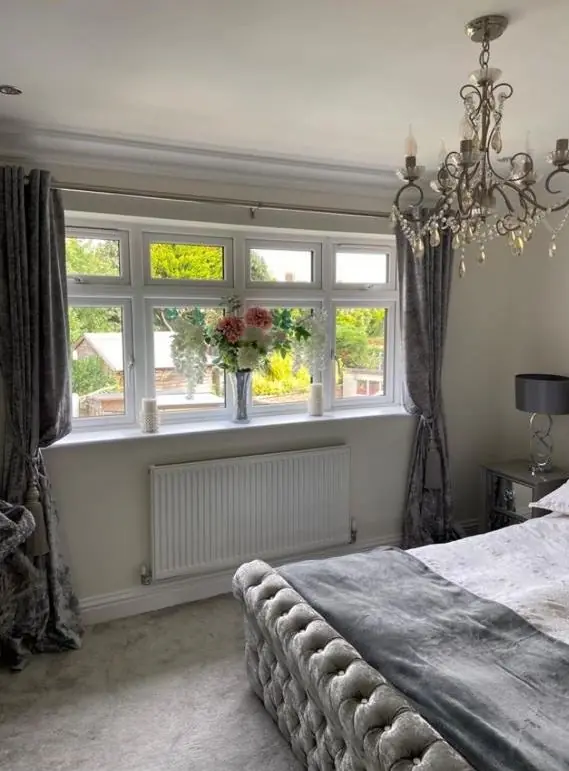
Indoors, thick stone walls and two-light windows mean rooms in the older cottages can be dimmer than their size suggests. Very cool greys can turn flat and lifeless there, while shades with a warm undertone hold up better. Breathable paints, which suit lime plaster, also come in a narrower range of colours and sheens than standard emulsions, so the choice is made from what will actually work on that wall. The general approach to light direction and undertones is on our colour and finish advice page.
Freer choices outside the conservation core
The newer houses in the parish and the park homes at Overstone Lakes on Ecton Lane sit outside the listed group, so personal taste has more room. Park homes have factory-finished cladding and boards, and the coating that suits those surfaces also shapes the colour and sheen range; Dean can explain what is available. A house facing open farmland also looks different in full daylight than a sample card does in a shop, so we test on the real surface before committing. More on the village is on the Sywell area page.
Last updated by Dean, DH Painter & Decorator.