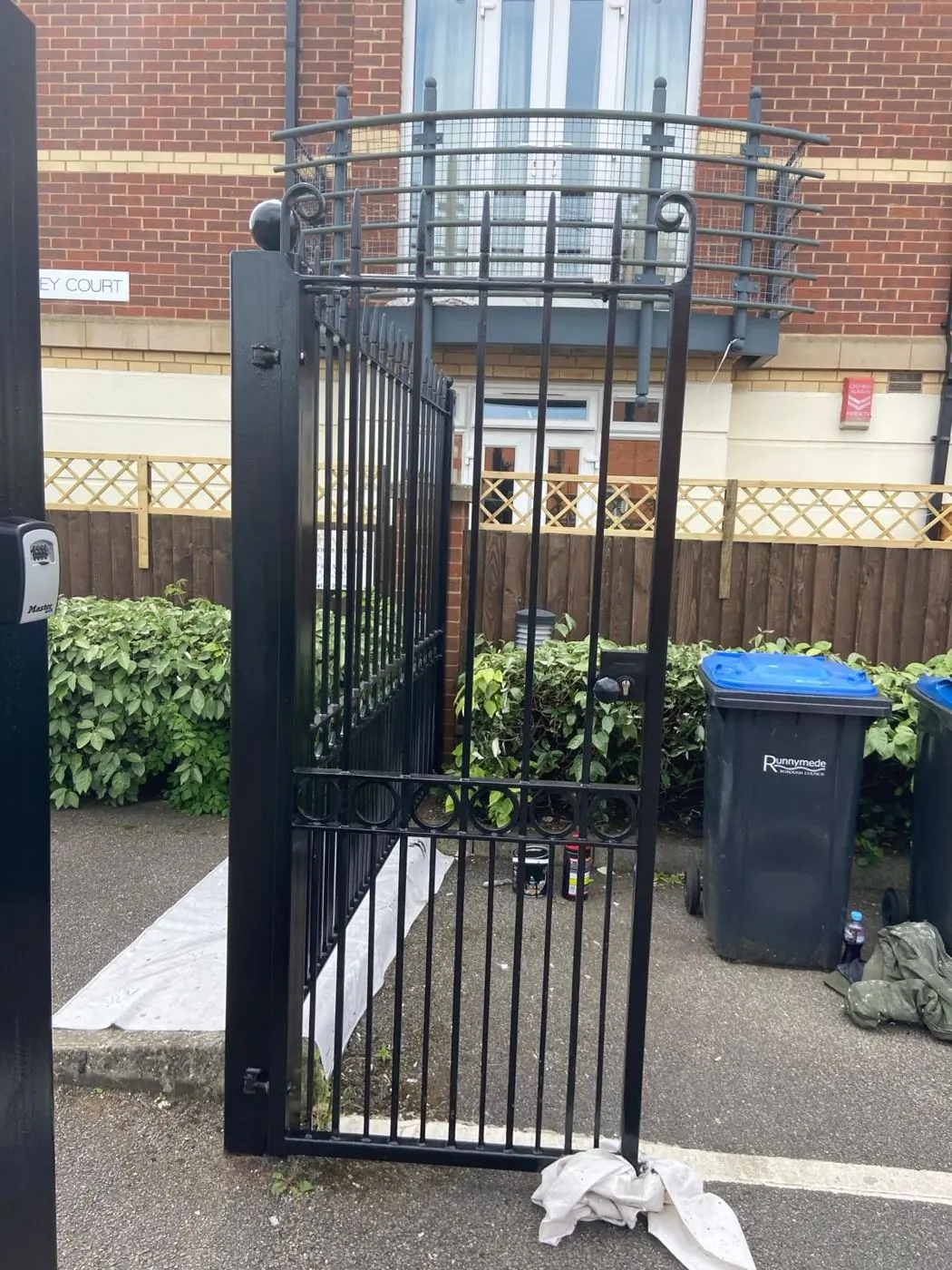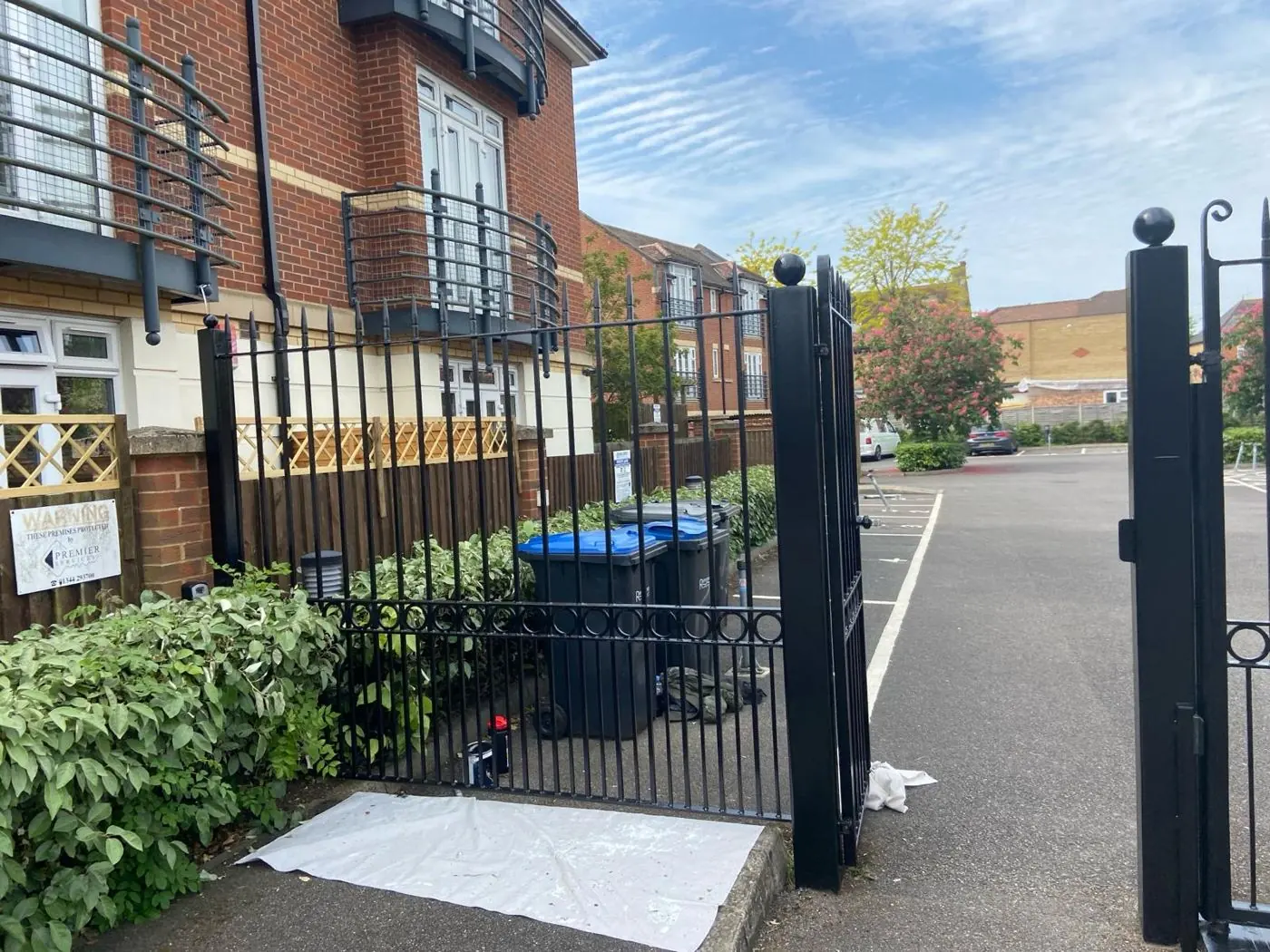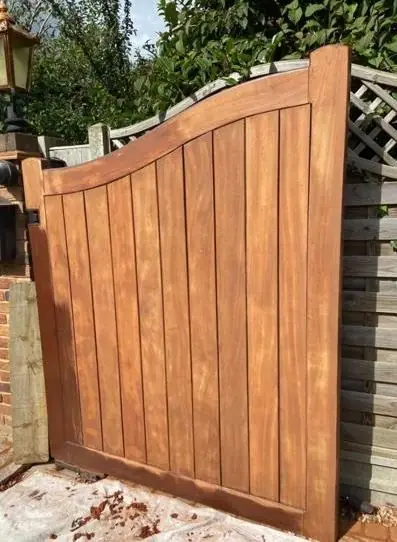
We paint metal gates, railings and ironwork in Sywell (NN6), 5.9 miles out of Northampton to the north-east. Alongside gates, that includes the small cast-iron lozenge glazing bars in the windows of the 1860s estate cottages and old school, and steel-clad buildings at the aerodrome.
The ironwork most people overlook: lozenge glazing bars
The most unusual metalwork in Sywell is not a gate. In the 1860-64 Overstone rebuild, many of the Main Street cottages were given two-light windows with wooden mullions holding cast-iron glazing bars in a lozenge, or diamond, pattern. The school of 1861, now the Old School House and Village Hall, has casements with the same cast-iron lozenge bars.
These bars are thin, and cast iron is brittle. When paint breaks down around the putty line, rust starts in the joints and, left long enough, it pushes against the glass. Treating them means:
- Removing loose paint and rust by hand with small scrapers and abrasive pads, not heavy tools that could crack the casting or the glass.
- Applying a rust treatment and a metal primer to the iron only.
- Painting the iron and the timber mullions as two separate jobs with two separate products, since a wood primer on iron, or a metal primer on wood, is the start of a failure.
The cottages are Grade II listed, so we repaint in the existing colour. Replacing the bars, or changing how they look, would be a matter for listed building consent rather than a painter.
Garden and driveway gates in a rural village
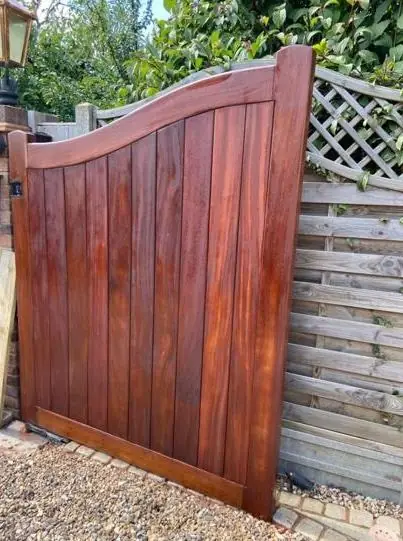
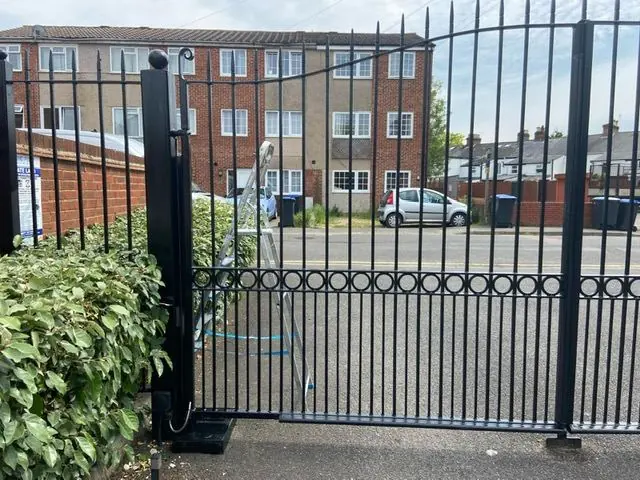
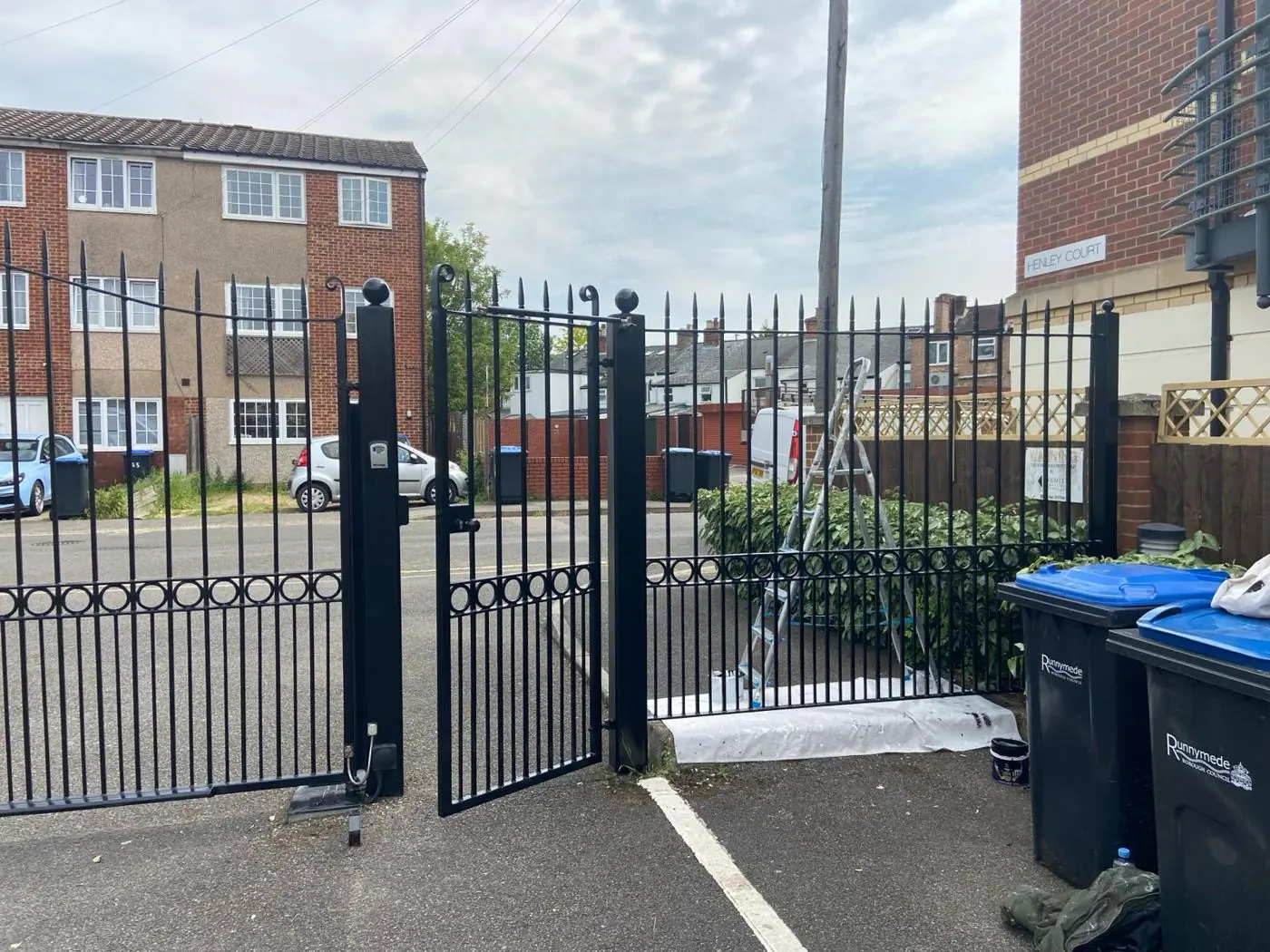
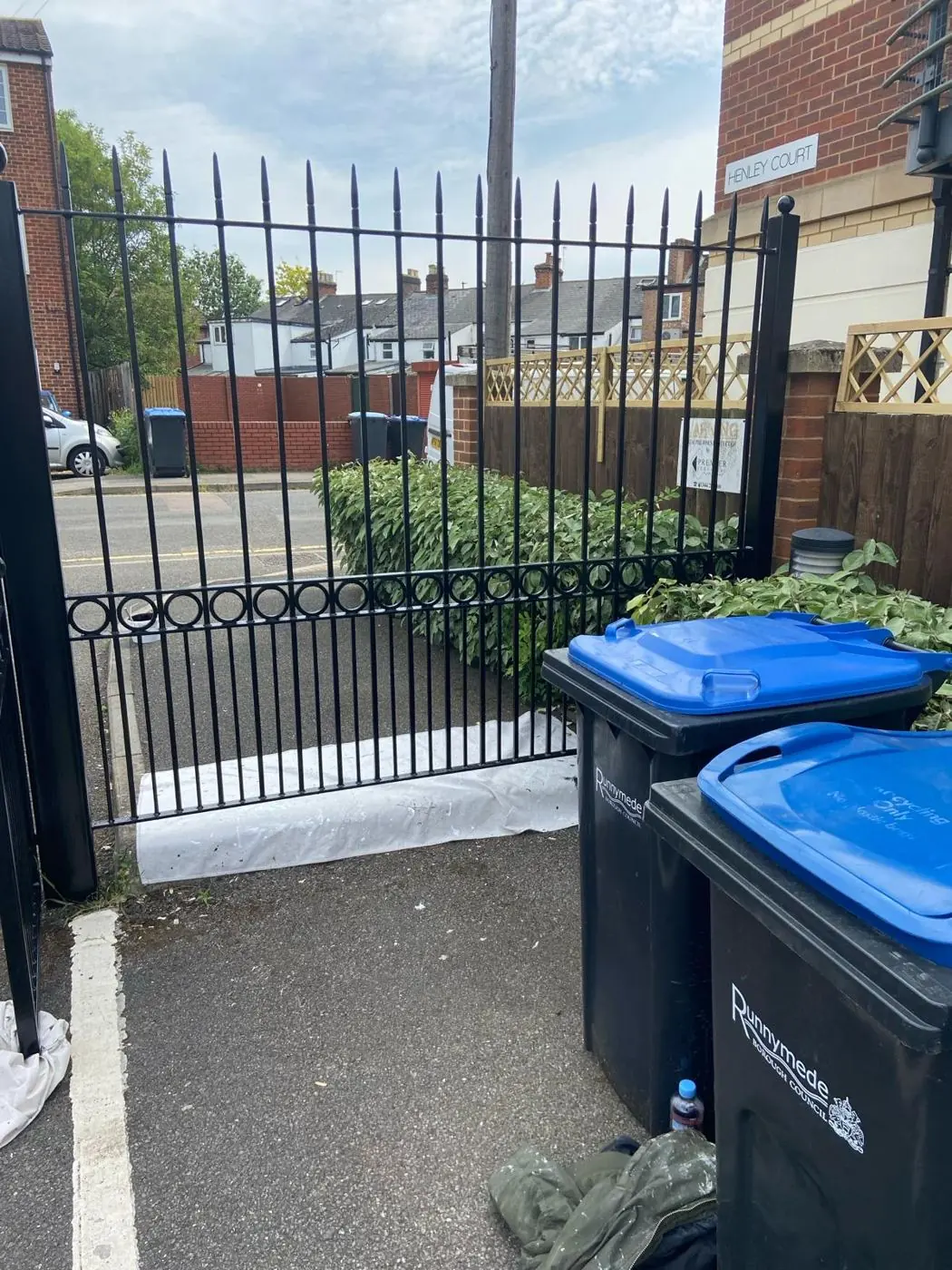
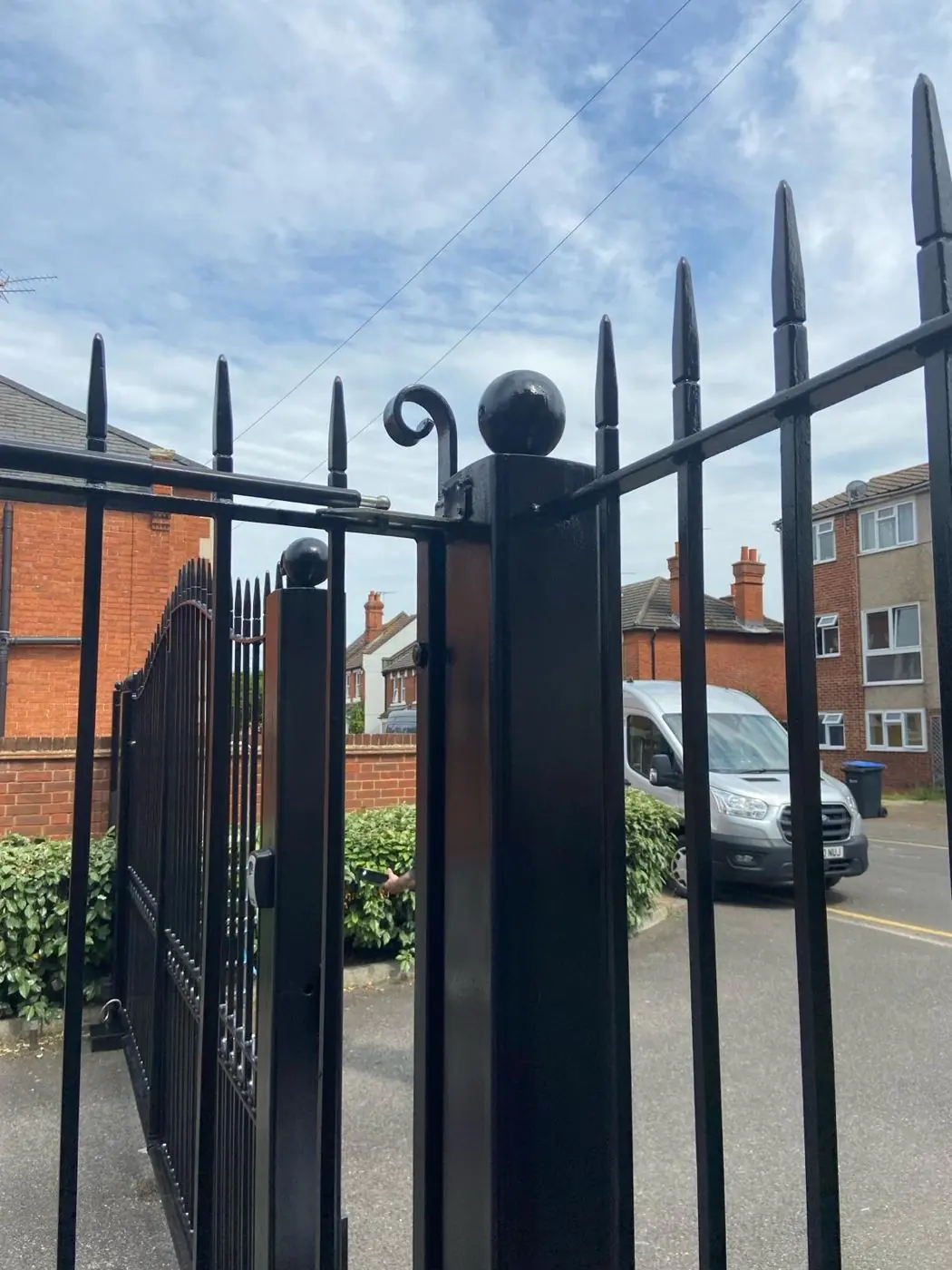
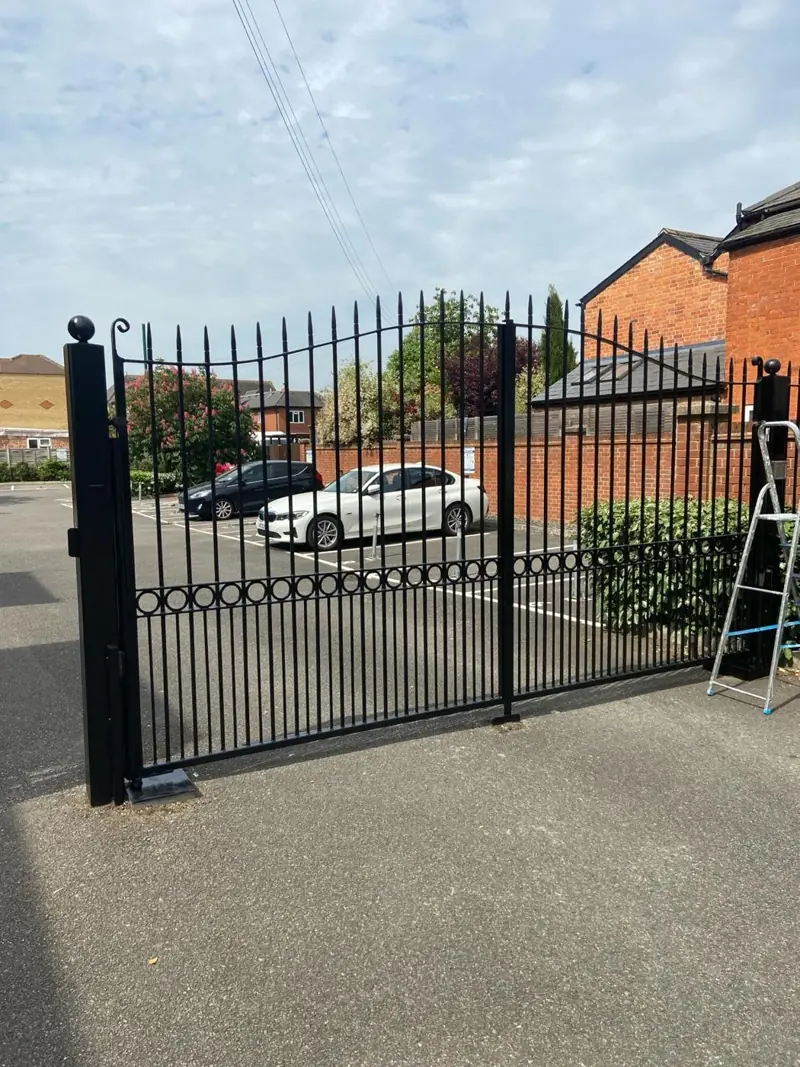
Metal gates on houses round the parish face the same open weather as everything else in Sywell, with open fields and aerodrome grassland around the village and the former reservoir close by. Dew and blown rain settle on the horizontal rails and in the hinge knuckles, and that is where rust usually breaks through first. We wire brush back to sound metal, treat any pitting that cannot be fully removed, prime bare areas and build up a finish that sheds water from those ledges. The full process, including how we identify wrought iron, mild steel and galvanised metal, is on our metal gate and railing painting page.
Gates that front listed cottages
Along Main Street the stone cottages read as a matching group, built as one estate scheme in a conservation area designated in 1977. A metal gate in front of one of them is seen as part of that group, so a traditional dark colour such as black, a deep green or a muted grey usually sits better than something bright. Where a gate or railing is attached to a listed building, a change of colour is worth checking with North Northamptonshire Council before we start; a repaint in the same colour is the straightforward option.
Steel at the aerodrome
Sywell Aerodrome opened in 1928 and its business park is home to around 138 registered businesses. The site includes steel-clad hangars, industrial units and wartime sheds that have survived since the Second World War. Steel cladding and structural steel call for industrial metal primers and topcoats, a different family of product from anything sold for a garden gate, and big areas mean planning for how much can be prepared and coated in a dry spell. For a unit or hangar, we quote under our commercial work and will talk through timings with you so painting fits around your business.
A quick guide to Sywell’s metalwork
| Metal item | Where in Sywell | Main concern |
|---|---|---|
| Cast-iron lozenge glazing bars | 1860s cottages on Main Street; Old School House and Village Hall | Brittle castings next to glass; listed fabric |
| Garden and driveway gates | Houses around the parish | Rust on rails and hinges from open-country weather |
| Steel cladding and frames | Hangars, units and wartime sheds at the aerodrome | Large surfaces needing industrial metal coatings |
The Sywell area page describes the village’s buildings in more detail, and for an idea of how costs are worked out, see our painter and decorator cost guide.
Last updated by Dean, DH Painter & Decorator.