DH Painter & Decorator paints interiors in Sywell, the NN6 village about 6 miles north-east of Northampton town centre. Dean, with over 30 years in the trade, treats the listed 1860s lias cottages on Main Street with breathable paints and handles newer homes and Overstone Lakes park homes with systems suited to their walls.
Sywell’s interiors fall into two camps
For interior painting the parish splits cleanly in two. At its heart are the Main Street and Church Lane cottages, rebuilt in 1860-64 for Lady Overstone in coursed lias with brick dressings and now listed at Grade II. Away from that core are newer houses and, on Ecton Lane, the factory-built park homes and lodges of Overstone Lakes. Dean plans and prices these as separate kinds of job, because the walls behind the paint are made of different things.
Solid lias walls and the plaster on them
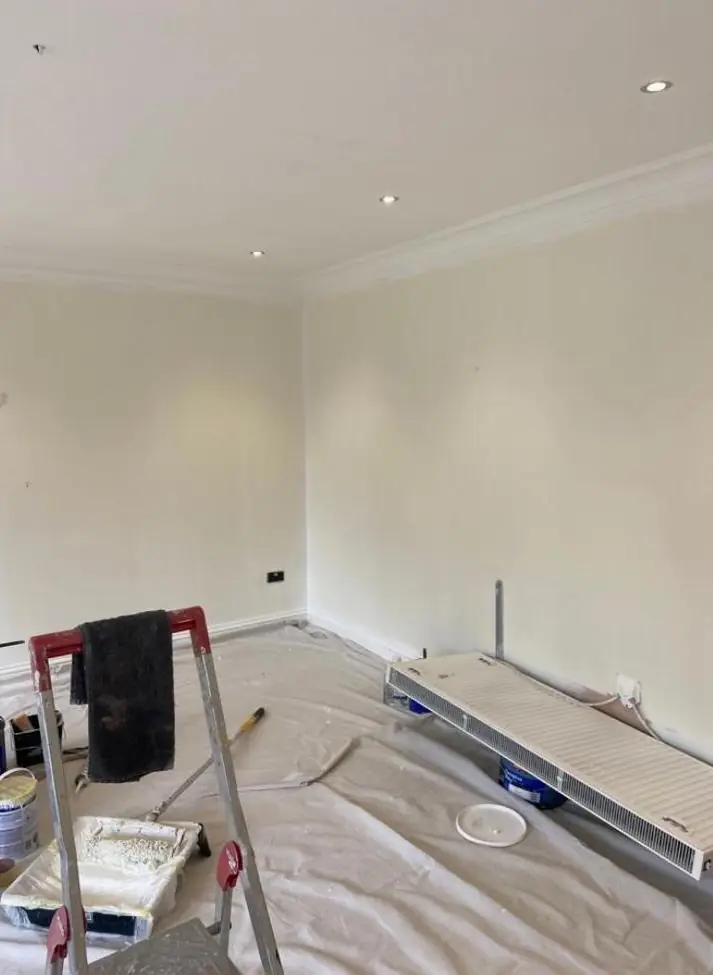
An estate cottage of the 1860s has no cavity. The lias is the wall, and its inside face is most likely finished in lime plaster rather than the gypsum skim of a modern house. Lime copes with moisture by letting it pass in and out. Cover it with a plastic-rich emulsion and the damp that would have evaporated collects under the film instead, which shows as blown patches low on outside walls and around window reveals within a season or two.
So in these rooms we start by finding out what is already there. Old distemper rubs off on a damp cloth and has to be washed down or covered with something compatible. A sound breathable coating can be built on. A failing modern emulsion may need taking back. Cracks in lime get a lime-based filler, because a gypsum filler sets harder than the wall around it and cracks again at the edges. The finish is a breathable paint made for lime. That choice saves redoing the same wall two years later.
Half dormers, deep reveals and iron glazing bars
The shape of these houses affects the work as much as the plaster does. Half dormers give the upstairs rooms sloping ceilings that meet the walls at uneven heights, and cutting a clean line along that junction is slower than in a square room. Thick stone walls make deep reveals around the two-light mullioned windows, and the cast-iron lozenge glazing bars in those frames want a metal-suitable paint rather than the gloss used on the timber. Square bays add more corners again. We price the cutting-in for what it is rather than by floor area.
Sywell Hall, listed Grade II* and probably dating from about 1600, is another matter entirely. Its panelling and staircase are protected fabric, and decoration there has to be agreed with the owner and, where it alters character, with the council.
Park homes at Overstone Lakes and newer houses
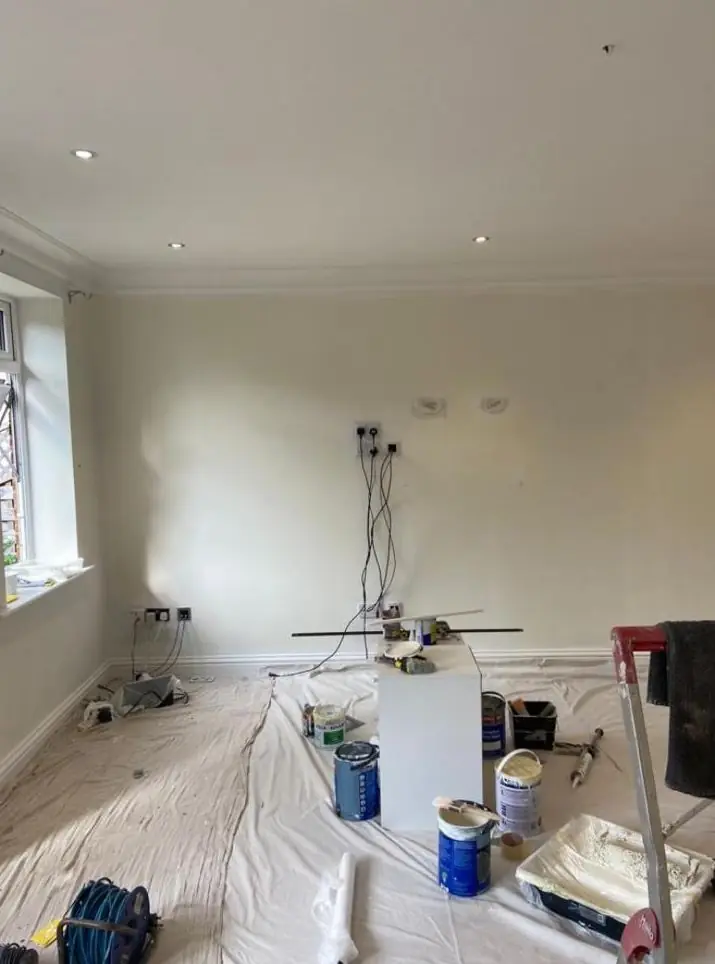
The park homes on Ecton Lane are built in a factory, and inside that usually means lightweight wall boards and sheet ceilings rather than plaster. Many boards have a printed or vinyl-type face that ordinary emulsion will not hold to. They need cleaning, a light key and an adhesion primer before any colour goes on, and joint strips are either masked or painted to match. Thin boards can swell at the edges if they get too wet, so coats are kept light. The newer houses in the parish are simpler: gypsum-plastered walls that take a standard emulsion system, as described on our interior painting page.
Working inside a row of cottages
Most of the listed cottages stand in pairs or rows of four or five, and a mid-row house may have no easy way round to the back. We plan for that: sheets go down along the front path, materials come through the front door in small loads, and rooms are cleared and finished one at a time so the house stays usable. On a village road like Main Street the van is parked clear of the lane and of neighbours’ gateways. If you want to set a budget first, our cost guide explains what affects a quote, and the Sywell area page covers the village as a whole.
Last updated by Dean, DH Painter & Decorator.