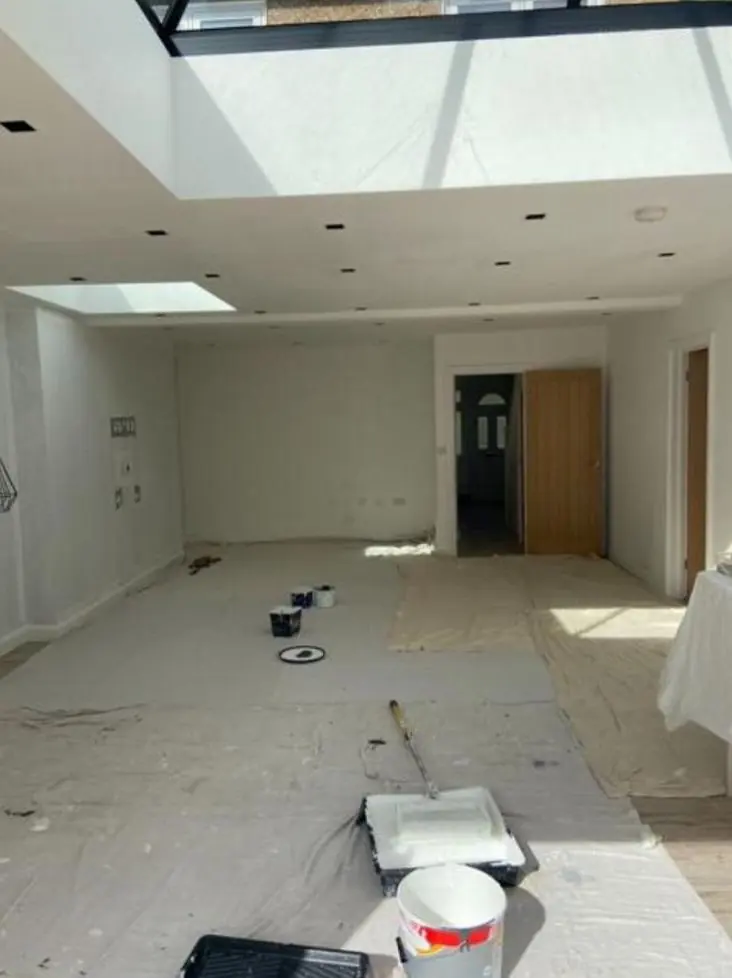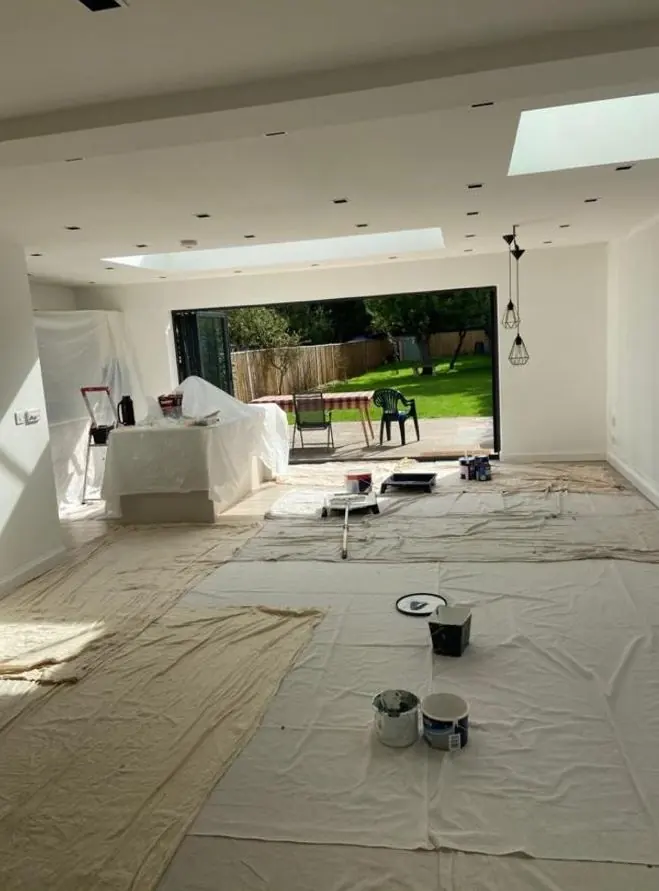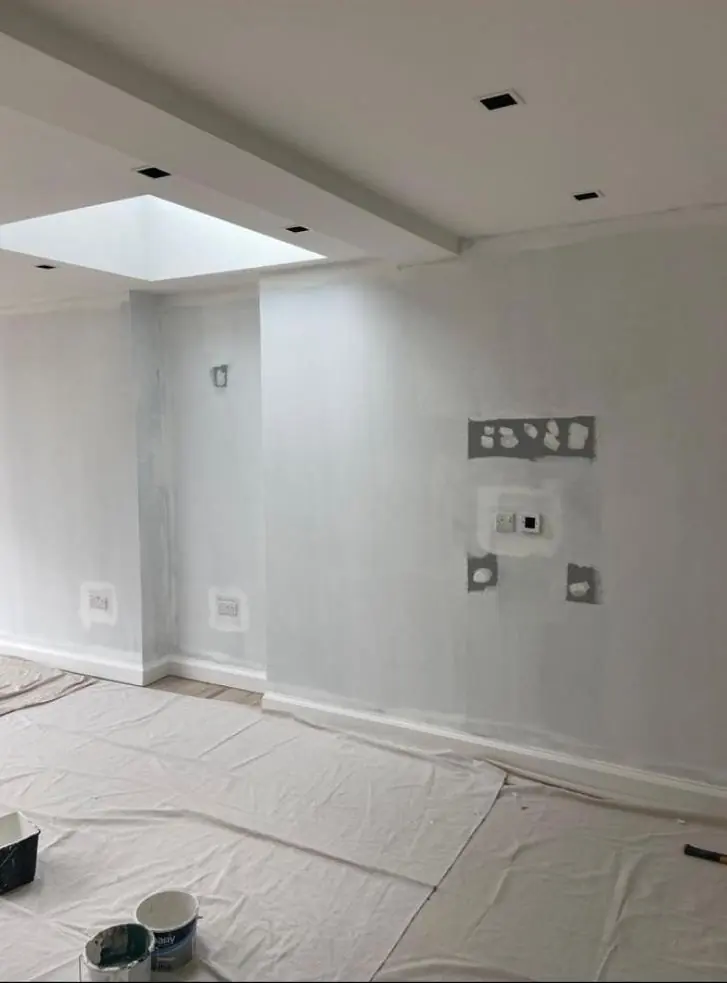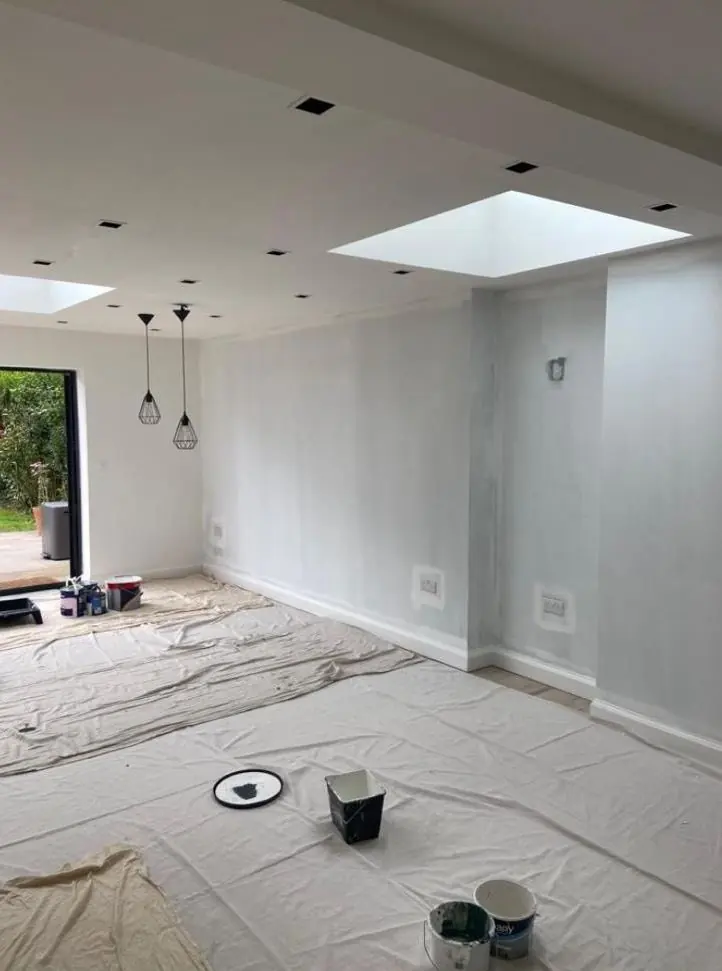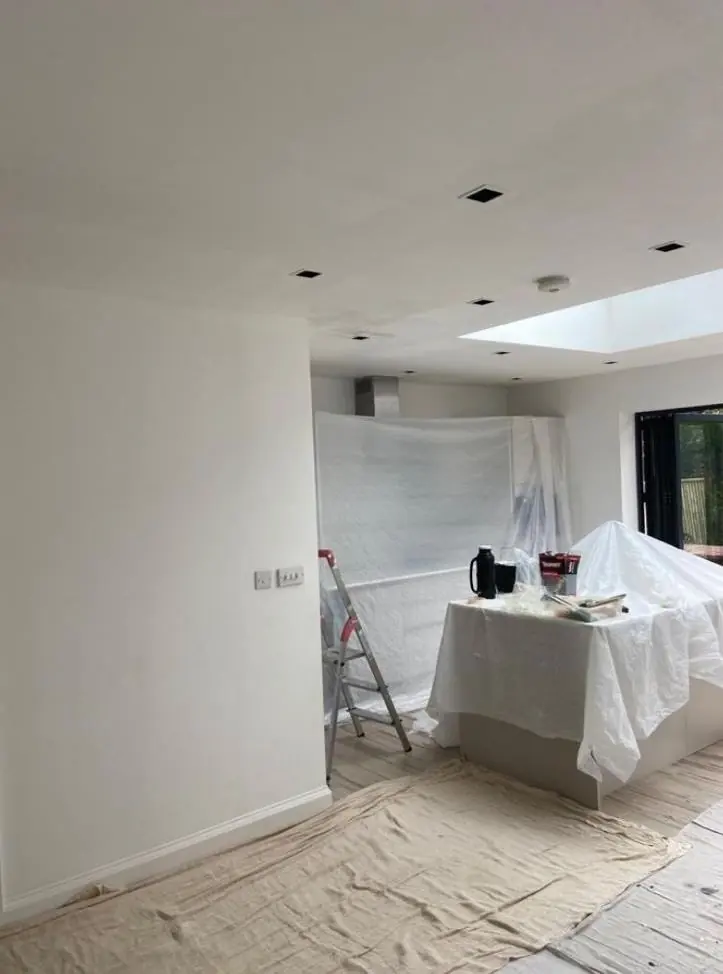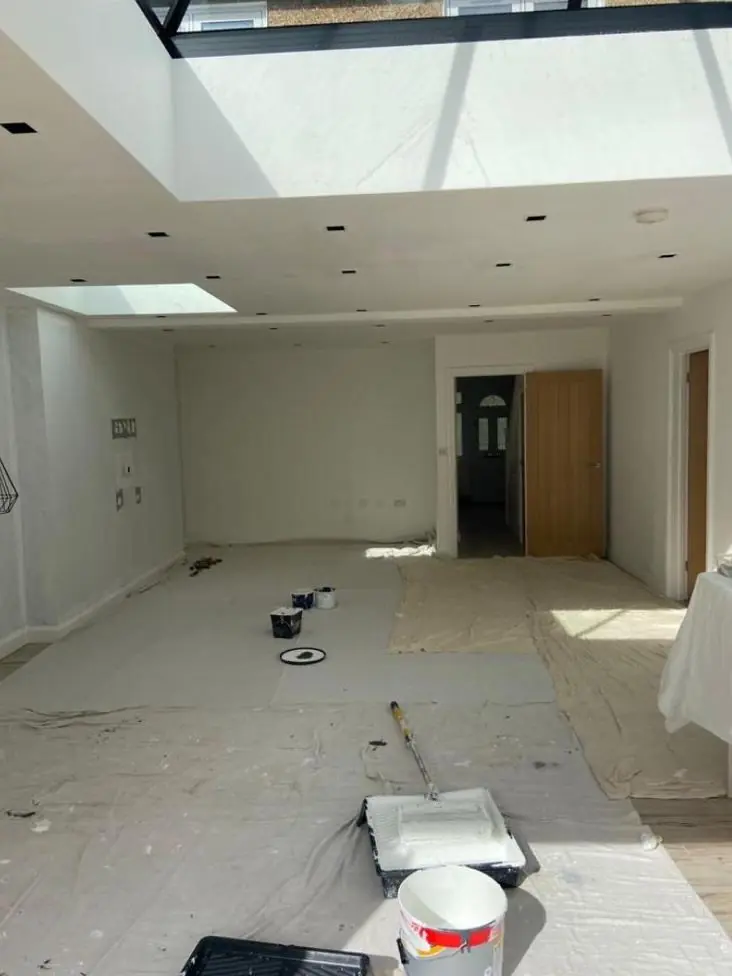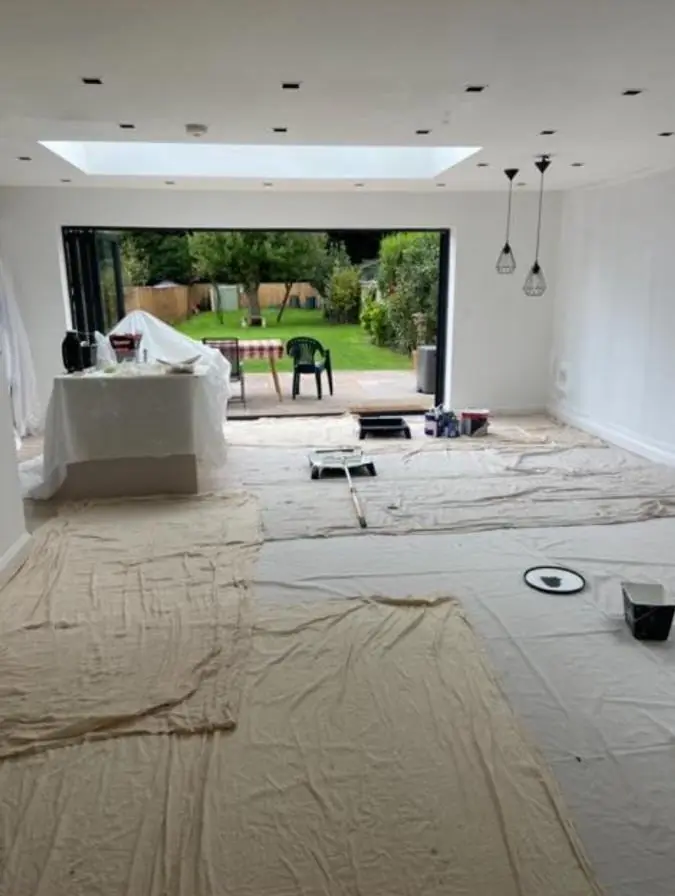
We decorate new plaster, re-skimmed rooms and extensions in Sywell, a short drive of about 5.9 miles north-east from our Northampton base. Where an extension meets an older lias-stone cottage, the junction between new gypsum and old lime-plastered walls needs the most thought.
When new work meets an 1860s stone wall
Sywell’s conservation area holds the estate cottages built for Lady Overstone in 1860-64, in solid coursed lias with brick dressings. When one of these gains a rear extension or a re-plastered room, the new walls are usually modern gypsum on block or board, while the original walls are solid stone with lime plaster inside. The two behave differently. Gypsum dries out and stays dry, while lime plaster on a solid wall takes in and gives off moisture through the year.
That has a direct effect on decorating. A wipeable vinyl run straight across both surfaces can look fine in the extension and blister on the old wall a season later. We decide the paint system wall by wall: a mist coat and good-quality emulsion on the new gypsum, and a breathable finish on the old lime-plastered walls, tinted to the same colour so the room still looks like one space.
Drying time is the part to plan for
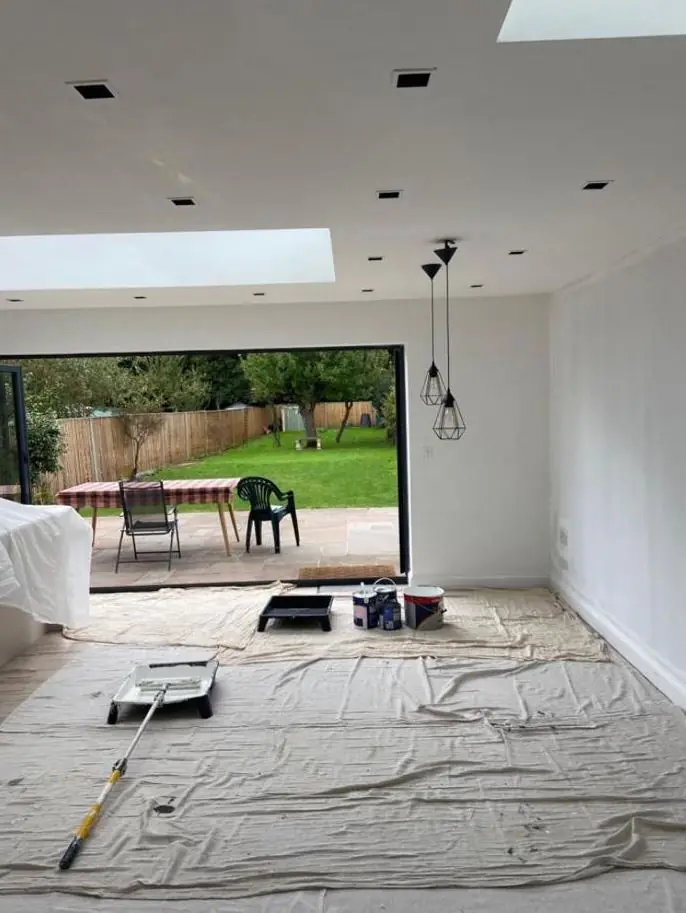
New plaster has to be fully dry before any paint goes on, and a new room built against a solid stone cottage often takes longer to reach that point than people expect. A single skim on board in a heated room may be ready in a week or two, while thick backing coats, a cold spell or a room with no heating yet can stretch that out considerably. We check reveals, corners and the areas behind radiators, which are usually the last to turn pale and even.
The first coat itself is explained step by step in our guide to painting new plaster with a mist coat, and the full scope of an extension job, including new skirtings and door linings, is on the new plaster and extension painting page.
The joint line and other trouble spots
- Where new plaster butts up to old, a hairline crack often opens as the extension settles. Where your timetable allows, we leave the final coat until early movement has shown itself, then fill with a flexible filler first.
- Old walls opened up for a new doorway often have patches of different plasters. Each patch is sealed according to what it is, so it does not flash through the top coat as a shiny or flat area.
- New timber skirtings and architraves are knotted and primed before fitting where we can, so the back faces and end grain are sealed too.
- Deep window reveals cut through solid stone walls dry more slowly than flat wall areas and are checked separately.
Newer homes and who handles consent
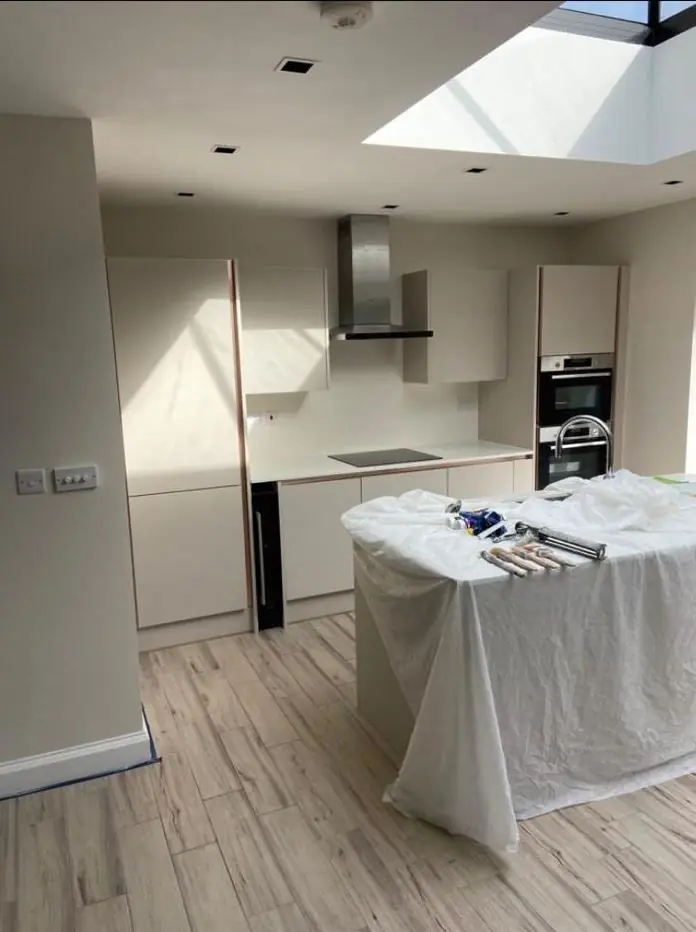
Not every new plaster job in the parish is in a listed cottage. Newer houses elsewhere in Sywell take standard extension decorating, with no lime plaster to work around. Planning permission and listed building consent for the extension itself are matters between you, your builder and North Northamptonshire Council. Once the plasterer has finished, we pick up from there.
If you live in one of the Grade II cottages on Main Street or Church Lane, ask your builder what was used to repair any original walls before we quote, because it decides which paint goes where. The park homes at Overstone Lakes are factory built with board interiors rather than wet plaster, so they are covered under our general interior work instead. More about the village is on our Sywell area page.
Last updated by Dean, DH Painter & Decorator.