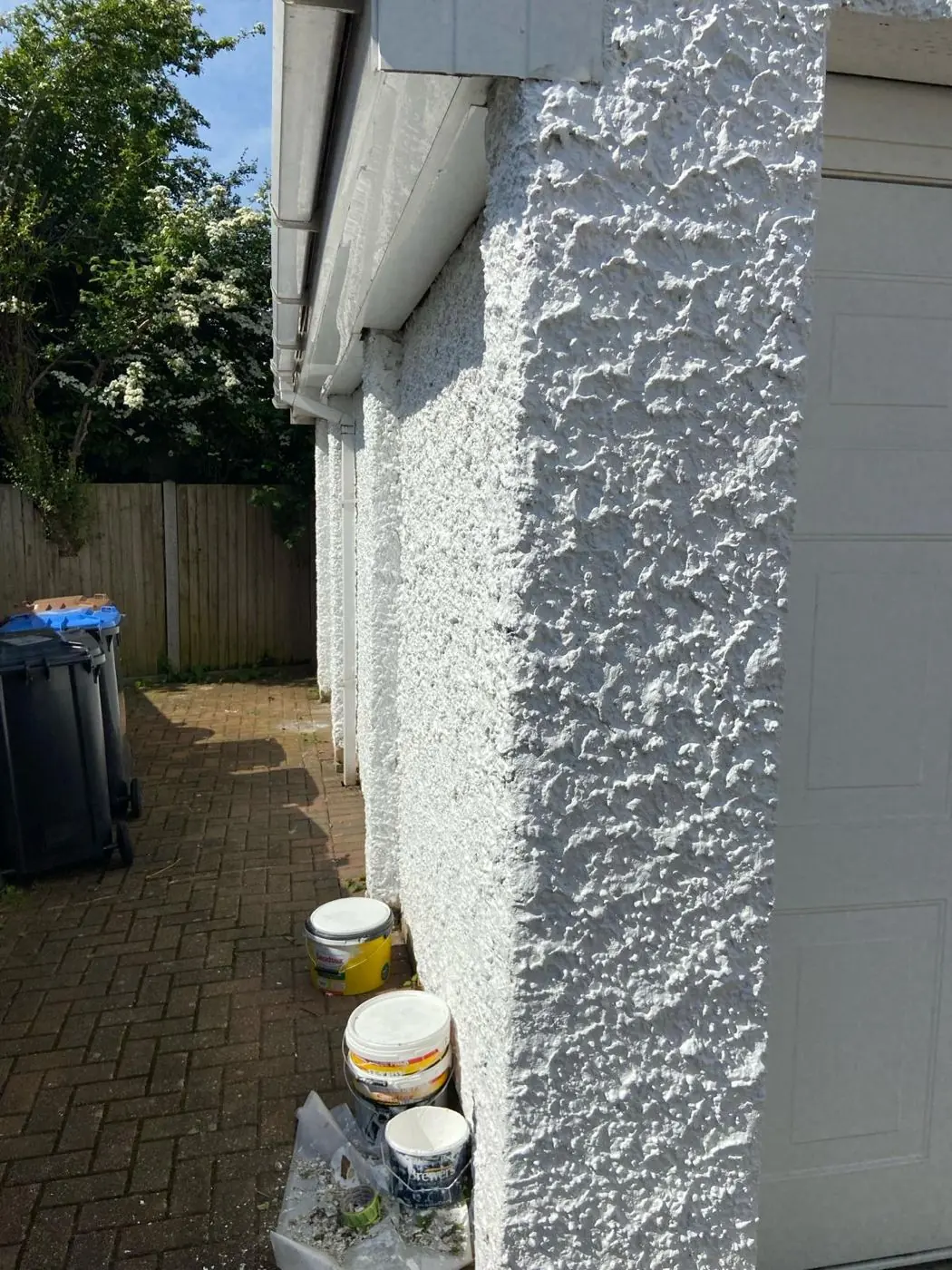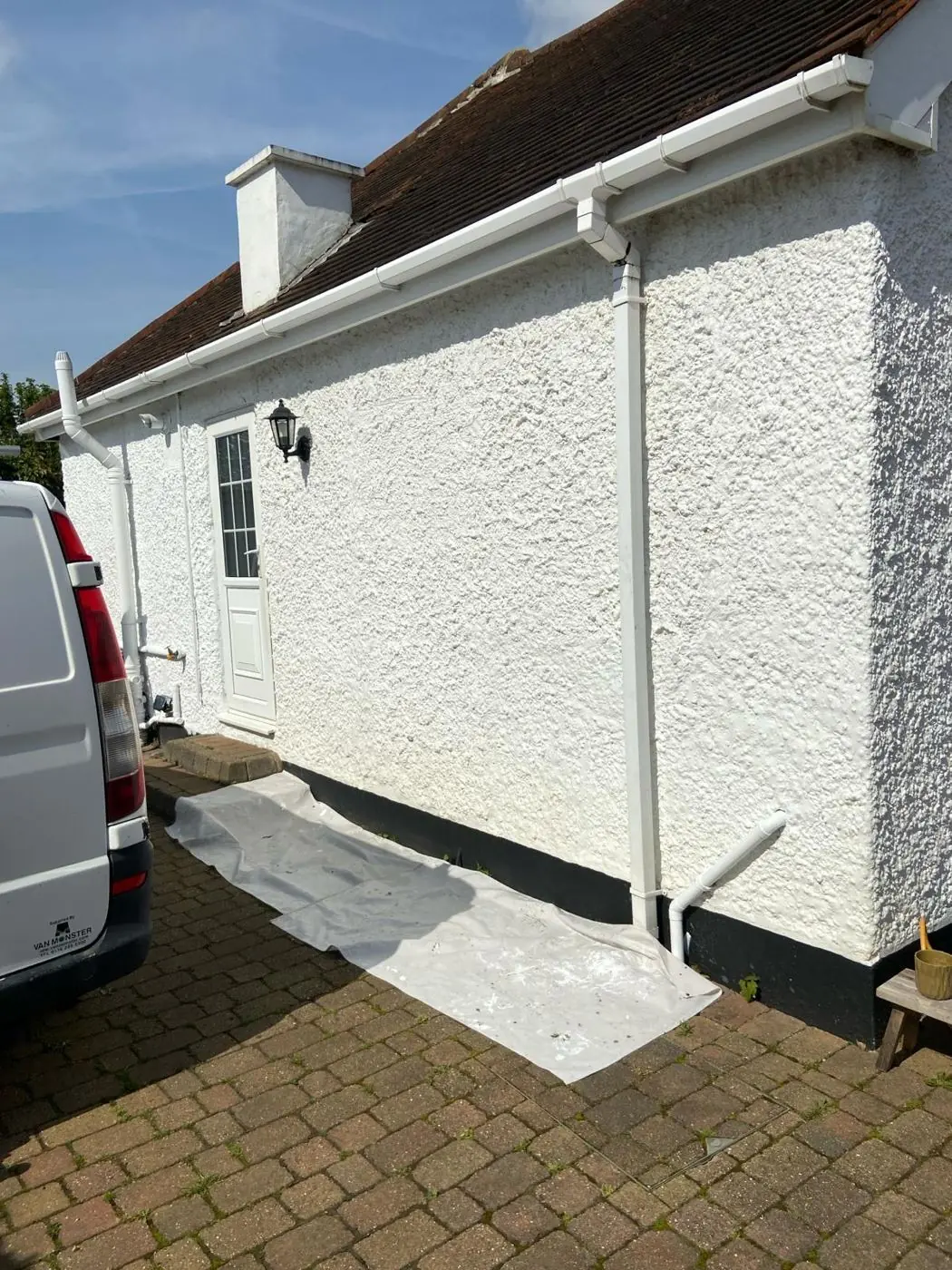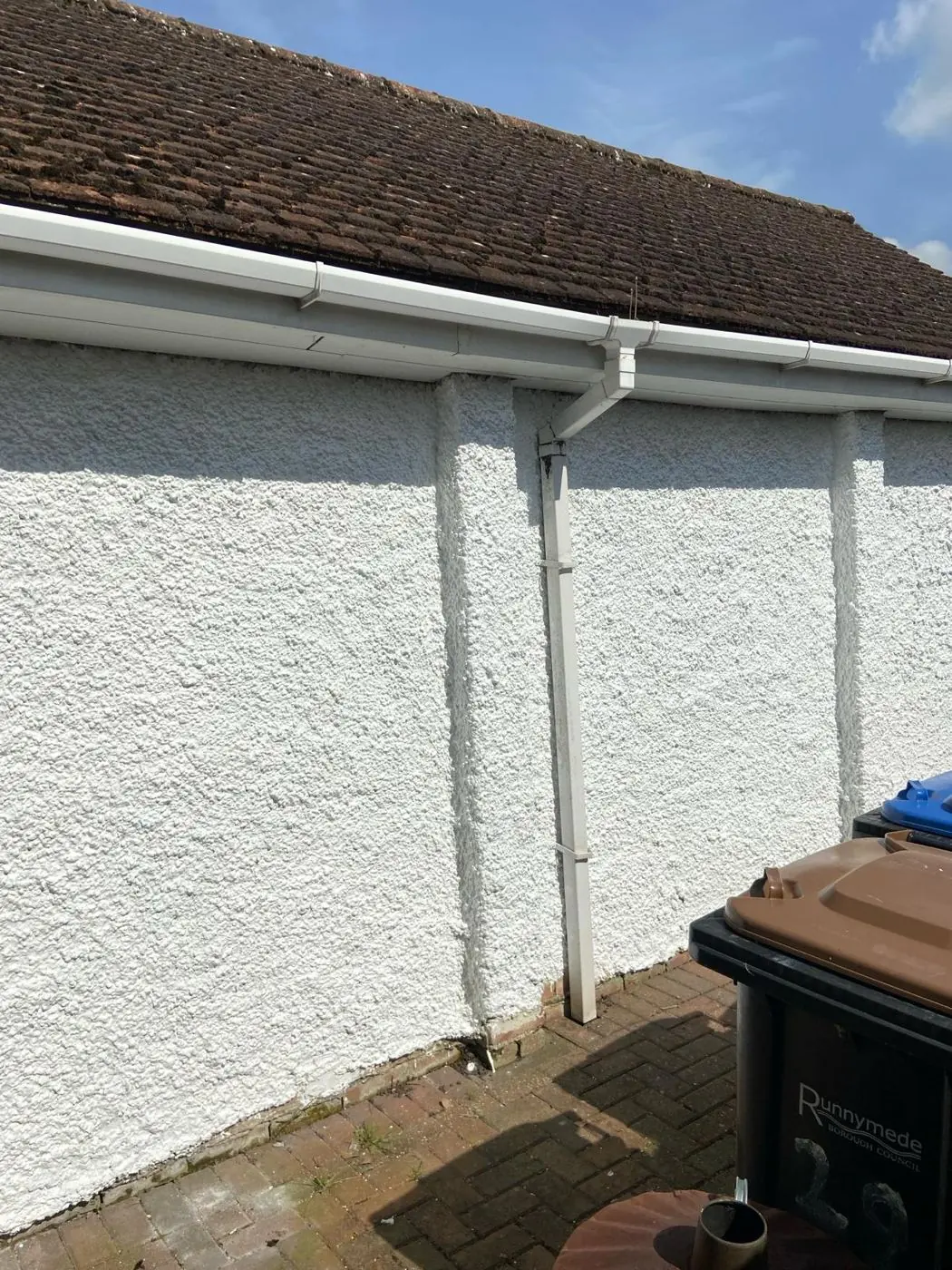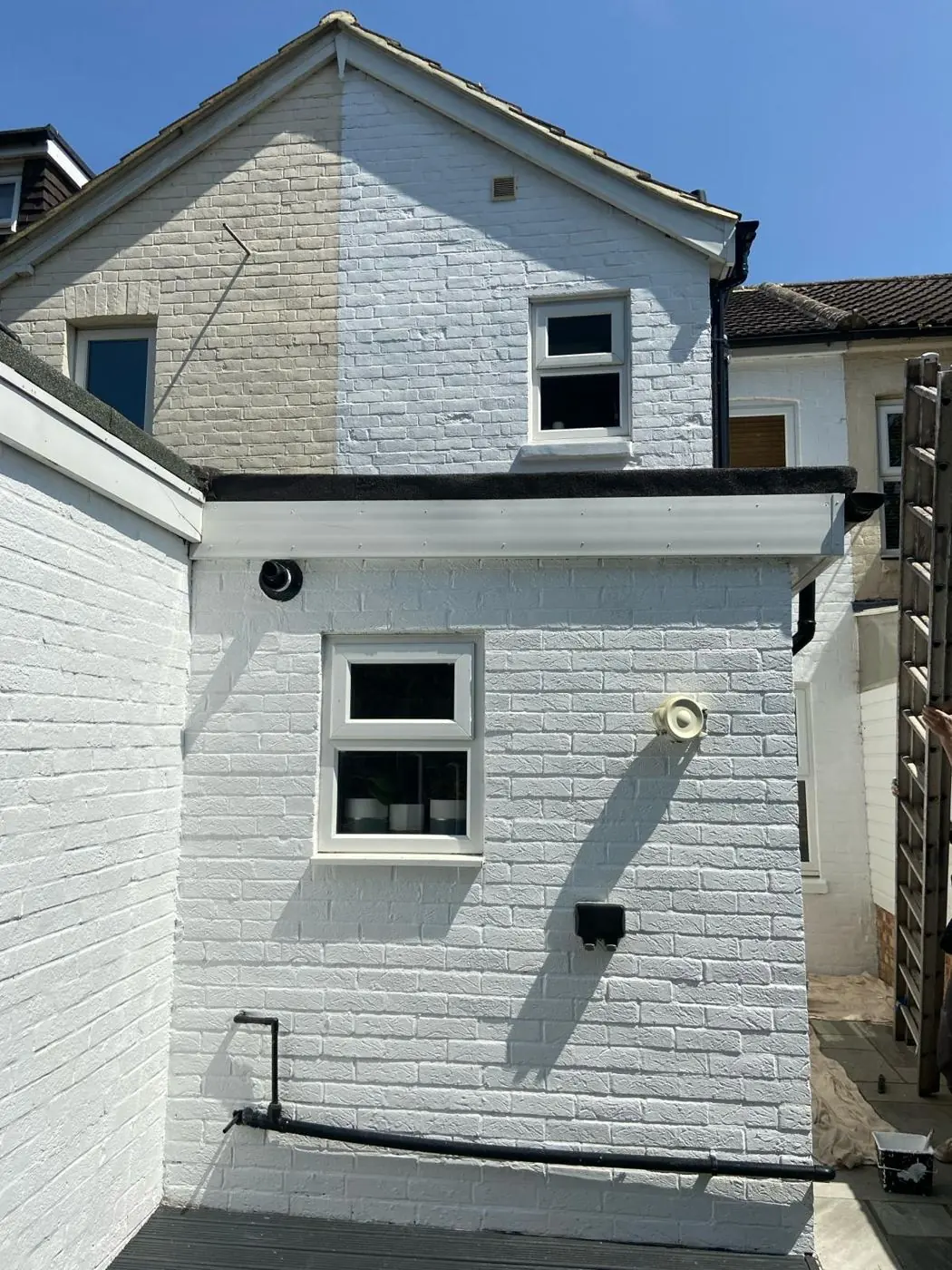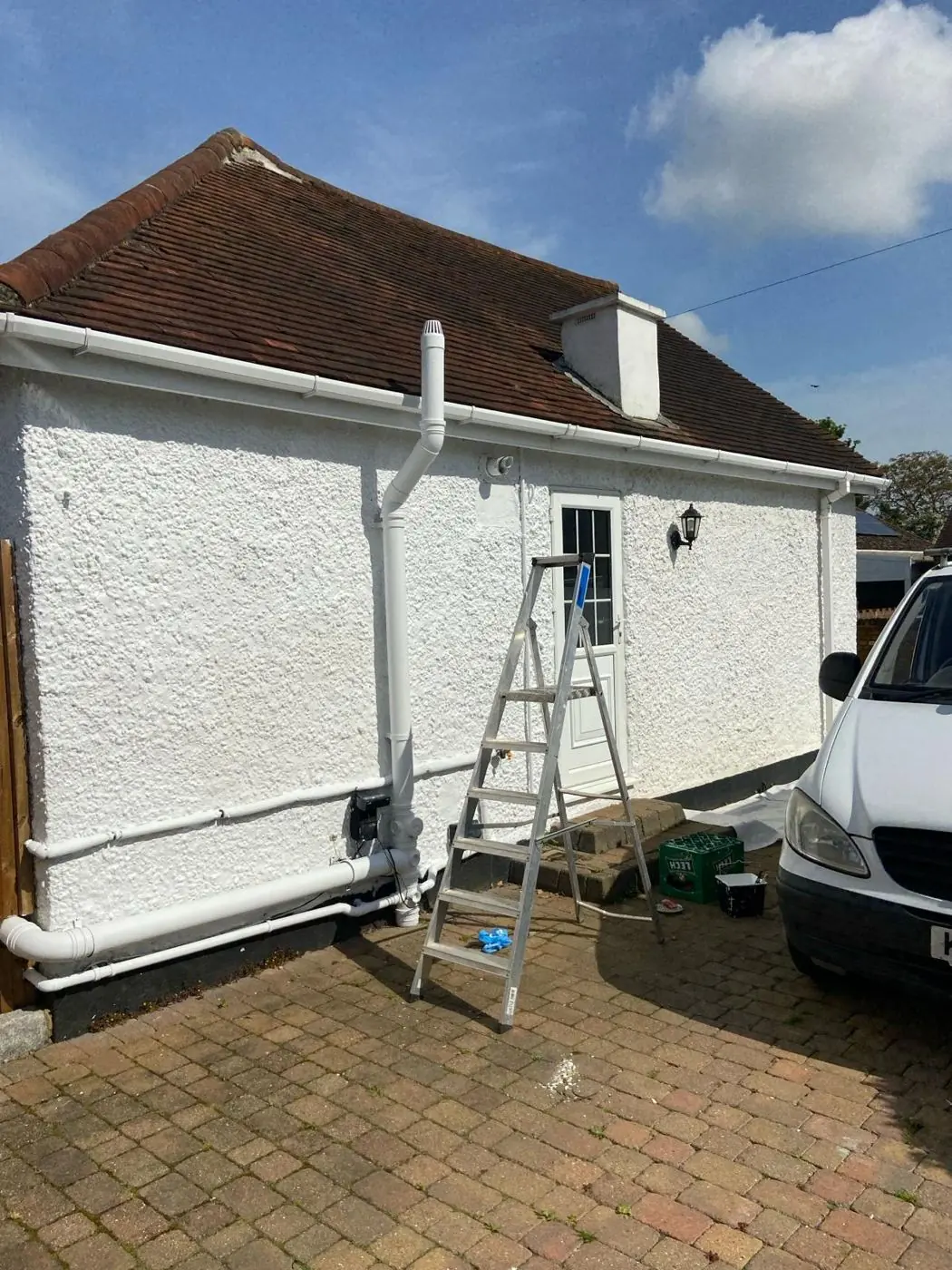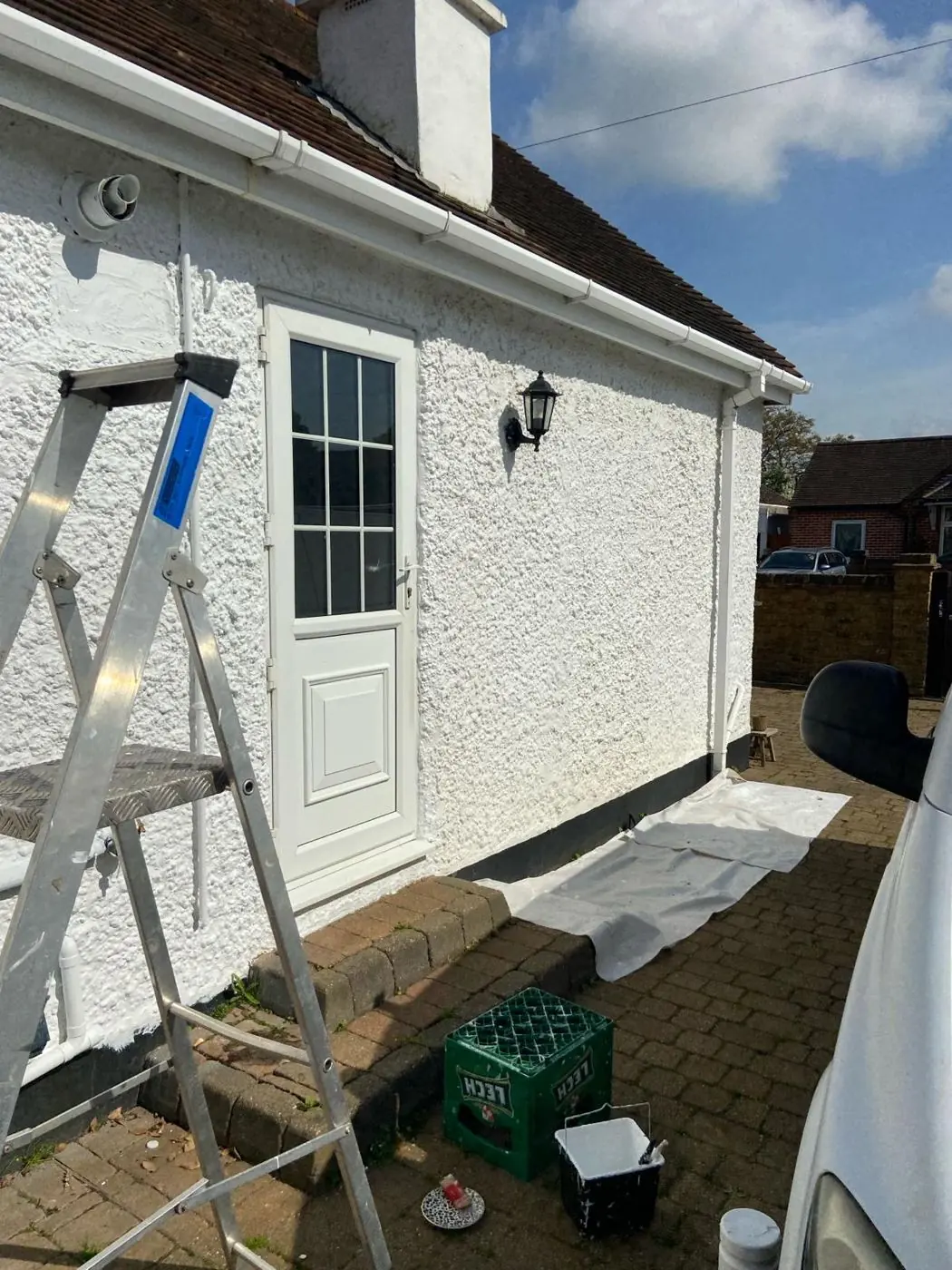
We paint render and masonry in Sywell, NN6, about 5.9 miles north-east of Northampton. In this village the work is limited to rendered newer houses and walls that already carry paint, because the listed lias cottages, school and hall are bare stone that should stay uncoated.
Start with the stone you should not paint
A masonry page for Sywell has to open with a warning, because the building most people picture when they think of the village is one that should never see masonry paint. The cottages along Main Street were built in 1860 to 1864 for Lady Overstone in coursed lias, regular or squared, with brick dressings and flat arches of brick. The Old School House and Village Hall is rusticated lias with ashlar dressings. Sywell Hall, which probably dates from around 1600, is lias ashlar. All of them are listed, and all of them are solid stone walls with no cavity.
Solid lias relies on its face to let damp out. Seal it with a modern acrylic or plastic-based masonry paint and the water that gets in from the ground and from driving rain has nowhere to go. You see the results later as flaking paint, salts, damp inside and, in a frost, spalled stone. On a listed wall, painting bare stone would also very likely need listed building consent. So if you own one of these houses and the stone looks tired, painting is the wrong fix, and we will say so.
Where masonry paint does belong in Sywell
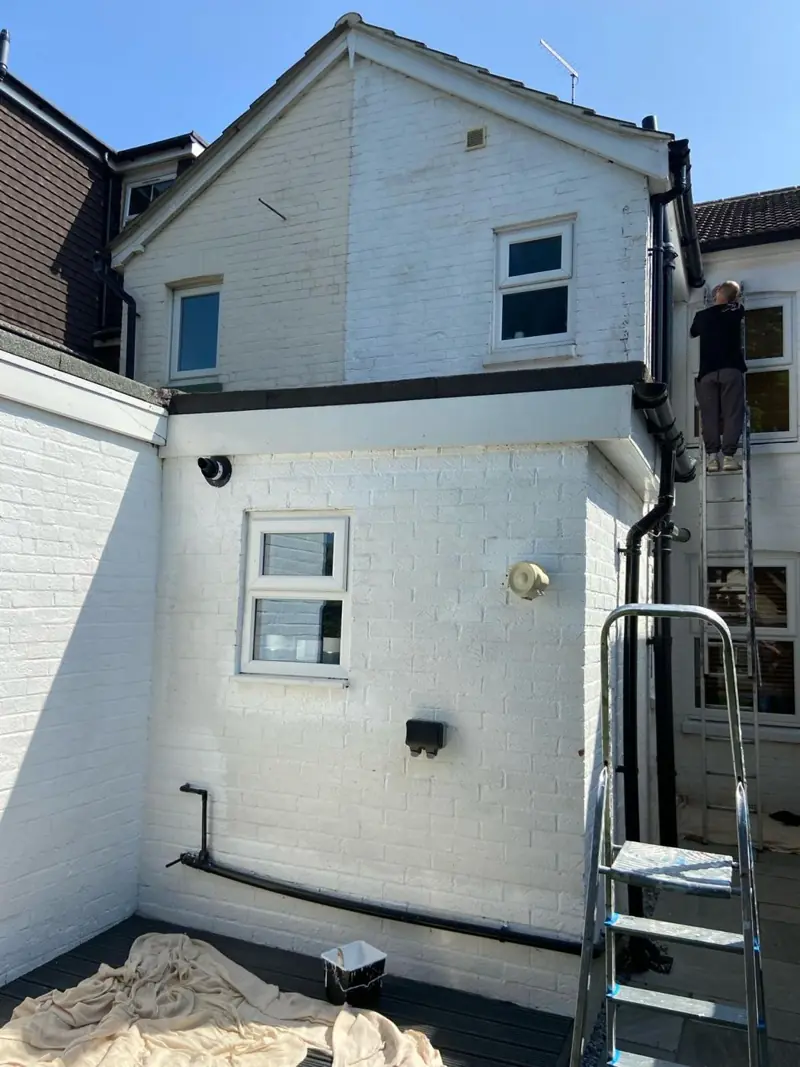
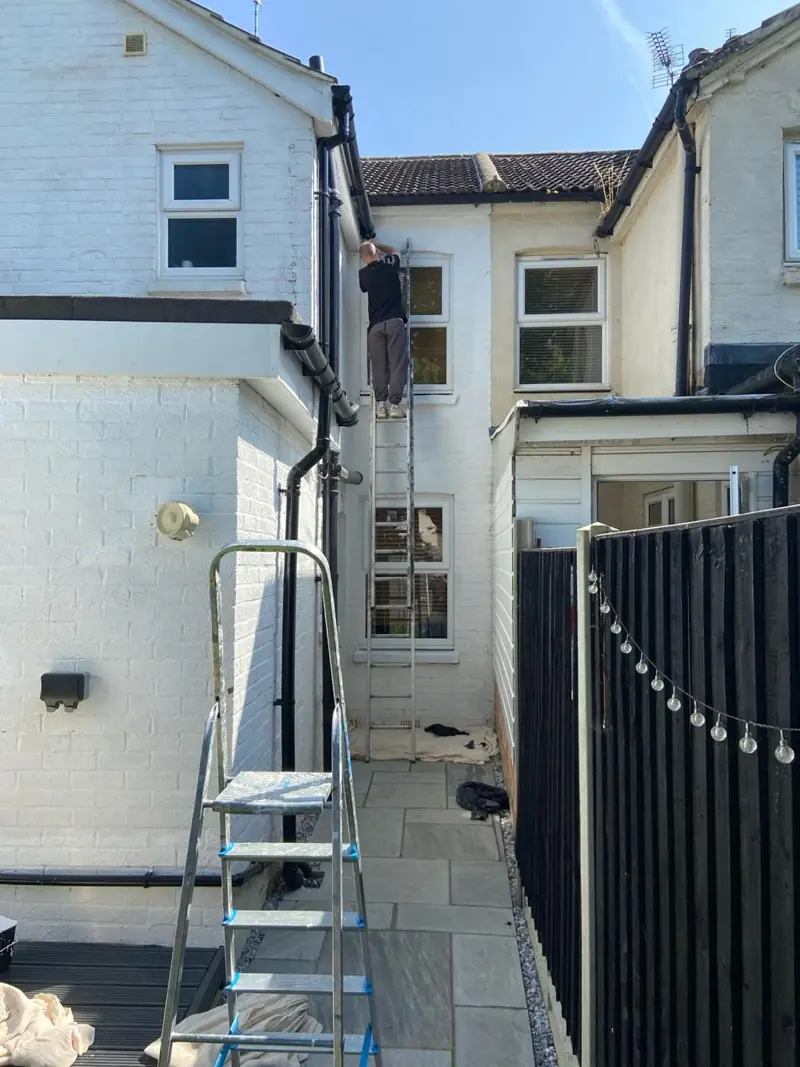
That leaves a narrower set of walls that are fair game:
- Rendered newer houses elsewhere in the parish, in sand and cement or roughcast.
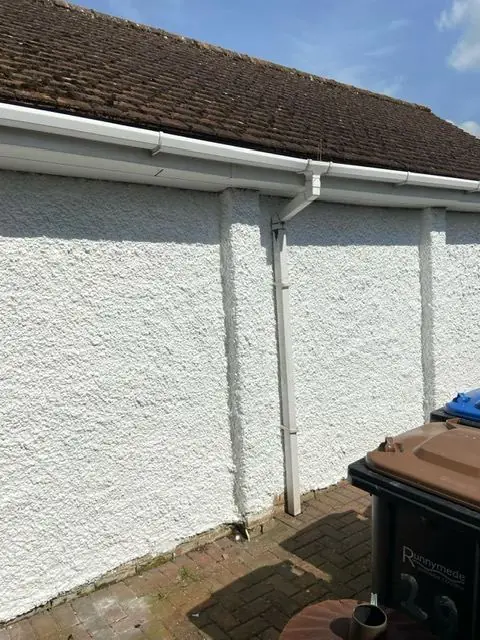
- Walls that already carry paint, such as a painted rear extension, outbuilding or garden wall, where the job is to maintain an existing coating.
- Plinths and low walls on unlisted property where a previous owner has already painted them.
On any wall that already has paint, we first find out what the old coating is. If a breathable mineral or lime-based paint has been used on older masonry, we keep to that kind of product rather than sealing it over with acrylic. On modern cement render, a good breathable masonry paint is the normal choice. Our render and masonry painting page explains the preparation steps, from algae wash to crack filling, in full.
Weather on the edge of open ground
Sywell sits in farmland, with the open grassland of the aerodrome on one side of the village and the country park, the former reservoir, close by. Rendered gable ends that face open fields catch rain and wind with nothing to break it, and that is where green algae and chalky paint tend to show first. On those elevations, we pay most attention to the sills, the drip details and any cracked render at the base, since water that gets behind render is what pushes paint off. Our guide to painting render and roughcast covers what to look for before booking.
Things that are not masonry at all
Two kinds of building in Sywell can look like masonry jobs from the road but are something else. Park homes at Overstone Lakes, off Ecton Lane, come from a factory with walls of board and cladding, so masonry paint is the wrong product; they need coatings made for those boards. And the steel-clad hangars and sheds at the aerodrome need metal primers and industrial coatings, not anything sold for walls. We will quote for both, but under the right service.
The conservation area covers only about 6.8 hectares of the village core, so if you are unsure whether your house is listed or whether a wall has ever been painted, ask us at the visit. You can also see how we approach the rest of the village on the Sywell page.
Last updated by Dean, DH Painter & Decorator.