DH Painter & Decorator covers Spratton from our Northampton base, about 6.5 miles north of the town centre on the A5199. Dean, with over 30 years in the trade, paints and decorates the village's 17th and 18th century stone houses, its Georgian and brick homes and its small run of shops.
A stone village on the A5199
Spratton is a village and civil parish on the A5199, north of Northampton in postcode NN6, with Brixworth Road as its main street. The 2011 census recorded a population of 1,150. Its historic core is a designated conservation area, and West Northamptonshire Council adopted the Spratton Conservation Area Appraisal and Management Plan in 2021, which identified 19 locally listed buildings and structures.
The parish church of St Andrew stands on high ground in the middle of the village. It dates from about 1120, keeps Norman work in its west wall and south door, and was restored inside by Sir George Gilbert Scott in 1847. Around it, the village grew in local ironstone and lias limestone, and that stone shapes almost every decision a decorator makes here.
The houses, and what each kind needs
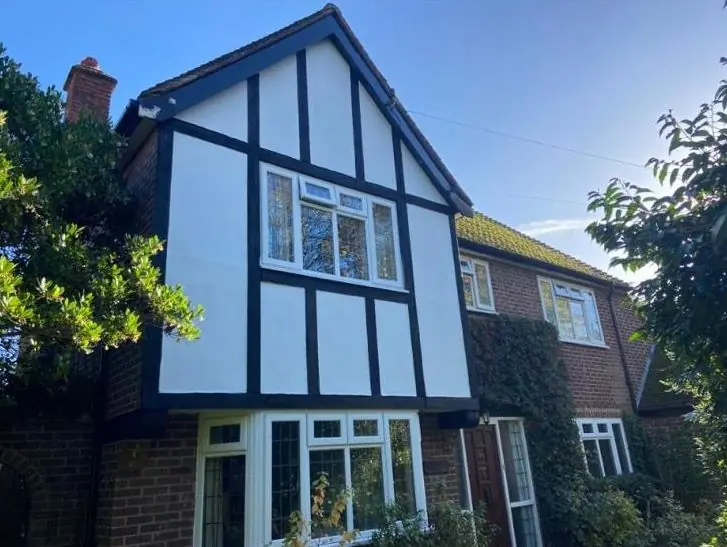
Spratton’s older housing falls into a few clear groups, and each brings its own paintwork.
| Period | Examples | Materials | Decorating focus |
|---|---|---|---|
| Late 17th to early 18th century | 2 Yew Tree Lane (1684), Olde House Farm (1691), The Fir Tree (1725), Home Farmhouse | Lias limestone and ironstone, many thatched, stone-mullioned and casement windows | Breathable interiors, casement joinery, no heat near thatch |
| 18th century | The Manor House and 6-8 Church Road, 7 Manor Road | Ironstone, and chequered red and burnt brick at The Manor House | Joinery, careful treatment of old repairs, colour in keeping |
| Late 18th century | Spratton House (1793), Northbank House, Spratton Hall | Sandstone and lias ashlar, slate roofs, timber sashes | Sash windows with glazing bars, period interiors, coach house doors |
| Early 19th century | Holly House, 7 Church Road | Red brick, three storeys | Tall access for joinery and stairwells |
Alongside these sit later homes and conversions, such as The Old Chapel at 23b Brixworth Road, licensed as a chapel in 1843 and converted into a house in 1982.
Outside: joinery, not walls
Most of Spratton’s historic houses are bare ironstone or lias, and that stone should stay unpainted. Painting soft stone with an impermeable coating traps moisture and can cause the face to spall. Where a wall or chimney has been rendered or painted in the past, the right follow-up is a breathable mineral or lime-based finish, never a sealing acrylic. At 7 Manor Road the listing records a cement-repaired gable, which is a typical example of a hard repair on soft stone. Where we see cement pointing or render on old stone, we point it out to the owner rather than paint over it.
That means exterior decorating in the village is mainly windows, doors and other timber. Stone-mullioned windows with timber casements and leaded lights need careful cutting-in and masking, with putty and timber repairs done before any paint. The Georgian sashes at Spratton House and Northbank House have fine glazing bars that are slow to paint well and need a sash-friendly system so the windows still open. Large timber doors on coach houses and outbuildings suit microporous paints or stains that let the wood move. See our exterior painting service for how a full outside repaint is planned.
Brick is the exception to the stone rule. Holly House on Church Road is three storeys of red brick, and The Manor House uses chequered red and burnt brick. Brick that has never been painted should usually stay that way, but where joinery sits high on a three-storey front, a tower or scaffold is the safe way to reach it, and that has to be planned around narrow lanes and neighbours’ access. Some older houses on Church Road and Manor Road may also have iron gates or railings set into their stone boundary walls. Any such ironwork needs rust treatment back to sound metal and a traditional dark colour that suits the conservation area. Church Road also has a high boundary wall, raised to 12 feet in a family dispute and now locally listed, which is a reminder of how much of the village’s character sits in its walls rather than its paintwork.
Working around thatch
Several of the oldest houses are thatched, including 2 and 10 Yew Tree Lane, Home Farmhouse and 7 Manor Road. On these houses we never use heat guns or blowlamps anywhere near the roof; old paint is taken off by scraping, sanding or chemical strippers instead. Thatch also changes how ladders are placed, since nothing can lean on the straw, and conventional fascias and bargeboards are often absent or tucked under the thatch. On slate-roofed houses with fascias, the steep historic roofs need properly planned access.
Inside old stone houses
Inside the 17th century cottages the walls are typically uneven lime plaster, the beams are low and the windows sit deep in thick walls. Flat or matt breathable emulsions and hand-hung papers with tolerant patterns suit them far better than plastic paints or broad plain vinyls. Georgian rooms are taller and straighter, with moulded joinery that can be picked out. Holly House, at three storeys, is the opposite of a cottage: its stairwell is a job for a tower or staging. Our interior painting page explains our preparation, and wallpaper hanging covers setting out paper on walls that are not straight.
Conservation area and listed buildings
Living in the conservation area does not stop you redecorating, but it changes what needs checking. Putting the same green back on a Yew Tree Lane front door is upkeep; switching a Church Road frontage to a new colour is a question for West Northamptonshire Council first. We have no source on whether an Article 4 direction applies in Spratton, so it is worth asking the council directly. Listed houses, including the Grade II cottages on Yew Tree Lane, 7 Manor Road and Northbank House, need listed building consent for anything beyond like-for-like work. Muted heritage colours sit easily beside ironstone, lias and thatch, and Dean can help you choose through our colour and finish advice.
Shops, the pub and the school
Spratton’s commerce is small and sits on Brixworth Road: the village store, a hairdresser and the King’s Head pub and restaurant. These are single frontages in a conservation setting, where traditional colour schemes fit. Spratton Hall, built around 1760 of Kingsthorpe limestone, has been Spratton Hall School since 1951 and sits in 50-acre grounds. Any work on a site like that would need to fit around term dates.
Getting a quote in Spratton
Spratton is on our patch along with its neighbours Brixworth, Creaton and the Bramptons; from the village it is a 6.5-mile run down the A5199 to our Northampton base. Before quoting, Dean calls in to see whether the job is mostly stone-cottage joinery, Georgian sashes or plaster, because each prices very differently. For what affects the price of a job, see our painter and decorator cost guide.
Last updated by Dean, DH Painter & Decorator.